
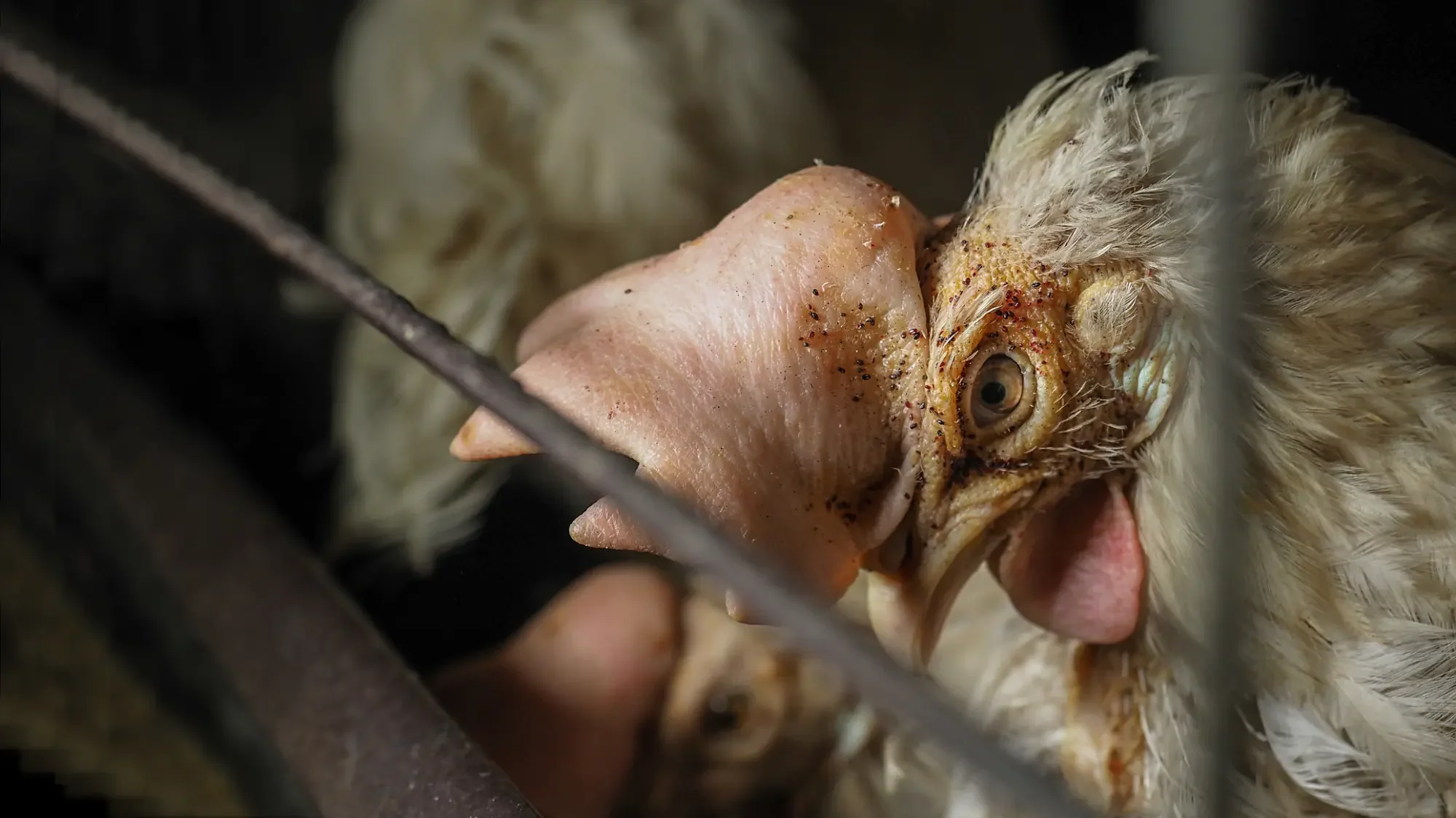
How We Broke the Hen
Photo credits: Selene Magnolia Gatti / We Animals
A wild hen lays 10 to 20 eggs a year to raise her chicks. A commercial hen lays over 300 eggs a year for an industry that will kill her at 72 weeks. The difference between those two birds is not evolution. It is engineering. This is the story of how we did it.
Humans have not only domesticated hens, but actively reshaped their biology. Our demand for eggs has driven a complete transformation of the modern hen, forcing her into an unnatural, relentless cycle of laying. Human‑driven selection prioritizes traits that benefit us (egg number, feed efficiency, shell quality) at the expense of the hen’s health and welfare. Today, a handful of genetics companies supply highly specialized hybrid hens bred specifically for extreme production in intensive systems.
And it started earlier than you think.
Contents:
Selection Against the Hen
In wild populations, natural selection favours traits that improve survival and successful reproduction in a given environment. In contrast, modern layer hens have been shaped by artificial selection: humans choose which birds reproduce, favouring those that lay more eggs, convert feed more efficiently, and fit industrial systems, regardless of long‑term health costs.
Resource‑allocation theory shows that investment in one biological function (like reproduction) comes at the expense of others, such as bone maintenance or immune function. In commercial laying hens, this trade‑off is extreme: huge amounts of calcium and energy are diverted into eggshells and yolk over a prolonged laying cycle, while bone strength and overall resilience decline.

Before We Changed Her
She was a wild bird. What happened next turned her into a production unit.
The domesticated hen traces her roots to the red junglefowl (Gallus gallus), a wild species native to Southeast Asia. Genetic studies show that domestic chickens derive primarily from red junglefowl, with some contribution from other junglefowl species, but centuries of selection have taken them far from their ancestors.
Under natural or semi‑natural conditions, red junglefowl hens lay roughly 10–20 eggs per year, usually in one or two clutches, to raise chicks. Not to supply a constant food stream for others. Early chickens spread along trade and migration routes from Southeast Asia into India, the Middle East, Africa, and eventually Europe, where they were initially valued more for cockfighting, ritual and status than for egg production.
Archaeological and historical evidence suggests that selective breeding for more frequent egg laying began thousands of years ago, as people learned that removing eggs from nests could stimulate hens to lay additional clutches. But truly year‑round, high‑rate laying detached from reproduction is a much more recent development, accelerated in just the last century.
She was never meant to be a production unit. What happened next changed that.
Poultry in an Elizabethan kitchen. Before the factories.
The First Factories
The Egyptians were among the first to experiment with large‑scale artificial incubation, using egg ovens to hatch large numbers of chicks more than 2,000 years ago—technology that prefigures today’s industrial hatcheries. Later, Roman writers described specialized poultry yards and intensive keeping of birds for food, an early form of confinement‑based production.
For most of history, however, hens lived as part of mixed farmyards or village flocks, scavenging and foraging outdoors. Their egg output remained modest by modern standards: historical estimates and 19th‑century poultry manuals suggest that even “better laying breeds” under good management were expected to produce on the order of 70–150 eggs per year, with many hens laying far fewer. Eggs were seasonal and limited; the idea of a hen laying nearly every day would have seemed extraordinary.
But the real acceleration hadn't started yet.
From 10 eggs a year to 300.
The history explains how we got here. The blog explains what it means for the hens alive today. → Read the Blog
The Century That Changed Everything
At the start of the 20th century, many hens in North America and Europe still lived semi‑free lives on small farms, and average production in U.S. flocks was around 80–90 eggs per hen per year. As breeding programs, nutrition, and disease control improved, test‑station birds and selected strains began pushing 150 eggs per year, then 200 and beyond.
Key drivers of industrialization included:
Selective breeding for high egg output. Breeding organizations shifted from multi‑purpose farm birds to highly specialized layer lines, selecting intensively for egg number, feed conversion, and shell quality.
Controlled lighting. With the advent of cheap electricity, producers realized they could keep hens laying through the winter by providing 14–16 hours of artificial light per day, overriding natural seasonal pauses in reproduction.
Specialized nutrition and management. New feeding regimes, disease control, and housing systems allowed larger, more uniform flocks with tightly managed body weight and egg output.
By the 1930s, competitive egg‑laying contests turned production into a sport, with breeds like the Australorp gaining fame: one record pen of six Australorp hens produced an average of about 309.5 eggs each in a year, and individual hens in trials laid over 340–360 eggs in 365 days. These extreme records showed what might be possible if hens were relentlessly selected and managed for output.
After the Second World War, confinement systems, mechanized feeding and watering, and climate‑controlled sheds rapidly became the norm in high‑income countries. By the 1960s, commercial flocks in the U.S. and Europe were averaging over 200 eggs per hen per year, and flock sizes had grown from a few dozen birds to tens or hundreds of thousands housed together in cages.
The label. Not the reality.
The labels changed. The genetics didn't.
ISA Brown, Hy-Line, Lohmann. Whether the carton says cage-free, free-range, or organic, the hen inside is the same engineered bird. → See What the Labels Really Mean
What She Has Become
Today’s commercial layer hen bears little resemblance to her red junglefowl ancestor. She is the product of intensive genetic selection for rapid maturity, high peak production, and prolonged laying cycles, designed to perform inside densely stocked barns or cages.
Modern commercial strains typically lay around 250–310 eggs per year, with many high‑performance flocks exceeding 300 eggs in their first full laying year. Breeding companies now openly aim for—and in some cases report achieving around 500 eggs in 100 weeks for top‑performing flocks, without moulting, in tightly controlled environments.
Post-WWII poultry processing. The system scales up.
To reach these outputs:
Hens are brought into lay at around 18–20 weeks of age and kept in continuous production until they are considered “spent,” typically at around 72–80 weeks, when egg numbers and shell quality decline.
Throughout this time, their bodies continuously divert calcium from structural bones into eggshells, leading to osteoporosis and fragile skeletons; studies of caged layers report fractures in up to 30% of hens over a single laying cycle, especially near depopulation.
Prolonged cycles and high ovulation rates also contribute to reproductive tract disease and other health problems documented in commercial flocks.
Crucially, these genetics are shared across housing systems. Whether eggs are sold as caged, barn, free‑range or organic, the hens are typically the same few commercial hybrid lines (ISA Brown, Hy‑Line, Lohmann and others) bred for high, continuous egg output. Labels may change the housing, but they do not undo decades of selection for hyper‑ovulation.
72 weeks. Then she's gone.
Her bones are breaking. Her reproductive system is failing. And the industry calls this "normal production." → This Is Her Life. See It.
From a wild ancestor laying perhaps a dozen or two eggs a year for her own offspring, we have engineered birds who can be pushed toward 300–500 eggs in a single, compressed life. This transformation did not happen by accident. It is the result of deliberate, cumulative human intervention, driven by profit, normalized by industry marketing, and paid for by the bodies of hens.
Egg production as we know it is not “natural.” It is a tightly engineered system that turns the hen’s reproductive system into a machine, from which she is discarded once her output drops.
Now you know how we built this system. The question is what happens inside it.
She didn't choose this body. We built it for her. The least we can do is look.
-
Laying hens – an overview. ScienceDirect Topics, “Laying Hens” (Egg production and traits). Summarizes selection for high egg output and associated productivity and welfare issues. https://www.sciencedirect.com/topics/agricultural-and-biological-sciences/laying-hens
Reproductive management of poultry. Poultry Science / NIH review (2020). Overview of modern reproductive management, including photoperiod manipulation and extended lay cycles in commercial hens. https://pmc.ncbi.nlm.nih.gov/articles/PMC7153309/
A systematic review of potential productivity, egg quality, and animal welfare implications of extended lay cycles in commercial laying hens. Poultry Science (2024). Focused on Canadian systems but relevant globally; reviews how longer cycles and high productivity affect welfare. https://pmc.ncbi.nlm.nih.gov/articles/PMC7153309/
United Egg Producers – Facts & Stats. Long‑term statistics on U.S. flock size, eggs per hen, and trends in the table‑egg sector. https://unitedegg.com/facts-stats/
“Eggs Profile.” Agricultural Marketing Resource Center (AgMRC). Historical overview of U.S. egg production, including shift from small farm flocks to large‑scale industrial operations. https://www.agmrc.org/commodities-products/livestock-dairy-poultry/poultry/eggs-profile
Perry, D. et al. (2012). “Signatures of selection in the genomes of commercial and non‑commercial chickens.” PLOS One 7(2): e30023. Documents genomic regions under strong selection in commercial layers compared with red junglefowl and other chickens. https://journals.plos.org/plosone/article?id=10.1371/journal.pone.0030023
“Chicken” – Wikipedia. General article summarizing chicken domestication, ancestry from red junglefowl and other junglefowl, and modern breeds. https://en.wikipedia.org/wiki/Chicken
AgMRC – Eggs Profile. (Used for consolidation and power/concentration in the egg industry.) https://www.agmrc.org/commodities-products/livestock-dairy-poultry/poultry/eggs-profile
“Researchers Pinpoint Date When Chickens Were First Domesticated.” Smithsonian Magazine (2022). Summarizes recent archaeological work dating domestication in Southeast Asia and spread into Europe and Africa. https://www.smithsonianmag.com/smart-news/researchers-pinpoint-date-when-chickens-were-first-domesticated-180980212/
Reproductive management of poultry. (As in 2) for historical shift from “natural” reproduction to tightly managed cycles in modern production. https://pmc.ncbi.nlm.nih.gov/articles/PMC7153309/
Eggs Profile (AgMRC). (As in 5) for early 20th‑century production levels, flock sizes, and subsequent industrialization. https://www.agmrc.org/commodities-products/livestock-dairy-poultry/poultry/eggs-profile
Ancient Egyptian agriculture – egg ovens. Overview of ancient Egyptian agriculture, including use of egg incubators/ovens more than two thousand years ago. https://en.wikipedia.org/wiki/Ancient_Egyptian_agriculture
“The Evolution of Poultry Production.” DOL‑Sensors. Industry article summarizing the progression from backyard flocks to industrial poultry over the 20th century. https://www.dol-sensors.com/content-pages/the-evolution-of-poultry-production
Historical poultry manuals and secondary analyses. For example: Lewis Wright, The Illustrated Book of Poultry (1873), cited in modern discussions of historical egg yields; forum and historian summaries of expected 70–150 eggs per hen under 19th‑century conditions. (Accessible overview: https://www.backyardchickens.com/threads/how-many-eggs-were-laid-by-hens-150-years-ago.1593024/ )
Smithsonian domestication article. (As in 9) for spread via trade routes, cultural uses, and timeline of domestication. https://www.smithsonianmag.com/smart-news/researchers-pinpoint-date-when-chickens-were-first-domesticated-180980212/
Eggs Profile (AgMRC) and early egg‑production data. Provides context for early 20th‑century egg production (~86 eggs/hen/year) and later increases. https://www.agmrc.org/commodities-products/livestock-dairy-poultry/poultry/eggs-profile
Laying hens – overview. (As in 1) plus modern extension sources describing typical commercial output of 250–310 eggs/hen/year and high‑performance flocks at 300+ eggs. For example: Purina, “How Long Do Chickens Lay Eggs?” https://www.purinamills.com/chicken-feed/education/detail/how-long-do-chickens-lay-eggs-goals-for-laying-hens
“Seasonal Light Requirements for Egg Production.” Premier1 Supplies. Extension‑style overview explaining that hens need ~14 hours of light per day to maintain egg production and how artificial lighting is used. https://www.premier1supplies.com/w/artificial-lighting-laying-chickens/
Lohmann LSL‑Lite Management Guide. Breeding‑company management guide describing nutrition, management, and performance goals, including production out to 16+ months and extended cycles. https://www.winmixsoft.com/wp-content/uploads/2025/06/Lohman-lsl-lite-management-guide-eng.pdf
“Australorp chicken.” The Livestock Conservancy; and hobby/record sources such as Backyard Poultry on Australorp egg‑laying records (e.g., 364 eggs in 365 days). https://livestockconservancy.org/australorp-chicken/ and https://backyardpoultry.iamcountryside.com/chickens-101/blue-and-black-australorp-chicken-a-prolific-egg-layer/
Eggs Profile and Evolution of Poultry Production. (As in 5 and 13) for post‑WWII confinement, mechanisation, flock size, and productivity trends. https://www.agmrc.org/commodities-products/livestock-dairy-poultry/poultry/eggs-profile and https://www.dol-sensors.com/content-pages/the-evolution-of-poultry-production
“Reaching the Goal of 500 First Quality Eggs Per Hen Housed.” The Poultry Site (2015). Explains breeding and management aimed at achieving 500 eggs per hen housed in 100 weeks. https://www.thepoultrysite.com/news/2015/07/reaching-the-goal-of-500-first-quality-eggs-per-hen-housed
Perry et al. (2012). (As in 6) for selection pressures and divergence of commercial layers from wild ancestors. https://journals.plos.org/plosone/article?id=10.1371/journal.pone.0030023
United Egg Producers – Facts & Stats and extended‑cycle review. Together, these show modern flock sizes (~311 million hens in the U.S.), average eggs per hen (~301/year), and the trend toward longer lay cycles. https://unitedegg.com/facts-stats/ and https://pmc.ncbi.nlm.nih.gov/articles/PMC7153309/
Reproductive management / genetic specialisation. (As in 2 and 6) for differentiation between layer and broiler lines.
Lohmann & egg‑quality genetics. Lohmann guides and egg‑quality reviews describing shell strength, albumen quality, and traits important for processing. For example: Research Progress on Genetic Factors of Poultry Egg Quality (2025, Frontiers in Genetics). https://pmc.ncbi.nlm.nih.gov/articles/PMC12729594/
RSPCA – How are layer hens farmed? and The Open Sanctuary Project – Chickens: How We Got Here. RSPCA gives typical commercial egg output (~300 eggs/year) and slaughter age (~72 weeks); Open Sanctuary explains wild red junglefowl laying roughly 10–15 eggs/year in 1–2 clutches and contrasts this with modern layers. https://kb.rspca.org.au/categories/farmed-animals/poultry/layer-hens/how-are-layer-hens-farmed-in-australia and https://opensanctuary.org/chickens-how-we-got-here/
Hy‑Line Brown product sheet; EW Nutrition – “Feeding layers for longer laying cycles and optimized production.” Hy‑Line Brown marketing states production “approaches 500 rich brown eggs in 100 weeks” under optimal management; EW Nutrition discusses feed strategies for 500‑egg goals. https://www.hyline.com/varieties/brown and https://ew-nutrition.com/feeding-layers-longer-cycles-optimized-production/
Whitehead, C. C. (2000). “Osteoporosis in cage layers.” Poultry Science 79(7): 1033–1041. Reviews osteoporosis in caged layers, noting fracture incidences up to ~30% in commercial flocks. https://pubmed.ncbi.nlm.nih.gov/10901207/
RSPCA LAYER HENS Information Notes. RSPCA Approved Farming Scheme factsheet describing production lifespan (~72 weeks), welfare issues, and spent‑hen culling. https://kb.rspca.org.au/categories/farmed-animals/poultry/layer-hens/how-are-layer-hens-farmed-in-australia
Research Progress on Genetic Factors of Poultry Egg Quality and related Poultry Science reviews. Covers genetic determinants of egg traits and emphasises the central role of genetics in modern egg production. https://pmc.ncbi.nlm.nih.gov/articles/PMC12729594/
Eggs Profile (AgMRC) and The Evolution of Poultry Production. (As in 5 and 13) for the long‑term “transformation of poultry farming” narrative—from small flocks to highly industrialised, vertically integrated systems. https://www.agmrc.org/commodities-products/livestock-dairy-poultry/poultry/eggs-profile and https://www.dol-sensors.com/content-pages/the-evolution-of-poultry-production
Lohmann management guides and Poultry Site 500‑eggs article. (As in 19 and 22) for the “global push” toward longer laying cycles and higher lifetime egg numbers per hen. https://www.winmixsoft.com/wp-content/uploads/2025/06/Lohman-lsl-lite-management-guide-eng.pdf and https://www.thepoultrysite.com/news/2015/07/reaching-the-goal-of-500-first-quality-eggs-per-hen-housed
Further Reading
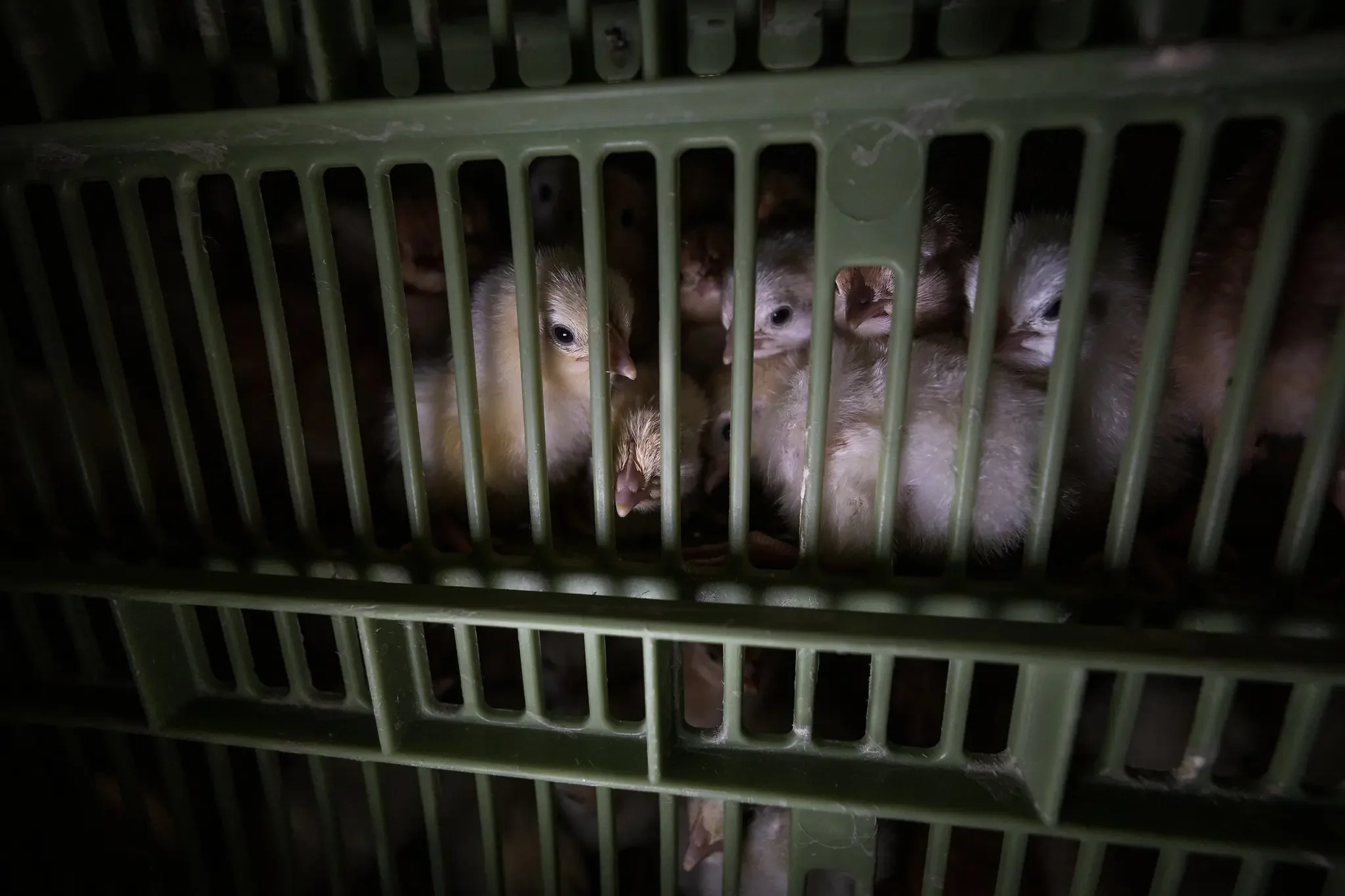
Chickens
Go Egg-Free
Fund the Truth