
The Truth About Backyard Chickens
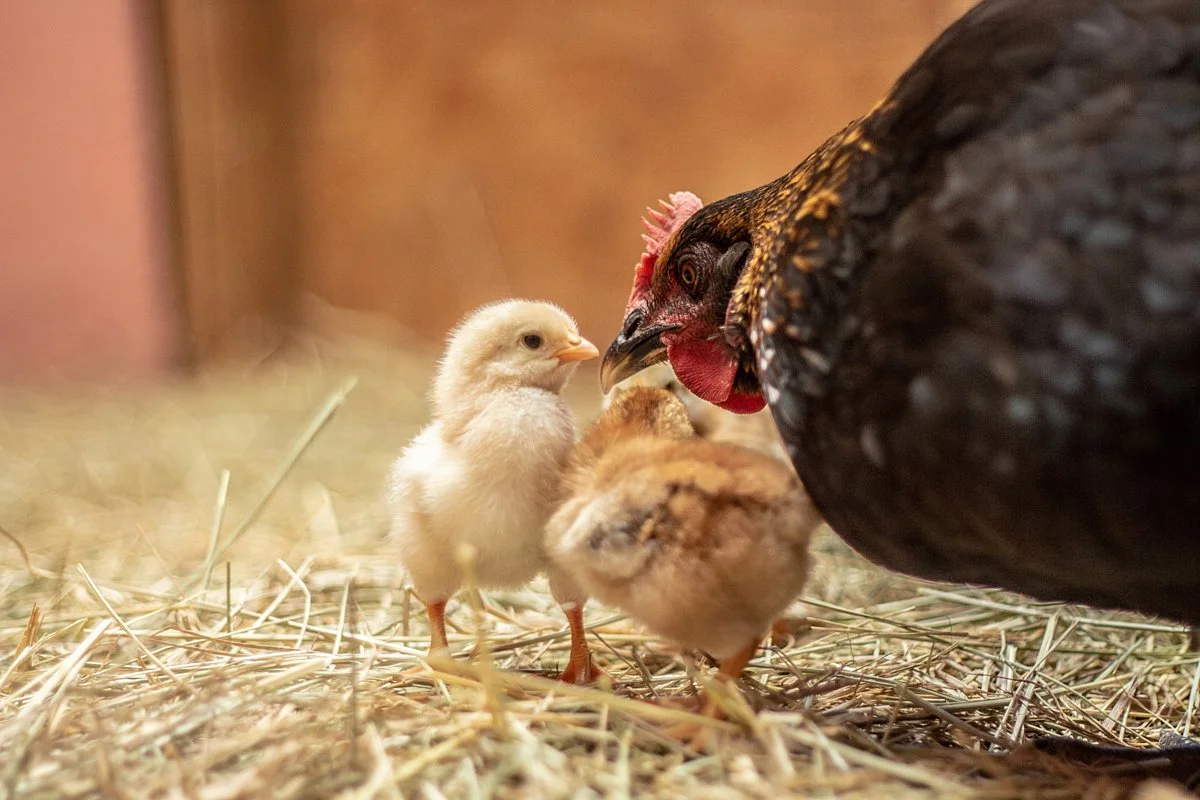
Photo credits: Jo-Anne McArthur / We Animals
Egg prices spike. Social media fills with images of happy hens in pastoral backyards. "Just get your own chickens," the advice spreads. It seems like the obvious answer to concerns about factory farming: personal agency, fresh eggs, a direct line from coop to kitchen.
For many people, keeping backyard chickens feels like the ethical choice.
But the backyard chicken boom is built on a fundamental misunderstanding of what keeping these birds actually means. It's impulse buying on a massive scale, fueled by crisis. Millions are jumping in without understanding the system they're supporting or the suffering they're perpetuating.
Contents:
The Backyard Chicken Boom
The numbers reveal the pattern clearly.
Early 2000s — Less than 1% of U.S. households kept chickens.[5] It was unconventional.
2018 — Around 5.8 million households had backyard flocks.[1] Interest was growing, driven by the local food movement and animal welfare concerns.
2020 — Over 15 million households owned chickens.[1] The pandemic hit, grocery store shelves emptied, and people panicked. Chick hatcheries couldn't keep up with demand.
2024-2025 — Another major surge.[2] Egg prices climbed, supply tightened, and 11 million additional households acquired backyard flocks, a 28% increase in just two years.[2] Researchers estimate approximately 85 million backyard chickens now exist in the U.S., based on 13% of households owning an average of five birds each.[4][3]
Each crisis follows the same pattern.[6][2] Prices spike. Supply disappears. People buy chicks on impulse. No experience. No long-term plan. No understanding of what these birds are or what they'll endure.
What most new chicken keepers don't realize: the system they're trying to escape reaches right into their backyard. The same industrial hatcheries that supply factory farms also supply backyard flocks. And there's a hidden cost to every hen purchased.
Image caption
Where Backyard Chickens Really Come From
Most backyard chicken keepers want hens. That's the driving force behind purchase decisions. Hens lay eggs. Roosters don't. So hens are desired; roosters are accidents or problems to be avoided.
This preference has massive consequences.
Backyard keepers' demand for hens-only flocks directly drives industrial hatchery practices.[7] Hatcheries must produce chicks to supply commercial farms and backyard enthusiasts alike. In the U.S., over 600 million chicks are hatched annually to supply the 90 billion eggs Americans consume.[7]
Roughly half of all hatched chicks are male.[7] They are killed immediately.
Male Chick Culling: The Industry Standard
Over 300 million male chicks are gassed or ground up alive in machines within hours of hatching every year in the United States.[7] This practice is called "culling," though the term obscures the reality of what happens.[7]
Why does this happen? Modern egg-laying breeds have been selectively bred for one purpose: producing eggs.[7] Males of these breeds don't gain weight quickly enough to be profitable for meat production, unlike broiler chickens bred specifically for rapid growth.[7] So they become waste.[7]
When a backyard chicken keeper buys six chicks for their coop, six male chicks were killed at the hatchery to make that purchase possible.[7] The connection is direct. The responsibility is shared.[7]
Some hatcheries are now exploring in-ovo sexing technology, which identifies male embryos before they hatch so they can be destroyed during development rather than as living chicks.[7][8] Brands like NestFresh and Kipster have begun offering eggs from hens hatched using this method.[7][8] It's a marginal improvement over grinding live chicks, but it doesn't address the core problem: billions of animals are still being bred into bodies designed to suffer.[7][8]
What Happens When the Eggs Stop
When people keep backyard chickens, they're often motivated by what these animals can provide. Fresh eggs every morning. Pest control in the garden. Fertilizer for the yard. Some entertainment. Maybe companionship. The birds become valued primarily for their output and usefulness.
This creates a predictable problem: what happens when that output stops?
Hens lay most prolifically in their first two years, reaching peak production at 30 weeks of age.[9][10][11] By the third year, egg production slows significantly with fewer eggs each week and gradual decline in egg size and shell quality.[9][12][13] Production hens can lay efficiently for two laying cycles (about 50-60 weeks each), but after two or three years many hens significantly decline in productivity.[12][11][14] Older hens (5+ years) may lay only sporadically, sometimes only one or two eggs per week or month.[9][13][10]
But chickens can live 6-10 years in backyard flocks.[15][16][14]
Research shows many backyard keepers respond to declining production by replacing birds, abandoning them, or culling them.[12][17] Some keep older hens but treat them as a burden rather than individuals deserving care. Others simply hadn't planned that far ahead and find themselves unprepared for years of care with no eggs in return.
When animals are kept primarily for what they produce, their value becomes conditional. This is the same framework that underlies industrial animal agriculture. The scale is different. The proximity is different. But the underlying logic is the same.
Modern egg-laying hens have been genetically engineered through decades of selective breeding to produce approximately 300 eggs per year.[18][9] Their wild ancestors, red junglefowl, produced 10 to 15 eggs annually, only during breeding season.
This isn't a small difference. It's a fundamental distortion of what a chicken's body is capable of withstanding.
The Inherent Suffering: Genetic Damage in Modern Laying Hens
The Physical Toll of Overproduction
Each egg requires enormous amounts of calcium.[15][11] That calcium is pulled directly from the hen's bones.[15] Over time (months or years), this leads to severe osteoporosis, fractures, and chronic pain.[15]
Reproductive disorders are endemic among laying hens. Egg binding. Peritonitis. Tumors. Prolapse. Internal bleeding. These are not rare complications; they're predictable consequences of the breeding. Many hens experience several of these conditions simultaneously, and most are either chronic or fatal.
Even in the best-case scenarios (a spacious coop, excellent nutrition, attentive daily care, access to veterinary support), these birds are still trapped in bodies designed to fail. The suffering isn't a failure of backyard chicken keeping. It's built into the animals themselves through selective breeding.
This cannot be loved away. It cannot be fixed with a nicer coop or better food. The damage is genetic.
Image caption
The Practical Challenges of Keeping Backyard Chickens
Beyond the ethical concerns, backyard chicken keeping involves substantial practical challenges most new keepers are unprepared for.[19][20][21]
Challenge 1: Cost
Reality:
Initial setup can range from $800 to $2,000 for a proper predator-proof coop, secure fencing, feeders, waterers, and initial supplies.[22]
Pre-built coops range from $300-$1,500, with DIY builds averaging around $500.[22]
A starter flock of four hens costs $20-$50 per bird.[22]
Ongoing annual costs run $400-$800, including feed ($40-$60/month), bedding ($15/month), and veterinary care ($100-$200/year).[22]
Total five-year costs can reach $4,000-$6,000 for a small flock.[22]
Most veterinarians don't treat chickens, and those who do charge rates equivalent to small-animal medicine.[23][21]
Challenge 2: Predators
Reality:
Raccoons, foxes, hawks, owls, coyotes, possums, neighborhood dogs, and rats view backyard coops as easy meals.[24][25][26]
Most store-bought coops lack secure underlayment and have flimsy fencing.[24][26] Hardware cloth (½-inch mesh) should be used instead of chicken wire, with an apron buried 6-12 inches deep or extending outward 12 inches around the perimeter.[24][26][27]
Predator attacks are devastating and common: blood, feathers, dismembered bodies, often a single traumatized survivor.[24]
Raccoons can open any lock a toddler can; two-step locks work best.[24][25]
This is nearly inevitable for new chicken owners.[24][26]
Challenge 3: Lifespan vs. Productivity
Reality:
As noted above, hens lay most prolifically in their first two years.[9][10][11]
Production drops significantly by year three.[9][12][13]
By age four or five, many lay only occasionally.[9][13][10]
But chickens can live 6-10 years.[15][16][14] This creates a long-term care problem: what happens to non-productive hens?
Some keepers cull them. Some attempt rehoming, but sanctuaries are full.[28][29]
Many simply keep aging, ailing birds without meaningful quality-of-life planning.[15][17]
Should You Rescue Chickens Instead?
Some people encountering this information ask about rescuing chickens rather than buying them from hatcheries. This is a compassionate impulse, but it requires understanding the full picture.
Rescued chickens still carry the genetic damage. Whether from a commercial operation or a backyard farm, they remain in bodies that hurt. The osteoporosis, reproductive disorders, and chronic pain don't disappear with better care.[15][16] Managing that suffering requires substantial financial commitment (potentially 5-10 years of daily care and veterinary expenses) and emotional labor.[28][29]
Eggs must be managed appropriately. Many rescued hens continue laying despite poor health. Those eggs should be returned to the hens (crushed and mixed back into their food) to recycle lost calcium.[28] The situation becomes managing an ongoing health crisis, not benefiting from the bird's output.
Rescuing a chicken is an act of care for an individual being in distress. It's not a solution to systemic chicken suffering. It's a band-aid on a much larger problem.
Organizations like Animal Place, Farm Sanctuary, United Poultry Concerns, and Open Sanctuary Project provide resources for ethical rescue and care.[28][29][30][31][32]
The Fundamental Problem
Keeping backyard chickens (whether purchased from a hatchery or rescued from a farm) doesn't opt anyone out of animal exploitation. It replicates the same patterns on a smaller scale, often with more emotional proximity.
If the goal is to reduce participation in systems that harm animals, keeping chickens for eggs isn't the answer.
Image caption
What Actually Reduces Harm
Action: Stop consuming eggs
How It Helps:
The most direct action. Plant-based alternatives exist for baking, cooking, and eating. The egg industry's messaging suggests eggs are nutritionally irreplaceable; they're not. Alternatives exist and work well.
Action: Support farmed animal sanctuaries
How It Helps:
Organizations like Animal Place, Farm Sanctuary, United Poultry Concerns, and Open Sanctuary Project rescue and care for chickens and other farmed animals who have been abandoned or rescued from bad situations.[28][29][30][31][32]
They provide legitimate sanctuary (space to live out their lives without expectation of production). Supporting them through donation, volunteering, or education addresses the crisis without replicating exploitation. Find sanctuaries at sanctuaries.org or through United Poultry Concerns.[28][29]
Action: Advocate for policy change
How It Helps:
Support legislation that prohibits cruel practices like male chick culling, improves conditions for laying hens, funds research into alternatives to animal agriculture, and holds producers accountable for welfare standards.[7][33][34]
USDA initiatives like biosecurity improvements and avian flu prevention programs affect industry practices.[33][34] Personal choices matter, but systemic change requires collective action.
Action: Educate others
How It Helps:
Share what's been learned about backyard chicken keeping, the egg industry, and where chicks really come from. Help people make informed decisions rather than impulse decisions.
University extension resources from institutions like Colorado State, Virginia Tech, University of Florida, University of Maryland, and University of Wisconsin provide evidence-based information.[19][20][21][35][12][11][14]
Final Thoughts
The backyard chicken boom is driven by good intentions. People want agency over their food sources. They want to make ethical choices. They want to escape participation in systems they recognize as harmful.
These motivations are understandable. But understanding and action sometimes diverge.
Keeping backyard chickens (for eggs, pest control, companionship, or any other reason) doesn't represent escape from exploitation. It represents participation in it, on a smaller and more personal scale.
Chickens deserve better.
They deserve not to be bred into bodies that hurt them.
They deserve not to be valued primarily for what they produce.
They deserve not to exist for human purposes.
Please, leave eggs off your plate.
-
San Antonio News - "America's backyard chicken boom explained" (October 2025) https://san.com/cc/americas-backyard-chicken-boom-explained/
Ainvest - "Americans raising backyard chickens surge by 28%" (April 2025) https://ainvest.com/news/chicken-boom
Audacy - "Backyard chicken ownership is skyrocketing" (February 2025) https://audacy.com/articles/news/backyard-chicken-ownership-is-skyrocketing
National Center for Biotechnology Information - "From the Backyard to Our Beds: The Spectrum of Care" (January 2024) https://www.ncbi.nlm.nih.gov/pmc/articles/PMC10814380/
Mike the Chicken Vet - "Major US Study on Backyard Flocks" (June 2013) https://mikethechickenvet.wordpress.com/
Forbes - "How The 2024 Bird Flu Outbreak Is Impacting Our Food" (May 2024) https://www.forbes.com/sites/brucelee/2024/05/01/how-the-2024-bird-flu-outbreak-is-impacting-our-food/
ASPCA - "Hatching a Plan to End a Cruel Practice" (March 2025) https://www.aspca.org/news/hatching-plan-end-cruel-practice
Kipster - "Egg Producer Kipster Uses In Ovo Sexing Technology" (June 2025)
Meyer Hatchery Blog - "How Long Do Chickens Live? Factors That Impact Lifespan" (December 2024) https://blog.meyerhatchery.com/how-long-do-chickens-live
Purina Mills - "How Egg Production is Affected by Age" (January 2025) https://www.purinamills.com/chicken-feed/articles/how-egg-production-is-affected-by-age
University of Florida IFAS Extension - "Factors Affecting Egg Production in Backyard Chicken Flocks" (May 2018) https://edis.ifas.ufl.edu/publication/ps012
Virginia Tech Extension - "Why Have My Hens Stopped Laying? 5 Factors that Impact Egg Production" (October 2023) https://pubs.ext.vt.edu/content/dam/pubs_ext_vt_edu/APSC/APSC-180NP/APSC-180NP.pdf
Grubbly Farms - "Why Have my Chickens Stopped Laying Eggs?" (September 2023) https://www.grubblyfarms.com/blogs/grubblys-community/why-have-my-chickens-stopped-laying-eggs
University of Wisconsin Extension - "Life Cycle of a Laying Hen" (2024) https://livestock.extension.wisc.edu/articles/life-cycle-of-a-laying-hen/
Hobby Farms - "How Long Do Chickens Live & Produce Eggs" (March 2025)https://www.hobbyfarms.com/how-long-do-chickens-live-produce-eggs/
SPCA BC - "Egg Production in Canada" https://spca.bc.ca/wp-content/uploads/2022/07/Egg-Production-in-Canada-Jan-2022.pdf
The Hearty Hen House - "What Things Affect Egg Laying?" (April 2020) https://www.theheartyhenhouse.com/what-things-affect-egg-laying/
American Egg Board - "Industry Data" (2023) https://incredibleegg.org/industry-data/
Colorado State University Extension - "Backyard Chickens" https://sam.extension.colostate.edu/backyard-chickens/
UC Agriculture & Natural Resources - "Basics for Raising Backyard Chickens" https://ucanr.edu/sites/poultry/files/215738.pdf
University of Tennessee Extension - "W1275 Raising Backyard Chickens: 10 Things to Do" https://utia.tennessee.edu/publication/w1275-raising-backyard-chickens-10-things-to-do-that-will-make-you-successful/
Phantom Ecology - "USDA Urges Americans to Raise Chickens as Egg Prices..." (March 2025) https://phantomecology.com/usda-urges-americans-raise-chickens-egg-prices/
Lafeber - "Care of the Backyard Chicken" https://lafeber.com/pet-birds/care-backyard-chicken/
Tilly's Nest - "Flock Safety: Backyard Chicken Predators" (November 2019) https://www.tillysnest.com/p/flock-safety-predators.html
The Chicken Chick - "11+ Tips for Predator-proofing Chickens" (May 2023) https://www.the-chicken-chick.com/predator-proofing-chickens.html
Garden Betty - "9 Ways to Predator-Proof a Chicken Coop" (April 2024) https://www.gardenbetty.com/predator-proof-chicken-coop/
Reddit/BackyardChickens - "Guide: How to Predator-Proof Your Chicken Coop" https://www.reddit.com/r/BackYardChickens/
Humane World - "Adopting backyard chickens as pets" (July 2018) https://humaneworld.org/our-work/farm/chickens/adopting-backyard-chickens-as-pets/
Hobby Farms - "Battery No More: How To Adopt Rescue Hens" (February 2020) https://www.hobbyfarms.com/how-to-adopt-rescue-hens/
Reddit/Vegan - "How do you care for rescued chickens..." (January 2023) https://www.reddit.com/r/vegan/
Open Sanctuary Project - "Creating An Enriching Life For Chickens" (December 2022) https://opensanctuary.org/resource/creating-enriching-life-chickens/
Farm Sanctuary - "Chickens | Farm Animals" (March 2025) https://www.farmsanctuary.org/get-involved/helping-farm-animals/chickens/
USDA - "USDA Update on Progress of Five-Pronged Strategy to Combat Avian Influenza" (March 2025) https://www.usda.gov/news-releases/usda-update-progress-five-pronged-strategy-combat-avian-influenza
USDA - "USDA Invests Up To $1 Billion to Combat Avian Flu and Strengthen Biosecurity" (February 2025) https://www.usda.gov/news-releases/usda-invests-1-billion-combat-avian-flu-and-strengthen-biosecurity
University of Maryland Extension - "Raising Your Home Chicken Flock" https://extension.umd.edu/resource/raising-your-home-chicken-flock
Further Reading & Resources

culling alternativesIn-Ovo Sexing
Step into the egg industry's latest buzz: In-ovo sexing. While sensationalized as “The cutting-edge technology trying to save millions of male chicks from being gassed” and “A Simple New Technique Could Make Your Eggs More Humane” by major media outlets, the truth is more complex.
pARENTINGMotherhood in the Egg Industry
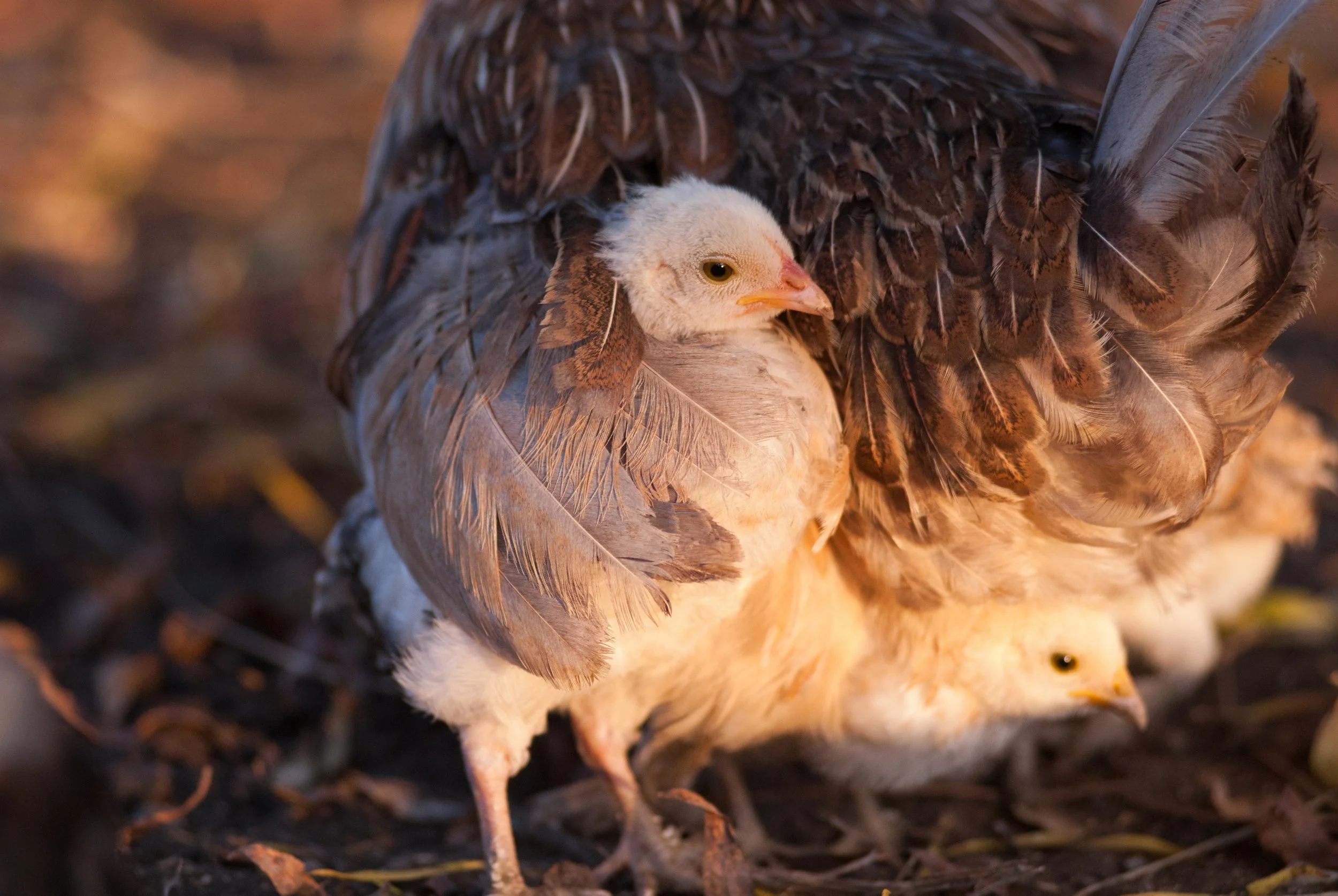
The vast majority of farmed animals, are female, and they are often subjected to unspeakable cruelty in the name of food. This includes cows used for dairy, pigs used for breeding, and of course, the layer hens used for their eggs. But it's not just the layer hens that suffer in the egg industry—it's also their mothers.
Continue reading

GUIDEThe Ultimate Egg-Replacer Guide
Are eggs really necessary? Spoiler alert: they're not! Whether you're transitioning to a plant-based lifestyle or just looking for healthier, cruelty-free alternatives, vegan egg replacements make it easier than ever to whip up your favorite dishes without compromising on taste or texture.