
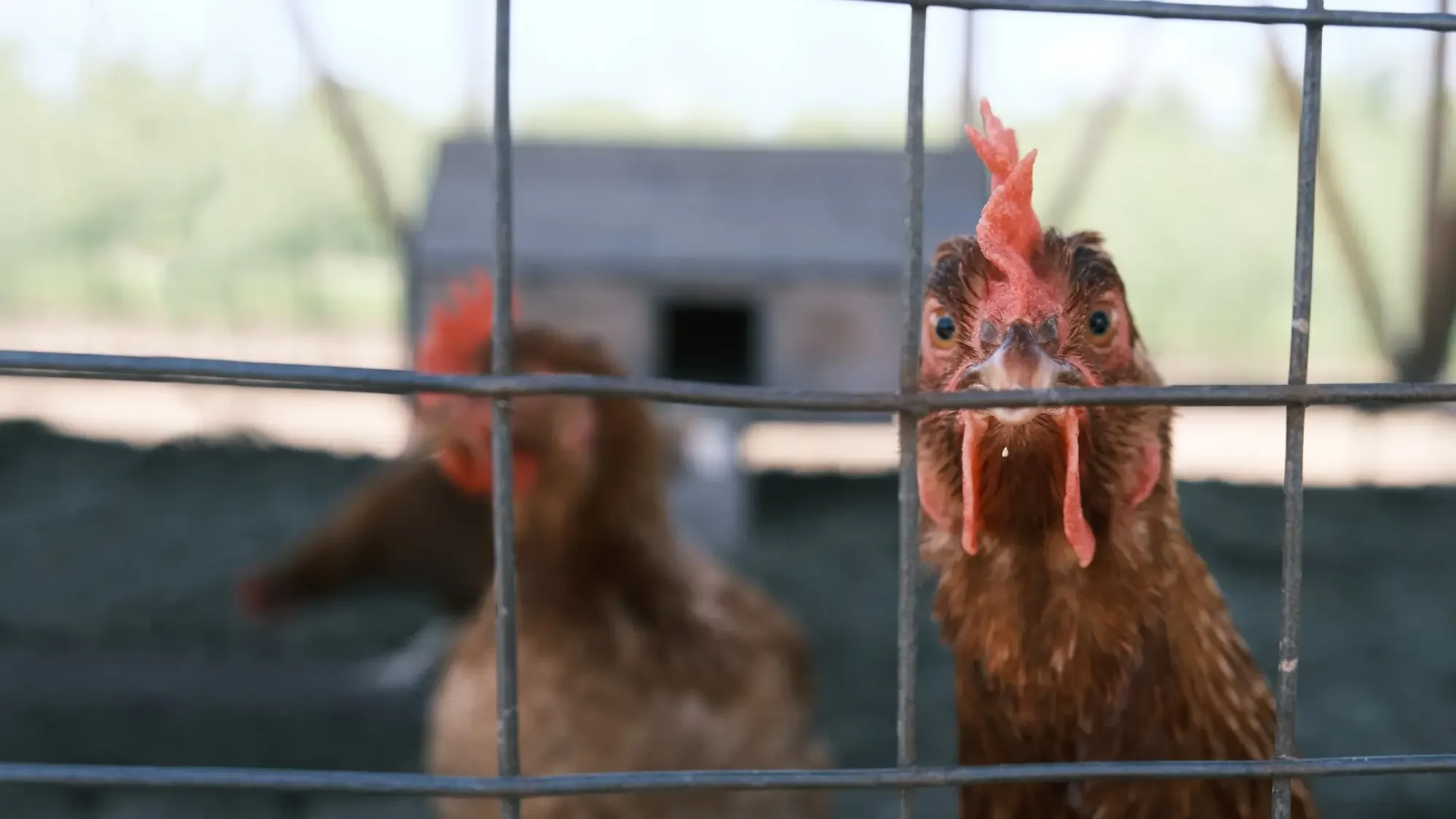
The Truth About Backyard Chickens
Photo credits: Sarah-Claude St-Louis / Pexels
Egg prices spike. Social media fills with happy hens in neat little backyards. “Just get your own chickens,” people say. It sounds like the ethical fix. It isn’t.
Backyard chickens are sold as a way out of factory farming. Fresh eggs. Personal control. A cleaner conscience. But the backyard chicken boom is built on the same system it claims to avoid.
Contents:
The Backyard Chicken Boom
The numbers tell the story clearly. Backyard chickens were a niche habit in the early 2000s. Then they became a trend. Then they became a panic buy.
Early 2000s — Less than 1% of U.S. households kept chickens. It was unconventional.
2018 — Around 5.8 million households had backyard flocks. Interest was growing, driven by the local food movement and animal welfare concerns.
2020 — Over 15 million households owned chickens. The pandemic hit, grocery store shelves emptied, and people panicked. Chick hatcheries couldn’t keep up with demand.
2024-2025 — Another major surge. Egg prices climbed, supply tightened, and backyard flocks surged again.
What this leaves out is the part most people never see: where the chicks come from, what happens to the males, and what happens when the hens stop laying.
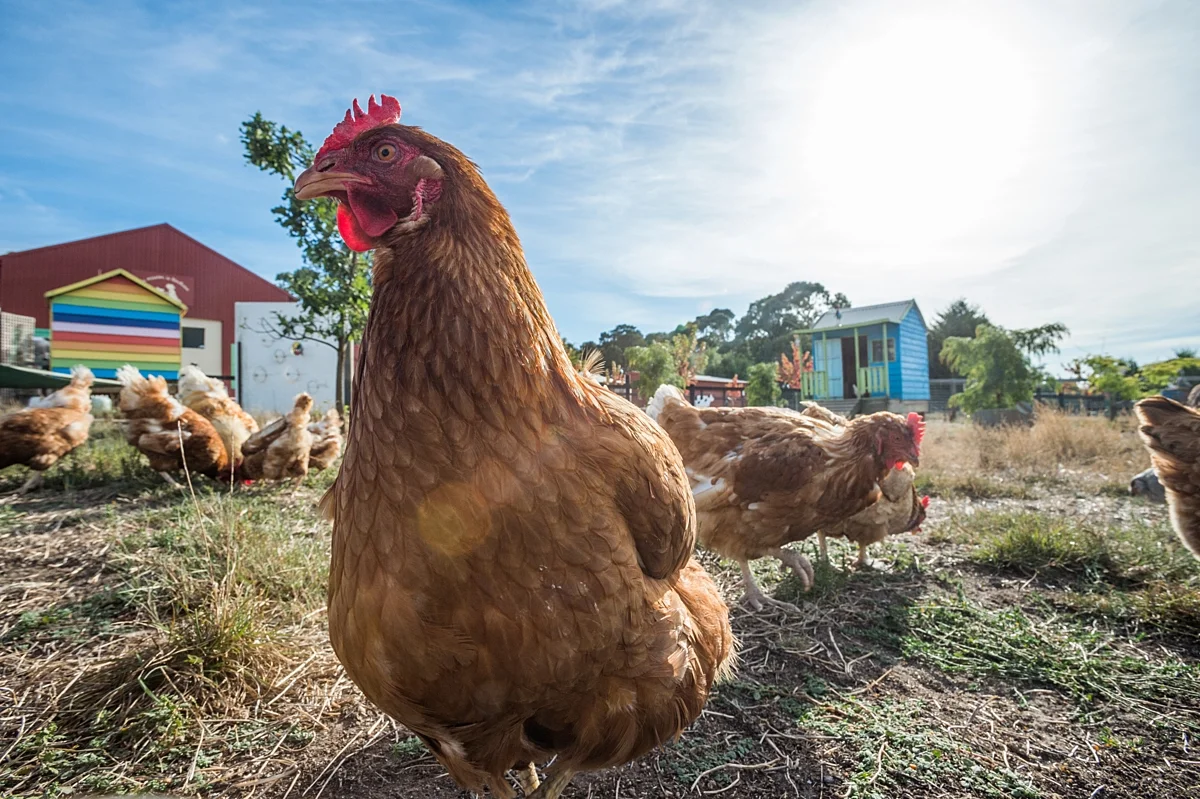
Rescued chickens out in the garden.
Where Chickens Come From
Most people who buy backyard chickens want hens. Hens lay eggs. Roosters do not. That one preference has a brutal consequence.
The same hatcheries that supply commercial egg production supply backyard flocks too. If a hatchery is breeding layer chicks, about half of them are male.
Those male chicks are killed.
Male chicks from egg-laying breeds do not grow fast enough to be profitable meat birds. So the industry treats them as waste.
In the United States, hundreds of millions of male chicks are killed every year by gassing or maceration. The industry calls this “culling.” That word hides what is actually happening.
If you buy chicks for a backyard coop, you are not stepping outside that system. You are helping fund it.
Some hatcheries now use in-ovo sexing, which identifies male embryos before hatching. That is a smaller harm. It is still not a solution. The birds are still being bred to serve a system that treats unwanted males as disposable.
Male Chick Culling
Backyard chicken buyers usually want hens only. But sexing is imperfect, and roosters still show up. In many places, roosters are illegal even where hens are allowed.
That leaves people with a bird they did not want and often do not know how to keep. Sanctuaries and rescue groups report a steady flow of abandoned roosters and unwanted backyard birds.
A chick looks harmless in a carton. A rooster in a suburb is a problem somebody has to deal with.
The Rooster Problem
What Happens When Eggs Stop
People keep hens for what they produce. Eggs. Pest control. Fertilizer. A little entertainment. That sounds harmless until the birds stop producing.
Hens lay most heavily in the first couple of years. After that, production drops. By year three, many hens are laying much less. By years four and five, some lay only occasionally.
But chickens can live five to ten years or more. That leaves a long stretch where the bird is still alive, still needs care, and no longer delivers eggs on demand.
That is where a lot of backyard goodwill ends. Some birds are rehomed. Some are culled. Some are abandoned. Some are left to age with no real plan.
If an animal is valued mainly for output, then her value drops when the output does.
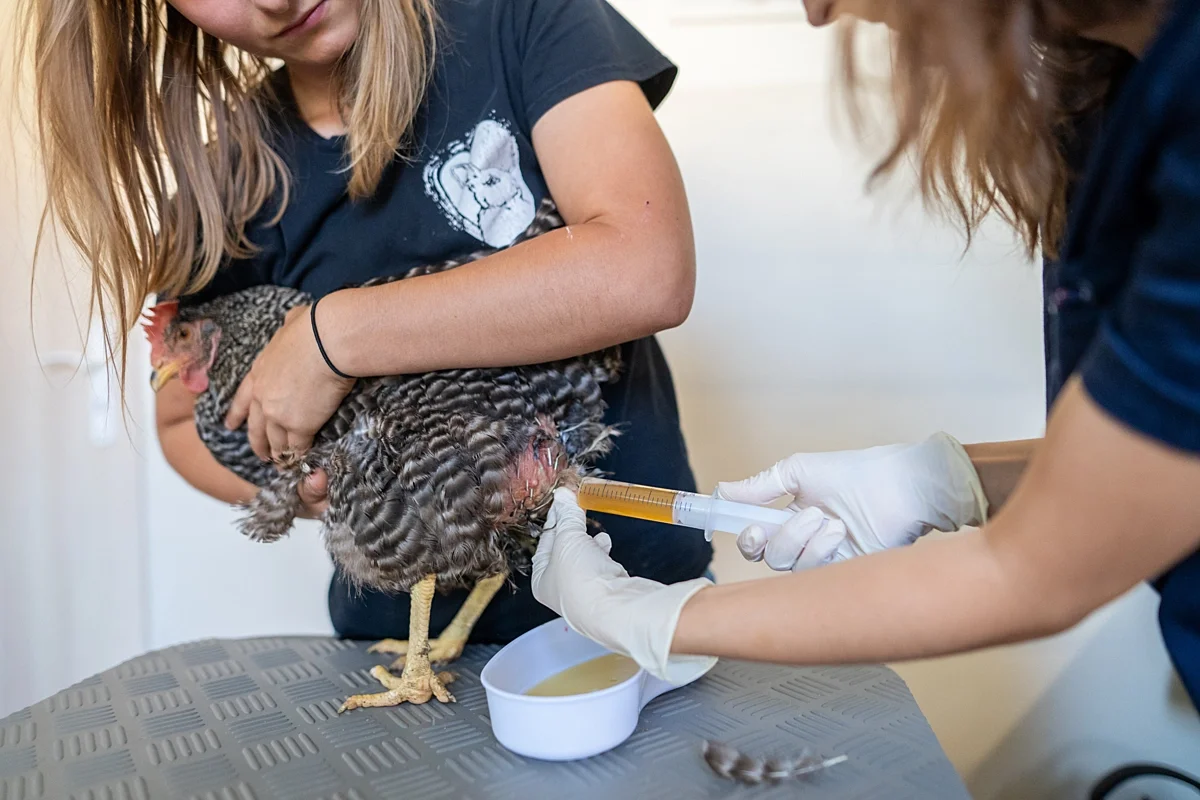
A rescued hen, is treated for yolk peritonitis at the veterinary clinic.
Bodies Bred To Overwork
Modern laying hens are not ordinary chickens living in nicer surroundings. They are the result of decades of selective breeding for extreme egg production.
Wild junglefowl lay around 10 to 15 eggs a year. Modern laying hens can produce around 300 or more. That is not a small adjustment. It is a total rewrite of the body.
The Physical Cost
Every egg uses calcium. That calcium comes from the hen’s body. Over time, that contributes to osteoporosis, fractures, and chronic pain.
Egg binding, prolapse, tumors, peritonitis, and internal bleeding are not rare edge cases. They are predictable consequences of pushing a hen’s body this hard.
A better coop does not undo that. Better feed does not undo that. Love does not undo that.
The damage is built in.
The Real-World Problems
Backyard chicken keeping is often sold as simple and wholesome. In practice, it is expensive, difficult, and messy.
-
A proper coop and run can cost far more than most beginners expect. Predator-proofing is not optional. Feed, bedding, vet care, and replacement supplies add up fast.
Many people buy a few birds because they want cheap eggs. Then they discover that cheap eggs were never the real product. The labor was.
Initial setup can range from $800 to $2,000 for a proper predator-proof coop, secure fencing, feeders, waterers, and initial supplies.
Pre-built coops range from $300-$1,500, with DIY builds averaging around $500.
A starter flock of four hens costs $20-$50 per bird.
Ongoing annual costs run $400-$800, including feed ($40-$60/month), bedding ($15/month), and veterinary care ($100-$200/year).
Total five-year costs can reach $4,000-$6,000 for a small flock.
Most veterinarians don't treat chickens, and those who do charge rates equivalent to small-animal medicine.
-
Backyard coops attract raccoons, foxes, coyotes, hawks, owls, dogs, rats, and more. Store-bought coops are often flimsy. Bad fencing kills birds.
When predator attacks happen, they are not peaceful or humane. They are bloody, violent, and usually traumatic for the surviving birds.
-
This is the part people do not plan for. Hens can live years beyond their peak laying period. That means years of care without much return.
Some keepers rise to that responsibility. Many do not. That gap is why older hens so often end up displaced, rehomed, or killed.
Health Risks
Backyard chickens are not just an animal-welfare issue. They are also a public-health issue.
Salmonella
The CDC has repeatedly linked backyard poultry to multistate Salmonella outbreaks. Healthy-looking birds can still carry Salmonella. Children are especially vulnerable.
People can get sick by touching birds, eggs, bedding, feeders, coop surfaces, or anything in the area where the birds live and roam.
Avian Flu
Backyard flocks also intersect with avian flu risk. The risk to humans is low, but not zero. The risk to birds is real.
So the “harmless backyard flock” story is wrong twice. It is wrong for the hens. It is wrong for the people around them.
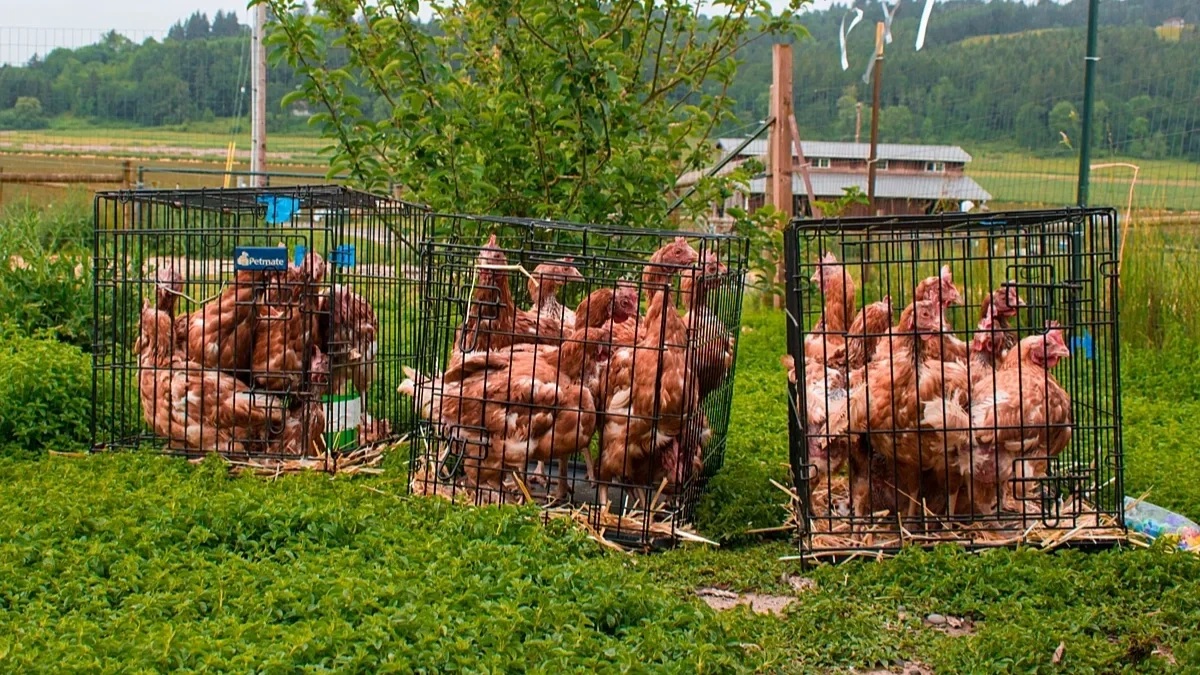
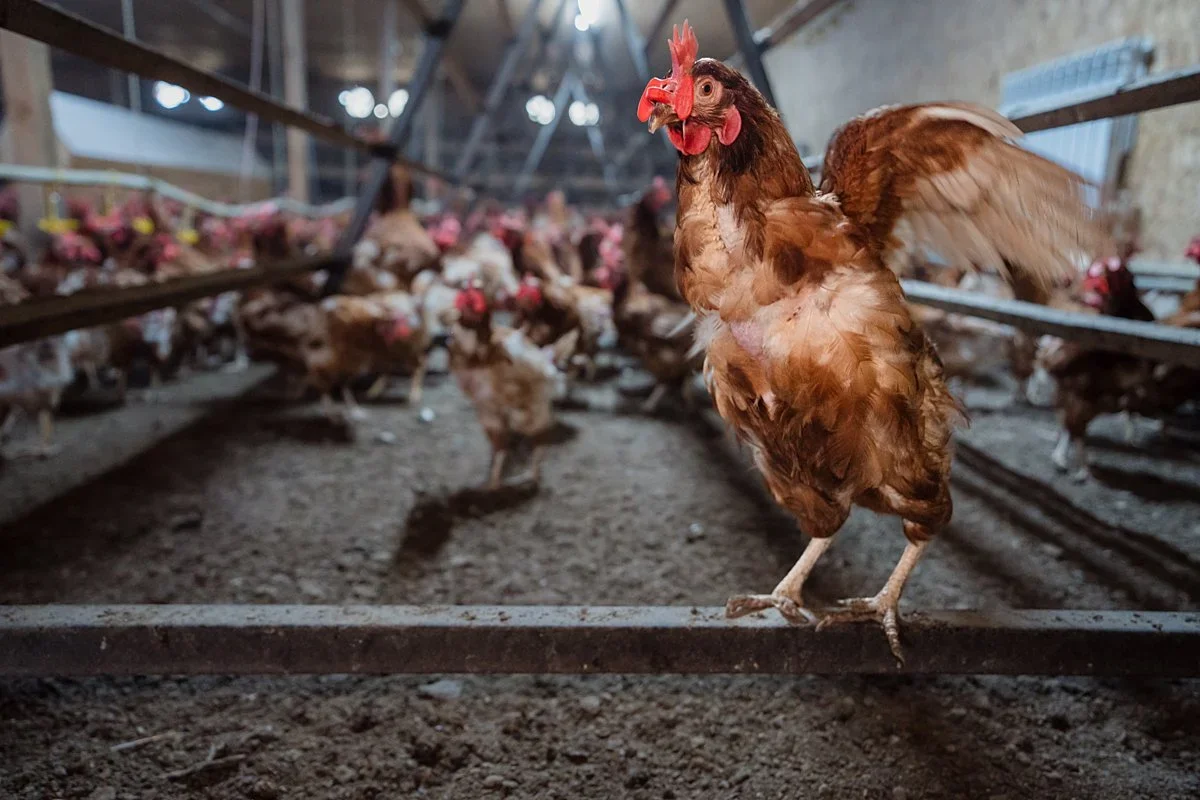
Three crates of laying hens rescued from a cage-free organic egg farm
Rescue Is Not A Fix
Some people ask whether rescuing chickens is the answer. It is kinder than buying chicks. It is still not a solution.
Rescued hens still live in bodies shaped by the same breeding problem. They still need lifelong care. They still face bone disease and reproductive illness.
Rescue is care for an individual bird. It is not a way to justify the system that produced her suffering in the first place.
The Fundamental Problem
The fundamental problem is not just where the hen lives. It is what she was bred for and how humans are taught to see her.
A backyard coop can look nothing like a factory farm and still run on the same idea: that a chicken exists to produce something for us. Eggs. Fertilizer. Pest control. Entertainment. Once that is the deal, her worth becomes conditional.
She matters while she lays. She matters while she is easy. She matters while she fits the story people wanted to tell themselves about “ethical eggs.”
Then the eggs slow. Then the vet bill comes. Then a rooster crows. Then a predator gets in. Then the fantasy breaks.
The setting changed. The logic did not.
That is why backyard eggs are not an escape from exploitation. They are a smaller, prettier version of it.
What Actually Reduces Harm
-
This is the direct answer. If people stop buying eggs, hatcheries hatch fewer chicks.
Plant-based alternatives already exist for baking, cooking, and breakfast. Eggs are not essential.
-
Sanctuaries give chickens a home without asking them to produce anything in return.
That matters. It is care without exploitation.
-
Ban or phase out male chick culling. Improve flock welfare rules. Fund alternatives to animal agriculture. Strengthen disease prevention and biosecurity.
Personal choices matter. Policy changes reach farther.
-
Most people have never been told where chicks come from or what happens when hens stop laying. Say it plainly. Share the facts. Don’t soften the story just because the system is familiar.
The Truth Under the Coop.
The backyard chicken boom is powered by good intentions. People want control. They want cheaper eggs. They want to believe they are doing better than factory farming.
But backyard chickens do not free anyone from the egg system. They extend it. They recreate it in smaller yards and prettier coops.
Chickens do not exist to produce eggs for us. They are not egg machines. They are living beings with bodies that hurt under the pressure we bred into them.
Chickens deserve more than a prettier version of the same system. They deserve lives that are not built around what their bodies can produce for us. If this page changed how you see backyard eggs, the next step is simple: stop funding the system that depends on them.
If you want it a little more like the tone of the hen-history page, the last two lines could be:
Chickens deserve lives that are not built around what their bodies can produce for us.
-
San Antonio News - "America's backyard chicken boom explained" (October 2025) https://san.com/cc/americas-backyard-chicken-boom-explained/
Ainvest - "Americans raising backyard chickens surge by 28%" (April 2025) https://www.ainvest.com/news/americans-raising-backyard-chickens-surge-by-28-due-to-soaring-egg-prices-and-bird-flu-outbreaks-11-million-households-now-own-flocks/
Audacy - "Backyard chicken ownership is skyrocketing" (February 2025) https://www.audacy.com/krld/news/national/backyard-chicken-ownership-is-skyrocketing
The Humane League - "The Truth About Chick Culling" https://thehumaneleague.org/article/chick-culling
ASPCA - "Hatching a Plan to End a Cruel Practice" https://www.aspca.org/news/hatching-plan-end-cruel-practice
Sentient Media - "Tech to End Chick Culling Has Now Been Implemented, but Challenges Remain" https://sentientmedia.org/tech-to-end-chick-culling-implemented-but-challenges-remain/
Colorado State University Extension - "Poultry" https://extension.colostate.edu/resource/poultry/
CDC - "Salmonella Outbreaks Linked to Backyard Poultry" https://www.cdc.gov/salmonella/outbreaks/saintpaul-04-26/index.html
CDC - "Salmonella Outbreak Linked to Backyard Poultry" https://www.cdc.gov/salmonella/outbreaks/mbandaka-05-01/index.html
Penn State - "Eggs from small flocks more likely to contain Salmonella enteritidis" https://www.psu.edu/news/research/story/eggs-small-flocks-more-likely-contain-salmonella-enteritidis
United Poultry Concerns - "Karen Davis on the Ethics of Keeping Backyard Hens for Eggs" https://www.upc-online.org/backyard/180521_karen_davis_on_the_ethics_of_backyard_hens_for_eggs.html
NPR - "The Truth Behind Abandoned Backyard Chickens" https://www.npr.org/sections/thesalt/2013/07/10/200699728/hipsters-off-the-hook-the-truth-behind-abandoned-backyard-chickens
UF/IFAS - "Backyard Chicken Basics" https://blogs.ifas.ufl.edu/indianriverco/2023/03/24/backyard-chicken-basics/
Further Reading
Cage-Free Eggs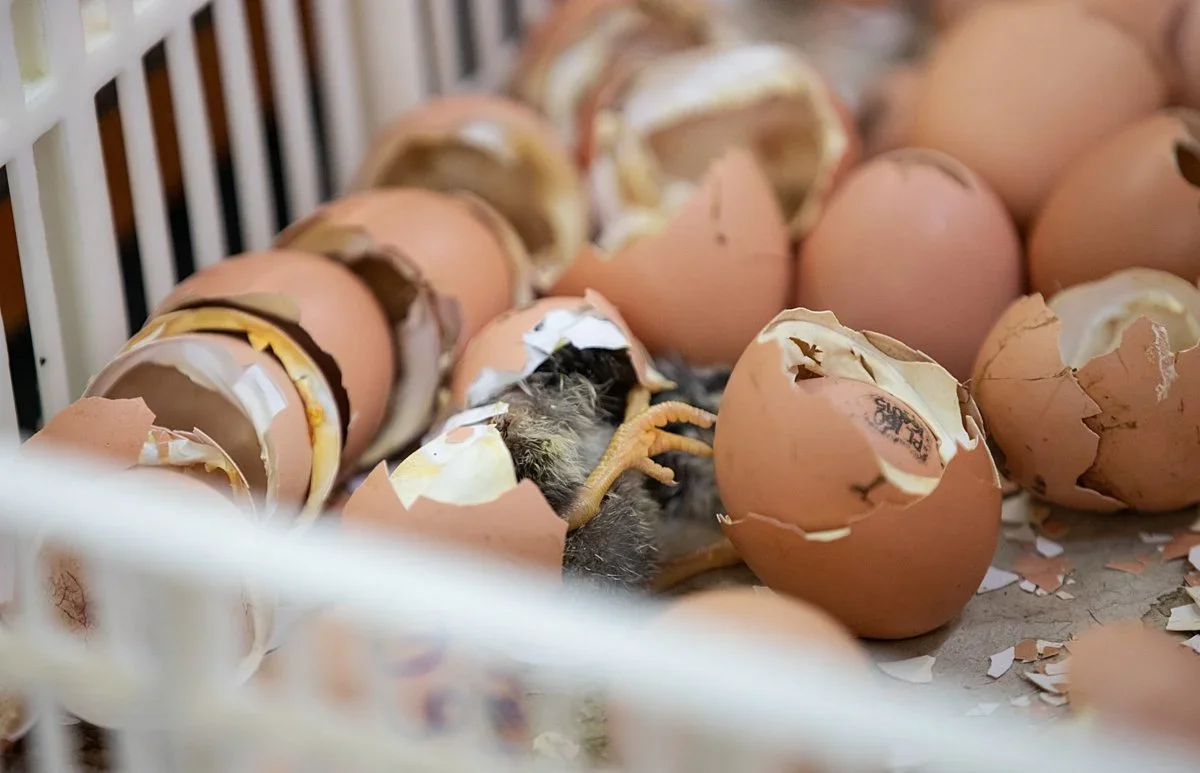
Health
EGG INDUSTRY