
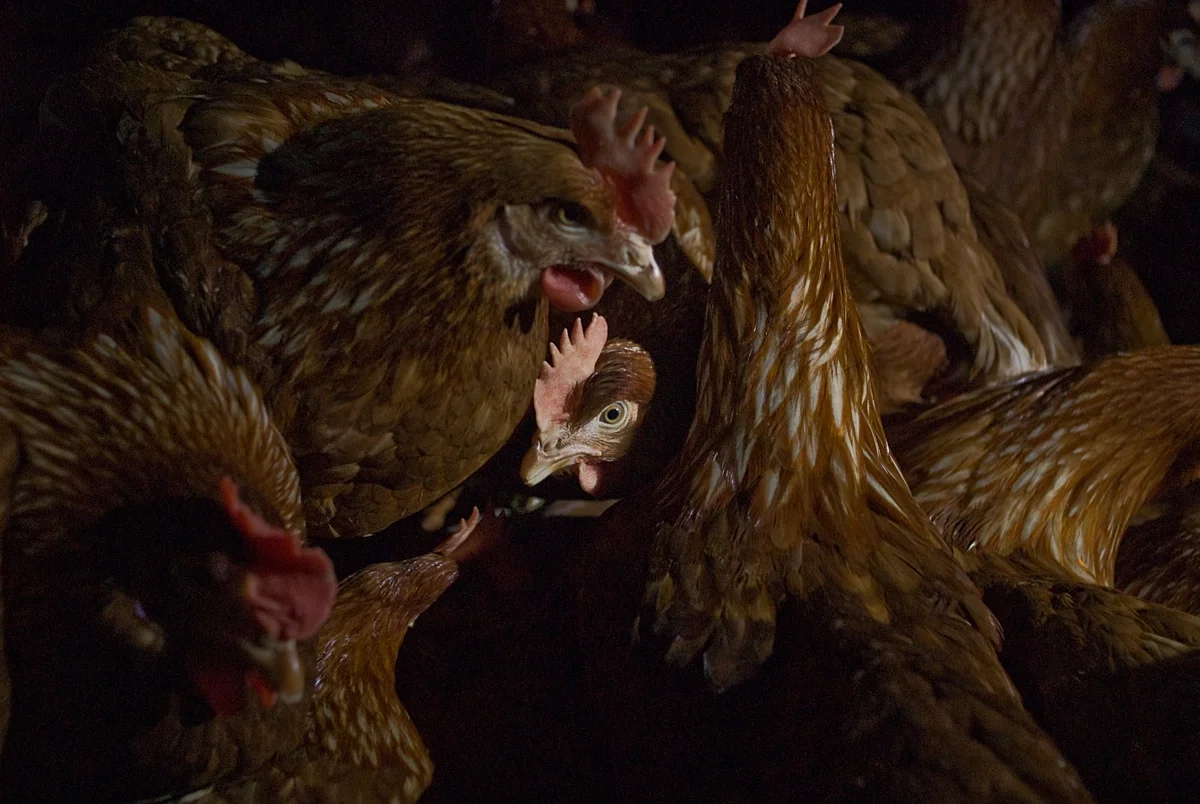
The Truth About Cage-Free Eggs
Photo credits: WeAnimals
You chose the cage-free carton. You paid more for it. You made that choice because you thought it meant something.
Here is what it legally required.
KEY FACTS BOX
Before you read further
Cage-free does not require outdoor access in the major egg-producing countries covered here: the US, UK, EU, Canada, and Australia.
Cage-free does not require a minimum amount of space per hen.
Cage-free does not prevent beak trimming.
Cage-free does not prevent the culling of male chicks.
US per-capita egg consumption remained at historically high levels during the cage-free campaign.
This page explains what cage-free does and does not require, what happens inside these barns, and what four things remain true no matter which carton you pick up.
Contents:
What cage-free actually requires by law
Cage-free means hens are housed indoors without individual wire cages. They can move around inside a building, room, or enclosed area and have continuous access to food and water. It is an indoor housing standard. In none of the major egg‑producing countries does “cage-free” by itself require outdoor access, a minimum amount of space per hen, a limit on flock size, protection from beak trimming, or any standard for air quality.
Cage-free is what happens when the industry removes the cage, but leaves the barn.
Canada
“Cage-free” is not defined in federal law. The closest regulated category is “free‑run”: hens are not kept in cages and remain indoors, with no legal requirement for outdoor access.
United Kingdom and European Union
Egg marketing standards recognize barn eggs (indoor, non‑cage), free‑range, and organic. “Barn eggs” are the cage‑free indoor system: hens are loose in the barn with no outdoor access required.
United States
For eggs that carry a USDA grade shield, AMS defines cage-free as eggs from hens housed in a building, room, or enclosed area that allows them to freely roam and provides unlimited access to food and water. The definition does not mention outdoor access, space per bird, flock size, or air quality.
Australia
There is no specific legal definition of “cage‑free” for eggs. National law regulates only the “free‑range” claim. Hens in barn or cage‑free systems are indoors with no outdoor access required.
What cage-free looks like in practice
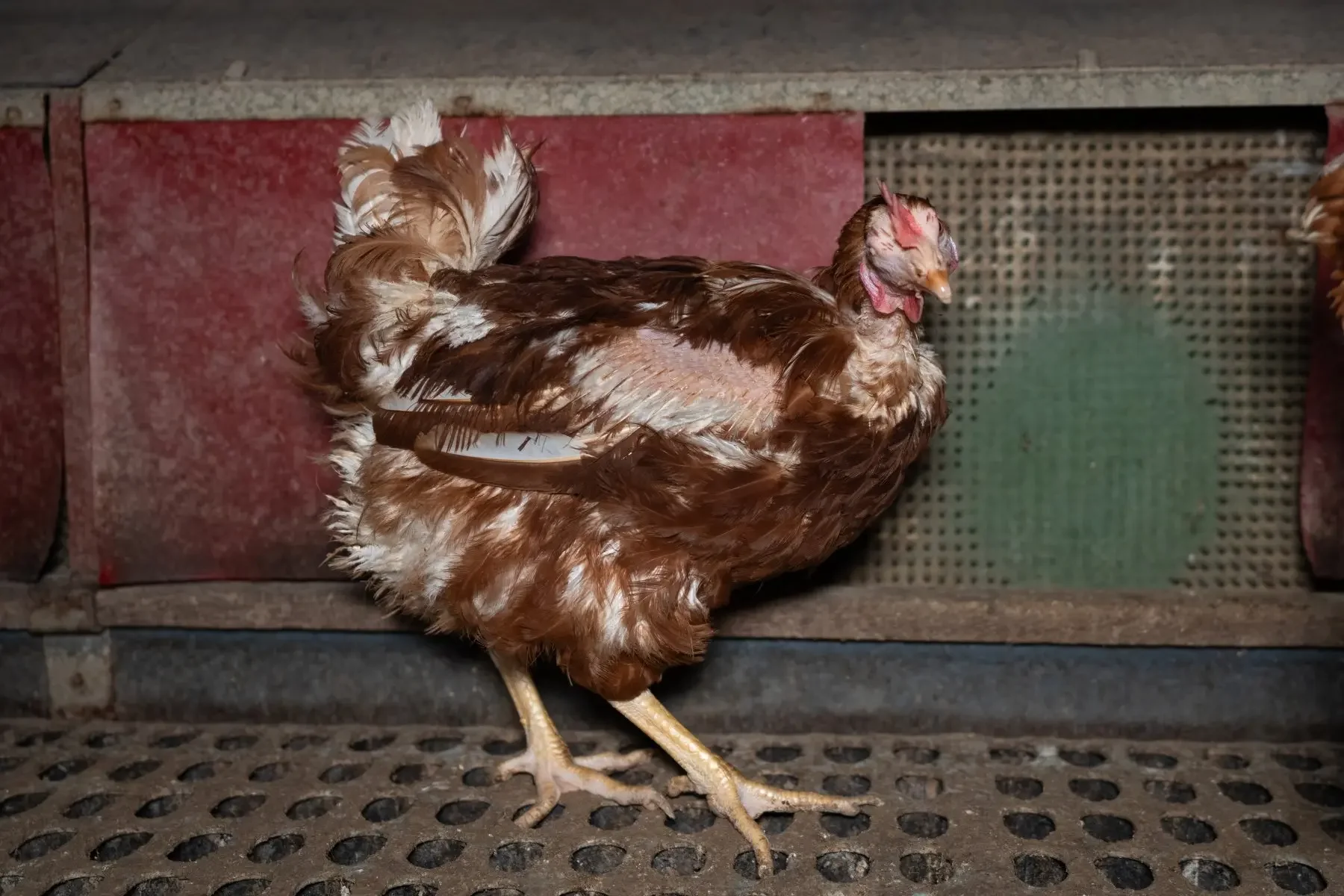
Picture a large industrial building. Inside it: tens of thousands of hens. Each one has roughly the space of a piece of letter paper: about 1 to 1.5 square feet of usable space per hen, depending on the housing system or company standard.
There are no individual cages. In a barn-only cage-free system, there is no requirement for a door to the outside. The ventilation is mechanical.
Ammonia concentrations in one comparative study averaged 21 to 42 parts per million in a multilevel system, compared with 3 to 12 ppm in furnished cages. Floor systems in the same study averaged 66 to 120 ppm. These figures come from a specific comparative study, not every cage-free barn. Ammonia levels vary with ventilation, manure removal, litter management, season, stocking density, and housing design.
A concentration of 25 ppm is commonly used as an occupational exposure benchmark. NIOSH lists 25 ppm as a recommended time-weighted exposure limit, while occupational studies have reported measurable pulmonary-function effects at lower ammonia concentrations in poultry workers. For hens, ammonia is also aversive. In preference tests, hens preferred fresh air over air containing approximately 25 or 45 ppm ammonia.
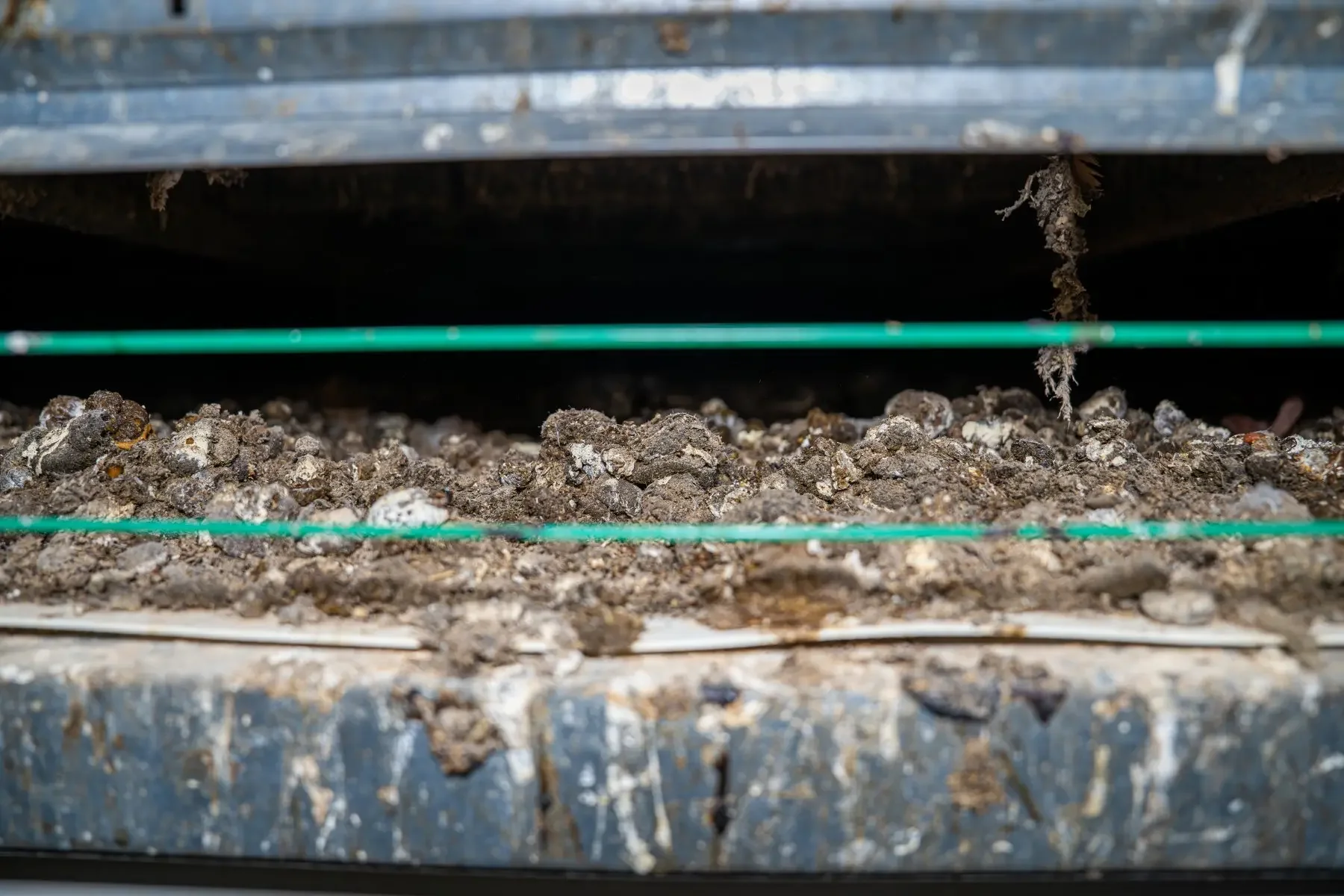
Dust concentrations are generally higher in aviary and floor systems than in cage systems. Comparative research has found respirable dust levels several times higher in non-cage systems, with reported differences in the range of roughly 3 to 9 times, depending on the system and measurement method.
Dust and feather accumulation can add to electrical and housekeeping fire hazards in poultry barns. In the Animal Welfare Institute dataset, egg-laying hens accounted for most of the recorded poultry fatalities. From 2022 to 2024, at least 2,534,800 farmed animals died in US barn fires. More than 98 percent were poultry, with egg-laying hens accounting for most of the poultry fatalities.
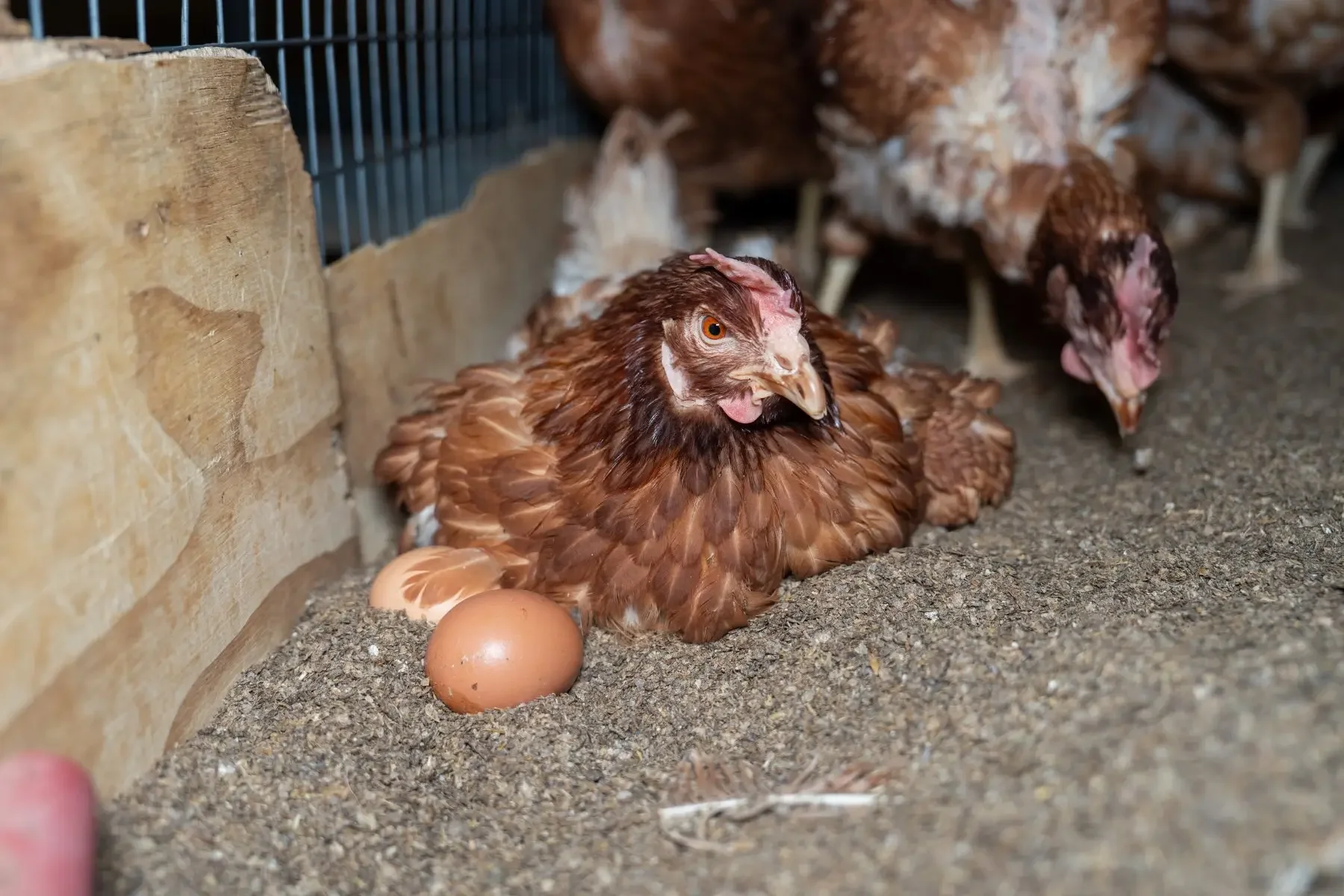
Cage-free systems are supposed to provide opportunities for behaviours such as nesting, perching, foraging, and dustbathing. But cage-free does not guarantee that hens receive enough suitable space or material to perform those behaviours. Reviews note that some cage-free systems provide little or no usable dustbathing substrate, and that litter can be quickly depleted, become wet, or be inaccessible to subordinate hens.
When suitable substrate is absent, hens may perform the movements of dustbathing without the material needed to complete the behaviour. Researchers call this sham dustbathing. The behaviour is attempted. The need is not satisfied.
The same distinction applies to nesting. A barn may contain nest boxes and still provide too little effective access for the number of hens, particularly when resources are crowded, blocked, or unevenly distributed. Competition around nest areas can contribute to frustration, piling, and smothering.
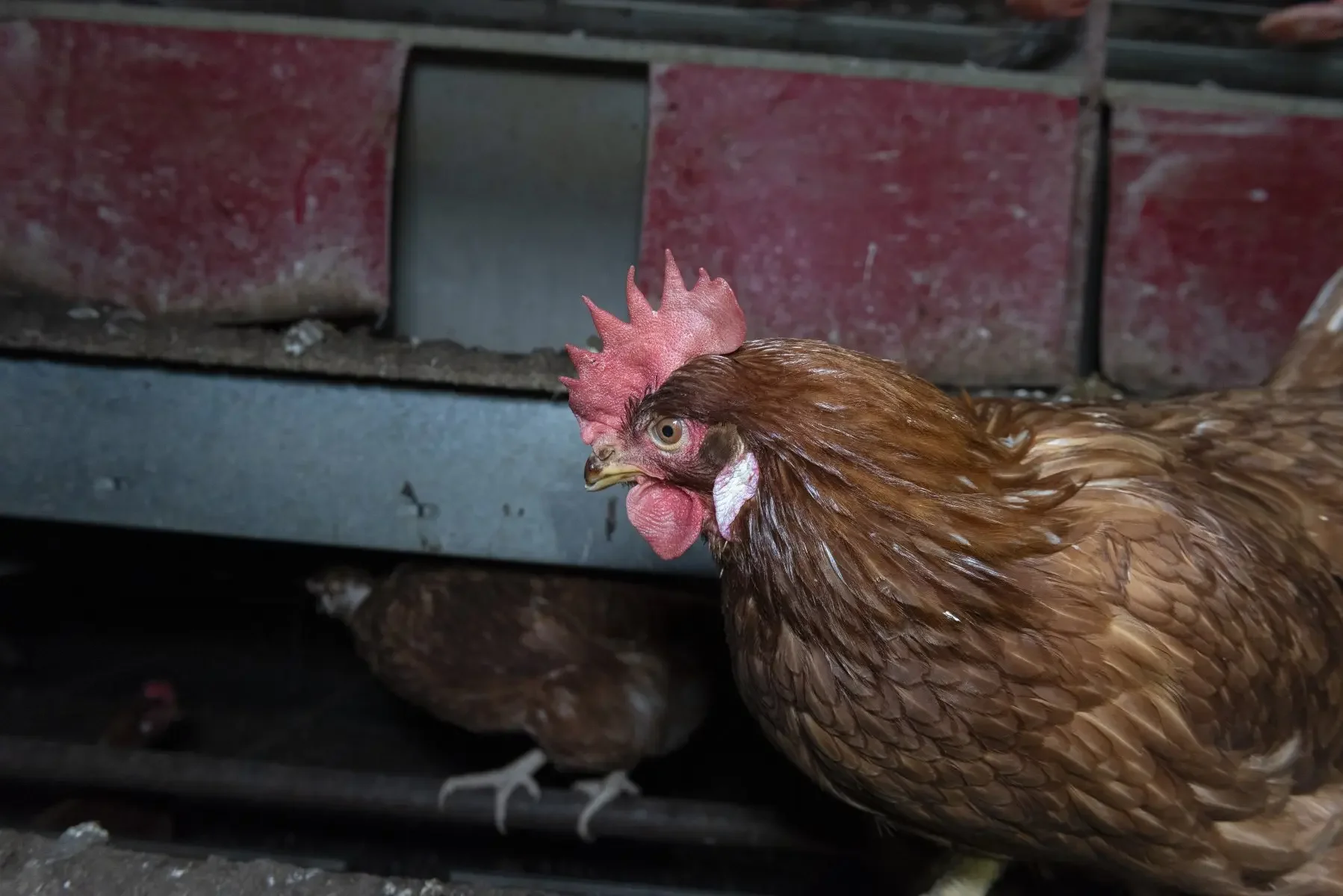
Beak trimming is common in commercial laying-hen systems, including cage-free systems (its use and legal conditions vary by country, certification, and management programme). It is generally used to reduce the risk of injurious feather pecking and cannibalism in large flocks.
The procedure does not remove the causes of pecking. It is a management response to them. Research and official reviews report that beak trimming can cause acute pain and may produce lasting changes to the beak, including sensory effects.
The industry calls this progress. The label removed the cage. It did not guarantee clean air, adequate dustbathing material, sufficient nest access, or freedom from social stress and injury.
The barn is only part of the picture. Here is what happens before a hen arrives, during her laying cycle, and when it ends.
What every egg carton has in common
Whatever label is on the carton, four features remain built into, or widespread across, commercial egg production. They are not only about the barn. They are about the system.
-
In commercial egg production, laying hens come from hatcheries. Male chicks cannot lay eggs and are not bred for meat. They have no economic value. Immediately after hatching, they are separated and killed. Ground alive or gassed. Globally, an estimated 6.5 to 7 billion male chicks are killed this way every year*.
This happens at organic farms in the UK. At free-range farms in Australia. At every cage-free facility in every country that has ever operated one.
The cage-free label is silent on this. So is every other label at your grocery store.
The chicks who survive the hatchery grow up motherless. No hen raised them. Chickens are acutely sensitive to each other's distress calls, and research shows that exposure to distress-call patterns affects stress responses in the birds who hear them. In a barn of tens of thousands, one bird's pain is not a private event. It travels.
*Some EU countries, including Germany, France, Austria, Luxembourg, and Italy, have adopted bans or restrictions on male chick culling, but those rules do not apply uniformly across Europe.
-
Wild red junglefowl, the ancestor of every domestic chicken, lays only small clutches: on the order of a few dozen eggs per year at most. Commercial laying hens produce 300 or more. Some high-performance commercial strains are selected for extended laying cycles exceeding 400 eggs per hen before slaughter.
This is not natural. It is the result of decades of selective breeding. Her body depletes calcium to produce each eggshell, leading to chronic bone loss. Researchers link high egg output directly to osteoporosis, keel bone fractures, and reproductive disorders including prolapse. These conditions occur in every commercial laying system, regardless of the label.
*The frequency and severity vary by strain, flock, housing, and management.
-
Studies of particular non-cage flocks have reported keel-bone fracture rates between 85 and 97 percent*. Causes include high egg production, bone depletion, collisions with perches and other structures, falls, and other mechanical forces.
Feather pecking has been reported in approximately 80 to 94 percent of surveyed cage-free flocks in some US research, but this is not a universal rate for every cage-free flock. Severe feather pecking can cause feather loss, skin wounds, infection, and cannibalism.
In large flocks, hens can pile on top of one another during moments of stress, panic, sudden movement, or competition for nest space. Smothering is a recognised risk in large-group, non-cage systems. Hens can pile onto one another, causing injury and death.
When highly pathogenic avian influenza reaches a commercial flock, USDA policy sets a goal of depopulating the affected premises within 24 to 48 hours. The primary methods vary by housing type. For floor-raised birds, water-based foam is a main method. Ventilation shutdown seals off airflow and may add heat or carbon dioxide. It is documented as a constrained procedure, used when preferred methods are unavailable or too slow. It can cause birds to die from heat stress, suffocation, or both.
By April 2025, USDA-reported outbreaks had resulted in the loss or depopulation of approximately 30.6 million laying hens in commercial table-egg operations. The figure included hens from both caged and non-caged systems and does not establish how many died by ventilation shutdown. USDA later reported that 50.7 million egg-laying hens were depopulated during the HPAI wave from mid-October 2024 through early March 2025.
Cage-free gives hens more room to move. It also gives them more opportunities to collide, compete, injure one another, and suffocate.
*prevalence varies by housing design, genetics, age, management, and the method used to detect damage
-
Chickens can live five to ten years. Commercial laying hens are typically slaughtered at 72 to 80 weeks, before the end of their second year, when their rate of egg production begins to decline. It is no longer profitable to feed them.
This is standard across the US, UK, Canada, EU, and Australia.
The cage-free label does not change this calculation. Neither does free-range, organic, or pasture-raised.
The Welfare Footprint Institute estimates that moving hens from conventional cages to indoor cage-free aviaries reduces thousands of hours of lower-intensity pain over the laying period. Its model finds little difference in estimated excruciating pain between housing systems. It also excludes several system-wide harms, including male-chick killing, selective breeding for high egg output, hatchery harms, transport, and early slaughter.
That calculation measures one phase of the hen’s life. It does not show that cage-free eliminates the worst pain or the wider harms of commercial egg production.
For a detailed breakdown of each label, read Part 1 of our ‘Cage-Free Illusion’ series.
The table below places every label side by side.
The label changes. The harms don't.
Every carton makes a different promise. Here is what each label actually requires by law, and which major harms the labels do not consistently address.
The table below shows what each housing label legally requires in the US, UK, Canada, EU, and Australia—and which core harms remain the same under every label.
Standards vary by country.
The bottom rows describe widespread structural features of commercial egg production. They are not eliminated by the label, although some countries have introduced restrictions or alternatives for particular practices.
-
FREE-RANGE
Free-range adds one thing: some access to the outdoors.
EU and UK: Continuous daytime access to open-air runs, maximum 2,500 hens per hectare, plus indoor space limits.
US: No federal minimum for time, frequency, or space. "Access to outdoors" has no legal definition for shell eggs.
Canada: Outdoor access is required, but no numeric minimum for space or hours is defined in federal law.
Australia: "Meaningful and regular" access required, maximum 10,000 hens per hectare, with density printed on the label.
Free-range changes the door. It does not change what happens at the hatchery, in her genes, or at end of lay.
ORGANIC
Organic comes closest to having detailed rules. It does not remove the core harms.
US (2023 Organic Livestock and Poultry Standards): Year-round outdoor access with weather and health exceptions, minimum indoor and outdoor space per bird, specific stocking density and housing design rules.
EU and UK organic: Continuous daytime outdoor access to runs, stocking density limits, organic feed, and additional welfare requirements.
Under the underlying US, EU, and UK rules, beak trimming may be permitted under specified conditions. Some private organic certification schemes may impose stricter requirements. Male chick culling, overbreeding for high egg output, and slaughter at end of lay all continue under organic labels. The label got stricter. The system did not change.
PASTURE-RAISED
Pasture-raised sounds like the strongest promise. For eggs, it is mostly marketing.
USA: No federal legal definition for shell eggs. USDA AMS requires third-party certification on graded cartons using the term. Certified Humane standards require at least 108 square feet of outdoor pasture per hen, with continuous access to rotated fields.
Canada, UK, EU, Australia: None has a statutory category for "pasture-raised." The term is voluntary marketing language.
When "pasture-raised" appears without a credible certification logo, it is a picture and a price, not a legal standard.
For a detailed breakdown of each label, read Part 1 of our ‘Cage-Free Illusion’ series.
The campaign to change this ran for a decade. Here is what it accomplished.
The cage-free campaign, and what it actually accomplished
Cage-free became one of the largest and most organised corporate campaign strategies in animal advocacy. Companies made pledges. Deadlines were set. Advocates declared progress.
During the same period, egg consumption remained high. In the United States, per-capita consumption rose from about 256 eggs per person in 2015 to nearly 292 in 2019, among the highest figures ever recorded, and remained high afterward. Globally, egg production more than doubled between 1990 and 2018 and has continued to rise. The campaign changed the housing label. The available consumption data does not show a corresponding reduction in demand.
The pricing data suggests that cage-free created a higher-priced product line. Cage-free eggs command a significant retail premium over conventional eggs, while published industry analysis finds that the additional cost to produce them is a fraction of that premium. The industry converted its facilities and built a higher-priced product line. The campaigns helped market the upgrade.
Asking a company to switch to cage-free eggs is not the same as asking it to use fewer eggs. The first request changes the housing system. The second reduces the number of animals required. The culling, selective breeding, early slaughter, and laying-related illnesses are not eliminated simply by changing the housing label.
Cage-free changes the cage. It does not change the system.
For the full economic picture, read Part 2 of our ‘Cage-Free Illusion’ series.
The system above has a number: approximately 304 million hens in the US egg industry.
Here is one of them.
Meet Rain
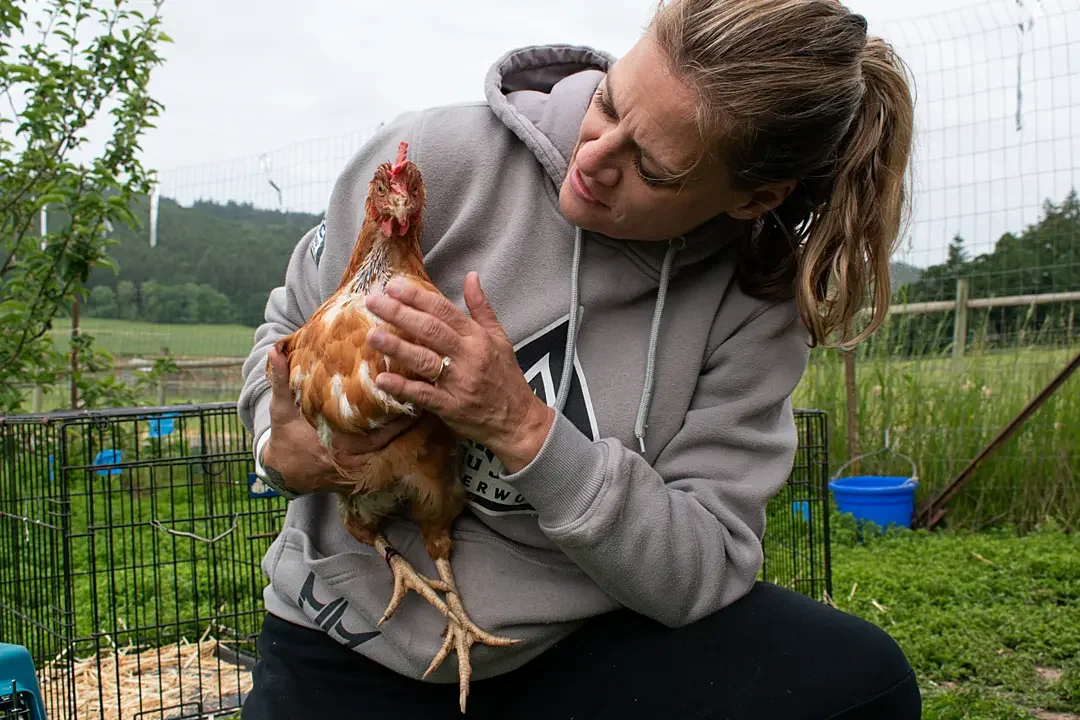
She was the last hen out. In April 2024, a cage-free, organic egg farm in Oregon shut down and posted on Craigslist. Hens for sale, $10 each. The ad called them layer machines. Local advocates organized. Three weeks. 435 hens rescued. Rain was the last one found, trapped under metal shelving while a rainstorm pounded the barn roof above her. Her rescuers named her for the sound.
The barn Rain came from looked ordinary from the outside. A building on a country road, easy to miss. Inside: dust, ammonia, thousands of hens in the dark. Eighteen months old. Already the age the industry calls spent.
She spent her first nights of freedom in the home of one of the people who found her. When she arrived at Wildwood Farm Sanctuary, she was missing feathers. Her body carried everything that eighteen months in that barn had done to it.
She began to heal. Feathers grew back. She found grass, dirt, open space. She let people touch her. In one photograph, she stands at the edge of her enclosure and looks out toward the fields beyond.
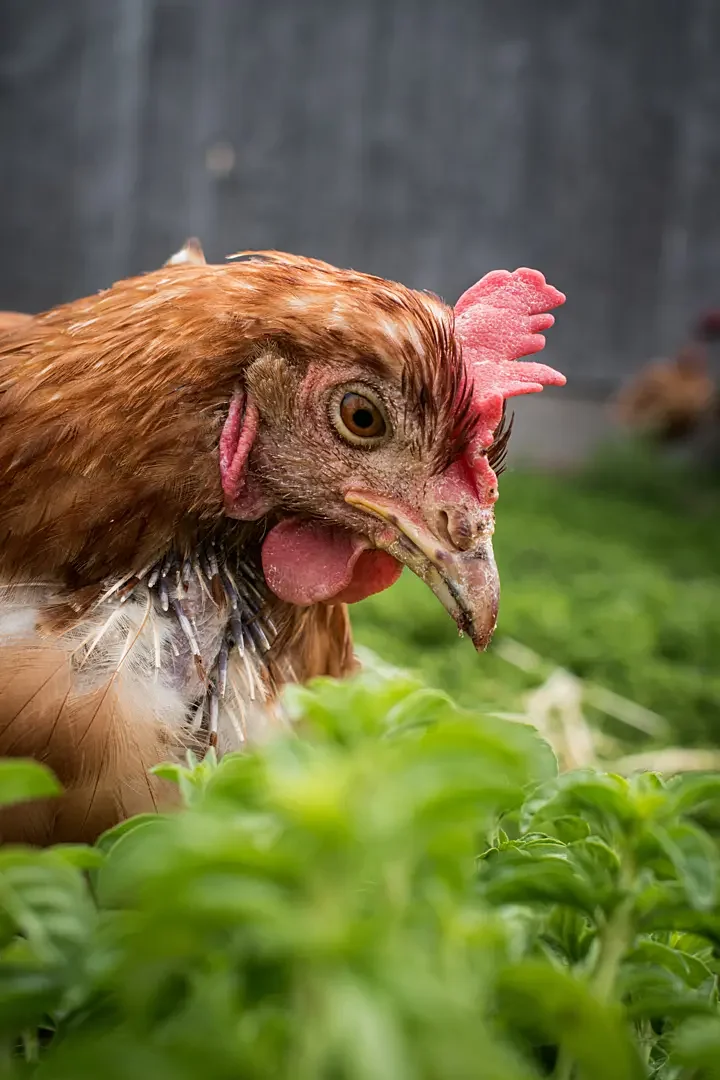
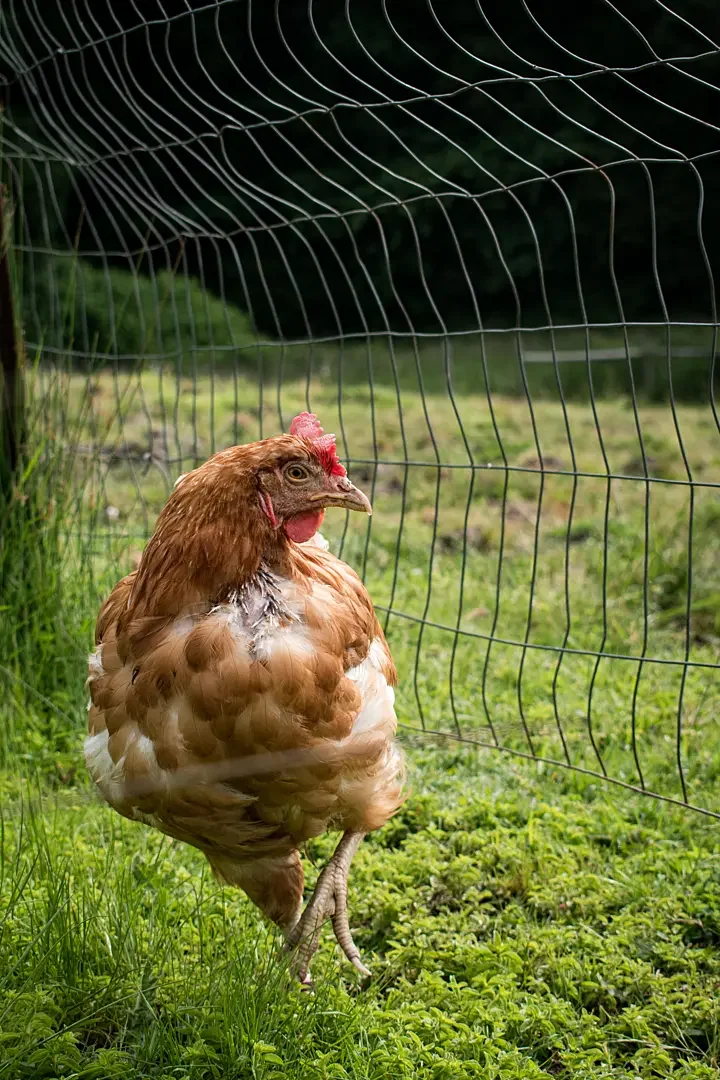
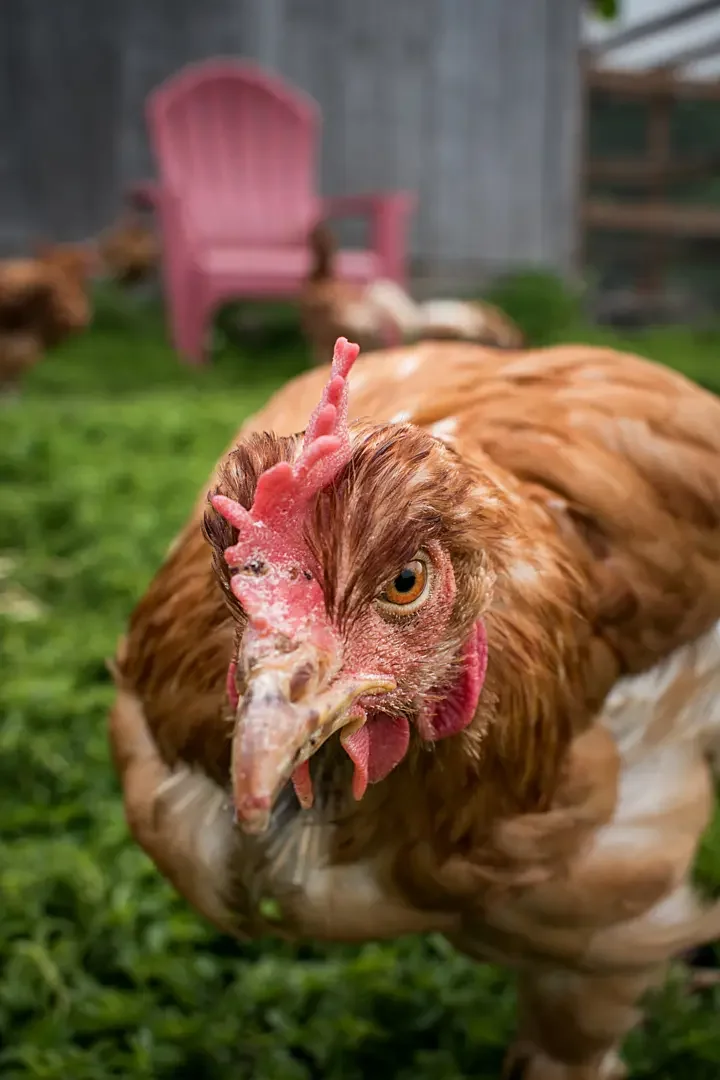
Rain is safe now. She has a name. She has people who know her face. Most hens in the system she came from don't.
The cage is gone. The system is not.
Egg-Truth exists because the industry depends on confusion. Help us keep the record clear.
FAQ
-
Cage-free means hens are housed indoors without individual wire cages. They can move inside a building and have continuous access to food and water. It is an indoor housing standard. It does not require outdoor access in the countries covered on this page: the US, UK, EU, Canada, and Australia.
-
No. Organic is a separate certification with additional requirements, including outdoor access and restrictions on feed and medication. Cage-free only addresses indoor housing. Both labels allow male chick culling*, overbreeding, and slaughter at end of lay.
*Some EU countries, including Germany, France, Austria, Luxembourg, and Italy, have adopted bans or restrictions on male chick culling, but those rules do not apply uniformly across Europe.
-
No. Cage-free is an indoor standard. It removes individual wire cages. It does not require outdoor access. This is true in the United States, Canada, and most commercial egg-producing countries worldwide.
-
In some ways. Hens in some cage-free systems can walk, perch, nest, and attempt to dustbathe, which a battery cage does not allow. Cage-free can also bring higher rates of keel-bone fractures during lay, feather pecking, and smothering, as well as greater exposure to disease risks, ammonia, and dust. Even the most comprehensive pro-cage-free welfare model finds little reduction in excruciating pain between systems. And it does not count male chick culling*, overbreeding, or slaughter at end of lay. The Welfare reviews have concluded that no single egg-farming system can be declared superior in every aspect of hen welfare.
*Some EU countries, including Germany, France, Austria, Luxembourg, and Italy, have adopted bans or restrictions on male chick culling, but those rules do not apply uniformly across Europe.
-
Free-range requires some outdoor access. Cage-free does not. In the EU, free-range requires continuous daytime access to open-air runs. In the US, no federal law specifies how much outdoor time, how often, or how large the space must be. In Canada and Australia, outdoor access is required but not precisely defined. Nowhere does the free-range label itself prevent male chick culling*, overbreeding, or slaughter at the end of lay.
*Some EU countries, including Germany, France, Austria, Luxembourg, and Italy, have adopted bans or restrictions on male chick culling, but those rules do not apply uniformly across Europe.
-
No. Cage-free removes one element of confinement. The central harms of commercial egg production apply to every system, regardless of label: around 6.5 to 7 billion male layer chicks are estimated to be killed globally each year, hens bred to produce many times the eggs their bodies evolved for, and slaughter before the age of two.
-
No single commercial egg label guarantees that male chicks were not killed. In most commercial egg supply chains, male chicks are still killed shortly after hatching. Some European countries, including Germany, France, Austria, Luxembourg, and Italy, have adopted bans or restrictions and require alternatives such as in-ovo sexing or rearing male chicks, but those rules vary in scope and exemptions.
Across commercial egg production, hens are selectively bred for very high egg output and are generally removed from production and sent to slaughter when their laying cycle becomes less profitable. These practices are not confined to bad actors or neglectful farms. They are structural features of commercial egg production.
-
Animal-free is moving in a direction cage-free cannot. It can replace eggs instead of simply rehousing the hens who produce them.
Cage-free scales the system. Egg-free can shrink it.
That is where the conversation should go.
Our Go Egg-Free Guide is free.
-
USDA Agricultural Marketing Service - “Questions and Answers: USDA Shell Egg Grading Service” https://www.ams.usda.gov/publications/qa-shell-eggs
USDA Agricultural Marketing Service - “Organic Livestock and Poultry Standards: Final Rule” https://www.govinfo.gov/content/pkg/FR-2023-11-02/pdf/2023-23726.pdf
European Union - “Rules on Marketing Standards for Eggs” https://eur-lex.europa.eu/EN/legal-content/summary/rules-on-marketing-standards-for-eggs.html
European Union - “Commission Implementing Regulation (EU) 2020/464” https://eur-lex.europa.eu/legal-content/EN/TXT/PDF/?uri=CELEX:32020R0464&from=PL
UK Government - “Egg Marketing Standards” https://www.gov.uk/guidance/egg-marketing-standards
Canadian Food Inspection Agency - “Outdoor Access for Organic Poultry” https://inspection.canada.ca/en/food-labels/organic-products/guidance-documents/outdoor-access-organic-poultry
BC SPCA - “Understanding Egg Labels” https://spca.bc.ca/news/understanding-egg-labels/
Australian Competition and Consumer Commission - “A Guide for Egg Producers” https://www.accc.gov.au/system/files/1484_Guide%20for%20egg%20producers_FA.pdf
Australian Certified Organic - “Australian Certified Organic Standard 2023” https://austorganic.com/wp-content/uploads/2024/02/Australian-Certified-Organic-Standard-2023.pdf
European Food Safety Authority - “Scientific Opinion: Welfare of Laying Hens on Farm” https://www.efsa.europa.eu/sites/default/files/2023-03/03-virginie-michel.pdf
Purdue University Extension - “Behavioral Challenges and Welfare Consequences of Cage-Free Housing” https://extension.purdue.edu/extmedia/AS/AS-694-W.pdf
Kristensen et al. - “Ammonia, Dust and Bacteria in Welfare-Oriented Systems for Laying Hens” https://pubmed.ncbi.nlm.nih.gov/19630203/
David et al. - “Aerial Dust Concentration in Cage-Housed, Floor-Housed, and Aviary Systems” https://pubmed.ncbi.nlm.nih.gov/24135584/
Toscano et al. - “Keel Bone Fractures in Laying Hens: A Systematic Review of Prevalence” https://pubmed.ncbi.nlm.nih.gov/32810250/
Herborn et al. - “Distress Calls as Social Stressors Affecting Chicken Welfare” https://pubmed.ncbi.nlm.nih.gov/41562568/
Welfare Footprint Institute - “Quantifying Pain in Laying Hens” https://welfarefootprint.org/book-laying-hens/
USDA APHIS - “HPAI Depopulation and Disposal” https://www.aphis.usda.gov/sites/default/files/hpai-depopulation-disposal.pdf
USDA APHIS - “HPAI Response: Ventilation Shutdown Plus Policy” https://www.aphis.usda.gov/sites/default/files/ventilationshutdownpolicy.pdf
Animal Welfare Institute - “Barn Fires: A Deadly Threat to Farmed Animals” https://awionline.org/wp-content/uploads/2025/10/awi-barn-fires-2025.pdf
American Egg Board / Incredible Egg - “Industry Data” https://www.incredibleegg.org/about-us/industry-data/
USDA National Agricultural Statistics Service - “Poultry Production and Value: January 1, 2025” https://data.nass.usda.gov/Statistics_by_State/California/Publications/Livestock_Releases/Poultry/2025/202501RVPOUL.pdf
FAO - “World Food and Agriculture: Statistical Yearbook 2020” https://openknowledge.fao.org/server/api/core/bitstreams/fe3b44ad-553a-4d2f-b8d9-d0ef1dc509ed/content
Egg Industry Center / Coalition for Sustainable Egg Supply - “The Cost of Cage-Free Transition and Proposition 12” https://www.eggindustrycenter.org/media/cms/Ibarburu_Prop12CostCF_800E51D54CF3D.pdf
USDA Agricultural Marketing Service - “Monthly Cage-Free Shell Egg Report” https://www.ams.usda.gov/mnreports/pymcagefree.pdf
The Humane League - “The Cage-Free Goal” https://thehumaneleague.org/article/cage-free-goal
Compassion in World Farming - “EggTrack” https://www.eggtrack.com/en/
PETA - “Failure of Cage-Free Housing Systems” https://www.peta.org/features/cage-free-white-paper-peta/
The Vegan Report - “Podcast Transcript, Episode 2957184” https://rss.com/podcasts/veganreport/2957184/?tab=transcript
RSPCA Australia - “What Happens with Male Chicks in the Egg Industry?” https://kb.rspca.org.au/categories/farmed-animals/poultry/layer-hens/what-happens-with-male-chicks-in-the-egg-industry
University of Copenhagen - “Technology Can Save Billions of Chicks from Being Killed” https://science.ku.dk/english/news-and-events/news/2023/11/technology-can-save-billions-of-chicks-from-being-killed/
We Animals Media - “Life Was on Our Side: The Hens Who Got a Second Chance” https://weanimals.org/project/life-was-on-our-side-the-hens-who-got-a-second-chance/
Good Food Institute - “2024 State of the Industry: Plant-Based Meat, Seafood, Eggs, and Dairy” https://gfi.org/wp-content/uploads/2025/04/2024_State-of-Plant-based_summary_GFI24005.pdf
Further Reading

EGG INDUSTRY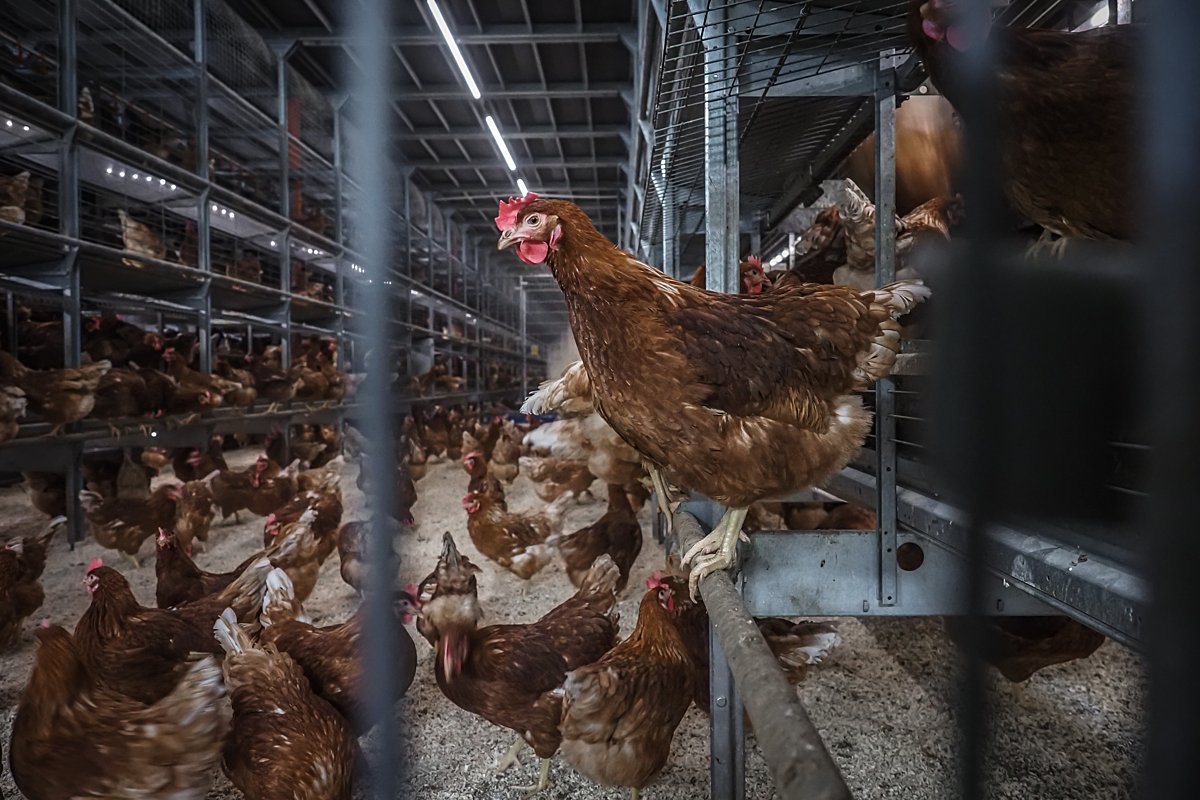
EGG INDUSTRY