The Cage-Free Illusion: Part 2
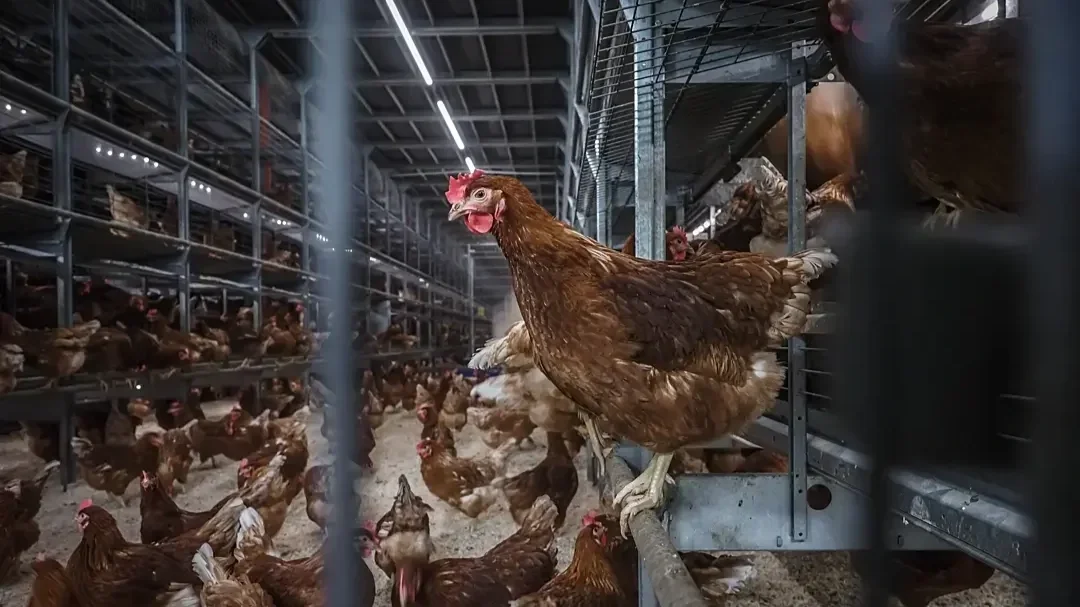
Image: Lukas Vincour via WeAnimals Media
edited July 2026Part 1 covered what happens inside a cage-free barn. The conclusion was simple. The cage is gone. The suffering is not.
Part 2 covers something harder. The organizations that campaign for cage-free eggs are not the egg industry. They are advocates who care about hens. Some have spent decades on this work. That is what makes the next question uncomfortable.
Did the cage-free campaign help the hens? Or did it help the egg industry sell more eggs at a higher price? For a full account of the barn conditions and the harms no label addresses, read Part 1 first.
Cage-Free: The Advocacy Movement
Since 2015, organizations including the Humane Society of the United States,Mercy for Animals, Animal Equality, Compassion in World Farming, The HumaneLeague, and World Animal Protection have campaigned to move the egg industry toward cage-free systems. Their strategy is direct: approach corporations,restaurants, hotel chains, and retailers, get them to commit to cage-free sourcing by a set deadline, track compliance, and apply pressure when companies fall short.


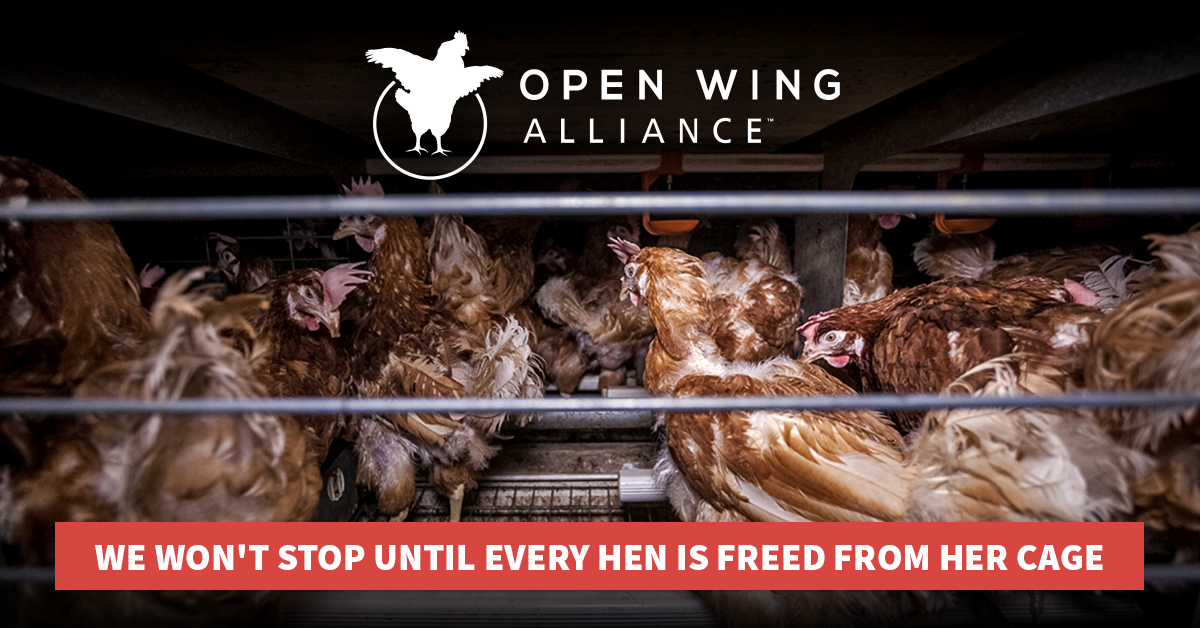


The campaigns have been large-scale and well-organized. Hundreds of companies have made pledges. Legislation has followed in some jurisdictions, and significant portions of the industry’s infrastructure have been converted or committed for conversion.
These organizations argue that incremental progress builds the foundation for larger change. They present a reduction in time spent in battery cages as a meaningful gain, even when the full structure of egg production remains intact.
Critics within the animal rights movement argue this framing measures the wrong thing. The question is not only whether individual hens suffer less in a cage-free barn. It is whether the campaign as a whole reduces the number of hens suffering at all.
The consumption data suggests it has not.
Cage-Free: Challenges and Limitations
Since 2015, the breakthrough year for major corporate cage-free commitments, US per-capita egg consumption rose from 256 eggs per person to a peak of 291.6 in 2019. It remained high after that, at 285.4 in 2020, 280.4 in 2021, 276.6 in 2022, and 287.4 in 2023. These are among the highest figures on record.
Some advocates have pointed to industry resistance as evidence the campaign is effective. The argument: if the egg industry is fighting back this hard, wemust be hitting them where it hurts.
The economics tell a different story.
The cage-free premium:
what the numbers actually show
At the shelf
Conventional eggs: ~$1.02/dozen (US advertised average)
Cage-free eggs: $2.34 to $2.83/dozen (US advertised average)
Retail premium: roughly $1.30 to $1.70 per dozen
In production
Extra cost to produce cage-free:~$0.24/dozen (a 36% increase over conventional)
USDA retail reports show cage-free eggs selling at a clear premium over conventional eggs, while industry studies estimate that cage-free production itself costs only modestly more than conventional production.
Capital conversion
Cost per conventional hen place: ~$15.14
Cost per cage-free hen place:~$39.39 (roughly 160% more)
Projected total US industry conversion investment: ~$9.5 billion
Who paid
Germany: ~€260 million in public funding for approximately 9 million cage-free hen places
Ireland: 40% government grant aid on qualifying poultry building conversions
EU: ongoing use of Common Agricultural Policy grants and national schemes in some member states
US: USDA research grants including direct funding for cage-free system development
The industry was asked to spend roughly $9.5 billion on conversion. A portion of that cost was absorbed by European taxpayers. The ongoing retail margin on cage-free eggs is multiple times the additional production cost.
*Sources: USDA Egg Markets Overview, July 2026;USDA cage-free retail report, June 2026;Egg Industry Center comparative analysis (Coalition for Sustainable Egg Supply)
"Now they're selling their eggs for a lot more money," said Dr. Crystal Heath, a veterinarian who has investigated cage-free facilities directly. "They're making billions of dollars a year off of their investment."
The conversion costs were a one-time expense. The premium margin is permanent.
"You're marketing a premium product," Dr. Heath continued, "and activists are now doing that free marketing for them, promoting the idea of cage-free eggs. We're doing free marketing for the animal exploitation industry. And that is so disturbing to me."


A second concern runs deeper. The cage-free campaigns primarily addressed one phase of a hen's life: the housing period during lay. Male chick culling, selective overbreeding, and early slaughter were treated as issues for a later campaign.
Some animal welfare researchers measure suffering in terms of total hours of pain per hen across a laying cycle. These measures can show improvement when housing conditions change. What they cannot show is whether the campaign reduced the number of hens in production. If consumption goes up while conditions marginally improve, the total amount of suffering in the system may rise, not fall.
Cage-Free: Insights from Consumers
The campaigns have had measurable effects in some markets. In some markets, cage-free eggs have reached substantial market share, including the UK and Australia. In the United States, the transition has been slower. The more important question is not whether consumers switched from battery cage to cage-free. It is whether they bought fewer eggs.

They did not. Per-capita egg consumption rose in countries with strong cage-free adoption and those with weaker adoption alike. Consumers who switched to cage-free did not reduce the number of eggs they bought.
This is the core mechanism. A welfare campaign can increase consumer comfort with a product. When it succeeds on those terms, demand does not fall. It stabilizes. The premium product replaces the commodity. The hens are still there.
Cage-Free: Perspectives from Farmers
"It actually took farmers a really long time to figure out how to put the bird in the cage. It's going to take a while to figure out how to get them back out." — Egg industry representative, Wired, 2016
A 2023 United Egg Producers survey captured the industry's internal view:
62% considered conventional housing better for sustainability
55% did not consider cage-free better for animal welfare
The majority rated conventional systems superior for production efficiency and food affordability
This is not a group of farmers being persuaded. It is a group being required to transition regardless of what they believe. Many companies that committed to cage-free sourcing by 2025 have missed their deadlines, and campaign groups continue to track non-compliance.

“Views on which production method ranks best across different characteristics”
Source: “THE TRANSITION TO CAGE-FREE EGGS” via United Egg Producers
Beyond Cage-Free
There is a harder question underneath all of this. Not whether cage-free is better than battery cages, but whether campaigning for cage-free moves the world toward fewer hens in any system at all.
Some jurisdictions have now passed cage-free laws. The system is no longer just an industry practice. It has legal protection. The infrastructure is built. The premium market is established.
"Now there's cage-free laws further entrenching the cage-free industry," Dr. Heath noted. "We should be telling Crumbl Cookies to remove eggs from their products altogether," she said. "Not telling them to use cage-free eggs."
The case for egg-free over cage-free is practical. Egg-free alternatives have improved substantially in the past decade. The fastest‑growing part of the egg aisle is not cage‑free. It is animal‑free.
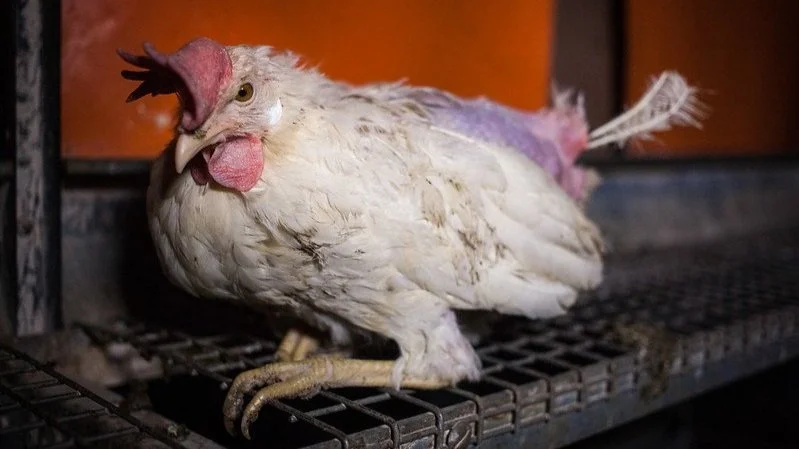
© Animal Justice Project
A campaign that reduces individual suffering while leaving the system intact is a humanitarian gesture. A campaign that replaces the product entirely is a structural solution.
"We don't have to lie to people," Dr. Heath said. "Everybody wants a future where animals are free and where people get access to nutritious food that meets their needs. Let's align our messaging with our real values and not tell ourselves a fake story in order to appease people. Let's start speaking the truth.”
That is what Egg-Truth is here for.
-
The Humane League - “Since 2015” cage-free goal page https://thehumaneleague.org/article/cage-free-goal
EggTrack / CIWF - “EggTrack 2023 report” https://www.ciwf.org.uk/media/7456432/ciwf_eggtrack_23-uk-f.pdf
Mercy for Animals - “Egg-quity Index” https://mercyforanimals.org/eggquity-index/
Mercy for Animals - “International Cage-Free Equity Index” https://file-cdn.mercyforanimals.org/mercy4animals.wpengine.com/sites/517/2021/11/ICEI-Report.pdf
American Egg Board / Incredible Egg - “Industry Data” https://www.incredibleegg.org/about-us/industry-data/
USDA ERS - “eggs.csv” https://www.ers.usda.gov/media/5333/eggs.csv?v=30269
USDA ERS - “Livestock, Dairy, and Poultry Outlook: July 2026” https://www.ers.usda.gov/publications/115092
USDA AMS - “Egg Markets Overview” https://www.ams.usda.gov/mnreports/ams_3725.pdf
USDA AMS - “Monthly USDA Cage-Free Shell Egg Report” https://www.ams.usda.gov/mnreports/pymcagefree.pdf
USDA AMS - “National Retail Report - Shell Egg and Egg Products” https://www.ams.usda.gov/mnreports/pywretailegg.pdf
Egg Industry Center - “The cost of cage-free transition” https://www.eggindustrycenter.org/media/cms/Ibarburu_Prop12CostCF_800E51D54CF3D.pdf
IEEP - “Financing the transition to cage-free farming in the EU” https://ieep.eu/wp-content/uploads/2026/04/Financing-the-transition-to-cage-free-farming-IEEP-2026.pdf
CNR-BEA - “Financing end cage farm EU” https://cnr-bea.fr/en/2026/06/18/financing-end-cage-farm-eu/
PAI - “29m welfare schemes for pigs farmers and poultry producers launched” https://pai.ie/466-8364-29m-welfare-schemes-for-pigs-farmers-and-poultry-producers-launched/
Purdue University - “Through the hen's eyes: $1 million grant to improve cage-free housing for egg-laying” https://ag.purdue.edu/news/2022/03/through-the-hens-eyes-1-million-grant-to-improve-cage-free-housing-for-egg-laying.html
WellBeing International - “The Effective Altruists’ Political Problem” https://www.wellbeingintlstudiesrepository.org/cgi/viewcontent.cgi?article=1003&context=acwp_awap
Welfare Footprint - “Book: laying hens” https://welfarefootprint.org/book-laying-hens/
Frontiers in Animal Science - “Full article” https://www.frontiersin.org/journals/animal-science/articles/10.3389/fanim.2022.995430/full?ga=2.235098113.1613092553.1712261812-2131417275.1709161718
The Vegan Report - “Podcast transcript” https://rss.com/podcasts/veganreport/2957184/?tab=transcript