Eggs and the Environment

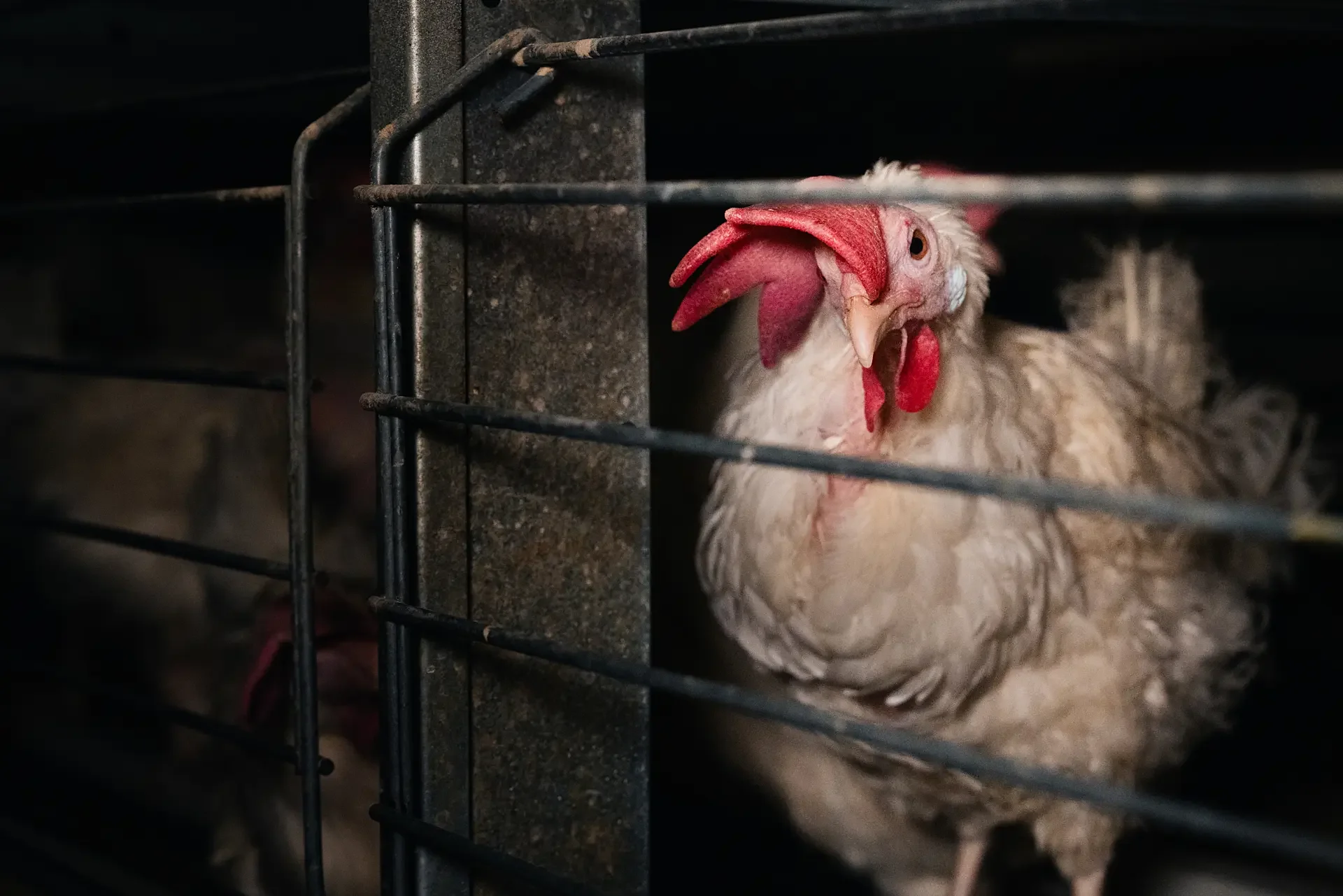
Photo credits: Marizilda Cruppe/Greenpeace

The Environmental Footprint of Eggs

Key Facts at a Glance

  • Egg production generates 5 to 10 times more greenhouse gas emissions than plant-based proteins like tofu, lentils, and peas — even in the most "efficient" systems.[1][2][3]

  • The egg industry's celebrated environmental improvements since 1960 came primarily from one source: forcing hens to produce 67-178% more eggs through genetic manipulation, intensifying the exploitation of individual birds. [4][5]

  • Feed production accounts for 50-75% of egg production's total environmental footprint, driven by resource-intensive cereals and soy that require synthetic fertilizers, land clearing, and long-distance transport. [6][7][8]

  • "Higher welfare" systems like organic and free-range often have worse environmental impacts than cage systems — organic eggs can require up to 2.7 times more feed and generate 40-65% higher emissions. [7][9]

  • Switching from any egg system to plant-based proteins reduces land use by 60-75%, water use by 50-70%, and emissions by 80-90% for equivalent protein. [1][2][3]

Image caption

Understanding Egg Production's Environmental Impact

Global egg production supplies over 80 million metric tons of eggs annually, making it a significant component of the global food system.[6][10] The industry promotes eggs as an efficient animal protein with lower environmental impacts than beef, pork, or chicken meat. While this comparison is technically accurate, it obscures a more important reality: eggs still generate dramatically higher environmental impacts than plant-based proteins across every metric. [1][2][3][11]

When industry reports celebrate reduced environmental footprints, they measure efficiency per kilogram of eggs produced. What they don't emphasize is how those efficiency gains were achieved: primarily by breeding hens to produce far more eggs than their bodies were designed to handle, causing widespread physical deterioration and suffering that enables the appearance of environmental progress. [4][5][12]

(*For more on the animal welfare costs of egg production, see our dedicated welfare page.*)

The Numbers Behind the Industry Narrative

Between 1960 and 2010, the US egg industry reported substantial environmental improvements per kilogram of eggs produced: [4][5]

  • 71% reduction in greenhouse gas emissions

  • 71% reduction in eutrophying emissions

  • 65% reduction in acidifying emissions

  • 31% reduction in energy use

  • 81% reduction in land use

These figures appear in industry sustainability reports and are frequently cited as evidence of agricultural innovation and environmental responsibility. However, analysis of the underlying data reveals that 28-43% of these improvements came from what industry calls "bird performance"— a euphemism for genetic manipulation that forces modern hens to lay 300-500 eggs per year compared to 180-250 eggs in 1960. [4][5] This represents a 67-178% increase in productivity per hen, achieved through selective breeding that optimizes hens' bodies for maximum egg output regardless of the physical toll. [4][5][12]

An additional 30-44% of improvements came from feed composition changes, primarily shifting from animal-derived ingredients to plant-based sources, and 27-30% from background industrial efficiencies in fertilizer production and transport. [4][5] While these latter factors represent genuine improvements in agricultural systems, the largest single contributor to reduced environmental impact per egg remains the intensification of individual hen exploitation.

Importantly, despite these per-unit improvements, total US egg production increased 30% from 1960 to 2010 (from 59.8 to 77.8 billion eggs). [4][5] This means that while efficiency improved, the absolute environmental footprint of the industry remained substantial and continues to grow with global demand.

Comparison of greenhouse gas emissions across protein sources shows eggs have a lower carbon footprint than most animal proteins but higher than plant-based alternatives.

Comparing Eggs to Plant-Based Proteins: The Scale of Difference

The most critical environmental comparison isn't between eggs and beef—it's between eggs and the plant-based proteins that can replace them nutritionally. When evaluated per unit of protein, the differences are stark and unambiguous.

Greenhouse Gas Emissions

Eggs produce approximately 4.21 kg CO₂-equivalent per 100 grams of protein —significantly lower than beef (49.89 kg), lamb (19.85 kg), pork (7.61 kg), and even chicken meat (5.70 kg). [1][2][11] Industry materials frequently highlight this comparison to position eggs as an environmentally responsible protein choice.

However, when compared to plant-based proteins, the picture changes dramatically: [1][2][3][11]

  • Tofu: 1.98 kg CO₂e per 100g protein (53% lower than eggs)

  • Lentils: 0.84 kg CO₂e per 100g protein (80% lower than eggs)

  • Peas: 0.40 kg CO₂e per 100g protein (90% lower than eggs)

This means that switching from eggs to lentils reduces climate impact by a factor of five. Switching to peas reduces it by a factor of ten. Even in the most efficient egg production systems, emissions remain 5-10 times higher than plant proteins providing equivalent nutrition. [1][2][3]

When measured per kilogram of protein rather than per 100 grams, one study found that free-range eggs produce only 0.2 kg CO₂e — lower than all meat sources. [13][14] While this figure appears favorable, it still represents substantially higher impact than tofu and exponentially higher impact than legumes, which produce negligible emissions per kilogram of protein.

Water and Land Use

Resource efficiency follows similar patterns. Eggs require approximately 53-60 liters of water per kilogram of eggs, which translates to significantly less water than beef and about 75% less than chicken meat on a per-calorie basis. [6][10][15] However, when compared to plant proteins, eggs still require similar or higher water inputs — approximately 1.07 times the water required by beans when normalized for protein content. [11]

Land use presents an even more striking contrast. Eggs require approximately 5.9 m² per kilogram of protein, compared to 164 m² for beef. [11] Industry frequently cites this 28-fold difference as evidence of sustainability. Yet beans require less than half the land of eggs —eggs demand 2.43 times more land than kidney beans for equivalent protein. [11] In absolute terms, shifting from eggs to plant proteins could reduce land use by 60-75% while providing the same nutritional value. [2][3][11]

Energy Consumption

Energy use in egg production ranges from 12.3 to 20 MJ per kilogram of eggs, depending on the production system, with feed production accounting for 50-75% of total energy consumption. [6][7][8] Plant-based proteins typically require 3-5 MJ per kilogram of protein equivalent — representing a 60-75% reduction in energy demand. [2][3]

The table below summarizes these critical comparisons:

Source: Compiled from multiple life cycle assessments and meta-analyses [1][2][3][11]

Image caption

Feed: The Dominant Environmental Driver

Across all credible life cycle assessments of egg production, feed emerges as the single largest contributor to environmental impacts, accounting for 50-75% of the total footprint depending on the impact category examined. [6][7][8] In Czech Republic production systems, feed represented approximately 50% of total environmental impact across all housing systems studied. [7][9] US research found that feed accounts for 54-75% of primary energy use and 64-72% of global warming potential in egg production. [7][8]

Why Feed Dominates the Footprint

The environmental burden of feed stems from multiple sources throughout the production chain: [6][7][8]

  • Synthetic nitrogen fertilizer production represents one of the largest contributors to feed-related emissions. Manufacturing nitrogen fertilizer requires substantial energy inputs and generates significant greenhouse gas emissions. These fertilizers are applied to cereal crops (corn, wheat, barley) and soy that form the foundation of laying hen diets. [6][7]

  • Land use change associated with expanding soy and cereal production drives deforestation and habitat destruction, particularly in South America where much of the world's soy is grown. Currently, over 80% of the world's soybean crop goes to feeding livestock, including egg-laying hens. [6][10] This represents a direct competition between animal agriculture and more efficient food production systems.

  • Long-distance transport of feed ingredients adds substantially to the carbon footprint. Soy from Brazil or Argentina, corn from the American Midwest, and other ingredients travel thousands of kilometers before reaching egg production facilities. [6][7] One UK study found that approximately 63% of egg production emissions represent embodied carbon in poultry feed, primarily from these cereals and soy with associated high emissions from industrial nitrogen production, land-use change, and transport. [13][14]

Feed Conversion Ratio: The Critical Metric

The feed conversion ratio (FCR) — the amount of feed required to produce one kilogram of eggs—stands as the most critical factor influencing environmental performance. [6][7][8][9] Small changes in FCR create cascading effects across all environmental impact categories because they directly determine the quantity of resource-intensive feed required.

US egg production FCR improved dramatically from 3.44 in 1960 to 1.98 in 2010, representing a 42% improvement that contributed substantially to the reduced environmental impacts celebrated by industry. [4][5] However, this improvement was achieved primarily through genetic selection that bred hens whose bodies convert feed to eggs with maximum efficiency—regardless of the physical consequences for the birds themselves. [4][5][12]

Contemporary facilities report FCR ranging from 1.76 to 2.32, with continued genetic selection pressure to reduce this ratio further. [4][5] Different housing systems show varying feed efficiencies, which partially explains their differing environmental impacts: [7][9]

  • Battery and enriched cage systems: 1.98-2.2 FCR

  • Barn/cage-free systems: 2.2-2.4 FCR

  • Free-range systems: 2.0-2.6 FCR

  • Organic systems: 2.7-5.3 FCR

The dramatically higher FCR in organic systems—sometimes reaching 5.3—reflects lower hen productivity due to breed characteristics, feed quality variations, outdoor activity levels, and management practices. [7][9] This translates directly into proportionally higher environmental impacts across all categories.

Feed Composition and Sourcing

Changes in feed composition accounted for 30-44% of the environmental improvements observed in US egg production between 1960 and 2010. [4][5] The shift from animal-derived feed ingredients to plant-based sources, particularly the replacement of ruminant materials with porcine and poultry by-products and then increasingly to pure plant sources, reduced impacts substantially. [4][5]

However, heavy dependence on cereals and soy remains an environmental concern due to the associated emissions from nitrogen fertilizer production, land-use change, and long-distance transport discussed above. [6][7][13] The crude protein content of feed significantly influences environmental impacts through nitrogen excretion and subsequent ammonia emissions. Optimal protein formulation tailored to hen nutritional requirements at different life stages can reduce impacts without compromising production. [7][8]

Research on alternative feed sources—including insect proteins, agricultural by-products, food waste, and locally-sourced ingredients—shows promise for reducing the environmental footprint of egg production. [6][7][8] However, these alternatives face challenges related to nutritional adequacy, cost, availability at scale, and regulatory approval. More fundamentally, they don't address the core issue: even with optimized feed, egg production still requires substantially more resources than producing plant proteins directly.

Image caption

Production Systems: No Sustainable Choice

The egg industry offers consumers a spectrum of production systems—battery cages, enriched cages, barn/cage-free, free-range, organic, and pasture-raised. Marketing materials and retailer messaging frame these as meaningful environmental and ethical choices, with "higher welfare" and "sustainable" labels commanding significant price premiums. The reality revealed by comprehensive life cycle assessments: all systems involve substantial environmental impacts, and some "higher welfare" systems actually generate worse environmental outcomes than intensive confinement. [7][9][10]

The table below summarizes environmental performance across major production systems:

Battery and Enriched Cages: Environmental Efficiency Through Extreme Confinement

Based on equivalent protein from legumes/tofu [1][2][3][7][9]

Conventional battery cages and enriched/furnished cages remain common globally, though increasingly restricted or banned in Europe and parts of North America due to welfare concerns. [6][10][12] From a purely environmental perspective, cage systems demonstrate measurable advantages over alternative systems: they typically achieve the lowest greenhouse gas emissions (2.1-2.5 kg CO₂e per kg eggs), best feed conversion ratios (1.98-2.2), and most efficient resource use per unit of production. [7][9][10]

These efficiencies stem from environmental control that optimizes temperature, minimizes hen activity and associated energy expenditure, reduces mortality through isolation from disease vectors, and maximizes stocking density to reduce facility footprint per bird. [6][7][9] Manure management in cage systems is also more controlled, with belts or scrapers that facilitate collection and reduce ammonia emissions compared to floor systems where manure accumulates. [6][7]

However, even these “most efficient” systems still generate 5-10 times higher emissions than plant-based proteins providing equivalent nutrition. [1][2][3] The environmental efficiency is achieved through extreme confinement—hens in battery cages have just 432-750 cm² of space (less than an A4 sheet of paper), cannot spread their wings, perch, nest, or dust bathe, and suffer from numerous welfare problems, including bone fractures, foot injuries, and behavioral deprivation. [6][10][12] (*For detailed welfare information, see our dedicated animal welfare page.*)

The European Union banned conventional battery cages in 2012, though "enriched" or "furnished" cages with slightly more space and minimal amenities remain permitted. [10][12] Despite the environmental efficiencies, consumer rejection of caged eggs continues to drive industry transformation globally.

Comparison of greenhouse gas emissions across protein sources shows eggs have a lower carbon footprint than most animal proteins but higher than plant-based alternatives.

Barn and Cage-Free Systems: Higher Impacts Without Environmental Benefits

Barn or cage-free systems house hens indoors without cages, typically at densities up to 9 hens per square meter, with nesting boxes, perches, and litter areas but no outdoor access.[6][10][12] These systems have become increasingly common as retailers and food service companies respond to consumer demand for cage-free eggs, with production growing from just 4% in 2014 to 51% in 2019 across EU member states. [10][12]

From an environmental perspective, barn systems show intermediate to poor performance compared to caged systems. Greenhouse gas emissions range from 2.7-3.5 kg CO₂e per kg of eggs—representing a 15-40% increase over caged systems. [7][9] Feed conversion ratios are typically higher (2.2-2.4 vs. 1.98-2.2 for cages), reflecting increased energy expenditure from greater freedom of movement and social interactions. [7][9]

Water use increases substantially in barn systems due to poorer manure management and higher ammonia concentrations, ranging from 5.0-5.5 m³ per kilogram of eggs compared to 2.2-5.0 for caged systems. [7][9] Energy consumption is approximately 12-15% higher (14-15 MJ/kg vs. 12-13 for cages) due to larger housing footprints and increased ventilation requirements. [7][9]

Research comparing production systems explicitly states that cage-free systems show no environmental advantage over caged systems—the primary distinction is welfare-related.[6][10] In fact, some life cycle assessments found that barn systems had higher impacts across most categories due to increased feed consumption, higher mortality rates, and more challenging manure management. [7][9]

Free-range systems consume approximately 20% more energy than conventional caged facilities due to larger housing, expanded infrastructure, outdoor area management, and predator deterrence systems. [9][16] The paradox is stark: systems marketed as more "natural" and "sustainable" often deliver worse environmental outcomes while still involving the same fundamental issues of male chick culling, premature slaughter, and genetic manipulation for hyper-production.

Image caption

Free-Range and Pasture-Raised: The Welfare-Environment Trade-Off

Free-range production provides hens with outdoor access, typically requiring a minimum of 4 m² of pasture per hen under EU regulations, though actual access and pasture quality vary widely. [7][9] Pasture-raised systems, representing a premium category marketed as the highest welfare standard, offer even more extensive outdoor space—often 108 square feet (10 m²) or more per hen—allowing natural foraging, exploration, and social behaviors. [16][17]

These systems generate 20-65% higher environmental impacts per unit of production compared to cage systems: [7][9][13][16]

  • Greenhouse gas emissions: 3.2-3.5 kg CO₂e per kg eggs (vs. 2.1-2.5 for caged)

  • Feed conversion ratio: 2.0-2.6 (vs. 1.98-2.2 for caged)

  • Water use: 3.2-4.9 m³/kg (variable due to outdoor hydration needs)

  • Energy consumption: approximately 20% higher

The elevated footprint stems from several factors documented in life cycle assessments: [7][9][16]

  • Increased feed consumption for thermoregulation in outdoor environments and greater physical activity

  • Longer production cycles as hens age more slowly with outdoor enrichment

  • Higher mortality rates from disease exposure, predation, and environmental stressors

  • Greater land requirements for outdoor areas that must be rotated to prevent soil degradation

  • More complex manure management, with approximately half of the manure deposited outdoors

Paradoxically, while outdoor manure deposition reduces ammonia emissions from housing (a benefit), it increases nitrous oxide emissions from pasture—a more potent greenhouse gas. [7][9] The net effect on climate impact is typically negative compared to controlled housing systems.

Some research has found that free-range systems with excellent management can achieve lower impacts than poorly-managed cage systems, particularly when hens are well-suited to outdoor conditions, pasture is actively used rather than just nominally available, and feed is locally sourced. [7][13] However, even in these best-case scenarios, free-range eggs still generate 3-8 times higher emissions than plant-based proteins providing equivalent nutrition. [1][2][3]

Image caption

Organic: The Highest Environmental Impact

Organic egg production follows specific regulations regarding feed (certified organic, no synthetic pesticides or GMOs), outdoor access (required in most organic standards), prohibited practices (no antibiotics, routine medications, or synthetic amino acids), and often additional welfare requirements. [6][7][9] Consumers frequently assume that organic production represents the most environmentally sustainable option due to the elimination of synthetic pesticides and fertilizers in feed production.

Life cycle assessments reveal a more complex reality. Organic eggs demonstrate the highest greenhouse gas emissions among all production systems studied: 3.4-3.5 kg CO₂e per kg of eggs, representing a 40-65% increase over conventional caged systems. [7][9] This stems primarily from dramatically higher feed conversion ratios—organic systems show FCR ranging from 2.7 to 5.3, meaning hens require up to 2.7 times more feed to produce the same quantity of eggs compared to conventional systems. [7][9]

Research on Czech organic egg production found extreme variability in small organic farms, with FCR ranging from 3.72 to 5.3.[7][9] Some organic farms showed environmental impacts per kilogram of eggs that met or exceeded the worst-performing conventional systems across multiple categories.[7][9] Water use was substantially higher (6.0-8.1 m³/kg vs. 2.2-5.0 for caged systems), and energy consumption reached 20-21 MJ/kg—50-65% higher than caged production. [7][9]

The reduced efficiency stems from several factors: [7][9]

  • Lower hen productivity due to breed characteristics (organic often uses heritage or dual-purpose breeds, less optimized for egg production)

  • Feed quality variations and restrictions on synthetic amino acids that limit dietary optimization

  • Higher mortality rates and longer production cycles

  • Outdoor access increasing energy expenditure for thermoregulation and activity

  • Organic feed production requiring more land per unit due to lower yields without synthetic fertilizers

Importantly, while organic feed production itself generates lower emissions per kilogram due to the absence of synthetic nitrogen fertilizers (a genuine environmental benefit), the substantially lower feed efficiency more than negates this advantage. [7][9]

The trade-off is clear:
Reduced pesticide use and better soil health in feed production are overwhelmed by the need for 2-5 times more of that feed to produce each kilogram of eggs.

Research modeling scenarios where organic production achieved feed conversion ratios approaching conventional systems (through improved genetics and management optimized for organic conditions) found that impacts could be reduced by approximately 50%, bringing organic performance closer to cage-free systems.[7][9] However, this remains theoretical—current organic production consistently shows the highest environmental impacts per unit of production across multiple countries and studies.[7][9]

Image caption

The Uncomfortable Conclusion

Comprehensive life cycle assessments from the Czech Republic, United Kingdom, United States, Canada, Netherlands, and other countries consistently demonstrate that no egg production system achieves environmental performance comparable to plant-based proteins.[1][2][3][6][7][9][10] Even the most efficient systems (battery cages) generate 5-10 times higher emissions, use 2-3 times more land, and require similar or greater water inputs than beans, lentils, tofu, and other plant proteins.[1][2][3]

The systems marketed as "sustainable," "ethical," or "environmentally friendly"—free-range, pasture-raised, organic—consistently show worse environmental performance than the intensive confinement systems they're positioned against.[7][9][16] This creates a genuine dilemma for consumers who prioritize both animal welfare and environmental sustainability, as improvements in one dimension often come at the cost of the other.

However, this framing obscures a more fundamental point: all of these systems exist within the same paradigm of animal exploitation that involves male chick culling, genetic manipulation for hyper-production, premature slaughter, and the inherent inefficiency of cycling plant proteins through animal bodies rather than consuming them directly. The question isn't which system is least bad—it's why we continue any of these systems when readily available alternatives exist.

Greenwashing and Industry Narratives

The egg industry has developed sophisticated messaging around environmental sustainability that often obscures more than it reveals. Several narratives warrant critical examination based on what comprehensive research actually shows.


Industry claim

"We've Achieved Remarkable Environmental Progress"

The Claim: The egg industry has reduced its environmental footprint by 60-80% since 1960 through innovation, improved efficiency, and better management practices.[4][5][15][18]

the truth

What the data shows:

While per-unit impacts have indeed decreased, analysis of the underlying mechanisms reveals that 28-43% of these improvements came from "bird performance"—breeding hens to produce 67-178% more eggs through genetic manipulation.[4][5] This isn't environmental innovation; it's intensified exploitation that extracts more product from each animal's body. The efficiency improvement is real, but it was achieved primarily by optimizing hens as production units, with substantial welfare costs. (*See our welfare page for details on the physical consequences of hyper-production.*)

Additionally, total production increased 30% from 1960 to 2010 despite per-unit efficiency gains.[4][5] This means absolute environmental impact remained substantial, and globally, egg production continues to expand. Celebrating reduced impact per egg while producing billions more eggs represents a form of greenwashing that focuses attention on relative improvements while absolute impacts grow.


Industry claim

"Cage-Free and Free-Range Eggs Are More Sustainable"

The Claim: Often implied through marketing that positions "higher welfare" products as environmentally superior, or at minimum, environmentally neutral compared to conventional eggs.

the truth

What the data shows:

Research explicitly states that cage-free systems show no environmental advantage over caged systems—in fact, they often show higher impacts. [6][7][9][10] Free-range eggs generate 20-65% higher emissions than caged eggs, and organic eggs show the highest impacts of all systems studied. [7][9] The welfare improvements in these systems—which are real and significant—come with environmental costs that directly contradict sustainability claims.

This doesn't mean welfare isn't important. It means that marketing these products as "sustainable" is misleading when they consistently show worse environmental performance across greenhouse gas emissions, water use, land use, and energy consumption.[7][9][16]


Industry claim

"Our Innovations Benefit Both Animals and the Environment"

The Claim: Technologies like precision feeding, AI monitoring, in-ovo sexing, and improved housing design simultaneously benefit animal welfare and environmental sustainability.[17][19][20]

the truth

What the data shows:

These technologies optimize the existing production system without addressing its fundamental inefficiencies. Precision feeding may reduce waste by a few percentage points, but feed still accounts for 50-75% of total environmental impact regardless of optimization.[6][7][8] AI monitoring may detect health issues earlier, but it doesn't change the fact that hens are genetically manipulated to produce 300-500 eggs per year—far beyond natural rates—with associated physical consequences.

In-ovo sexing technology, promoted as solving the ethical crisis of male chick culling, still involves killing male embryos—it simply moves the killing from day-old chicks to 9-14 day embryos.[12][19] While this may represent an improvement, it doesn't fundamentally change the system that produces billions of unwanted male birds annually because of extreme genetic specialization.[12][19]

These innovations make exploitation more efficient and perhaps marginally less cruel. They don't make it sustainable when plant-based alternatives exist that eliminate the need for the system entirely.


Industry claim

"Circular Economy Approaches Make Egg Production Sustainable"

The Claim: Manure valorization as fertilizer, eggshell waste utilization for calcium products, biogas from manure, and local feed sourcing create closed-loop systems that approach carbon neutrality.[17][20][21]

the truth

What the data shows:

While these practices reduce waste and can improve specific aspects of environmental performance, they don't change the fundamental resource equation. Eggs still require 5-10 times more feed, land, water, and energy than plant proteins providing equivalent nutrition, regardless of how efficiently waste streams are managed.[1][2][3][7][9]

Circular economy principles applied to an inherently inefficient system can make that system somewhat less wasteful, but they can't overcome the basic biological reality: cycling plant proteins through animal bodies to produce eggs will always require more resources than consuming those plant proteins directly. Every kilogram of egg protein required 2-5 kilograms of plant protein in feed, along with associated land, water, and energy inputs that could have been avoided entirely.[6][7][8][9]


Industry claim

"Eggs Are Necessary for Food Security and Nutrition"

The Claim: Eggs provide affordable, nutrient-dense protein essential for feeding a growing global population, particularly in developing countries where animal protein access is limited.[6][10][22]

the truth

What the data shows:

This framing ignores that the plant proteins fed to hens (soybeans, peas, grains) could feed humans directly with far greater efficiency. For every 100 grams of protein produced in eggs, hens consume 200-500 grams of plant protein in feed, depending on feed conversion ratios and feed composition.[6][7][8][9] The protein, iron, calcium, and other nutrients in eggs can be obtained from plant sources—legumes, leafy greens, fortified plant milks, nuts, and seeds—at a fraction of the environmental cost.[1][2][3]

(For detailed information on plant-based nutrition as a complete replacement for eggs, see our nutrition page.)

The food security argument particularly fails scrutiny in wealthy countries, where egg consumption is highest and plant-based alternatives are readily available. In these contexts, eggs represent a choice, not a necessity—and that choice comes with substantial environmental consequences.


The Bottom Line: When Alternatives Exist, Eggs Aren't Sustainable

The egg industry wants consumers to believe that eggs can be produced sustainably—that with the right housing system, feed optimization, waste management, and technological innovation, egg production can be environmentally responsible. The comprehensive scientific evidence shows otherwise.

Environmental improvements since 1960 have been real in per-unit terms, but they came primarily from intensifying the exploitation of individual hens by breeding them to produce 67-178% more eggs, alongside genuine improvements in industrial efficiency and feed composition.[4][5] Even with these improvements, eggs generate 5-10 times more greenhouse gas emissions than plant-based proteins and require 2-3 times more land and similar or greater water for equivalent nutrition.[1][2][3][11]

Production system reforms—from caged to cage-free, conventional to organic—redistribute environmental impacts without eliminating them, and often make them worse. Research explicitly confirms that cage-free systems show no environmental advantage over caged systems, and organic eggs demonstrate the highest environmental impacts across multiple categories due to dramatically lower feed efficiency.[6][7][9][10]

Industry narratives about sustainability, circular economy approaches, and environmental innovation obscure a fundamental reality: cycling plant proteins through animal bodies to produce eggs will always require more resources than consuming those plant proteins directly. For every kilogram of egg protein, hens consume 2-5 kilograms of plant protein in feed, along with the land, water, and energy required to produce that feed.[6][7][8][9]

The question facing consumers, policymakers, and food system planners isn't which egg production system is most sustainable. The question is why we continue this system when readily available plant-based alternatives exist that provide equivalent nutrition at a fraction of the environmental cost and without the welfare concerns inherent to animal agriculture.

When beans, lentils, tofu, peas, and other plant proteins can provide complete nutrition while generating 80-90% lower emissions, using 60-75% less land, and requiring 50-70% less water, the continued production and consumption of eggs represents a choice—not a necessity.[1][2][3][11] And that choice has substantial environmental consequences that can no longer be justified by claims of "sustainable" or "responsible" production.

Take Action

  • Choose plant proteins: Replace eggs with beans, lentils, tofu, chickpeas, or commercial egg replacers in your diet. Every egg not consumed prevents the resource use documented above.

  • Question sustainability claims: When you see "sustainable eggs," “carbon-neutral eggs,” or "regenerative eggs," ask what data supports those claims and compare them to the plant-based alternative.

  • Share this information: Most people don't know that organic eggs have worse environmental impacts than cage eggs, or that all eggs generate 5-10x more emissions than plant proteins.

  • Support policy change: Advocate for honest environmental labeling that includes comparisons to plant-based alternatives, and for agricultural subsidies that support plant protein production rather than animal agriculture.

For more information on egg production's impact on hens, see our [Chickens section]. For plant-based nutrition that replaces eggs completely, see our [Eggs & Health] page.

Last updated: October 2025
For questions or corrections, contact: info@thetruthorganization.com

Further Reading & Resources

culling alternatives

In-Ovo Sexing

Step into the egg industry's latest buzz: In-ovo sexing. While sensationalized as “The cutting-edge technology trying to save millions of male chicks from being gassed” and “A Simple New Technique Could Make Your Eggs More Humane” by major media outlets, the truth is more complex.

pARENTING

Motherhood in the Egg Industry

The vast majority of farmed animals, are female, and they are often subjected to unspeakable cruelty in the name of food. This includes cows used for dairy, pigs used for breeding, and of course, the layer hens used for their eggs. But it's not just the layer hens that suffer in the egg industry—it's also their mothers.

Continue reading

GUIDE

The Ultimate Egg-Replacer Guide

Are eggs really necessary? Spoiler alert: they're not! Whether you're transitioning to a plant-based lifestyle or just looking for healthier, cruelty-free alternatives, vegan egg replacements make it easier than ever to whip up your favorite dishes without compromising on taste or texture.

Donate

Your donation helps expose industry myths and moves people toward compassion.

Make a donation