Health Juliane Priesemeister Health Juliane Priesemeister

Eggs and Health

Eggs and health - the fat and cholesterol found in eggs can harm heart health and lead to diabetes, as well as prostate and colorectal cancers.

File 2021-10-11, 6 08 46 PM.png

The fat and cholesterol found in eggs can harm heart health and lead to diabetes, as well as prostate and colarectal cancers.*

Bold claims - let’s dive into this and have a closer look at cholesterol, protein and why eggs are not the health food they are claimed to be.

Cholesterol

For almost five decades it has been conventional wisdom that dietary cholesterol should be limited. For the average person, this means consuming less than 300 mgs per day, and less than 200mg per day for hyper-responders, those with type 2 diabetes or pre-diabetes and those who are at risk of cardiovascular disease - which is most people who “expect to live past middle age”. For the record, one average-sized egg contains approximately 215 mgs of dietary cholesterol.

Despite these long-standing restrictions, a flurry of media reports recently has cited studies now claiming that dietary cholesterol does not actually increase overall cholesterol levels in the blood. These studies claim we no longer have to be concerned about these previous restrictions. In other words, feel free to eat as many eggs as you want! And, shockingly, some studies are even suggesting that eating eggs can actually reduce the risk of heart disease.

Even the United States Office of Disease Prevention and Health Promotion as far back as 2015 were advised by a panel to drop any recommendations that limit cholesterol intake. It is of particular interest to note that Dr. J. David Spence, professor of pharmacology and clinical neurology at the Robarts Research Institute, Western University in London, Ontario, Canada, has written extensively that this recommendation, has been “heavily influenced by propaganda from the egg industry”.

Protein

Some nutritionists will concede that it is just the egg yolk that should be avoided despite the industry propagating the myth that cholesterol in eggs is harmless. Nutritionists will advocate, however, for the consumption of egg whites because it is almost all protein.

While protein is essential in our diets, there is a balance between excessive and adequate. In other words, you can get too much of a good thing! IGF-1 (insulin growth factor) is a hormone in the blood that regulates the replenishment of old and dying cells with new ones in our body. Excessive protein consumption over time can elevate IGF-1 to abnormally high levels and promote cellular growth exceeding our natural requirements. Elevated levels of IGF-1 have been linked to various forms of cancer.**


To learn more about the harmful effects of egg consumption on human health, please visit our “Eggs and Our Health” page.


Please consider taking ‘Petunia’s Pledge’ below and enjoy the free live events organized by Catskill Animal Sanctuary.

Take Petunia’s Pledge to join an online community and free live classes.

Take Petunia’s Pledge to join an online community and free live classes.

Read More
About Us Nigel Osborne About Us Nigel Osborne

Welcome to Egg-Truth!

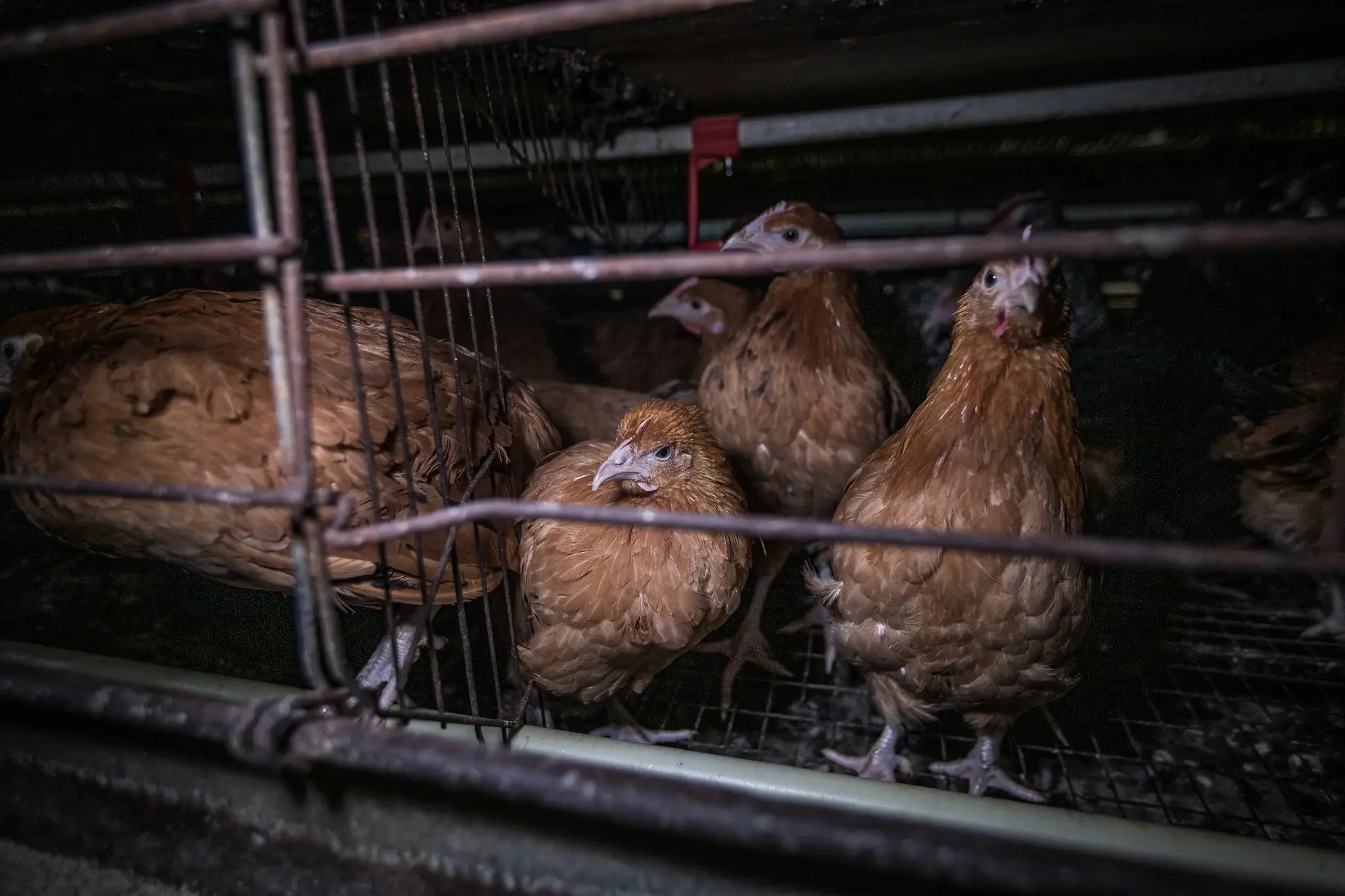
Welcome to Egg-Truth! A website designed to educate and inform consumers, and the public at large, about the true nature of: industrialized egg production, it's affect on human health, the environment, and most importantly, the hens who endure one of the most miserable and heavily exploited existences in all of animal agriculture.

Welcome to Egg-Truth! A website designed to educate and inform consumers, and the public at large, about the true nature of industrialized egg production, it's affect on human health, the environment, and most importantly, the hens who endure one of the most miserable and heavily exploited existences in all of animal agriculture.

Some of the images and content on this web site are of a graphic nature - if you are upset by this, we are sorry. However, it is virtually impossible to tell the true story of egg production and its associated horrors without the use of still images and video. As they say, "a picture is worth a thousand words", and by extension, a video could be worth 10,000.

Often, it is human nature to avert our eyes when we see things that are upsetting, violent or graphic in nature. It is our mind attempting to avoid any potential trauma as a result of looking at unpleasant imagery. Unfortunately, given the amount of eggs consumed globally, our appetite for eggs contributes to the suffering of hens on an unprecedented scale. No animal, with perhaps the exception of chickens raised for meat, endures more suffering, qualitatively and quantitatively, than egg laying hens.

Chickens are social, intelligent and sensitive creatures who are capable of exhibiting problem solving, critical thinking, empathy and a host of other cognitive functions we normally associate with the companion animals we keep in our homes like dogs and cats. Despite this, global, industrialized egg production sees hens as merely a means to an end - a limitless supply of a commodity called: the 'egg'.

While it is true that eggs contain some goodness from a nutritional standpoint, there is nothing healthy in eggs that can't be obtained in far healthier forms of other foods where animal welfare is much less of a concern or not at all. And, many of those foods do not contain the constituents in eggs that are unhealthy and contribute over time to various diseases in humans.

Environmentally speaking, the urine, faeces, methane, ammonia and other toxic gases that are a by-product of billions of hens farmed and slaughtered annually, must be remediated. However, the soil, ground water, rivers, streams, ponds, lakes and coastal run-off areas around the world pay the price as the final destination for much of this waste - and this has a negative impact on our health and wildlife as well. Animal agriculture has become under increasing scrutiny for the amount of water and land dedicated to hydrate farmed animals and to grow food to feed billions of animals confined in feed lots, sheds and barns around the world. And this is no less of a concern with egg production as it is with other species farmed and harvested for human consumption.

We hope you find this website informative. We also hope you share it far and wide - our goal is to become the #1 destination on the web for fact-based information on global, egg production. A lofty goal no doubt, but with your help, we hope to get there one day - and the sooner the better! We intend to post regularly on our blog and our social media channels as they come on-line. So please check back with us frequently, and if you have any questions, need additional information or have suggestions for our website, don't hesitate to reach us via our Contact Us page.

Many thanks!

Photo credit banner image: Jo-Anne McArthur / We Animals

Read More