The Age of the Chicken: A Legacy Written in Bones
This post reveals how industrial chicken farming is rewriting our planet’s geological record, marking the dawn of the "Gallocene"—an era defined by the mass fossilization of chicken bones.
Image: weanimals.org
In a distant future—long after our civilization has faded—scientists might sift through layers of Earth and make a startling discovery: trillions upon trillions of chicken bones, fossilized in landfills, their altered shapes and unnatural densities forever etched into the planet’s geological record. These bones—remnants of the chickens bred, used, and discarded by the egg and meat industries—will tell a story of human dominance, consumption, and neglect.
Some scholars have already named this era the “Poultryocene” or “Gallocene”—the “Age of the Chicken”. Not because chickens have thrived, but because they’ve been bred in such astronomical numbers that they have literally reshaped Earth’s biosphere. At any given moment, there are over 23 billion chickens on Earth, far surpassing the population of any other land animal.
A Bird We Barely Know
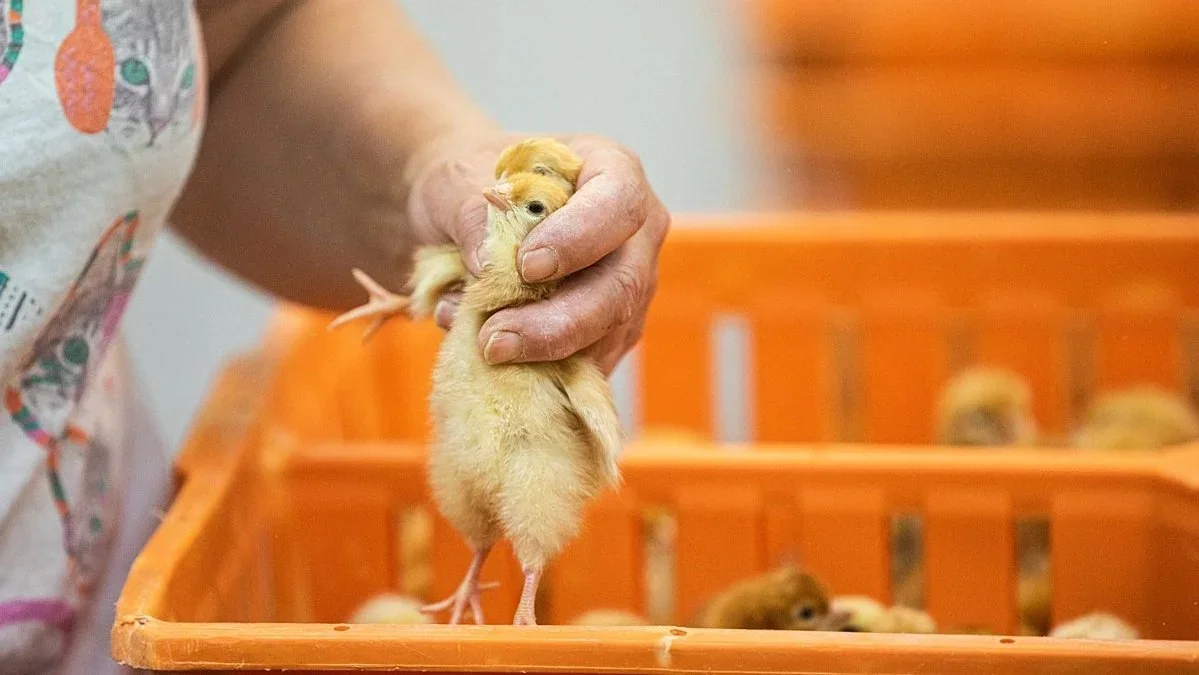
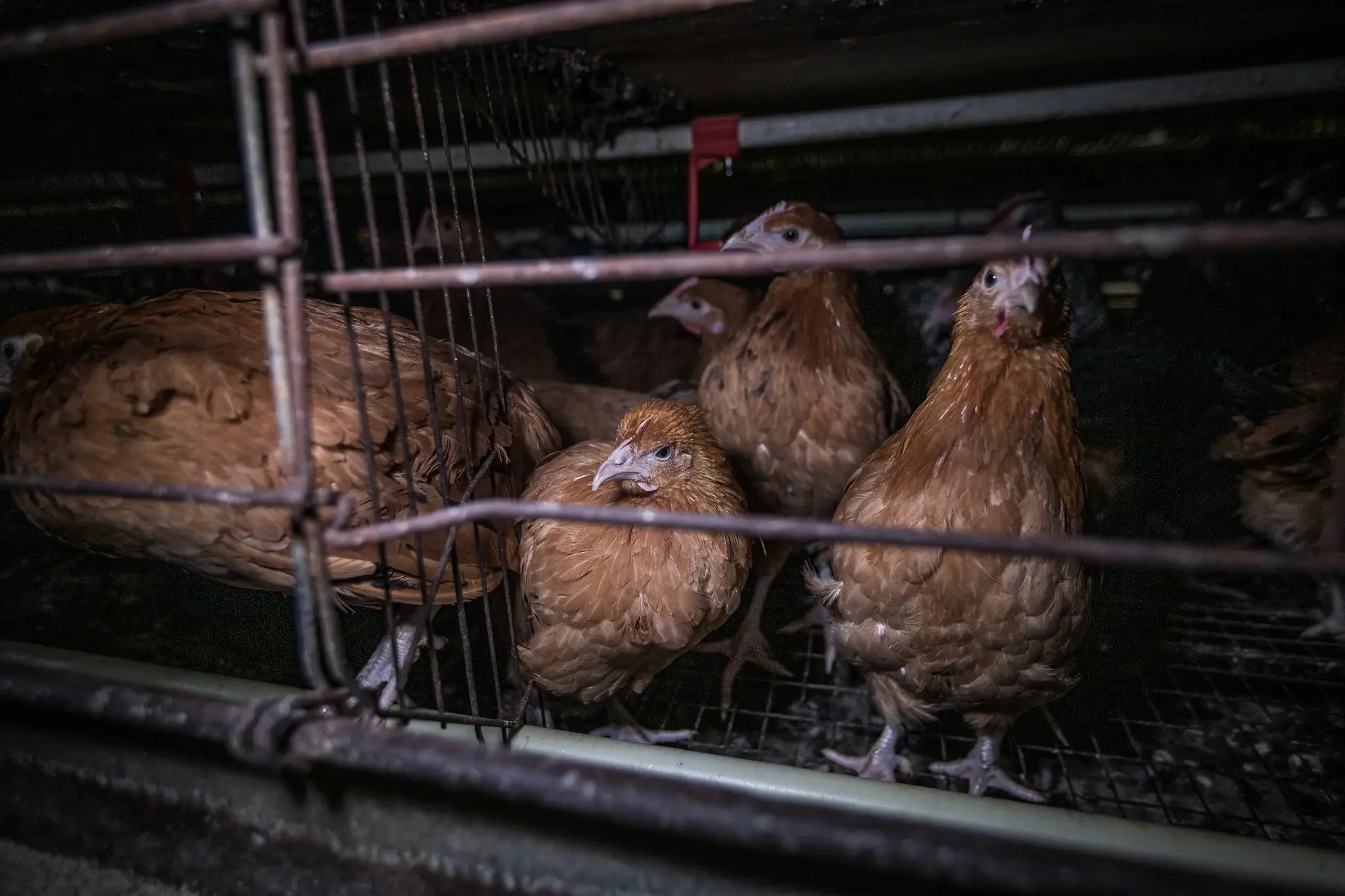
Ironically, while we live in an apparent “Age of the Chicken,” most of us rarely see living chickens at all. In supermarkets, we find sanitized packages of wings and drumsticks. On egg cartons, we see idyllic illustrations of hens roaming free. The reality is drastically different: in the meat industry, chickens have been bred to grow so fast they suffer crippling health problems, and in the egg industry, hens are pushed to ovulate incessantly at great detriment to their health.
Modern “broiler chickens” are engineered to grow three times faster and pack on five times the biomass compared to chickens of the early 20th century. This extreme breeding is all about profit: more white breast meat in less time. Typically, these birds are slaughtered at just five to seven weeks old, whereas a wild fowl might live up to eleven years. Because their hearts and lungs can’t keep pace with such explosive growth, many chickens experience heart failure, respiratory issues, and severe leg pain if allowed to live beyond the typical slaughter age. Even in sanctuaries that rescue them, so-called “broilers” often struggle with chronic health issues and rarely reach old age.
Meanwhile, “layer chickens” have been bred to lay about 500 eggs a year, dwarfing the mere 10 to 15 that their wild ancestors once laid—only in spring. Each ovulation can be fraught with pain or life-threatening complications. Conditions like egg yolk peritonitis (when egg material leaks into the body cavity), cloacal prolapse, and ovarian cancers are tragically common. What nature intended as a cyclical, occasional process has become a daily production line, inevitably ending in chronic pain or premature death.
Fossilized Footprints of Suffering
All these trillions of chickens—confined, bred to extremes, and slaughtered—will leave their mark on Earth’s geological record. Their bones, piled in landfills, will serve as a stark signal that something colossal and troubling took place. Future scientists could easily identify a massive surge in chicken fossils dating from the mid-20th century onward, silent witnesses to industrial-scale breeding and hidden cruelty. Unlike dinosaur remains—whose disappearance marked natural catastrophes—these modern chicken fossils would reveal a disaster of our own making: one born of human exploitation. Their bones would testify to how we altered their DNA, cramped them into factory farms, and discarded them in unfathomable numbers.
Despite the overwhelming presence of chickens in our food system, few consider them beyond their role as commodities. We call this the “Age of the Chicken” not because we honor or celebrate these birds, but because in death they overwhelm our culture—stripped, sliced, and served before we ever truly acknowledge their lives.
Chickens are remarkable creatures, however, —curious, intelligent, and socially complex. They forge deep connections, navigate intricate social hierarchies, and revel in pleasures like dust bathing and nesting. They recognize one another’s faces, communicate with genuine empathy, and are devoted mothers who bond with their chicks both before and after hatching. Yet in the industrial egg and meat sectors, these natural behaviors are systematically suppressed. Confined to overcrowded sheds, denied meaningful interactions, and forced into unnatural breeding and egg-laying cycles, chickens are reduced to mere cogs in the relentless machinery of food production. The industry strips them of their inherent dignity, turning vibrant, sentient beings into products with a singular purpose—profit.
If we genuinely live in the “Age of the Chicken,” then we owe it to these creatures to see them as more than commodities. Their lives are defined by intelligence, empathy, and social bonds—not merely by fast-growing muscles or high egg yields. Every purchase of chicken or eggs fuels an industry that prizes volume and profit at the expense of animal well-being.
Choosing Compassion
Every choice we make has consequences. One of the simplest yet most impactful ways to change the fate of chickens is to stop consuming them. This so-called “Poultryocene” doesn’t have to be a story of suffering; it can be a turning point, if we decide to honor life rather than exploit it.
Please leave eggs off your plate.
By choosing compassion, we can rewrite the legacy that future geologists—and future generations—will unearth in Earth’s layers. Let’s make sure that when they find these bones, they also find evidence of a turning tide toward empathy and respect.
Sources & Further Reading
Article Sources:
Bennett, Carys, Richard Thomas, Mark Williams, Jan Zalasiewicz, et al. “The broiler chicken as a signal of a human reconfigured biosphere,” Royal Society Open Science, 12 December 2018.
Narayanan, Yamini. “An Ecofeminist Politics of Chicken Ovulation: A Socio-Capitalist Model of Ability as Farmed Animal Impairment,” Hypatia, vol. 39, 2024.
Further Reading:
The Creation of the Modern Hen: Hen History
The Suffering of the Hens in the Egg Industry: Life of a Hen
How to Replace Eggs: Recipes and Resources
Ready to Go Vegan? Vegan Bootcamp
This post was informed by the valuable input of Chloë Taylor, whose academic expertise and research played a key role in shaping the article.
How to Love All Animals
Veganism is about shattering that carnist lens and seeing the individuals behind our meals and removing them from our plates one by one. It’s about discovering that we can thrive on plant-based foods alone. It’s about learning that the future of our food system isn't factory farming or genetic manipulation, but rather love, compassion, and the abundant variety of plant-based proteins.
Image: WeAnimals Media
Do you believe animals, much like us, should live free from needless suffering? Does the thought of causing harm to them trouble your conscience? If you find yourself nodding in agreement, you're not alone. There's a vast community of compassionate individuals who, despite their diverse dietary choices, share a common bond—empathy for animals.
The way we perceive animals is undergoing a significant shift. Despite many of us labeling ourselves as animal lovers, the legal view of animals has often reduced them to mere property rather than feeling beings. However, something intriguing is stirring. Recent studies are illustrating a remarkable change – around 47% of the British population today acknowledges that animals deserve the same rights as humans to escape suffering. Another 71% firmly believe causing animals pain is wrong.
These numbers aren't just figures; they signify a profound transformation. It’s as if science and law are catching up to what our innate feelings have always told us – creatures such as dogs, chickens, octopuses, and even lobsters are akin to us; they possess thoughts and emotions. This awakening may very well be global. Nowadays, when the media reports on human-inflicted cruelties and crises in relation to animals, like a lost companion animal or an escaped animal from a zoo (or perhaps an egg farm), it's as though a collective cry of outrage bursts from our hearts.
But what about the animals commonly found on our plates: cows, pigs, and chickens? Do they, too, deserve lives free of pain and suffering? Often, the distinction between which animals we cherish and which we consume is vividly illustrated in a popular meme:
Original Source: unknown
To understand the morality behind the public’s perception of some animals as friends while others are thought of as food, let’s focus on what psychologists call 'carnism'—the invisible belief system influencing us to eat certain animals while sparing others.
‘Carnism’ acts as a buffer, veiling the realities of our choices, enabling us to relish a Sunday roast while overlooking the animal's suffering that brought it to our plate. This conundrum finds its roots in the complexities of the animal food industry, where money, intricate supply chains, and neatly packaged products act as a shield. This disconnect between us and the source of our food allows us to act in ways that might seem unethical in other contexts. Yet, even the deep pockets of the animal food industry can’t fully blind our hearts from some suffering in their products.
For instance, while many enjoy scrambled eggs for breakfast or crack some eggs to bake some treats without a second thought, the concept of male chick culling often evokes a sense of moral unease. This practice is an inherent part of the egg industry, where male chicks are shredded or killed shortly after hatching, as they are considered of no use to the egg-laying process.
Images: human.cruelties
So, let's focus on this gap, this crack in the carnist food lens to truly see these chicks as vulnerable babies that yearn for life. To us, this realization speaks of a wider reality, namely, that the majority of people are vegan at heart.
Often, the very mention of the “v” word is enough to send people running for the hills with their cheese and omelettes in hand, including self-professed animal lovers who would otherwise agree that animals deserve to be free from pain and suffering. In truth, we can hardly blame them. The image of vegans in the media paints us as extremist, judgmental, even confrontational. However, the reality of veganism is quite different. It's not about passing moral judgments or extremism. Instead, it's a reminder that, deep down, most of us are uncomfortable with the idea of animals suffering needlessly, like the culling of male chicks in the egg industry.
That is what veganism is about. It’s about shattering that carnist lens and seeing the individuals behind our meals and removing them from our plates one by one. It’s about discovering that we can thrive on plant-based foods alone. It’s about learning that the future of our food system isn't factory farming or genetic manipulation, but rather love, compassion, and the abundant variety of plant-based proteins.
As we conclude, we invite everyone to celebrate World Vegan Month and take part in the journey toward a more compassionate lifestyle. Embrace this opportunity to explore and discover the diverse world of plant-based foods.
For those curious or interested in learning more, we encourage participation in the Vegan Bootcamp.
Alex Ventimilla, Advisor
Alex is a third-year PhD student in the Department of English and Film Studies at the University of Alberta.
Passionate about ecology, he firmly believes in the impact of storytelling on shaping our perspectives. He believes that the narratives we engage with through reading, watching, and listening play a crucial role in defining our connections with both human and non-human beings.
Why Eating Some Animals But Not Others Is A Form Of Prejudice
Why do we choose to eat some animals, but not others?
Here’s why your food preferences are unfair and irrational
Why do we choose to eat some animals, but not others?
It is well known that spiritual beliefs often play a factor in people’s diets. Yet, giraffes and locusts are both kosher and halal, while Jesus never forbade Christians from wolfing down whales or dogs. Why is it then that only a comparatively small fraction of people, sometimes only in relatively isolated communities around the world, choose to eat these species? And why are countless edible animals not eaten at all?
Looking at the animal most commonly featured on plates around the world may be a good place to begin answering questions about what makes certain animals unpopular menu choices. Pound-by-pound, this would be the domestic pig, making up for 36% of all the animal matter consumed by humans, narrowly beating out Gallus gallus domesticus, a.k.a. the domestic chicken, at 33%. However, the numbers of individuals required to rack up these percentages tell a different story.
Over 75 billion chickens must be slaughtered yearly to meet the growing global demand for their flesh, compared to an estimated 1.5 billion pigs a year. This number does not include the millions of layer hens required to satisfy the world’s growing demand for their eggs, which humankind consumes at an estimated rate of one thousand billion units per year.
That’s 1, 000, 000, 000, 000 eggs every 365 days.
Do numbers matter?
People are evidently comfortable making the choice to eat chickens and their unborn offspring. And it may be that the very fact that these birds are bred and kept in such numbers makes it easier for people to consume them rather than large wild animals like giraffes and whales, whose populations are far smaller and localized. Governments have even established multinational organizations like CITES to regulate and sometimes ban the trade of products derived from species whose small population sizes make them susceptible to extinction, suggesting a growing number of people are against eating endangered species. Conversely, this would also suggest that people are more willing to eat animals that exist in large numbers. But these initial suggestions do not hold to scrutiny.
But what about insects?
Many species are notoriously numerous, including locusts. One small swarm roughly 1 km2 can be up to 80 million strong. Various cultures throughout these swarming grasshoppers’ range take advantage of this seasonal bounty of animal protein, incorporating them into their diet, as do other populations with other insect species the world over. Entomophagy still struggles to find acceptance in Western societies, however, where insects are perceived as unappealing, if not outright unsanitary and unsafe for human consumption (even though most zoonotic disease outbreaks have been traced back to commonly eaten animals, including pigs, chickens, and their eggs).
Humans also harvest exorbitant quantities of fish and seafood from the ocean every year. Indeed, while whales’ endangered status is cited as a principal reason behind the International Whaling Commission’s ongoing ban on whaling, no such multinational legislation exists to protect any of the endangered tuna species. Further, both insects and fish can be mass-produced in the same manner as chicken and other livestock, while producing insect protein requires far fewer resources than chickens, pigs, or cows. Despite bugs’ sustainability and nutritional value though, people in industrialized nations seem to prefer eating more familiar farmed animals.
Does domestication matter?
This does not seem to be a factor either. Familiarity with a domestic species can, in fact, be why some people choose not to eat animals like cats and dogs. One argument for these exceptions could be that neither of the two were originally domesticated for food, although neither were chickens. Their wild ancestor, the Indian jungle fowl, was originally tamed for cockfighting. Only later did people begin to eat their flesh and eggs, a historical turn that also occurred with cats and dogs in many regions around the world, as these are eaten from East Asia to the Americas. Nowadays, however, the latter two are nearly universally regarded as companions while consuming them has become increasingly ostracized. For instance, the pressure on countries like South Korea to shut down their thriving dog meat market has been growing in recent years, while in a rare instance of bipartisan legislation, the Dog and Cat Meat Trade Prohibition Act of 2018 formally illegalized such practices in the United States.
A dog meat market in Vietnam. Photo: Jo-Anne McArthur/We Animals
But if these aren’t it, then what characteristics lead people to choose to eat some animals while ignoring, even protecting others? What, separates chickens from dogs, and whales from tuna, the so-called chicken of the sea?
Because they are not like us?
One last argument could be that people choose not to eat animals that are too similar to humans, either because they are close biological relatives or because we share a higher kind of intelligence. Meanwhile, people’s sense of kinship with fish like tuna and birds like chickens is likely to be weak if present at all. Biologically, however, dogs, whales, cattle, pigs, and thousands of other mammals are all members of ferungulata, a vastly diverse group that split from our family, primates, millions of years before the days of the T-rex. In short, Homo sapiens are just as closely related to all these species, some of which they choose to kill and consume in exorbitant quantities, some of which they provide with luxury food. Intelligence or perception thereof does not fully explain these distinctions either. The widely acknowledged intelligence of pigs has done little to prevent people’s craving for pork, while recent studies suggest that the intelligence of chickens has been unjustifiably underestimated and may rival that of cats and dogs.
This is all to say there doesn’t appear to be any heads or tails to how people in industrialized societies choose which animals are acceptable to eat and which aren’t. All distinctions between these species used to rationalize these choices are arbitrary, inconsistent, and irrational. They are little more than cultural prejudices based on unfounded assumptions about some species that have the effect of deeming their lives expendable for human consumption, a kind of discrimination against their suffering. It is, in short, a form of speciesism.
Say what?
Oxford animal rights activist Richard D. Ryder was the first to popularize the term. Arguing that "race” and “species” are both vague terms used in the classification of living creatures according to physical appearance, Ryder drew an analogy between the unequal treatment of racialized people and the uneven ethical considerations applied to different animal species. Since then, other science philosophers like Peter Singer and Richard Dawkins have also engaged with the concept. While acknowledging that the word is rather awkward, Singer agrees with its premise and argues we must give equal consideration to the pain experienced by all beings who share the capacity to suffer. Meanwhile, Dawkins considers that the human tendency to divide the world into units like races, cultures, and species reflect nothing but the limitations of our minds and our use of language. Within these purely subjective categorizing systems that represent animals as discontinuous species, he writes, the agency and suffering of some species can be recognized while those of others is denied or overlooked if it favors the survival of “our group”, be it a culture, race, or species.
The question of survival
The ability to prioritize the survival and wellbeing of the self and those most closely related was a valuable evolutionary advantage (pre)historically speaking given the precariousness most animals experience in the wild. This is also why cannibalism occurs. But in industrialized nations, human survival is no longer tied to the consumption of other, less related organisms. The fact that most people in such societies already choose to abstain from eating several animal species indicates they are at least partially aware of this. Thus, raising awareness of both the availability of vegetable-based foods, as well as the numerous physical and neurological characteristics we share with widely eaten animals may be key if the goal is to steer people away from current speciesist dietary practices. Already, a study out of New Zealand indicates that people’s attitudes towards chickens improve significantly when given the opportunity to spend time with these smart, sentient, and sociable animals. Perhaps interspecies encounters with the animals people still choose to eat can lead to the eventual realization that these most, if not all species, are complex beings whose right to life and freedom from suffering we should consider.
Alex Ventimilla is a Ph.D. student in English & Film at the University of Alberta. He holds a B.A. in English Literature & Society cum laude from Vrije Universiteit Amsterdam and an M.A. in English & Film Studies from the University of Alberta. His primary research interests are animal/habitat studies and the environmental humanities.
Anonymous Memoir of a Battery Caged Chicken
My eyes are shut. I strain to open them a little but the burning sensation forces them closed again. Perhaps it is better they are shut. When I open them I see things I don’t want to.
“Every chicken here dies. But no chicken here really lived. ”
My eyes are shut. I strain to open them a little but the burning sensation forces them closed again. Perhaps it is better they are shut. When I open them I see things I don’t want to.
My feet ache intolerably. I lift one foot to relieve it for a while, but the extra weight on my other foot is unbearable, so I put both feet down again. Whatever I’m standing on, it’s not stable.
It is hard to breath. I take in a deep breath and my lungs absorb the foul stench around me. My nose burns, as does my throat. The room smells of stale faeces and urine. My lungs feel heavy and wet. The wetness trickles down my throat, irritating my airways. I need to cough up this poisonous phlegm, but I don’t seem to be able to.
I’m hungry. There is food not far away, but I can’t get close enough. It’s hard to move and I’m terrified to try. The others I have been put here with- they have all gone mad. Sometimes they try to hurt me. I still have cuts and sores from the last attack- my last attempt to get closer to the food.
It is useless anyhow. Even when I get to the food my mouth hurts. It is hard to keep the food in my mouth. It just falls out. I have to tilt my head back to keep it there. Depravation, I decide, is easier.
There’s a loud scream that echoes through the darkness.
I open my eyes. Two of the others are fighting in the dark. Perhaps over food, or perhaps they have gone crazy- it only takes a matter of time. I can see across the room another huddled into a corner. She is menstruating and is embarrassed she can’t keep it private. She wants to be alone.
I choose to shut my eyes again.
My body aches in every way possible. It’s like a heavy throbbing sensation that starts at my neck and travels all the way down my body. I desperately want to stretch out, to relieve some of the pain, but there is no room. I lean against the cold, rusty metal bars beside me. My skin feels so red raw, and leaning against the wire only distresses my skin more.
The stinging on my skin gets worse as I’m forced to rub against the metal as a cage mate attempts to move to a more comfortable position.
Apparently chickens don’t have dreams.
Perhaps that is true. I don’t dream of a better life, because I don’t know of any other existence. This is everything I know of life. I have not seen, heard or thought of anything different.
But I do have hope.
Sometimes when I shut my eyes, everything goes blank for a while. The pain goes, the smell goes, and I don’t know where I am. This is my nothing. But no matter how long I sleep, my nothing is always broken again by life.
But maybe, just maybe, one day when I go to my nothing, I won’t ever wake up again. One day perhaps everything will disappear. No pain, no smell, no fighting, no cages- nothing.
That is what I hope for. That is all I have.
Do not mourn for me when I die. It is what died inside me while I was still alive that should enrage you.
Every chicken here dies. But no chicken here really lived.
Anonymous memoir of a battery caged chicken.
Emma Hurst, Animal Justice Party MP, elected to the Upper House of NSW Parliament - Emma Hurst's Website
Emma Hurst is the first female Animal Justice Party MP, elected to the Upper House of NSW Parliament in Australia. A former psychologist, Emma has worked tirelessly for the rights of animals for many years with a background in campaigning, political lobbying, and media work.
Since she was elected in March 2019, Emma has used her time in parliament to bring animals to the forefront of political discussion: running inquiries into battery hens and animals in entertainment, preparing legislation to ban puppy farms, securing legislative reform on the link between domestic violence and animal abuse, banning the breeding and importation of captive dolphins, and campaigning against the use of animals in experimentation.
"Which came first the Chicken or the egg?"
Evolutionary biologists think that they have solved the dilemma.
Here is why you couldn't find an answer, yet.
Plutarch, (46 - c. 120)
Most everyone is familiar with the mind teaser, ”Which came first the Chicken or the egg?” While it seems contemporary, the question was first posed 2000 years ago by the Greek philosopher, Plutarch. The question – and its answer - was considered quite serious and important because it deals with whether or not the universe and life have a beginning.
In our worldly experience, everything seems to have a cause and an effect. Something causes something else to happen. The Dog wags her tail which knocks down the vase of flowers which spills water on the floor which causes the Dog’s guardian to slip and fall which causes the second Dog to bark, and so on - a simple chain of causes and effects. But, what came before that? We might be able to keep going back to find earlier and earlier causes but at some point, like the Greeks, we are stuck with the question: What came before the universe?
“Time is a mystery from a scientific point of view. The past is gone and the future has not yet happened, and the present as the point between past and future immediately ceases to exist – or it is possible to question whether it ever existed at all.”
Evolutionary biologists think that they have solved the dilemma. They claim it was the egg who came first and did so through mutation. In other words, a non-Chicken laid an egg that was somehow genetically changed to produce the first Chicken. But, physics says otherwise.
We usually take time as a given, that it is real and flows in succession. But, quantum physicist David Bohm called time a “mystery.” Indeed, he asserted, the passage of time, from past, present, and future only exist as an assumed image or thought. “The world-line (history) of a Chicken in spacetime is comprised of a series of continuous spacetime events. This is called the "block" picture of the universe, “(Perelman, 2020). The Chicken (past) who laid the egg (present) who becomes the Chicken (future) are one and the same. Our perception of time’s directionality, moving from the past towards the future is not grounded in reality, but (mis)informed by our belief in a fixed sense of self. Furthermore, quantum physics’ retrocausality implies that the Chickens and eggs of today can send information to the past thereby changing who their predecessors could be and might have been.
According to Bohm, the world we experience around us, the eggs, Chickens, and ourselves, only appear separate but are actually explicit manifestations of a deeper implicit order. As he describes, “Take for example all the experience of ourselves that we have at the ordinary level, in which I include all the various kinds of thoughts, images and sensations with which we identify. Now ordinarily we say, tacitly, that that is me. But that is really only an explicit image of something much more subtle and enfolded.”
Venn diagrams representing the specific and overlapping proteins identified in the human (during the whole gestation) and chicken (11th day of incubation) amniotic fluid (AF). Human AF data were obtained from the work of Cho et al., (11), which combines results from nine publications (supplemental Data S3, sheet #3).
So when contemplating the Chicken-egg conundrum, quantum mechanics frames it in a very different way by demonstrating that we each emerge from life’s intrinsic, implicit wholeness, but are forever entangled, not just connected to each other, but we profoundly affect one and another. The egg that you hold in your hand was generated by the same wholeness from which you were generated. You and the egg are deeply entangled in the universe.
Physics is not the only science to recognize patterns of continuity which underlie and cohere all of us. Neuroscience does not delve into the implicit, invisible realms which quantum physics reveals, however, it describes the continuity in the explicit, tangible world.
Chickens, humans, Fish, and all other Animals possess common brains and capacities to feel, think, and experience the rainbow of emotions that make life so rich. We may look different on the outside, feathered versus naked skin, beaks versus noses and mouths, etc, but inside we share the same brain structures and processes which govern consciousness.
As we have learned from the recent convergence of global crises, to harm or destroy, abuse or kill an egg or Chicken, is the same as abusing and killing ourselves. As Shakespeare’s Danish Prince once admonished his friend, “There’s more to Chickens and eggs, Horatio, than dreamt in your philosophy.”
Gay Bradshaw, PhD, PhD, Executive Director - The Kerulos Center for Nonviolence
Gay holds doctorate degrees in ecology and psychology, and has published, taught, and lectured widely in these fields both in the U.S. and internationally. She is the author of the Pulitzer Prize-nominated Elephants on the Edge: What Animals Teach Us about Humanity, and Carnivore Minds: Who These Fearsome Beings Really Are, both published by Yale University Press. She is also the author of Talking with Bears: Conversations with Charlie Russell (Rocky Mountain Books, 2020). Dr. Bradshaw’s work focuses on trans-species psychology, the theory and methods for the study and care of Animal psychological well-being and multi-species cultures. Her research expertise includes the effects of violence on and trauma recovery for Elephants, Grizzly Bears, Chimpanzees, Parrots, and other species both free-living and in captivity.
The Cambridge Declaration on Consciousness
We have decided to publish, in it’s entirety, The Cambridge Declaration on Consciousness (“CDC'“). What is this declaration and what does it mean?
Photo credit: We Animals
We have decided to publish, in it’s entirety, The Cambridge Declaration on Consciousness (“CDC'“).
What is this declaration and what does it mean? This was a document signed in 2012 by “an international group of prominent scientists, led by computational neuroscientist and neurophysiologist Dr. Philip Low, . . . . . in which they are outlining convergent evidence indicating that non-human animals have the neuroanatomical, neurochemical, and neurophysiological substrates of conscious states along with the capacity to exhibit intentional behaviors, and consequently discarding the notion that humans are unique in possessing the neurological substrates of consciousness. Stephen Hawking was the guest of honor at the signing ceremony”.1
The CDC, in essence, rejects the view of French philosopher René Descartes (1596 - 1650) in which he, “maintained that animals cannot reason and do not feel pain; animals are living organic creatures, but they are automata, like mechanical robots. Descartes held that only humans are conscious, have minds and souls, can learn and have language and therefore only humans are deserving of compassion.”2
Reading Descarte’s views on animals may come as a surprise to many. Anyone who has ever interacted with nonhuman animals knows they are conscious, they do feel pain and have emotions - this observational evidence is easily and quickly discernible. Nonetheless, Descartes’ views heavily influenced humanities perspective of non-human animals including within the scientific and legal communities for centuries. It is fair to say that this view of non-human animals pre-existed Descartes, it was those ancient philosophers who provided Descartes with the foundation he needed.
As such, Steven Wise, an Amercian legal scholar and head of the NonHuman Rights Project, once said, “For four thousand years, a thick and impenetrable legal wall has separated all human from all nonhuman animals. On one side, even the most trivial interests of a single species — ours — are jealously guarded. We have assigned ourselves, alone among the million animal species, the status of "legal persons." On the other side of that wall lies the legal refuse of an entire kingdom, not just chimpanzees and bonobos but also gorillas, orangutans, and monkeys, dogs, elephants, and dolphins. They are "legal things." Their most basic and fundamental interests — their pains, their lives, their freedoms — are intentionally ignored, often maliciously trampled, and routinely abused.”
This is why the CDC is such an important moment in science and for nonhuman animals. It is a formal rebuke of centuries of collective cognitive dissonance among the sciences and moral philosophy. Disciplines, ironically, in which one might consider cognitive dissonance antithetical to the intellectual rigours and disciplines of reason and logic required by these otherwise noble human pursuits.
But what also caught our eye upon reading the CDC, is the following sentence: “Birds appear to offer, in their behavior, neurophysiology, and neuroanatomy a striking case of parallel evolution of consciousness.”
Please read the declaration. We also provide a link to download the declaration as a PDF.
The Cambridge Declaration of Consciousness
On this day of July 7, 2012, a prominent international group of cognitive neuroscientists, neuropharmacologists, neurophysiologists, neuroanatomists and computational neuroscientists gathered at The University of Cambridge to reassess the neurobiological substrates of conscious experience and related behaviors in human and non-human animals. While comparative research on this topic is naturally hampered by the inability of non-human animals, and often humans, to clearly and readily communicate about their internal states, the following observations can be stated unequivocally:
The field of Consciousness research is rapidly evolving. Abundant new techniques and strategies for human and non-human animal research have been developed. Consequently, more data is becoming readily available, and this calls for a periodic reevaluation of previously held preconceptions in this field. Studies of non-human animals have shown that homologous brain circuits correlated with conscious experience and perception can be selectively facilitated and disrupted to assess whether they are in fact necessary for those experiences. Moreover, in humans, new non-invasive techniques are readily available to survey the correlates of consciousness.
The neural substrates of emotions do not appear to be confined to cortical structures. In fact, subcortical neural networks aroused during affective states in humans are also critically important for generating emotional behaviors in animals. Artificial arousal of the same brain regions generates corresponding behavior and feeling states in both humans and non-human animals. Wherever in the brain one evokes instinctual emotional behaviors in non-human animals, many of the ensuing behaviors are consistent with experienced feeling states, including those internal states that are rewarding and punishing. Deep brain stimulation of these system in humans can also generate similar affective states. Systems associated with affect are concentrated in subcortical regions where neural homologies abound. Young human and nonhuman animals without neocortices retain these brain-mind functions. Furthermore, neural circuits supporting behavioral/electrophysiological states of attentiveness, sleep and decision making appear to have arisen in evolution as early as the invertebrate radiation, being evident in insects and cephalopod mollusks (e.g., octopus).
Birds appear to offer, in their behavior, neurophysiology, and neuroanatomy a striking case of parallel evolution of consciousness. Evidence of near human-like levels of consciousness has been most dramatically observed in African grey parrots. Mammalian and avian emotional networks and cognitive microcircuitries appear to be far more homologous than previously thought. Moreover, certain species of birds have been found to exhibit neural sleep patterns similar to those of mammals, including REM sleep and, as was demonstrated in zebra finches, neurophysiological patterns, previously thought to require a mammalian neocortex. Magpies in particular have been shown to exhibit striking similarities to humans, great apes, dolphins, and elephants in studies of mirror self-recognition.
In humans, the effect of certain hallucinogens appears to be associated with a disruption in cortical feedforward and feedback processing. Pharmacological interventions in nonhuman animals with compounds known to affect conscious behavior in humans can lead to similar perturbations in behavior in non-human animals. In humans, there is evidence to suggest that awareness is correlated with cortical activity, which does not exclude possible contributions by subcortical or early cortical processing, as in visual awareness. Evidence that human and nonhuman animal emotional feelings arise from homologous subcortical brain networks provide compelling evidence for evolutionarily shared primal affective qualia.
We declare the following: “The absence of a neocortex does not appear to preclude an organism from experiencing affective states. Convergent evidence indicates that non-human animals have the neuroanatomical, neurochemical, and neurophysiological substrates of conscious states along with the capacity to exhibit intentional behaviors. Consequently, the weight of evidence indicates that humans are not unique in possessing the neurological substrates that generate consciousness. Nonhuman animals, including all mammals and birds, and many other creatures, including octopuses, also possess these neurological substrates.”
* The Cambridge Declaration on Consciousness was written by Philip Low and edited by Jaak Panksepp, Diana Reiss, David Edelman, Bruno Van Swinderen, Philip Low and Christof Koch. The Declaration was publicly proclaimed in Cambridge, UK, on July 7, 2012, at the Francis Crick Memorial Conference on Consciousness in Human and non-Human Animals, at Churchill College, University of Cambridge, by Low, Edelman and Koch. The Declaration was signed by the conference participants that very evening, in the presence of Stephen Hawking, in the Balfour Room at the Hotel du Vin in Cambridge, UK. The signing ceremony was memorialized by CBS 60 Minutes.
Download: The Cambridge Declaration on Consciousness.pdf
Footnotes:
Nigel Osborne is the Executive Dir. of Egg-Truth. Nigel has years of experience related to animal rights and on-line advocacy. Nigel's extensive background in the publishing, outdoor advertising, printing and web design industries over the last 25 years provides him with a strong, creative acumen and business management experience. Through Egg-Truth.com and it's social media channels, Nigel seeks to increase awareness among the public about global egg production and expose the conditions for the billions of hens condemned to laying every year.
Learning How to Speak Bird
Did you know that in this very moment, there are tens of billions of birds held in captivity?
Photo credit: We Animals Media
Did you know that in this very moment, there are tens of billions of birds held in captivity? Worldwide, “commercialized” chickens alone outnumber us by a ratio of nearly seven to one. That’s seven chickens for every human on the planet, more if you consider apartment hens and backyard flocks, a growing trend in many cities and suburban areas.
Despite its astounding prevalence, avian captivity as a phenomenon remains all but invisible, something most people hardly even think about, let alone talk about. (And frankly, those with a vested interest in maintaining the status quo would prefer to keep it that way.)
The deafening silence surrounding bird captivity is what inspired me to find my voice and more recently, to undertake a five-year study on “Poultry, Parrots, and People” in order to delve into the psychological aspects of bird confinement. What I discovered is that while the motivations underlying avian captivity are as varied as the species we keep, most share one theme in common: commodification at the expense of the birds.
Parrots, for example, are often sought for their beauty and companionship—aesthetic friendship for purchase at a pretty price. Yet beauty fades and relationships are complicated, leaving many parrots left to languish alone—or worse. By contrast, the chickens, ducks, geese, and other species we refer to collectively as “poultry” are not considered in post-industrialist society as individuals at all so much as means to an end: feathers, eggs, and flesh measured most efficiently in dollars per pound. The end result is the same for poultry as it is for parrots—or worse.
Psychology informs us that commodification is, in essence, a form of objectification, a psychological projection that inflicts harm on an unfathomable scale, both to birds and to us as their captors. Peeling back this Cartesian projection reveals its irrational nature, for humanity’s collective lack of consideration for living, breathing birds is a strange paradox given that our affinity for avian beings is an ancient one, steeped in rich symbolic potency informed by the experiences of countless generations. So why is there currently such a wide schism between our perception (and treatment) of the birds we encounter in day-to-day life and those of our imagination, the sacred metaphorical images that speak in the universal language of the archetypes?
Perhaps in holding the tension of these opposing forces, we have forgotten a third thing, the one at the heart of the matter: The birds themselves.
In my experience, if you spend enough time with a bird, you will begin to see the true colors of their character. They are nothing short of magnificent, far brighter than any feather. The birds i’ve known are sparkling and imaginative and playful, sometimes generous, always curious, and oftentimes rude. They are individuals with their own personalities, just like you and me. (I guess it turns out the species divide might just be another one of those pesky psychological projections.)
With these newly-honed avian eyes I can see it is no longer enough to speak about birds; we need to learn to speak with them, to include their voices in the conversation. This realization inspired me to create the short film “A Bird Tail”, narrated from the perspective of a backyard Ameraucana hen named Pimento, one of the many avian loves of my life. I invite you to watch the film, to get to know Pimento and to fall in love with her, too.
Because isn’t Love the most motivating force of all, stronger than psychological projections like objectification and speciesism? Surely our love for all living things compels us to take flight in the face of immeasurable odds, to get our hands dirty, to learn how to speak for (and to!) Birds and other animals—beginning with telling the Egg-Truth about eggs, for instance.
So I implore you, dear reader, to seek your catalyst. Find not only your voice but the courage to wield it, to crow until you’re blue in the face, until you’re absolutely certain you’ve woken every
Sleeping
Neighbor.
Billions of silenced birds depend upon it.
Egg-Blog contributor: Elizabeth M. Burton-Crow, Ph.D. currently works at the Depth Psychology Program, Pacifica Graduate Institute. Elizabeth does research in Philosophy of Science, Ecopsychology, and Trans-species Ethics. Her current project is 'Poultry, Parrots, and People: Exploring Psyche Through the Lens of Avian Captivity'. Dr. Crow is also a facuity member of The Kerulos Center for Nonviolence