Robin - Rescued From The Dead
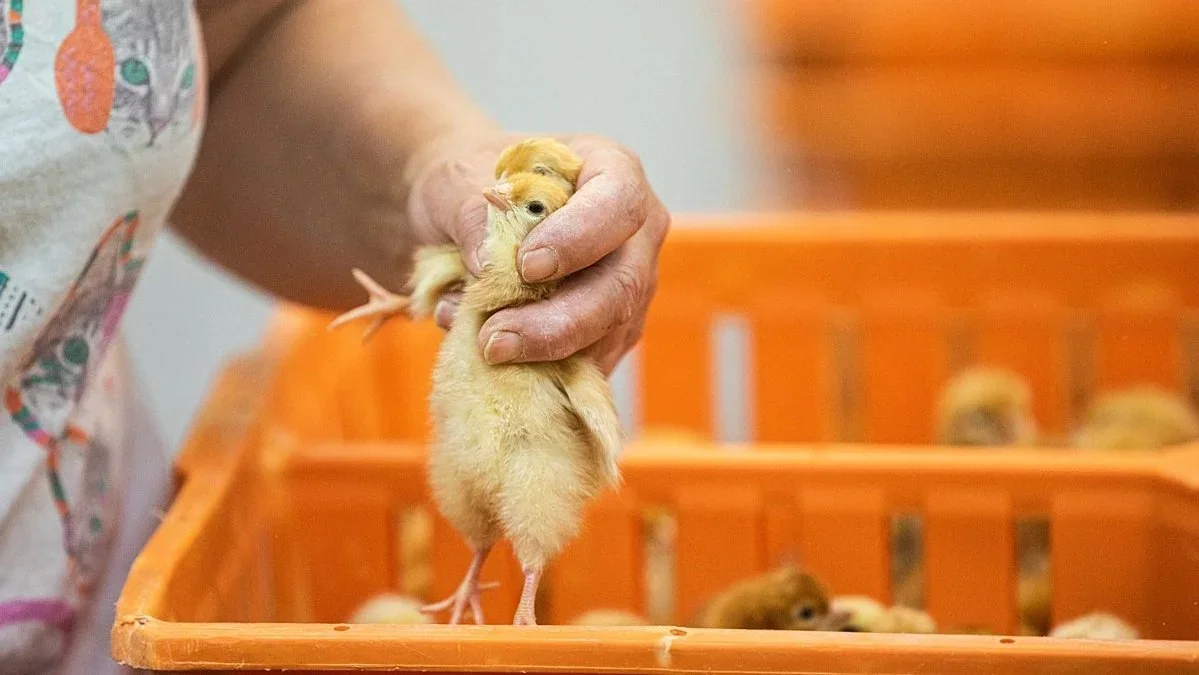
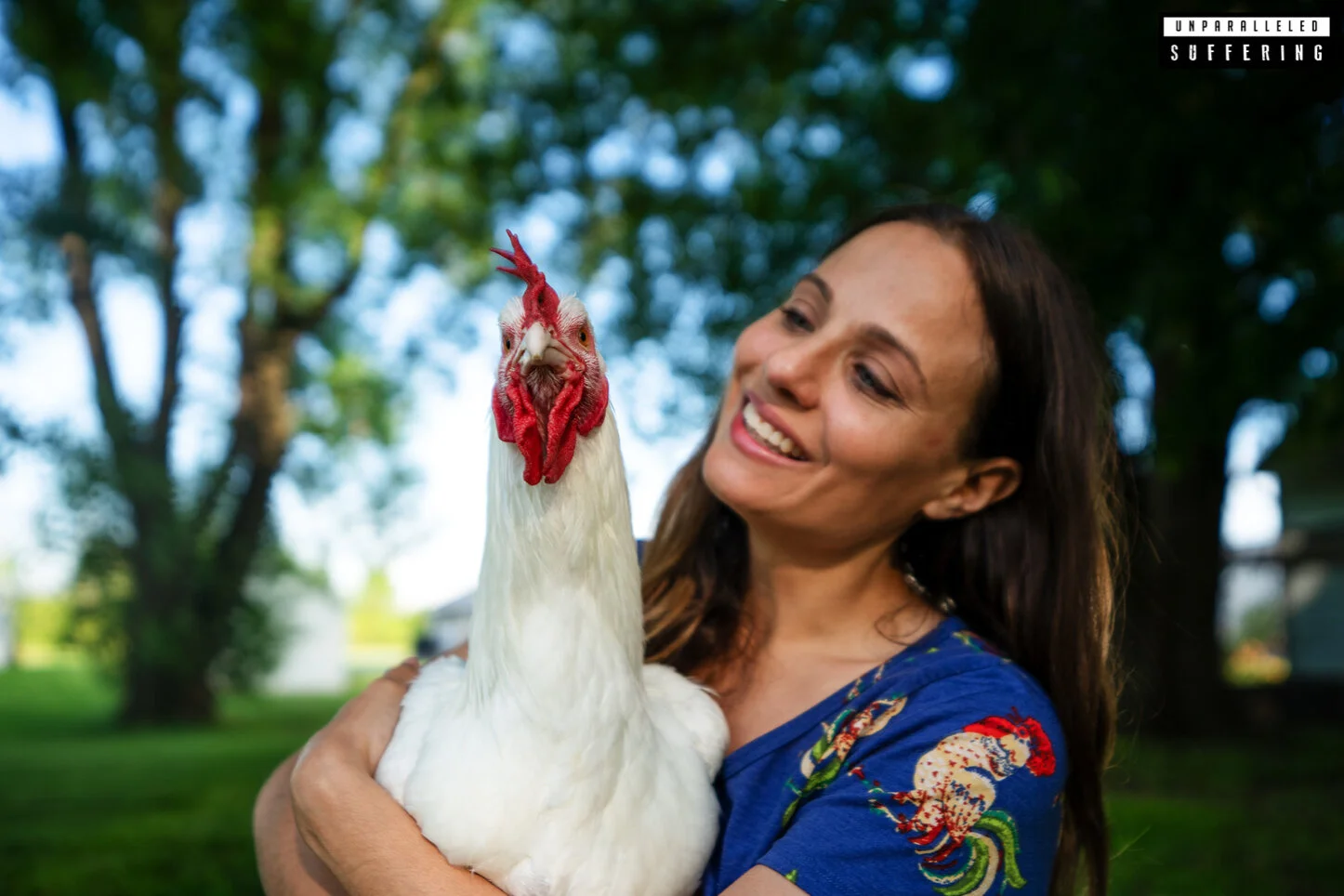
This post documents the rescue from a plastic trash bag of a “dead” chicken – a baby rooster – who was slaughtered during the ritual of Kaporos in Brooklyn, New York last fall along with thousands of other chickens.
Robin was found in a tied-up trash bag with his throat slit. Activists were documenting the aftermath of the kaporos on the morning after the final night of rituals, and they discovered one of the bags moving. They opened the bag and found Robin still alive and covered in blood among several dead birds. Robin went through the entire “sin- transferring” ritual including being swung over the participants head, then having his throat slit and being left for dead in the trash. The butcher (known as a shucat) missed his main artery, which is one of the many miracles of his story. Just minutes after they pulled him out of the trash, the garbage trucks arrived to take the bags filled with dead birds.
He was assisted by a triage team of activists and when Vanessa Dawson from Penelope’s Place showed up, she brought him to the emergency vet.
Robin was placed on oxygen, given heavy pain meds, fluids and antibiotics. He went into surgery the next day but he was given a 20% survival rate that he would live through the very risky surgery to repair his throat. When the vet called Vanessa for an update after the surgery the first words out of her mouth were “You have a miracle bird”. He recovered beautifully and now thrives at Penelope’s Place. He suffered some mental trauma from having lived through the ritual and being in the garbage bag among all of those other dead chickens. Any time that the lights went out it was as if he was back inside the bag. But he quickly learned that he was safe and loved at Penelope’s Place and the trauma symptoms subsided significantly. He turns 3 years old this month and is doing beautifully!
Unparalleled Suffering creates a documentary to report on the cruel Jewish tradition (more about that at the bottom of this page) and the unbelievable rescue of Robin.
Watch it here:
Kaporos - An Antiquated Custom
Kaporos is an antiquated custom that is sometimes referred to as Kapparot, both of which can mean “atonement,” or “scapegoat” or “sacrifice.” This is a “sin-transferring” custom in which a live animal (usually a mass-produced domesticated chicken) or money can be used. This tradition is done by some Haredi (ultra-orthdox) and Hasidic Jewish practitioners in the days and evenings leading up to the holiday of Yom Kippur, the Jewish Day of Atonement. Neither the Torah nor the Talmud - the two most holy Jewish texts - mandate or even mention Kaporos. It isn’t part of Jewish law to practice this. Certain Jewish scholars first discussed Kaporos in the ninth century. These scholars claimed that since the Hebrew word ‘gever” meant both “man” and “rooster,” punishment for the bird could be substituted for punishment of the human. Since this time, many Jewish scholars and rabbis have opposed this torturous, murderous and superstitious sin-cancellation practice. The ritual is most commonly practiced in Israel, but it also takes place in many other areas of the world - the epicenter being Brooklyn, New York and the second most popular location in the United States being Los Angeles. In Brooklyn alone, between 100,000 to 200,000 chickens are killed annually for this superstition.
For more information check this link.
Penelope's Place the Sanctuary is a non-profit Rescue and Sanctuary located in Akron, NY. Co-founders Vanessa Dawson and Steven Dawson began Penelope's Place in Brooklyn, NY and moved to the buffalo area to expand the sanctuary. The sanctuary was inspired by their first rescue Penelope the chicken. This sanctuary is her legacy. Penelope's Place is a vegan sanctuary and operates fully under those values. The animals will never be used for their eggs or meat and we also serve as a place of education about living a compassionate life towards all beings.
Anonymous Memoir of a Battery Caged Chicken
My eyes are shut. I strain to open them a little but the burning sensation forces them closed again. Perhaps it is better they are shut. When I open them I see things I don’t want to.
“Every chicken here dies. But no chicken here really lived. ”
My eyes are shut. I strain to open them a little but the burning sensation forces them closed again. Perhaps it is better they are shut. When I open them I see things I don’t want to.
My feet ache intolerably. I lift one foot to relieve it for a while, but the extra weight on my other foot is unbearable, so I put both feet down again. Whatever I’m standing on, it’s not stable.
It is hard to breath. I take in a deep breath and my lungs absorb the foul stench around me. My nose burns, as does my throat. The room smells of stale faeces and urine. My lungs feel heavy and wet. The wetness trickles down my throat, irritating my airways. I need to cough up this poisonous phlegm, but I don’t seem to be able to.
I’m hungry. There is food not far away, but I can’t get close enough. It’s hard to move and I’m terrified to try. The others I have been put here with- they have all gone mad. Sometimes they try to hurt me. I still have cuts and sores from the last attack- my last attempt to get closer to the food.
It is useless anyhow. Even when I get to the food my mouth hurts. It is hard to keep the food in my mouth. It just falls out. I have to tilt my head back to keep it there. Depravation, I decide, is easier.
There’s a loud scream that echoes through the darkness.
I open my eyes. Two of the others are fighting in the dark. Perhaps over food, or perhaps they have gone crazy- it only takes a matter of time. I can see across the room another huddled into a corner. She is menstruating and is embarrassed she can’t keep it private. She wants to be alone.
I choose to shut my eyes again.
My body aches in every way possible. It’s like a heavy throbbing sensation that starts at my neck and travels all the way down my body. I desperately want to stretch out, to relieve some of the pain, but there is no room. I lean against the cold, rusty metal bars beside me. My skin feels so red raw, and leaning against the wire only distresses my skin more.
The stinging on my skin gets worse as I’m forced to rub against the metal as a cage mate attempts to move to a more comfortable position.
Apparently chickens don’t have dreams.
Perhaps that is true. I don’t dream of a better life, because I don’t know of any other existence. This is everything I know of life. I have not seen, heard or thought of anything different.
But I do have hope.
Sometimes when I shut my eyes, everything goes blank for a while. The pain goes, the smell goes, and I don’t know where I am. This is my nothing. But no matter how long I sleep, my nothing is always broken again by life.
But maybe, just maybe, one day when I go to my nothing, I won’t ever wake up again. One day perhaps everything will disappear. No pain, no smell, no fighting, no cages- nothing.
That is what I hope for. That is all I have.
Do not mourn for me when I die. It is what died inside me while I was still alive that should enrage you.
Every chicken here dies. But no chicken here really lived.
Anonymous memoir of a battery caged chicken.
Emma Hurst, Animal Justice Party MP, elected to the Upper House of NSW Parliament - Emma Hurst's Website
Emma Hurst is the first female Animal Justice Party MP, elected to the Upper House of NSW Parliament in Australia. A former psychologist, Emma has worked tirelessly for the rights of animals for many years with a background in campaigning, political lobbying, and media work.
Since she was elected in March 2019, Emma has used her time in parliament to bring animals to the forefront of political discussion: running inquiries into battery hens and animals in entertainment, preparing legislation to ban puppy farms, securing legislative reform on the link between domestic violence and animal abuse, banning the breeding and importation of captive dolphins, and campaigning against the use of animals in experimentation.
Dr. Crow's Bird Show
We all know the eggspression: What came first, the Chicken or the Egg?
We all know the eggspression: What came first, the Chicken or the Egg? On today’s Bird Show (Apr. 7, 2020), Dr. Crow and Co-host Charlene are joined by Egg-Truth.com’s Nigel Osborne to discuss the origins of the Easter Egg. (Egg-rolling contest, anyone?) Then we’ll swoop in for a deeper look at backyard flocks and the industrial egg industry and what it all means for the modern Chicken. Finally, we’ll share some Easter craft ideas with the potential to become new fun, family traditions.
Gerri's Story
“Saving Gerri was, hands down, the most humbling and inspiring thing I’ve ever done in my life”. - Georgia Rae Laidlaw Brown
Gerri on her day of rescue.
Saving Gerri was, hands down, the most humbling and inspiring thing I’ve ever done in my life.
And even as a long-term vegetarian (now vegan activist), I had no idea how intelligent and kind natured chickens could be.
The day we rescued Gerri was the day she was destined for the slaughterhouse. Her days as a commercial laying hen were over and the next step in the process was for her “to be finished” - an industry term that means: killed and sold to the public as meat!
Luckily for Gerri, and the other 200+ chickens with her that day, they were given a second chance and were re-homed.
Gerri’s life was brutal from the very beginning, and even years later I have trouble processing what had intentionally been done to her. The photo shown here is of Gerri on the day she was rescued. Until this time, she had never seen daylight, her wings and beak had been clipped and she had been laying eggs at the unnatural rate of approx. 340 eggs a year in caged isolation. This is a sad fact-of-life for chickens that is a well-kept secret from consumers.
Much of the language used to describe how animals are treated in factory farms is chosen to mislead the public and paint a picture that makes the whole process acceptable. Make no mistake, the words and images are carefully chosen. Words like, “welfare” are used to mask what is actually just varying degrees of deprivation and cruelty. The images of happy, healthy chickens we often see on egg boxes are a misrepresentation of the conditions in which chickens live. And this include eggs sold as “free-range” and “organic” which may be the most misleading of all.
But lately attitudes have been shifting. Thanks to many main-stream documentaries and under-cover videos on social media and elsewhere, more and more people are beginning to see what is going on. Every day the conditions that all animals endure on factory farms is being exposed and talked about and the truth is getting harder to hide.
Gerri gettin’ in to the cream cheeze!
So… a little more about Gerri. She is as hilarious as she is bold and brave. From her very first day with us, she has taken everything in stride. (Here she is, covered in vegan cream cheese after sharing a bagel with me!) Just look at her little face!
When we first rescued Gerri she was not going to be a house chicken. She is one today because that is what she wanted. Daily she would peck at our door asking to come inside and before we knew it, she was spending most of her day in the house with us. She does venture outside to sleep in her house, or at the bottom of the garden, and for the occasional stroll around the property.
Like many animals who are given the chance to live in a loving and nurturing environment, Gerri knows her name and she will come running to you when called. She also likes to hang out with her cat and dog siblings and enjoys napping in the dog bed.
Gerri and her canine siblings.
Also, like everyone, Gerri is an individual with personal likes and dislikes and that extends to her food preferences. Her favourite food is mashed potato, but her preferences can change depending on her mood. Of course, she has her organic corn and pellets, but she is also partial to hummus, tomatoes, blueberries, cashew nuts, jackfruit, but not yellow peppers… she can’t stand them and will spit them out!
Gerri is my daughter, and my best friend, and I really do love her very much! She is a huge part of our family and loved completely and equally alongside the other animals (and humans!) She’s very expressive, funny and will fuss around you for attention just like the dogs do.
Gerri scoping out her sleeping arrangements.
In fact, I haven’t met anyone that hasn’t been blown away with how clever and sweet natured Gerri is – and I truly believe that all chickens have this potential, if they are only given the chance.
Gerri inspires me every day and I’m honoured to share a little more about her life and her story as well as shedding a little light on the commercial egg industry that exploits these beautiful animals.
I would encourage everyone to consider giving up eggs and going vegan. And, if your situation is right for it, rescuing an ex-commercial laying hen. You can also make a difference by donating to the various chicken rescue organisations. As individuals we can each a make huge difference.
As for Gerri, her confidence and character grows daily and I hope that her story inspires people to see what wonderful friends and family members chickens can be!
For more images and videos etc. head to: Georgia Rae Laidlaw Brown.
To learn about the true lives of the billions of hens condemned to lay in commercial, egg farms around the globe, please visit: Egg-Truth
Georgia Rae Laidlaw Brown has been vegan for 3 years and is a trained Broadcast Journalist and PR Professional. She is vegan for the animals, but also for the environment, her health and future generations.
The Cambridge Declaration on Consciousness
We have decided to publish, in it’s entirety, The Cambridge Declaration on Consciousness (“CDC'“). What is this declaration and what does it mean?
Photo credit: We Animals
We have decided to publish, in it’s entirety, The Cambridge Declaration on Consciousness (“CDC'“).
What is this declaration and what does it mean? This was a document signed in 2012 by “an international group of prominent scientists, led by computational neuroscientist and neurophysiologist Dr. Philip Low, . . . . . in which they are outlining convergent evidence indicating that non-human animals have the neuroanatomical, neurochemical, and neurophysiological substrates of conscious states along with the capacity to exhibit intentional behaviors, and consequently discarding the notion that humans are unique in possessing the neurological substrates of consciousness. Stephen Hawking was the guest of honor at the signing ceremony”.1
The CDC, in essence, rejects the view of French philosopher René Descartes (1596 - 1650) in which he, “maintained that animals cannot reason and do not feel pain; animals are living organic creatures, but they are automata, like mechanical robots. Descartes held that only humans are conscious, have minds and souls, can learn and have language and therefore only humans are deserving of compassion.”2
Reading Descarte’s views on animals may come as a surprise to many. Anyone who has ever interacted with nonhuman animals knows they are conscious, they do feel pain and have emotions - this observational evidence is easily and quickly discernible. Nonetheless, Descartes’ views heavily influenced humanities perspective of non-human animals including within the scientific and legal communities for centuries. It is fair to say that this view of non-human animals pre-existed Descartes, it was those ancient philosophers who provided Descartes with the foundation he needed.
As such, Steven Wise, an Amercian legal scholar and head of the NonHuman Rights Project, once said, “For four thousand years, a thick and impenetrable legal wall has separated all human from all nonhuman animals. On one side, even the most trivial interests of a single species — ours — are jealously guarded. We have assigned ourselves, alone among the million animal species, the status of "legal persons." On the other side of that wall lies the legal refuse of an entire kingdom, not just chimpanzees and bonobos but also gorillas, orangutans, and monkeys, dogs, elephants, and dolphins. They are "legal things." Their most basic and fundamental interests — their pains, their lives, their freedoms — are intentionally ignored, often maliciously trampled, and routinely abused.”
This is why the CDC is such an important moment in science and for nonhuman animals. It is a formal rebuke of centuries of collective cognitive dissonance among the sciences and moral philosophy. Disciplines, ironically, in which one might consider cognitive dissonance antithetical to the intellectual rigours and disciplines of reason and logic required by these otherwise noble human pursuits.
But what also caught our eye upon reading the CDC, is the following sentence: “Birds appear to offer, in their behavior, neurophysiology, and neuroanatomy a striking case of parallel evolution of consciousness.”
Please read the declaration. We also provide a link to download the declaration as a PDF.
The Cambridge Declaration of Consciousness
On this day of July 7, 2012, a prominent international group of cognitive neuroscientists, neuropharmacologists, neurophysiologists, neuroanatomists and computational neuroscientists gathered at The University of Cambridge to reassess the neurobiological substrates of conscious experience and related behaviors in human and non-human animals. While comparative research on this topic is naturally hampered by the inability of non-human animals, and often humans, to clearly and readily communicate about their internal states, the following observations can be stated unequivocally:
The field of Consciousness research is rapidly evolving. Abundant new techniques and strategies for human and non-human animal research have been developed. Consequently, more data is becoming readily available, and this calls for a periodic reevaluation of previously held preconceptions in this field. Studies of non-human animals have shown that homologous brain circuits correlated with conscious experience and perception can be selectively facilitated and disrupted to assess whether they are in fact necessary for those experiences. Moreover, in humans, new non-invasive techniques are readily available to survey the correlates of consciousness.
The neural substrates of emotions do not appear to be confined to cortical structures. In fact, subcortical neural networks aroused during affective states in humans are also critically important for generating emotional behaviors in animals. Artificial arousal of the same brain regions generates corresponding behavior and feeling states in both humans and non-human animals. Wherever in the brain one evokes instinctual emotional behaviors in non-human animals, many of the ensuing behaviors are consistent with experienced feeling states, including those internal states that are rewarding and punishing. Deep brain stimulation of these system in humans can also generate similar affective states. Systems associated with affect are concentrated in subcortical regions where neural homologies abound. Young human and nonhuman animals without neocortices retain these brain-mind functions. Furthermore, neural circuits supporting behavioral/electrophysiological states of attentiveness, sleep and decision making appear to have arisen in evolution as early as the invertebrate radiation, being evident in insects and cephalopod mollusks (e.g., octopus).
Birds appear to offer, in their behavior, neurophysiology, and neuroanatomy a striking case of parallel evolution of consciousness. Evidence of near human-like levels of consciousness has been most dramatically observed in African grey parrots. Mammalian and avian emotional networks and cognitive microcircuitries appear to be far more homologous than previously thought. Moreover, certain species of birds have been found to exhibit neural sleep patterns similar to those of mammals, including REM sleep and, as was demonstrated in zebra finches, neurophysiological patterns, previously thought to require a mammalian neocortex. Magpies in particular have been shown to exhibit striking similarities to humans, great apes, dolphins, and elephants in studies of mirror self-recognition.
In humans, the effect of certain hallucinogens appears to be associated with a disruption in cortical feedforward and feedback processing. Pharmacological interventions in nonhuman animals with compounds known to affect conscious behavior in humans can lead to similar perturbations in behavior in non-human animals. In humans, there is evidence to suggest that awareness is correlated with cortical activity, which does not exclude possible contributions by subcortical or early cortical processing, as in visual awareness. Evidence that human and nonhuman animal emotional feelings arise from homologous subcortical brain networks provide compelling evidence for evolutionarily shared primal affective qualia.
We declare the following: “The absence of a neocortex does not appear to preclude an organism from experiencing affective states. Convergent evidence indicates that non-human animals have the neuroanatomical, neurochemical, and neurophysiological substrates of conscious states along with the capacity to exhibit intentional behaviors. Consequently, the weight of evidence indicates that humans are not unique in possessing the neurological substrates that generate consciousness. Nonhuman animals, including all mammals and birds, and many other creatures, including octopuses, also possess these neurological substrates.”
* The Cambridge Declaration on Consciousness was written by Philip Low and edited by Jaak Panksepp, Diana Reiss, David Edelman, Bruno Van Swinderen, Philip Low and Christof Koch. The Declaration was publicly proclaimed in Cambridge, UK, on July 7, 2012, at the Francis Crick Memorial Conference on Consciousness in Human and non-Human Animals, at Churchill College, University of Cambridge, by Low, Edelman and Koch. The Declaration was signed by the conference participants that very evening, in the presence of Stephen Hawking, in the Balfour Room at the Hotel du Vin in Cambridge, UK. The signing ceremony was memorialized by CBS 60 Minutes.
Download: The Cambridge Declaration on Consciousness.pdf
Footnotes:
Nigel Osborne is the Executive Dir. of Egg-Truth. Nigel has years of experience related to animal rights and on-line advocacy. Nigel's extensive background in the publishing, outdoor advertising, printing and web design industries over the last 25 years provides him with a strong, creative acumen and business management experience. Through Egg-Truth.com and it's social media channels, Nigel seeks to increase awareness among the public about global egg production and expose the conditions for the billions of hens condemned to laying every year.
Sarah's Story
It's perhaps surprising that many people don't consider this question very often - perhaps because the suffering that exists in the egg industry is so hidden from us . . .
Sarah. Photo courtesy of: Little Oak Sanctuary
Hatching date: 1 November 2015 | Arrival date: May 2017
It's perhaps surprising that many people don't consider this question very often - perhaps because the suffering that exists in the egg industry is so hidden from us, and our direct experience with chickens and eggs, if we have any, is a far cry from what most chickens experience in the commercial egg industry.
Sarah is a hen who came to Little Oak Sanctuary in 2017. Her experience gives us a glimpse into what the 16 million hens experience each year in Australia in order to produce eggs for people. May is International Respect for Chickens month, the perfect time to share her story with you.
Born into the Australian Egg Industry, Sarah never knew her mother. Rather than entering the world under her mother's protective wings, Sarah hatched from her egg onto a wire tray, among thousands of other chicks.
Soon after hatching, Sarah and her sisters were sorted from their brothers, and any of their sisters who were sick or weak. As male chicks are not able to produce eggs, and are not suitable for meat production (the chickens bred for meat are an entirely different bird), they are considered waste products by the egg industry and killed by maceration or gassed the day they hatch, along with weak or sick female chicks.
Sarah and her sisters were then taken and placed beak first into a machine that cut their tiny beaks with a hot blade. This process is called "de-beaking", a practice aimed to reduce pecking between hens who are kept in situations where they cannot form natural hierarchies or move away from each other.
“
“Anything that is held in secret cannot be healed. The light cannot reach that which is locked away in the dark.””
Once Sarah was old enough to start laying eggs, she was taken to a battery egg farm, like 9 million other hens each year in Australia. Many people don't realise that the majority of eggs produced by hens in battery cages are sold for use in cafes, restaurants and products that contain egg. Sarah then spent the next 12 months of her life in a small cage with 7 other hens. Denied everything a hen values, the ability to form a natural pecking order, nesting space, room to dust bathe and spread your wings, the chance to live your life.
Modern layer hens have been selectively bred so that they produce around 300,000 eggs per year at their peak level of production. Prior to human intervention, hens would naturally lay up to 15 eggs, once a year in spring - as a single clutch (like other birds!). This unnatural level of production we have thrust upon 'egg laying' hens taxes their little bodies tremendously and they are not able to maintain it for long - usually only around a year - before the level of laying reduces.
At this point they are considered 'spent' and are no longer commercially viable. In a process referred to as "depopulation" they will be taken from their cages, moved into small transport crates with around 5 other hens, and taken to slaughter, typically for pet food. Egg laying hens are not used for chicken meat, having been bred specifically to produce a huge number of eggs, rather than to grow large breast muscle.
Fortunately for Sarah, she and 29 of her sisters were spared from slaughter at this point, and found sanctuary at Little Oak. Sarah now spends her days advocating for her kind, enjoying the sunshine and wind through her feathers, dust bathing in the soil and perching on a roost - according to her flocks pecking order - at night.
You can spare the 16,000,000 hens like Sarah a lifetime of suffering - and her brothers who don't get to live past a day - by leaving eggs and egg products off your plate.
This article was re-published with the expressed permission of Little Oak Sanctuary.
Kate & James are the co-founders and operators of Little Oak Sanctuary in Australia. Kate works outside of her sanctuary to fund its operation. Kate is a professional photographer and business manager for a not-for-profit organisation in town whilst James is a musician who teaches and plays professionally. All positions at the sanctuary are unpaid and donations received go towards the animals and advocating for them.
Learning How to Speak Bird
Did you know that in this very moment, there are tens of billions of birds held in captivity?
Photo credit: We Animals Media
Did you know that in this very moment, there are tens of billions of birds held in captivity? Worldwide, “commercialized” chickens alone outnumber us by a ratio of nearly seven to one. That’s seven chickens for every human on the planet, more if you consider apartment hens and backyard flocks, a growing trend in many cities and suburban areas.
Despite its astounding prevalence, avian captivity as a phenomenon remains all but invisible, something most people hardly even think about, let alone talk about. (And frankly, those with a vested interest in maintaining the status quo would prefer to keep it that way.)
The deafening silence surrounding bird captivity is what inspired me to find my voice and more recently, to undertake a five-year study on “Poultry, Parrots, and People” in order to delve into the psychological aspects of bird confinement. What I discovered is that while the motivations underlying avian captivity are as varied as the species we keep, most share one theme in common: commodification at the expense of the birds.
Parrots, for example, are often sought for their beauty and companionship—aesthetic friendship for purchase at a pretty price. Yet beauty fades and relationships are complicated, leaving many parrots left to languish alone—or worse. By contrast, the chickens, ducks, geese, and other species we refer to collectively as “poultry” are not considered in post-industrialist society as individuals at all so much as means to an end: feathers, eggs, and flesh measured most efficiently in dollars per pound. The end result is the same for poultry as it is for parrots—or worse.
Psychology informs us that commodification is, in essence, a form of objectification, a psychological projection that inflicts harm on an unfathomable scale, both to birds and to us as their captors. Peeling back this Cartesian projection reveals its irrational nature, for humanity’s collective lack of consideration for living, breathing birds is a strange paradox given that our affinity for avian beings is an ancient one, steeped in rich symbolic potency informed by the experiences of countless generations. So why is there currently such a wide schism between our perception (and treatment) of the birds we encounter in day-to-day life and those of our imagination, the sacred metaphorical images that speak in the universal language of the archetypes?
Perhaps in holding the tension of these opposing forces, we have forgotten a third thing, the one at the heart of the matter: The birds themselves.
In my experience, if you spend enough time with a bird, you will begin to see the true colors of their character. They are nothing short of magnificent, far brighter than any feather. The birds i’ve known are sparkling and imaginative and playful, sometimes generous, always curious, and oftentimes rude. They are individuals with their own personalities, just like you and me. (I guess it turns out the species divide might just be another one of those pesky psychological projections.)
With these newly-honed avian eyes I can see it is no longer enough to speak about birds; we need to learn to speak with them, to include their voices in the conversation. This realization inspired me to create the short film “A Bird Tail”, narrated from the perspective of a backyard Ameraucana hen named Pimento, one of the many avian loves of my life. I invite you to watch the film, to get to know Pimento and to fall in love with her, too.
Because isn’t Love the most motivating force of all, stronger than psychological projections like objectification and speciesism? Surely our love for all living things compels us to take flight in the face of immeasurable odds, to get our hands dirty, to learn how to speak for (and to!) Birds and other animals—beginning with telling the Egg-Truth about eggs, for instance.
So I implore you, dear reader, to seek your catalyst. Find not only your voice but the courage to wield it, to crow until you’re blue in the face, until you’re absolutely certain you’ve woken every
Sleeping
Neighbor.
Billions of silenced birds depend upon it.
Egg-Blog contributor: Elizabeth M. Burton-Crow, Ph.D. currently works at the Depth Psychology Program, Pacifica Graduate Institute. Elizabeth does research in Philosophy of Science, Ecopsychology, and Trans-species Ethics. Her current project is 'Poultry, Parrots, and People: Exploring Psyche Through the Lens of Avian Captivity'. Dr. Crow is also a facuity member of The Kerulos Center for Nonviolence
British Columbia Hens Rescued
Earlier this year we conducted an interview with Jeff Regear, an animal rights activist, who along with several colleagues documented unspeakable cruelty on several egg farms in British Columbia, Canada.
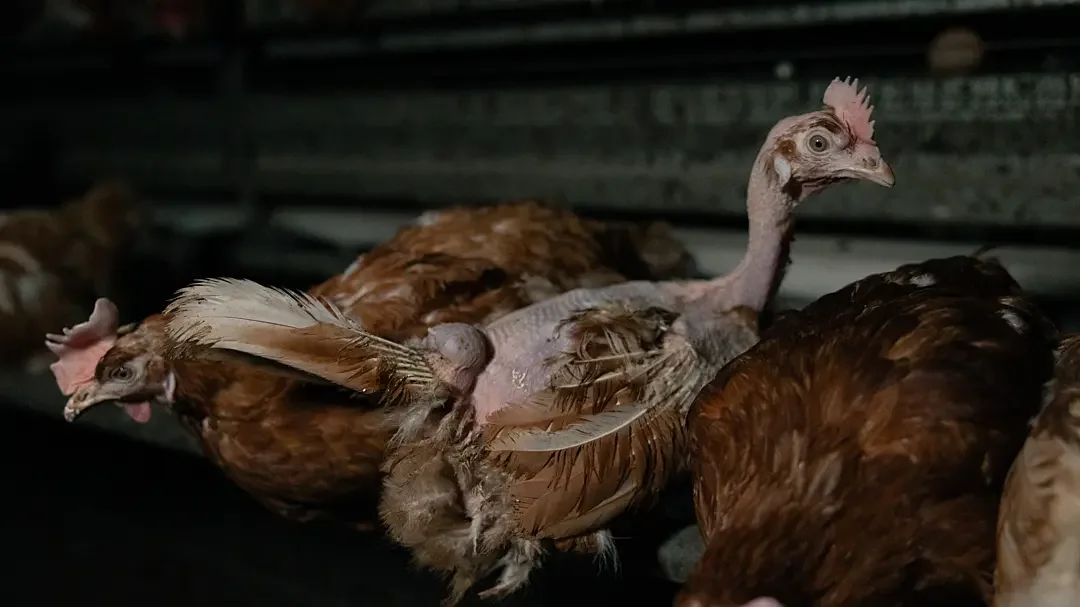
Earlier this year we conducted an interview with Jeff Rigear, an animal rights activist, who along with several colleagues documented unspeakable cruelty on several egg farms in British Columbia, Canada. Upon entering these facilities they discovered manure pits beneath the rows of battery cages. Some of these mounds of manure were almost six feet high. And half-buried in those manure pits were hens who accidentally fell into the pits after having escaped their cages or were improperly handled by farm workers. These poor birds had been physically unable to extract themselves from the awful filth and had been left there to die.
The activists reported what they saw to the British Columbia SPCA (Society for the Prevention of Cruelty to Animals) and provided extensive photo and video evidence. It made national and international headlines, spurred on in part by a media blitz from PETA who had also received copies of the disturbing images. Since the airing of this story, the farms in question have been decommissioned as authorities continue to investigate. No charges have been laid as of this publishing date.
However, we have learned that several of the activists rescued some of the hens they found submerged in the muck. Meghan Beattie, of Vancouver Chicken Save and Board Member of Liberation BC, recently published a photo diary of the amazing recovery these hens have made since being rescued. We wanted to share this good news with our readers. Meghan has been kind enough to share her photos and personal thoughts with Egg-Truth (please see gallery further below).
"I don't know that I can put into words what this experience was like for me and how it changed me. And I won't try. I won't describe my journey, because it's not about me, it's about these sweet girls. Their lives and new freedom. I'll let these photos tell their story. But I will share this; I have so much respect and gratitude for the humans that led this rescue and invited me to join. This is at a battery cage farm in the Fraser Valley. Our plan going in was to just get footage, but when we arrived the doors were open. The chickens that had been in the battery cages were spent and had been taken to slaughter. Battery cage barns are set up in a way that the cages are above ground - so all the feces and filth falls to the lower, bottom level. When we saw the giant back doors wide open we peaked in and saw these babies. Many were running around, probably not realizing they could walk themselves right out. But then we saw others stuck in wet pools of fecal matter. Some still alive, some not... We took all the girls that were stuck to our vehicle - 21 in total - and we were going to go back for all the others but then an alarm went off and we had to leave them behind. One of our team took all 21 back to his house in Deep Cove. A couple days later we bathed them and, slowly but surely, with vet visits, medicine and lots of love and attention, most of them got stronger and healthier. Unfortunately, some girls died on that first night, and others succumbed to their wounds and broken bodies days and weeks into their new found freedom. But this story does have a happy ending. Even though almost half of these sweet girls passed away after their rescue, they died free birds. They died a less painful and lonely death than what they would have if we hadn't gone to that barn that night. The other 11 girls are thriving and will live out their lives safe, happy and free. As all earthlings deserve to do." - Meghan Beattie