Open Letter To The Ontario Legislature (Canada)
“Psychology Today” published an article, dated June 16, 2020, by Marc Bekoff, Ph.D., professor emeritus of Ecology and Evolutionary Biology at the University of Colorado
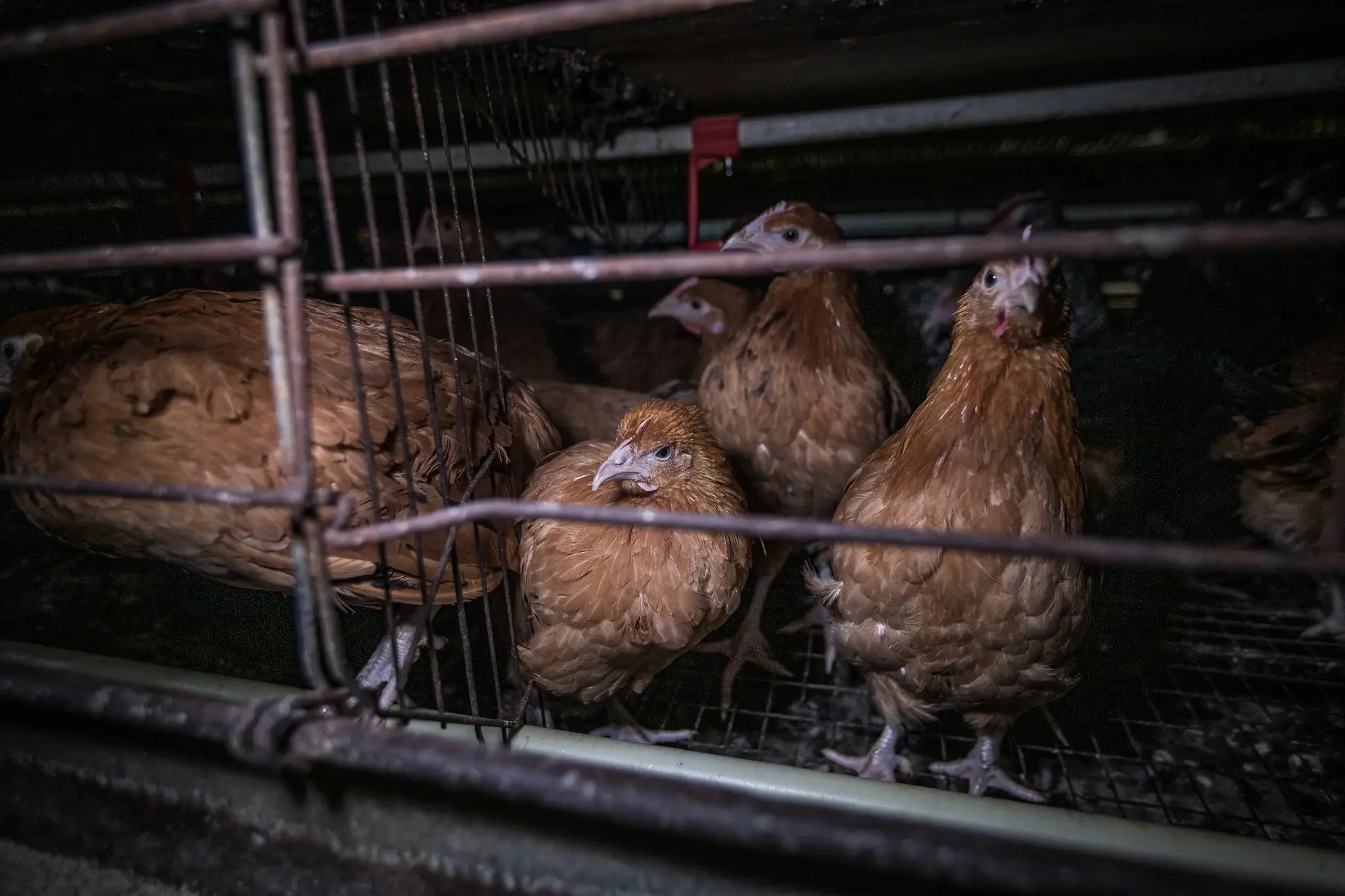
Photo: Sabrina Desgagne, taken 2018, Fearman’s pork processing facility, Burlington, Ontario. Images like these will no longer be seen by the public as a result of Bill 156.
Wednesday, June 17, 2020
Dear Ontario Member of Provincial Parliament,
“Psychology Today” published an article, dated June 16, 2020, by Marc Bekoff, Ph.D., professor emeritus of Ecology and Evolutionary Biology at the University of Colorado, Boulder, and co-founder with Jane Goodall of Ethologists for the Ethical Treatment of Animals, regarding statements made by the Ontario Federation of Agriculture. Read here: https://www.psychologytoday.com/us/blog/animal-emotions/202006/do-animals-think-or-feel
In particular, the OFA’s following statement to the Standing Committee on General Government regarding the Security from Trespass and Protecting Food Safety Act (Bill 156) as it relates to the cognitive ability of non-human animals:
"The concept of 'sentient beings' refers to beings with the power to reason and think. The term also implies beings with an awareness of their surroundings who respond to sensations, have cognitive thoughts and have the capacity to perceive and experience life subjectively. Feeling is a subjective state, available only to the animal feeling it. As animals and humans are built and function differently, it is unfair to automatically attribute the sensations experienced by humans to be the same as those experienced by animals. Humans have the ability to communicate their experiences, and what they feel. Since animals cannot communicate with us, there’s a huge assumption by animal activists that animals have emotional responses and the ability to reason and think, in the same way that humans do. We simply do not know if animals are capable of reasoning and cognitive thought, therefore we cannot attribute human qualities of reasoning and cognitive thought on animals as the activists would like."
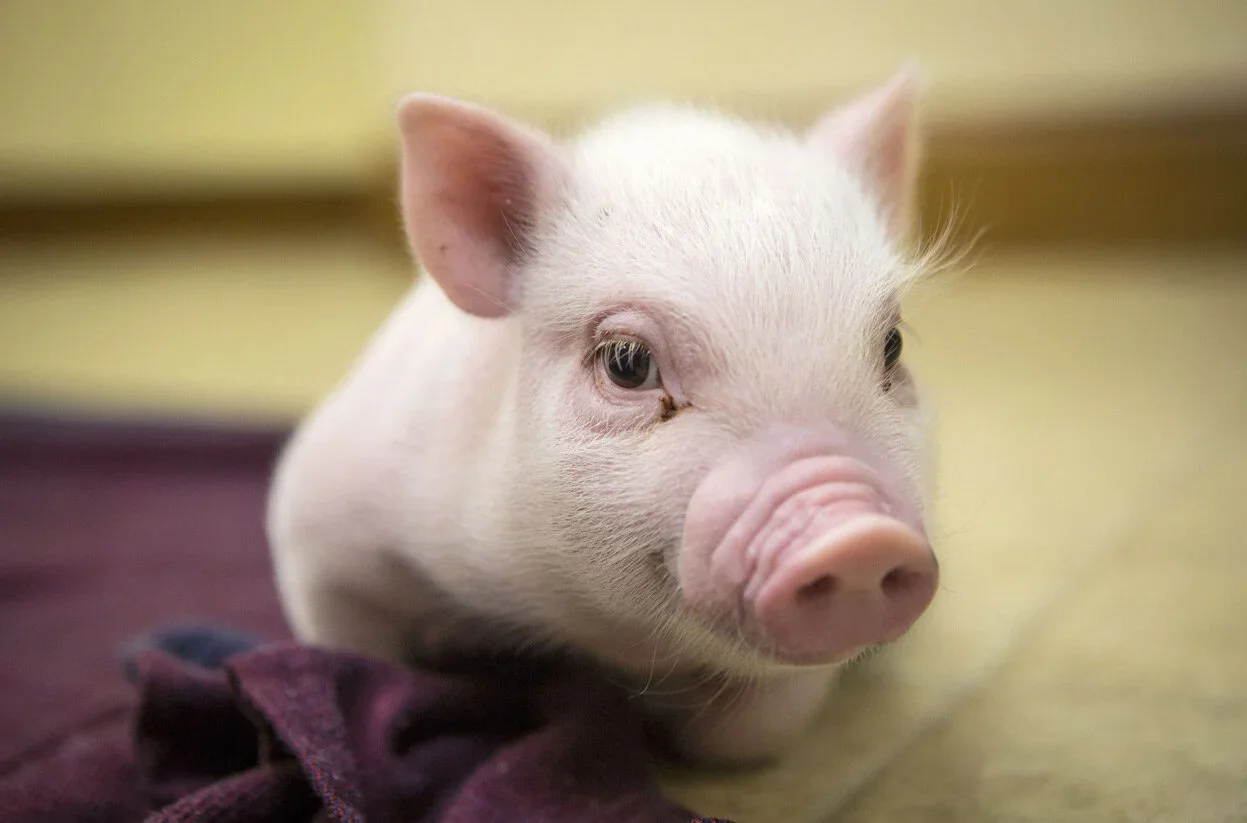
Mr. Bekoff rightly expressed shock and dismay at the ludicrous nature of such an assertion. The sentient nature of non-human animals is not a debatable point. Read here “The Cambridge Declaration of Consciousness”: https://www.egg-truth.com/egg-blog/2019/5/13/the-cambridge-declaration-on-consciousness
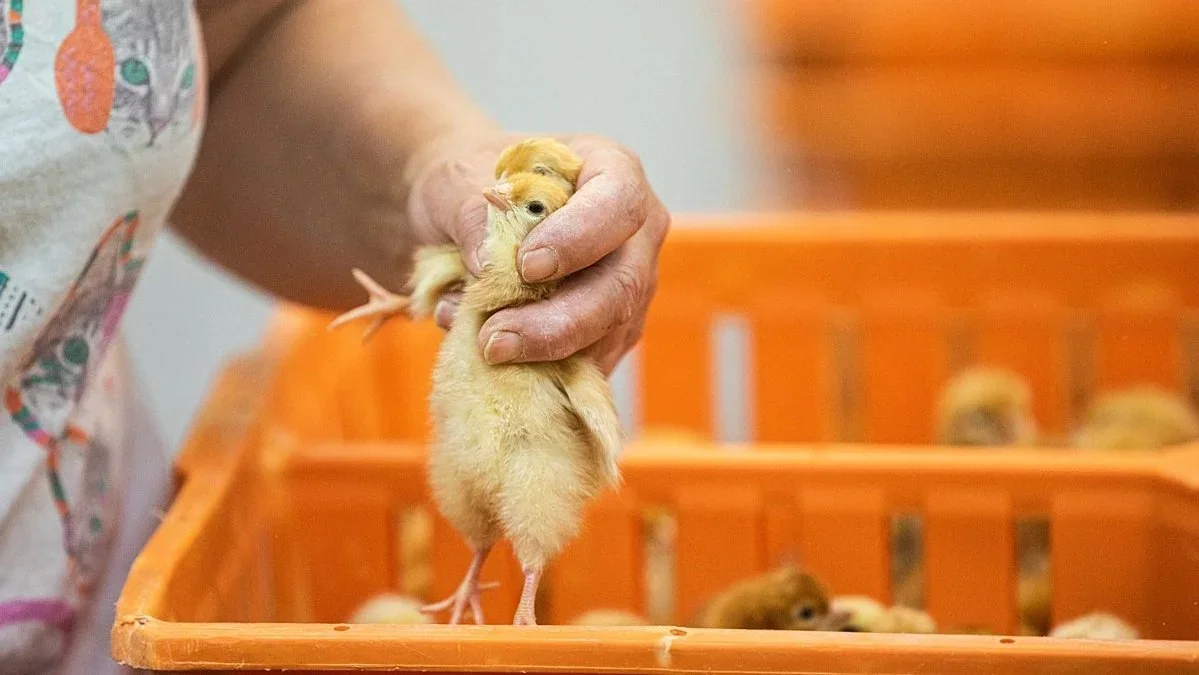
We understand that the OFA and its members have no interest in the public ever seeing how farmed animals are genetically manipulated, routinely mutilated, altered, confined, prodded, transported and slaughtered in Ontario – this wouldn’t be good for business.
We also understand that the OFA and its members have to assume a level of extreme, cognitive dissonance on these matters to assuage any moral culpability in their collective treatment of farmed animals.
The OFA is free to live in a universe where up is down, left is right and animals are not sentient. What is most outrageous is the OFA either knowingly and willingly lied to the standing committee, or were in possession of such a level of stupidity as to warrant them from being barred from making any submissions related to farmed animal welfare in future. Any credibility they may have had in the eyes of the public should be completely shattered.
Given taxpayers money is used to subsidize and help fund an organization that attempts to fool elected officials and the public by pretending they have some unique insight into the subject at hand, is of great offense and a colossal misallocation of government funds.
Bill 156 is transparent in what it is attempting to do – deny the public from scrutinizing how our food is produced. Bill 156 has nothing to do with safety. This was an industry driven agenda and we object to the OFA attempting to ‘hoodwink’ the standing committee, and thus the public. This is a classic example of regulatory capture and an affront to democracy, free speech and the public’s right to know. For those of you who supported this bill you have succeeded in concealing animal cruelty in our food system – history will judge you, and it won’t be kind.
We look forward to future court challenges on this Bill and it’s inevitable failure.
Regards,
Nigel Osborne, Executive Dir.
Egg-Truth.com
Nigel Osborne is the Executive Dir. of Egg-Truth. Nigel has years of experience related to animal rights and on-line advocacy. Nigel's extensive background in the publishing, outdoor advertising, printing and web design industries over the last 25 years provides him with a strong, creative acumen and business management experience. Through Egg-Truth.com and it's social media channels, Nigel seeks to increase awareness among the public about global egg production and expose the conditions for the billions of hens condemned to laying every year.
Our Position on Cage Free Initiatives
Single-issue campaigns, such as cage-free initiatives, have long been a focus of many animal rights organizations like HSUS.
Photo credit: HSUS
The Humane Society of the United States recently announced what they claim is a huge victory for caged hens in the state of Washington.
Single-issue campaigns, such as cage-free initiatives, have long been a focus of many animal rights organizations like HSUS. There is no doubt living on litter (assuming it is dry and properly cycled) vs. a wire floor for 18 months is less cruel. However, some “free-range” environments still use metal or wire flooring to allow urine and faeces to pass through into the manure pits below (see image below). Nonetheless, caged environments generally tend to provide hens the living space of about 8.5” x 11”. Cage-free environments could potentially give a hen about the equivalent of 12” x 12”.
The method of housing depicted above is considered by many as “free-range”.
However, what is the data showing us as to the effectiveness of these campaigns and are they really a victory for hens forced to endure endless egg laying?
Flock sizes and egg consumption in the U.K., Canada and the United States in 2017 and 2018 are at their highest levels in history and will continue to grow due to demand. As the general public are largely ignorant of standard practices in the egg industry, cage-free initiatives wrongly focus public attention on only one of the many cruel aspects of egg production - the laying phase. Given the general public already does not see the same moral imperative on the issue of egg laying hens with, say, animals used for meat, cage-free initiatives reinforce this false notion and helps to remove any ethical concerns the public may have once had about eggs. And if you doubt this, just read some of the comments on HSUS’s Facebook page as it relates to this “victory” (see below).
And the reality is, for cage-free farms to remain economically competitive in the early days of transition, they will have to increase their stocking densities and/or increase the number of hens per barn. And these hens will still be subject to many of the same illnesses and disease that afflict caged hens. And possibly a few more they wouldn’t have had in a caged environment.
The argument that "cage-free" will increase the price of eggs and thus drive down consumption is not necessarily supported by the data. Once large food retailers and restaurants like McDonald's finally convert their massive, global supply chains to cage-free, the price gap between cage-free and caged eggs will ultimately narrow at the hand of market pressures until there is virtually little to no difference once adjusted for inflation.
Reducetarianism and flexitarianism are also contributing to the increase in egg consumption as consumers seek out protein alternatives for meat. While plant-based proteins are part of those alternative choices, so too are eggs. Single-issue campaigns have not been effective thus far for hens forced to lay eggs. Had they been then we would see egg consumption trending lower, not at an all-time high with projected demand going down, not up. And given that egg production, qualitatively and quantitatively, is the most cruel form of animal agriculture on the planet, this is not good news in terms of reducing overall animal suffering. If egg consumption is at historic highs and will continue to go up, so too will maceration, debeaking, vaccinations, transport and slaughter.
Follow Your Heart’s “VeganEgg”.
We believe the animal rights movement has reached a tipping point. And with the myriad of plant-based alternatives and compassionate choices available, the time has come for a much bigger focus on the care tradition and advocating for leaving all animal foods, including eggs, off our plates. Unfortunately, large animal rights organizations like HSUS and others have not evolved their strategies.
Cage-free legislation is not a victory for animals. It is an anthropocentric justification to make us feel better that we are achieving a measure of success when all the metrics point in the other direction.
Note: this post was updated on May 22 to include a photo of free-range hens on a perforated steel flooring.
Nigel Osborne is the Executive Dir. of Egg-Truth. Nigel has years of experience related to animal rights and on-line advocacy. Nigel's extensive background in the publishing, outdoor advertising, printing and web design industries over the last 25 years provides him with a strong, creative acumen and business management experience. Through Egg-Truth.com and it's social media channels, Nigel seeks to increase awareness among the public about global egg production and expose the conditions for the billions of hens condemned to laying every year.