Egg-free - Tips and Resources
But how does one switch to an egg-free, maybe, vegan diet now? Here are our favourite resources to help replace eggs in your diet.
During the last three weeks, we shared a lot of content regarding the impact of eating eggs on the environment, your health, and the hens.
But how does one switch to an egg-free, or even, a vegan diet? Below are some of our favourite resources to help replace eggs in your diet. And, if you’d like to support a sanctuary to help rescue more layer hens, check out some of the links at the bottom.
Egg Replacements
It’s never been easier to replace eggs in your favourite recipes. The simple and most accessible ones are likely foods that are already in your pantry or fridge.
Here are the top nine options. Choose the right one by understanding what role eggs play in the recipe. Do they act as a binder for leavening, adding moisture, or adding protein? (For a more detailed explanation on this, check out this great post.)
This egg alternative graphic is provided by Vegan Outreach.
Applesauce (binder, moisture)
Aquafaba (binder)
Baking soda and vinegar (leavening agent)
Bananas (moisture)
Chia seeds (binder)
Firm tofu (protein, moisture)
Flaxseed (binding)
Powdered egg replacer (leavening agent)
Silken tofu (protein, moisture)
Many of you may have heard of a popular, plant-based egg called: JustEgg. It is a real revolution for egg-free cooking! But did you know that it’s just one of many fantastic commercial liquid eggs that have been launched in the past few years? Here is a comprehensive list of delicious cruelty-free products on our “Egg Alternatives” page.
Egg-free Recipes
We would also love to share some of our favourite recipes with you. We have a vast collection (whisked together by the gifted chef Linda) on our blog and even more on our Pinterest page. Happy cooking!
Hen Rescue
Now, if week 3 of our series made you want to help there are several options.
First and foremost check out the website, blogs and podcasts from our partners at Catskill Animal Sanctuary. They are entertaining, informative and let you be part of the saved animals’ lives there.
We also love smaller sanctuaries (called micro sanctuaries) that specialize in rescuing ex-battery hens and struggle to make ends meet. Please have a look at the fantastic work of:
Brown’s Microsanctuary (Canada)
This is run by the wonderful and energetic Temara Brown. A microsanctuary for chickens rescued from industrial and small-scale egg & meat farming abused or neglected pets and backyard butchery.
Belle and Fleur (UK)
Haidy at Belle and Fleur (Little Cage Fighters) runs a tight ship with the most loving and luxurious hen home in the UK. She is always happy to chat about hens. She has the experience and access to wonderful vets who have always helped her understand more about her beloved Girls.
NSW Hen Rescue (Australia)
And, finally, there is NSW Hen Rescue (Australia), founded by Catherine Kelaher. She and her volunteers rescue, rehabilitate and re-home sick, injured, abused and abandoned animals that come into their care. They are 100% volunteer-run and provide the individuals rescued the veterinary care and love they need.
We hope you enjoyed our series. Before we wrap things up we would like to give a big ‘Thank You’ to Sentient Media who allowed us to republish their great newsletter content. We highly recommend the website of this non-profit, journalism organization that seeks to create transparency around the use of animals in our daily lives—from food to companionship to laboratory test subjects.
Make sure to check out our daily posts on Twitter, Instagram and Facebook for more information on chickens and the egg industry.
Eggs and Animal Abuse
For the short lives that egg-laying chickens live—usually around 2 years—their lives are stressful. The total number of chickens raised for eggs in Canada is over 25.8 million.
With permission. Originally published by Sentient Media.
For the short lives that egg-laying chickens live—usually around 2 years—their lives are stressful. The total number of chickens raised for eggs in Canada is over 25.8 million.
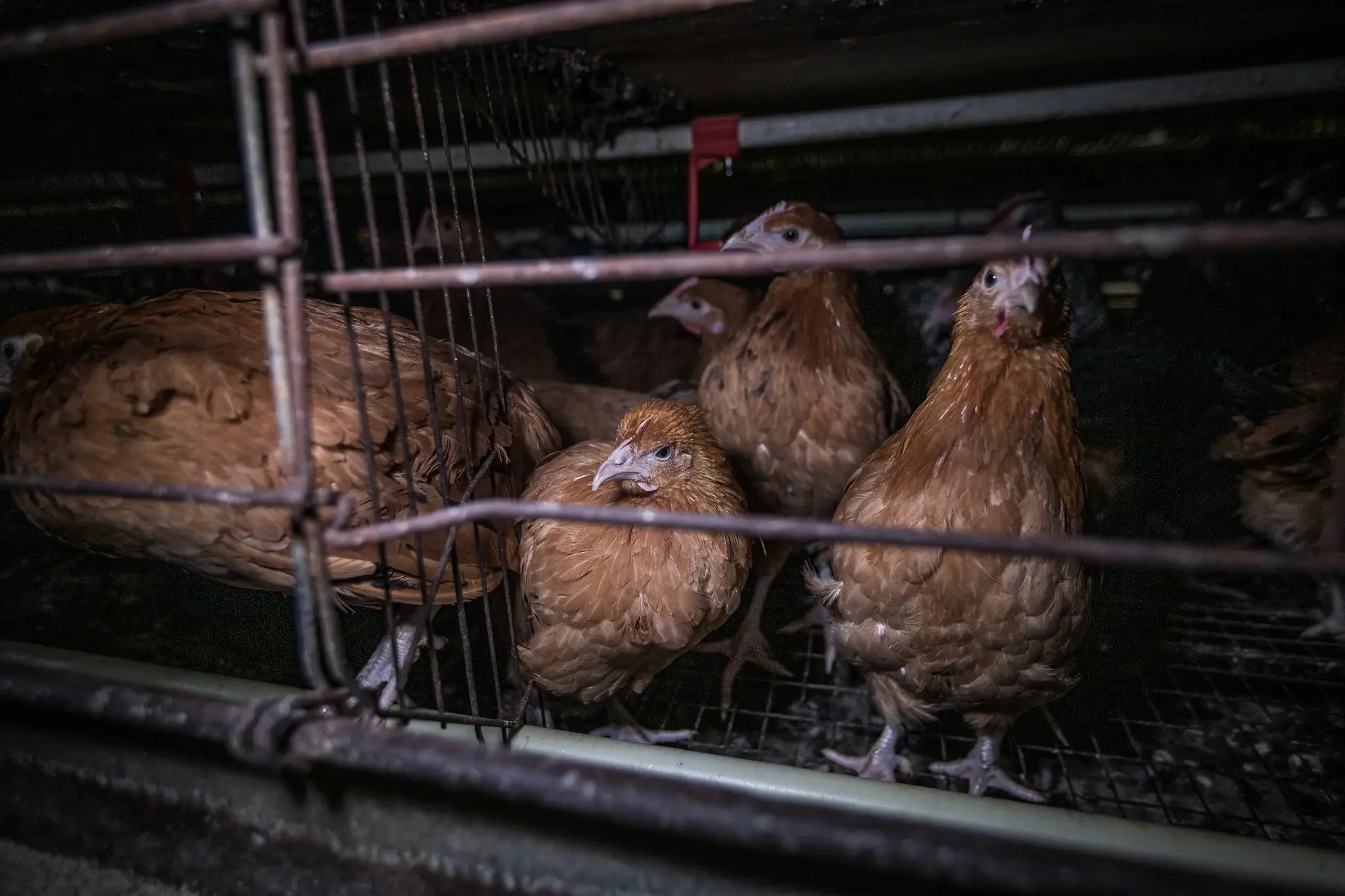
Canada has over 1,000 egg farms and hens are forced to lay approximately 320 eggs in one year. Eighty-four percent of Canadian egg-laying hens spend their entire lives in cages. Around 66 percent of caged birds are housed in conventional “battery” cages, while the remaining 18 percent are housed in “enriched” slightly larger cages. On average, each hen is given less space than a standard sheet of printed paper.
The use of battery cages is still the most common method of raising egg-laying chickens worldwide. In the countries that are part of the International Egg Commission, which includes Nigeria, the U.S., Brazil, and Germany, about 88.7 percent of hens are kept in battery cages.
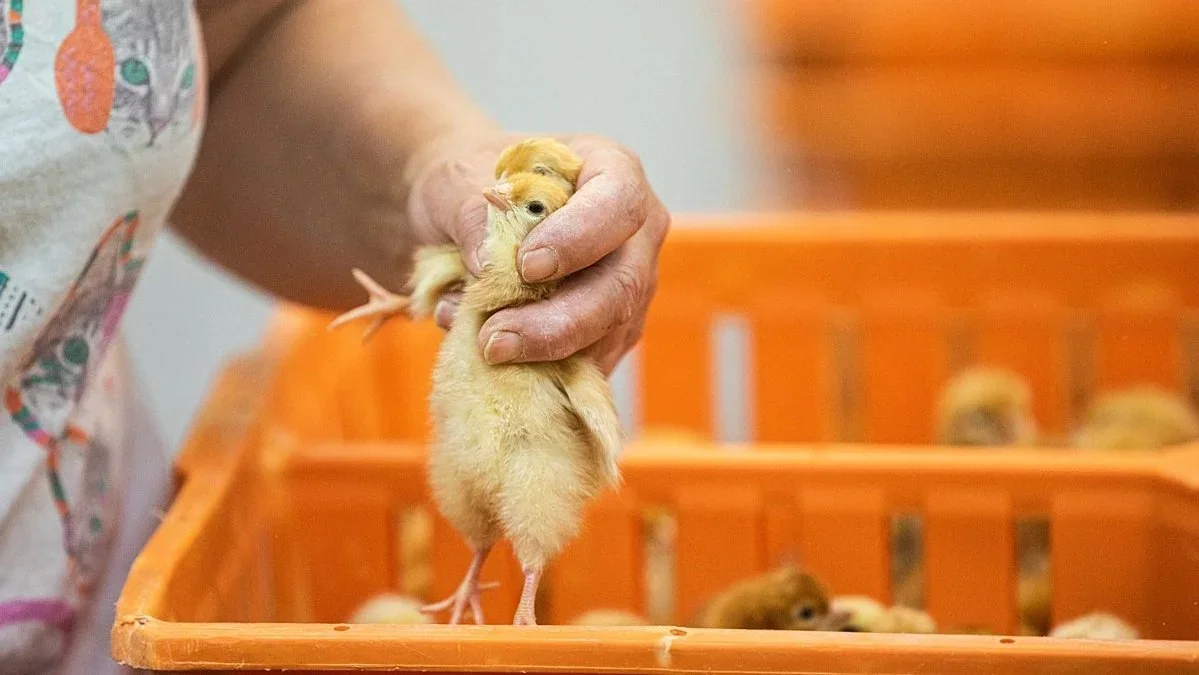
The egg production process is started by debeaking the chicks who are just a few hours or a day old. This process is done without any painkillers. Due to the pain, the chicks often are unable to eat or drink water leaving them dehydrated and starving until they heal. As there is not enough space, the hens are not able to move around or expand their wings. Additionally, they are unable to clean themselves and have no option but to sit on their urine and feces.
The male chicks born in the egg industry are regarded as waste and are discarded within hours of being born. It's a standard practice to throw them in the garbage, kill them in gas chambers, or grind them in "Macerators."
The air inside egg farming buildings is full of ammonia which is toxic for the birds and they can suffer respiratory illnesses and even die from the effects. Because the number of hens within factory farms is large, farmers are unable to keep up with the dead birds, so the surviving hens are often forced to live next to other dead hens.
Rather than the 10 to 15 eggs laid naturally in a year by red jungle fowl—the presumed ancestor of today’s domestic chicken—industrially farmed hens have been manipulated to lay more than 300 eggs per year. This is almost 30 times more than the natural amount of eggs produced by one hen.
For a more detailed record of the life of layer-hens, please visit our “Life of a Hen” page.
Please consider taking ‘Petunia’s Pledge’ below and enjoy the free live events organized by Catskill Animal Sanctuary.
Eggs and Health
Eggs and health - the fat and cholesterol found in eggs can harm heart health and lead to diabetes, as well as prostate and colorectal cancers.
The fat and cholesterol found in eggs can harm heart health and lead to diabetes, as well as prostate and colarectal cancers.*
Bold claims - let’s dive into this and have a closer look at cholesterol, protein and why eggs are not the health food they are claimed to be.
Cholesterol
For almost five decades it has been conventional wisdom that dietary cholesterol should be limited. For the average person, this means consuming less than 300 mgs per day, and less than 200mg per day for hyper-responders, those with type 2 diabetes or pre-diabetes and those who are at risk of cardiovascular disease - which is most people who “expect to live past middle age”. For the record, one average-sized egg contains approximately 215 mgs of dietary cholesterol.
Despite these long-standing restrictions, a flurry of media reports recently has cited studies now claiming that dietary cholesterol does not actually increase overall cholesterol levels in the blood. These studies claim we no longer have to be concerned about these previous restrictions. In other words, feel free to eat as many eggs as you want! And, shockingly, some studies are even suggesting that eating eggs can actually reduce the risk of heart disease.
Even the United States Office of Disease Prevention and Health Promotion as far back as 2015 were advised by a panel to drop any recommendations that limit cholesterol intake. It is of particular interest to note that Dr. J. David Spence, professor of pharmacology and clinical neurology at the Robarts Research Institute, Western University in London, Ontario, Canada, has written extensively that this recommendation, has been “heavily influenced by propaganda from the egg industry”.
Protein
Some nutritionists will concede that it is just the egg yolk that should be avoided despite the industry propagating the myth that cholesterol in eggs is harmless. Nutritionists will advocate, however, for the consumption of egg whites because it is almost all protein.
While protein is essential in our diets, there is a balance between excessive and adequate. In other words, you can get too much of a good thing! IGF-1 (insulin growth factor) is a hormone in the blood that regulates the replenishment of old and dying cells with new ones in our body. Excessive protein consumption over time can elevate IGF-1 to abnormally high levels and promote cellular growth exceeding our natural requirements. Elevated levels of IGF-1 have been linked to various forms of cancer.**
To learn more about the harmful effects of egg consumption on human health, please visit our “Eggs and Our Health” page.
Please consider taking ‘Petunia’s Pledge’ below and enjoy the free live events organized by Catskill Animal Sanctuary.
Eggs and the Environment
Eggs and the environment - a topic seldom talked about. But this overview shows that large egg farms do a number on their immediate environment and the ecosystem.
(With permission. Originally published by Sentient Media in their Newsletter ‘100 Voices - Day 24’)
In an intensive system of farming, billions of chickens live in cramped conditions and are exploited every year for meat and egg production. This form of farming aims to keep as many birds as possible in a limited area while maximizing profits.
It is becoming increasingly acknowledged that animal agriculture is a major contributor to the climate crisis. Animal agriculture is also destroying forests, polluting rivers, and displacing communities across species.
Chicken farming’s impact on the climate is less than cattle farming’s environmental impact, however, greenhouse gas emissions (GHG) per serving of poultry are still 11 times higher than those for one serving of beans.
Egg production is no different. The impacts range from poor living conditions for the animals, poor working conditions for humans, and pollution and degradation of the environment. Recently, research published by the Journal of Cleaner Production revealed an ecological footprint from the current productive system of eggs, where every dozen eggs emit 2.7 kilograms of CO2, and approximately 196 liters of water are used to produce one egg.
Chicken meat is playing an increasingly large role in the American diet as people trade red meat for more poultry. Americans now eat more chicken per capita than beef or pork. The annual American appetite for chicken produces 129 billion lbs of CO2 emissions per year—the same amount as 12.37 million cars. Between 1981 and 2006, GHG emissions from the Canadian poultry industry increased by 40%.
Due to the rise of global demand for chicken and eggs, animal feed production must also rise. Over one-third (37%) of global soy is fed to chickens and other poultry. In 2004, the chicken farming industry utilized a total of 294 million tons of animal feed. The global poultry feed market was valued at $175.9 billion in 2018, growing at a rate of 4.5% over the forecast period.
This increased feed production has resulted in the expansion of croplands resulting in deforestation of biodiverse forests and pollution of water resources. This pollution is caused by the use of mineral fertilizers, pesticides, and herbicides. It also contributes to air pollution from nitrogen fertilizer which happens through the evaporation of ammonia.
Sentient Media’s ‘100 Voices’ Newsletter is a creation of their Social Media Fellowship program sponsored by VEGFUND.
Please consider taking ‘Petunia’s Pledge’ below and enjoy the free live events organized by Catskill Animal Sanctuary.
Petunia's Pledge - From Vegetarian to Vegan In One Month
Join us from Oct-1 to Nov-1 to move to a vegan lifestyle together with the Catskill Animal Sanctuary.
Dear vegetarians, vegan-curious, and everyone interested in a healthier and more compassionate lifestyle!
October 1st marks World Vegetarian Day. And we couldn't be more excited about people coming together to consider making lifestyle changes for the better. In partnership with Catskill Animal Sanctuary, we will guide you through a month-long information campaign about transitioning from a vegetarian lifestyle to a vegan one.
While it’s not as simple as crossing out a few letters of a word, we’ll show you the benefits of a vegan lifestyle in hopes of getting you started on your journey to a cruelty-free diet!
The first week of the campaign will start with information about the environmental impacts of eggs. Week two will focus on the health benefits of leaving eggs off your plate. Week three will reveal the realities of egg farming from an animal welfare perspective. In week four we’ll provide additional information on how to transition to a vegan lifestyle. We’ll provide lots of resources and links for delicious, egg-free alternatives, egg-free recipes and to help with the transition!
And please consider taking ‘Petunia’s Pledge’ below and enjoy the free live events!
See you throughout October.
Sincerely,
The Egg-Truth Team
We’re going to have a lot of fun this month trying out new vegan recipes, chatting in our Facebook group about our favourite vegan cheeses — WHOA those have come a long way! — and so much more!
You can click here to view & download Petunia’s Vegan Tips & Tricks.
If you have questions, please write to my pal Heather Decker, our Communications & Retail Associate — she helps out because my handwriting is chicken scratch!
You can jump onto our Facebook group with questions too! There are lots of friendly faces there!
We’ll send you some more emails throughout the month, but don’t be shy about questions! My friends and I are here for you.
Mark your calendar for these upcoming events:
October 13th at 6:00 PM Vegan101 Webinar and Dinner Cookalong with Linda Soper-Kolton, Award-Winning Chef & Cookbook Author
October 16th at 12:00PM Vegetarian To Vegan Workshop at Catskill Animal Sanctuary: A Live Recipe Demo With Chef Linda PLUS A Tour With Sanctuary Founder Kathy, and more!
Cooking Classes! Pick one and get your free ticket with the code PETUNIAJUNE21
PLUS Virtual Sanctuary on our Facebook Page every Thursday at 1:00 PM of course! My human pals, Andrea & Lauren, are creating LOTS of amazing content. I don’t want to spoil the surprise — but you won’t want to miss it!
Thanks for taking the next step on your compassionate journey with us!
Signed,
Petunia ;)