Health Nigel Osborne Health Nigel Osborne

Eggs Over (dis-)Easy?

(The USDA has been) warning egg producers against the illegal use of false or misleading advertising . . .

In this eight-minute video from Nutrition Facts, consumerist collusion between the USDA and the egg industry are revealed via documents sourced through the Freedom of Information Act. Warning egg producers against the illegal use of false or misleading advertising, the USDA repeatedly advises substitution for the words "safe", "healthy", and "nutritious":

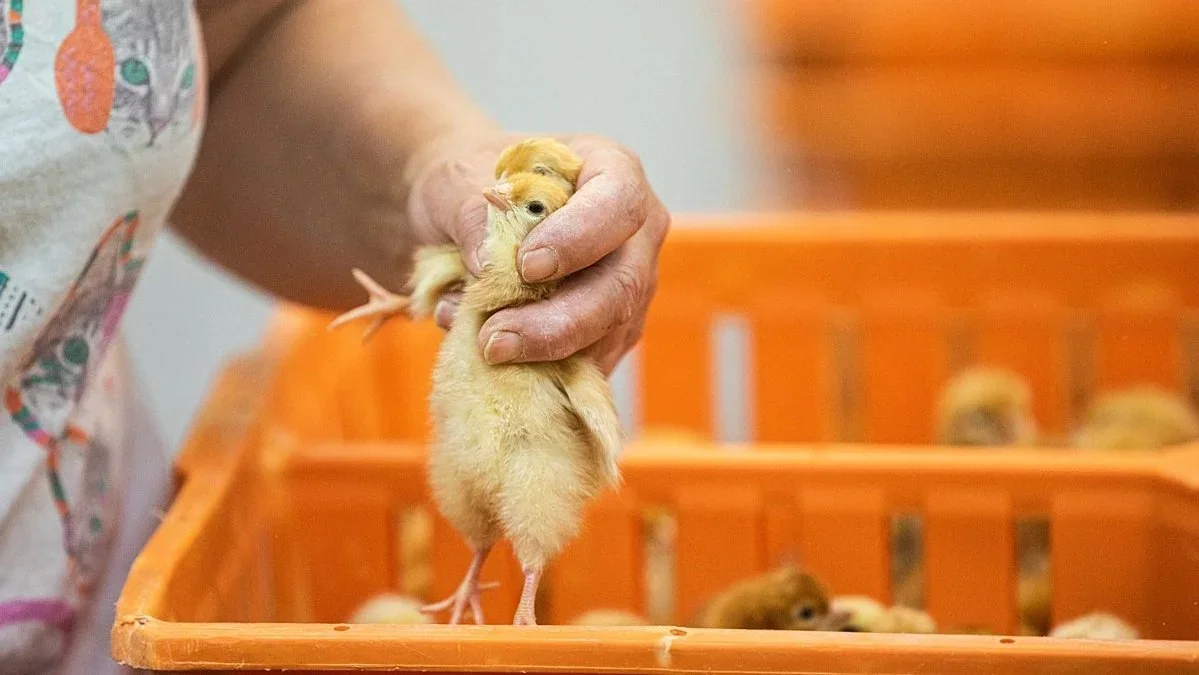
It is no surprise that egg yolks are high in cholesterol, and that eggs are calorie bombs given that their evolutionary purpose is to feed a growing embryo. It is also no surprise that those with a vested financial interest in the production of eggs would seek to ameliorate any negative connotation with their brand or product. What is surprising is the level of self-awareness these companies seem to have about the atrocities they're committing, not only with regard to the health of the humans consuming eggs but also the treatment of the hens to whom they owe their livelihood. What's also surprising is that taxpayers are helping foot the bill for their own manipulation.

A review by the U.S. Federal Trade Commission deems advertising by the egg industy is “false, misleading or deceptive”.

These documents between the USDA and egg companies demonstrate that the federal government has a hand in shaping public perception, re-framing words ("healthy" is now "nutritionally-dense"; "safe" is now "fresh") in what I can only describe as a blatant attempt to pull the wool over our eyes. What's in it for them? What is the financial or moral hook on which the USDA is hanging its cap? Surely fielding such questions and offering alternative verbiage carries a cost to the USDA, an organization so woefully understaffed that poultry farm inspections were given over to farm employees in 2014 due to nationwide USDA inspector shortages.  

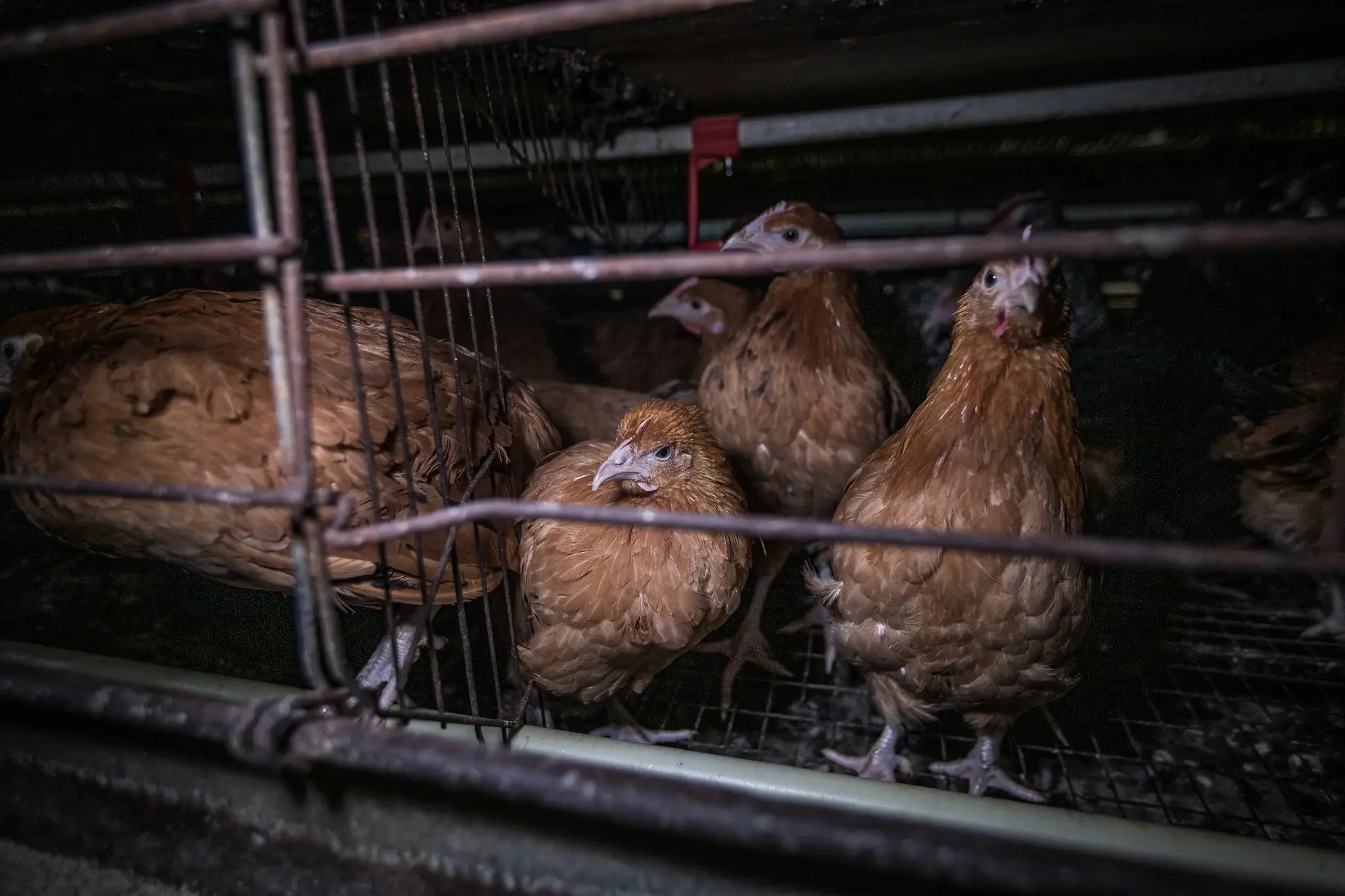
Denial is a powerful thing, and cognitive dissonance can only be stomached for so long. With these ideas in mind, I had wrongfully assumed that industrial agriculturalists as a whole had all but gone numb to the idea of psychological nuance, patting themselves on the back for a bottom line honestly achieved through good ol' fashioned farm work. Sure you gotta make the cartoon chicken look happy and the farm in the background blood-free. Consumerists can get "overwhelmed" otherwise... but to have the blatant suggestion that advertising should not depict scenes that are "too industrial"--battery cages, large warehouses filled with eggs, machinery, etc.--demonstrates that their willingness to manipulate the psyche of the consumer precedes their concern with demonstrating sterility and mechanized efficiency, reducing hens to units on a Henry Ford production line.

Wow. The fact that these companies are still having to mitigate consumer feelings for the hen after all that commodification and utilitarian production speaks volumes to the innate strength of empathy in avian-human connection. I guess that's the silver lining here. Bottom line, egg consumption can lead to heart disease, and perhaps even worse, heart dis-ease: that achy feeling that creeps in when empathy is swallowed by dissociation.

This blog post is re-published with the permission of Elizbeth M. Burton-Crow, Ph.D.


Elizabeth_Burton-Crow.jpg

Egg-Blog contributor: Elizabeth M. Burton-Crow, Ph.D. currently works at the Depth Psychology Program, Pacifica Graduate Institute. Elizabeth does research in Philosophy of Science, Ecopsychology, and Trans-species Ethics. Her current project is 'Poultry, Parrots, and People: Exploring Psyche Through the Lens of Avian Captivity'. Dr. Crow is also a facuity member of The Kerulos Center for Nonviolence

Read More
Philosophy, Chickens Nigel Osborne Philosophy, Chickens Nigel Osborne

Learning How to Speak Bird

Did you know that in this very moment, there are tens of billions of birds held in captivity?

Photo credit: We Animals Media

Did you know that in this very moment, there are tens of billions of birds held in captivity? Worldwide, “commercialized” chickens alone outnumber us by a ratio of nearly seven to one. That’s seven chickens for every human on the planet, more if you consider apartment hens and backyard flocks, a growing trend in many cities and suburban areas.

Despite its astounding prevalence, avian captivity as a phenomenon remains all but invisible, something most people hardly even think about, let alone talk about.  (And frankly, those with a vested interest in maintaining the status quo would prefer to keep it that way.)

An eleven-year-old me and my first “pet” rooster, Bonnie. Roosters like Bonnie are perhaps the most invisible captive birds in modern society, with the majority silenced shortly after leaving the shell. Those remaining survivors are often labeled nuisances and banned in municipalities, and some find themselves shredded alive for bloodthirsty sport. A lucky few find their way to loving flocks or to sanctuary

The deafening silence surrounding bird captivity is what inspired me to find my voice and more recently, to undertake a five-year study on “Poultry, Parrots, and People” in order to delve into the psychological aspects of bird confinement.  What I discovered is that while the motivations underlying avian captivity are as varied as the species we keep, most share one theme in common: commodification at the expense of the birds.

Parrots, for example, are often sought for their beauty and companionship—aesthetic friendship for purchase at a pretty price.  Yet beauty fades and relationships are complicated, leaving many parrots left to languish alone—or worse.  By contrast, the chickens, ducks, geese, and other species we refer to collectively as “poultry” are not considered in post-industrialist society as individuals at all so much as means to an end: feathers, eggs, and flesh measured most efficiently in dollars per pound.  The end result is the same for poultry as it is for parrots—or worse.

Psychology informs us that commodification is, in essence, a form of objectification, a psychological projection that inflicts harm on an unfathomable scale, both to birds and to us as their captors. Peeling back this Cartesian projection reveals its irrational nature, for humanity’s collective lack of consideration for living, breathing birds is a strange paradox given that our affinity for avian beings is an ancient one, steeped in rich symbolic potency informed by the experiences of countless generations. So why is there currently such a wide schism between our perception (and treatment) of the birds we encounter in day-to-day life and those of our imagination, the sacred metaphorical images that speak in the universal language of the archetypes?

Perhaps in holding the tension of these opposing forces, we have forgotten a third thing, the one at the heart of the matter: The birds themselves.

Meet Pimento at the age of one month, a young Ameraucana chicken who would later grow into a brave and beautiful hen. Pimento stars in the 30-minute film “A Bird Tail”, which chronicles her adventures living in a diverse, multi-species flock.

In my experience, if you spend enough time with a bird, you will begin to see the true colors of their character.  They are nothing short of magnificent, far brighter than any feather.  The birds i’ve known are sparkling and imaginative and playful, sometimes generous, always curious, and oftentimes rude.  They are individuals with their own personalities, just like you and me.  (I guess it turns out the species divide might just be another one of those pesky psychological projections.)

Cocoa awaits the results of her X-ray, and the news is not good. Modern “layer” hens have genomes that have been manipulated by humans to ramp up egg production year-round. Instead of the dozens of eggs laid annually by her wild ancestors, today’s hen can lay hundreds and as you can imagine, this wreaks havoc upon their reproductive systems. On Cocoa’s X-ray, we discovered 1) an ectopic egg stuck inside her abdomen and 2) that we were too late to save her.

With these newly-honed avian eyes I can see it is no longer enough to speak about birds; we need to learn to speak with them, to include their voices in the conversation.  This realization inspired me to create the short film “A Bird Tail”, narrated from the perspective of a backyard Ameraucana hen named Pimento, one of the many avian loves of my life.  I invite you to watch the film, to get to know Pimento and to fall in love with her, too.

Because isn’t Love the most motivating force of all, stronger than psychological projections like objectification and speciesism?  Surely our love for all living things compels us to take flight in the face of immeasurable odds, to get our hands dirty, to learn how to speak for (and to!) Birds and other animals—beginning with telling the Egg-Truth about eggs, for instance.

So I implore you, dear reader, to seek your catalyst.  Find not only your voice but the courage to wield it, to crow until you’re blue in the face, until you’re absolutely certain you’ve woken every

Sleeping

Neighbor.

Billions of silenced birds depend upon it.


Elizabeth_Burton-Crow.jpg

Egg-Blog contributor: Elizabeth M. Burton-Crow, Ph.D. currently works at the Depth Psychology Program, Pacifica Graduate Institute. Elizabeth does research in Philosophy of Science, Ecopsychology, and Trans-species Ethics. Her current project is 'Poultry, Parrots, and People: Exploring Psyche Through the Lens of Avian Captivity'. Dr. Crow is also a facuity member of The Kerulos Center for Nonviolence

Read More