Egg Industry, About Us, Cage-free Eggs Nigel Osborne Egg Industry, About Us, Cage-free Eggs Nigel Osborne

Our Position on Cage Free Initiatives

Single-issue campaigns, such as cage-free initiatives, have long been a focus of many animal rights organizations like HSUS.

Photo credit: HSUS

The Humane Society of the United States recently announced what they claim is a huge victory for caged hens in the state of Washington.


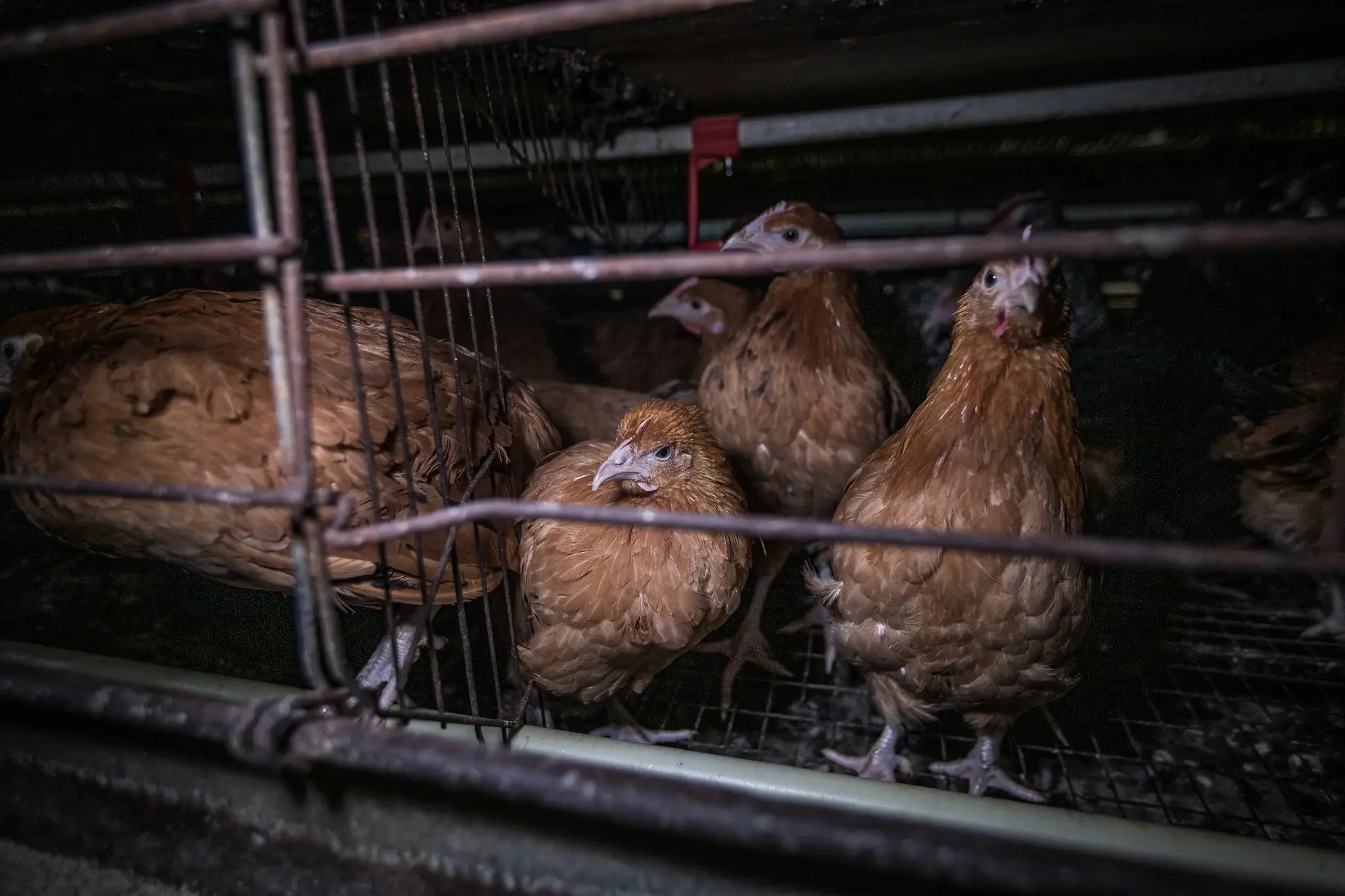
Single-issue campaigns, such as cage-free initiatives, have long been a focus of many animal rights organizations like HSUS. There is no doubt living on litter (assuming it is dry and properly cycled) vs. a wire floor for 18 months is less cruel. However, some “free-range” environments still use metal or wire flooring to allow urine and faeces to pass through into the manure pits below (see image below). Nonetheless, caged environments generally tend to provide hens the living space of about 8.5” x 11”. Cage-free environments could potentially give a hen about the equivalent of 12” x 12”.

The method of housing depicted above is considered by many as “free-range”.

However, what is the data showing us as to the effectiveness of these campaigns and are they really a victory for hens forced to endure endless egg laying?

Flock sizes and egg consumption in the U.K., Canada and the United States in 2017 and 2018 are at their highest levels in history and will continue to grow due to demand. As the general public are largely ignorant of standard practices in the egg industry, cage-free initiatives wrongly focus public attention on only one of the many cruel aspects of egg production - the laying phase. Given the general public already does not see the same moral imperative on the issue of egg laying hens with, say, animals used for meat, cage-free initiatives reinforce this false notion and helps to remove any ethical concerns the public may have once had about eggs. And if you doubt this, just read some of the comments on HSUS’s Facebook page as it relates to this “victory” (see below).

Comment_1.png
Comment_2.png
Comment_4.png
Comment_5.png

And the reality is, for cage-free farms to remain economically competitive in the early days of transition, they will have to increase their stocking densities and/or increase the number of hens per barn. And these hens will still be subject to many of the same illnesses and disease that afflict caged hens. And possibly a few more they wouldn’t have had in a caged environment.

The argument that "cage-free" will increase the price of eggs and thus drive down consumption is not necessarily supported by the data. Once large food retailers and restaurants like McDonald's finally convert their massive, global supply chains to cage-free, the price gap between cage-free and caged eggs will ultimately narrow at the hand of market pressures until there is virtually little to no difference once adjusted for inflation.

Reducetarianism and flexitarianism are also contributing to the increase in egg consumption as consumers seek out protein alternatives for meat. While plant-based proteins are part of those alternative choices, so too are eggs. Single-issue campaigns have not been effective thus far for hens forced to lay eggs. Had they been then we would see egg consumption trending lower, not at an all-time high with projected demand going down, not up. And given that egg production, qualitatively and quantitatively, is the most cruel form of animal agriculture on the planet, this is not good news in terms of reducing overall animal suffering. If egg consumption is at historic highs and will continue to go up, so too will maceration, debeaking, vaccinations, transport and slaughter.

Follow Your Heart’s “VeganEgg”.

Follow Your Heart’s “VeganEgg”.

We believe the animal rights movement has reached a tipping point. And with the myriad of plant-based alternatives and compassionate choices available, the time has come for a much bigger focus on the care tradition and advocating for leaving all animal foods, including eggs, off our plates. Unfortunately, large animal rights organizations like HSUS and others have not evolved their strategies.

Cage-free legislation is not a victory for animals. It is an anthropocentric justification to make us feel better that we are achieving a measure of success when all the metrics point in the other direction.

Note: this post was updated on May 22 to include a photo of free-range hens on a perforated steel flooring.


Nigel_headshot_ET.jpg

Nigel Osborne is the Executive Dir. of Egg-Truth. Nigel has years of experience related to animal rights and on-line advocacy. Nigel's extensive background in the publishing, outdoor advertising, printing and web design industries over the last 25 years provides him with a strong, creative acumen and business management experience. Through Egg-Truth.com and it's social media channels, Nigel seeks to increase awareness among the public about global egg production and expose the conditions for the billions of hens condemned to laying every year.

Read More
About Us Nigel Osborne About Us Nigel Osborne

Welcome to Egg-Truth!

Welcome to Egg-Truth! A website designed to educate and inform consumers, and the public at large, about the true nature of: industrialized egg production, it's affect on human health, the environment, and most importantly, the hens who endure one of the most miserable and heavily exploited existences in all of animal agriculture.

Welcome to Egg-Truth! A website designed to educate and inform consumers, and the public at large, about the true nature of industrialized egg production, it's affect on human health, the environment, and most importantly, the hens who endure one of the most miserable and heavily exploited existences in all of animal agriculture.

Some of the images and content on this web site are of a graphic nature - if you are upset by this, we are sorry. However, it is virtually impossible to tell the true story of egg production and its associated horrors without the use of still images and video. As they say, "a picture is worth a thousand words", and by extension, a video could be worth 10,000.

Often, it is human nature to avert our eyes when we see things that are upsetting, violent or graphic in nature. It is our mind attempting to avoid any potential trauma as a result of looking at unpleasant imagery. Unfortunately, given the amount of eggs consumed globally, our appetite for eggs contributes to the suffering of hens on an unprecedented scale. No animal, with perhaps the exception of chickens raised for meat, endures more suffering, qualitatively and quantitatively, than egg laying hens.

Chickens are social, intelligent and sensitive creatures who are capable of exhibiting problem solving, critical thinking, empathy and a host of other cognitive functions we normally associate with the companion animals we keep in our homes like dogs and cats. Despite this, global, industrialized egg production sees hens as merely a means to an end - a limitless supply of a commodity called: the 'egg'.

While it is true that eggs contain some goodness from a nutritional standpoint, there is nothing healthy in eggs that can't be obtained in far healthier forms of other foods where animal welfare is much less of a concern or not at all. And, many of those foods do not contain the constituents in eggs that are unhealthy and contribute over time to various diseases in humans.

Environmentally speaking, the urine, faeces, methane, ammonia and other toxic gases that are a by-product of billions of hens farmed and slaughtered annually, must be remediated. However, the soil, ground water, rivers, streams, ponds, lakes and coastal run-off areas around the world pay the price as the final destination for much of this waste - and this has a negative impact on our health and wildlife as well. Animal agriculture has become under increasing scrutiny for the amount of water and land dedicated to hydrate farmed animals and to grow food to feed billions of animals confined in feed lots, sheds and barns around the world. And this is no less of a concern with egg production as it is with other species farmed and harvested for human consumption.

We hope you find this website informative. We also hope you share it far and wide - our goal is to become the #1 destination on the web for fact-based information on global, egg production. A lofty goal no doubt, but with your help, we hope to get there one day - and the sooner the better! We intend to post regularly on our blog and our social media channels as they come on-line. So please check back with us frequently, and if you have any questions, need additional information or have suggestions for our website, don't hesitate to reach us via our Contact Us page.

Many thanks!

Photo credit banner image: Jo-Anne McArthur / We Animals

Read More