Egg Industry, Cage-free Eggs Juliane Priesemeister Egg Industry, Cage-free Eggs Juliane Priesemeister

The Cage-Free Illusion: Part 1

Unravel the paradox of the cage-free movement: while hailed as progress, it inadvertently perpetuates systemic issues within the egg industry. Delve into the hidden realities shaping our food system and challenge the status quo with us.

Imagine it is the year 2124!

And, in a world liberated from the shadows of industrial animal agriculture, a young scholar traverses history, probing the slow evolution toward a vegan world. Amidst the enigma of humanity's transition, the scholar encounters the perplexing saga of the cage-free campaign—a purportedly noble initiative tainted by misguided optimism. Activists, employing the foot-in-the-door strategy, aimed for incremental shifts toward cruelty-free futures. Yet, the scholar's exploration unveils a stark reality: the industry cunningly exploited this approach, weaponizing it to evade accountability and perpetuate their cruel practices unimpeded.

As we transition from the idyllic realms of our vegan future back to the present, we confront the harsh realities of today's egg industry. Cage-free systems, heralded as a step towards humane egg production, present themselves as an alternative to traditional battery cages. However, beneath the veneer of progress lies a landscape of exploitation and compromise.

Cage-free: A Definition

Cage-free housing systems in egg production aim to create open environments within barns or buildings, allowing hens to engage in natural behaviors such as perching, nesting, and dust bathing. Unlike conventional cage systems, which confine hens to small wire enclosures, cage-free setups eliminate individual cages to provide freedom of movement.

The primary difference between cage-free and cage systems is the absence of closed wire enclosures. In cage-free systems, hens have the liberty to move around and interact with their environment, promoting their physical and psychological well-being. Unlike free-range and pasture systems that offer outdoor access, cage-free environments typically house hens indoors within spacious barns or buildings, offering protection from predators and adverse weather conditions.

Cage-free: The History

The transition to cage-free egg farms began to gain momentum in the late 20th century, with early initiatives taking root in countries such as Switzerland and the Netherlands during the 1980s and 1990s. These pioneering efforts laid the groundwork for subsequent developments in cage-free egg production, serving as test cases for alternative housing systems aimed at improving the welfare of laying hens. As consumer awareness of animal welfare issues grew and regulatory scrutiny intensified, other countries soon followed suit, with significant advancements in cage-free farming observed across Europe, North America, and Oceania by the early 21st century.

Throughout the 2000s and 2010s, a wave of legislative reforms and corporate commitments further accelerated the transition to cage-free egg production worldwide. Countries such as Germany, Sweden, and the United Kingdom implemented regulations mandating the phase-out of conventional battery cages in favor of enriched and cage-free systems, signaling a paradigm shift in the global egg industry. Similarly, major retailers and food corporations began to adopt cage-free egg sourcing policies in response to consumer demand for more ethically produced eggs, driving further investment and innovation in cage-free infrastructure.

By the 2020s, cage-free egg farms had become more prevalent across the globe, with an increasing share of the supply chains in countries such as the United States, Canada, the European Union, Australia, and New Zealand. Despite initial resistance from the egg industry, the momentum towards cage-free production continued to grow, fueled by a combination of consumer activism, regulatory mandates, and corporate commitments to animal welfare.

This map shows the dominant housing systems on commercial egg farms around the world (click on map to enlarge and zoom in). Source: welfareproject.org

As we peer into the landscape of cage-free egg production across different regions, it's essential to understand the nuanced approaches and regulatory frameworks shaping these systems. By examining the specifics of cage-free farming in the United States, Canada, the United Kingdom, the European Union, and Australia, we can gain deeper insights into the diverse practices and trends driving the evolution of egg production worldwide.

Cage-free: In Comparison

In the USA, Canada, the UK, the EU, and Australia, cage-free systems typically offer more space per hen compared to conventional cage systems, with average space allocations ranging from 550 to 750 square centimeters per hen. Flock sizes in cage-free systems vary widely, often accommodating tens of thousands of hens in large barns or buildings. The size of cage-free barns also varies, with some facilities spanning over 100 meters in length and 25 meters in width to accommodate the large number of hens housed within them. The transition to cage-free housing varies among producers and is influenced by factors such as market demand, regulatory requirements, and industry initiatives.

Countries USA Canada UK EU Australia
Number of Hens in Barn (Range, Average) 1,000 - 100,000 (average varies) 1,000 - 80,000 (average varies) 1,000 - 80,000 (average varies) 1,000 - 100,000 (average varies) 1,000 - 80,000 (average varies)
Space per Hen 1.0 - 1.5 sqm
(10.8 - 16.1 sqft)
1.0 - 1.5 sqm
(10.8 - 16.1 sqft)
1.0 - 1.5 sqm
(10.8 - 16.1 sqft)
0.75 sqm
( 8.1 sqft)
0.55 sqm
(5.9 sqft)
Depopulation Age 80 - 100 weeks 70 - 100 weeks 72 weeks 72 weeks 80 weeks
Number of Eggs per Hen 250 - 320 eggs/year 250 - 320 eggs/year 250 - 320 eggs/year 250 - 320 eggs/year 250 - 320 eggs/year
Cage-Free vs Caged 39% cage-free,
61% caged
17% cage-free,
83% caged
79% cage-free,
21% caged
55% cage-free,
45% caged
57% cage-free,
43% caged
Cage-free by 2025 2036 2027 2027 2036

Cage-free: The Hens

Hens, like many creatures, have natural behaviors and preferences that contribute to their well-being. They enjoy basking in the sunlight, scratching the earth for food, and seeking out safe, secluded spots for nesting. In small flock sizes, they establish pecking orders and maintain social structures.

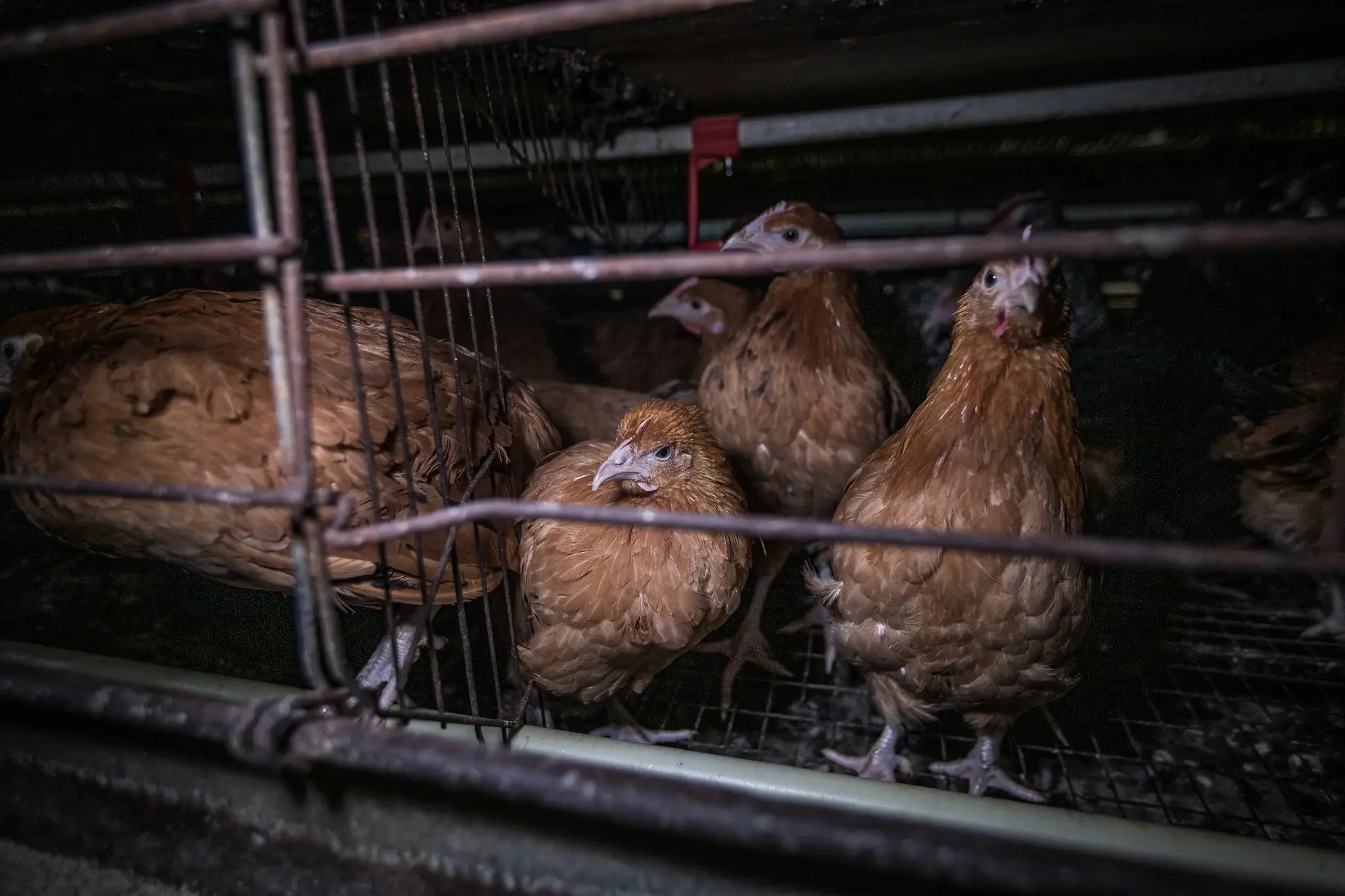
However, the reality for hens in cage-free barns starkly contrasts with their natural inclinations. Instead of sun-drenched pastures and earthy substrates, they find themselves confined within crowded, windowless buildings. Opportunities for natural behaviors like dust bathing and foraging are limited, with thousands of hens competing for space and resources. Nesting areas may lack privacy, disrupting the hens' instinctual need for seclusion during egg-laying.

Despite claims that cage-free systems offer a more humane alternative to traditional battery cages, a closer examination reveals significant shortcomings.

By comparing key factors such as hatchery practices, flock sizes, laying illnesses, and early slaughter rates, we can gain a comprehensive understanding of the true impact of egg production on animal well-being.

Egg Production Comparison Table
Battery Cages Enriched Cages Cage-Free Free-Range Pasture Raised
Hatchery Sourced (Male Chick Culling) Yes Yes Yes Yes Yes
Bred for Overproduction Yes Yes Yes Yes Yes
Laying Illnesses Yes Yes Yes Yes Yes
Early Slaughter Yes Yes Yes Yes Yes

Hatchery Sourced (Male Chicks Culling): In the egg industry, hatcheries are responsible for supplying laying hens. However, the process of hatchery sourcing involves separating male and female chicks shortly after hatching. Male chicks, deemed economically nonviable for egg production, are typically culled, often through methods like maceration or gassing. While cage-free systems do not directly address the issue of hatchery sourcing, they perpetuate the demand for hatchery-supplied hens, contributing to the inherent cruelty of chick culling practices.

Bred for Overproduction: Selective breeding within the egg industry aims to maximize egg production efficiency, typically at the expense of hen well-being. Hens in cage-free systems are bred for traits such as high egg production rates and feed efficiency, leading to overproduction and strain on their bodies. While cage-free environments may offer slightly more space and freedom of movement compared to traditional cages, the underlying issue of over breeding persists, exacerbating health problems and reducing overall welfare.

Laying Illnesses: Cage-free housing systems, despite providing hens with minimally more space and some environmental enrichment, do not eliminate the risk of laying-related health issues. High egg production rates can lead to reproductive disorders such as egg binding and prolapse, as well as metabolic disorders like osteoporosis. Additionally, the crowded conditions in cage-free barns may increase the spread of diseases and parasites among hens, further compromising their well-being.

Early Slaughter: While cage-free systems may offer a slightly longer lifespan for hens compared to battery cages, the ultimate fate of laying hens remains the same—early slaughter. Hens in cage-free environments are typically slaughtered after one to two years of egg production, far short of their natural lifespan. Despite claims of improved welfare, cage-free systems perpetuate the cycle of premature slaughter inherent in the egg industry, underscoring the ethical concerns associated with egg production as a whole.

As we conclude our exploration of cage-free egg production, it's evident that the industry's narrative of ethical progress is far from straightforward. Despite the promise of marginal improvements in hen welfare, cage-free systems fail to address fundamental issues ingrained in egg production. From unresolved hatchery practices to premature slaughter, the realities of cage-free farming underscore the pressing need for a comprehensive reassessment of our treatment of animals within our food systems.

Before wrapping up, it's essential to highlight the shortcomings of corporate commitments and the accountability of animal rights organizations. Despite promises of reform, many corporations have failed to deliver on their pledges, while some animal rights groups have struggled to hold the egg industry accountable in certain regions for falling short on commitments.

Moreover, the proliferation of cage-free campaigns championed by welfare organizations worldwide has ignited significant debate within vegan and animal rights circles. Join us as we examine the motivations behind these campaigns, their impact on consumer perceptions, and whether they genuinely serve the interests of animal welfare or inadvertently perpetuate the status quo of animal exploitation in Part 2.


Juliane Priesemeister, Executive Director

Juliane worked almost a decade for an international corporation as an information designer. Generating compelling visual stories was her daily deed, but as much as she enjoyed the creative work the big corporation environment left her hungry for substance and impact.

When she started her yoga journey a few years ago the “do no harm” philosophy pushed her to align work with her personal ethics and values. Today she uses her omnibus skill set, including marketing communications, economics, and graphic design, to reveal the truth about the egg industry to consumers.

Read More
Undercover Investigations, Egg Industry Juliane Priesemeister Undercover Investigations, Egg Industry Juliane Priesemeister

Dead Ones - Exposing the Truth for True Transformation

With the EU's unified trade area, consumers find it challenging to track the origins of the eggs they purchase, especially when used as ingredients. In May and June 2023, two undercover activists documented the grim reality of hens kept on a farm operated by the largest egg producer in Poland and the entire European Union – Fermy Drobiu Woźniak.

In the realm of animal welfare standards, the European Union (EU) has earned a reputation as a global leader. Yet, this reputation doesn't uniformly extend to the conditions of laying hens across EU member states. Within the EU's integrated trade zone, consumers encounter a formidable challenge – deciphering the origins of the eggs they buy, particularly when utilized as ingredients.

As consumers within the European Union grapple with the challenge of tracing the origins of the eggs they purchase, a chilling exposé has emerged. In May and June 2023, two dedicated undercover activists, Oksana and Sasha, embarked on a harrowing journey into the heart of the continent's largest egg producer – Fermy Drobiu Woźniak, nestled in Wioska, Poland. Their six-week odyssey within the sprawling facility, which boasted 'enriched cages' as a supposed improvement over battery cages, bore witness to unimaginable suffering. Their account sheds light on the stark realities of egg production—here is what they found:

‘Enriched cages’ were introduced as an alternative to battery cages. But for hens, this transition has been far from liberating. They continue to suffer in cramped and unnatural environments.

Stress, aggression, cannibalism, cramped cages, unbearable heat, and swarms of fleas – these were the daily horrors revealed by the investigation.

  • Cramped Cages
    The cages on the farm were incredibly cramped, with hens barely having room to move. Hens had to squeeze through crowded spaces, making it impossible for them to spread their wings. The lack of space was agonizing for these birds.

  • Cannibalism and Feather Pecking
    Stress from overcrowding led to aggression among the hens. They fought for space and access to the nest, resulting in feather pecking and even cannibalism. Weaker hens were often pecked to death by their fellow birds.

  • Painful Deformities
    The mesh floor of the cages caused severe foot deformities in many hens. Their toes bent painfully in the opposite direction, causing excruciating pain. No help was provided, and they were left to suffer alone.

  • Slow and Inhumane Deaths
    Injuries from the metal perches were common, and hens trapped there were left to die slowly from hunger and thirst. There was no procedure to help injured or sick hens, and everyday veterinary care was nonexistent. Defective cages proved deadly for many.

Just a few of the many snapshots taken by Oksana and Sasha during their undercover investigation. Source: Otwarte Klatki

Fermy Drobiu Woźniak, being the largest egg producer in Poland and the EU, raises questions about the conditions for hens across the industry. Across the European Union, there are, in fact, significant disparities in laying hen welfare. While some countries have made strides in transitioning to more humane systems, others lag. For instance, while Germany keeps the majority of their hens in cage-free systems (>60%), the neighboring countries of Poland, The Czech Republic, and Slovakia still keep over 70% of laying hens in cages.

This map shows the dominant housing systems on commercial egg farms around the world (click on map to enlarge and zoom in). Source: welfareproject.org

A hen escaped the cages and stands in front of a pile of crushed eggs. Source: Otwarte Klatki

In our pursuit of ethical and humane eggs, the global landscape of egg production, as revealed in the linked map, sheds light on the challenges consumers face. This desire for better conditions for hens often remains unfulfilled, as demonstrated by the Polish undercover investigation. This investigation serves as a stark reminder that the transition from battery cages to ‘enriched cages’ may not always deliver the expected improvements for hens.

As consumers, we supported this transition with the hope of more ethical eggs, but it's crucial to consider whether we may have been inadvertently misled. We've explored the grim realities of these housing systems in prior posts, accessible here and here, offering an opportunity for us to reflect on our choices and demand genuine humane treatment for hens.

It's worth recognizing that the fight for improved conditions must go beyond the superficial shift from cages to 'cage-free.' It's an invitation to be more discerning when navigating the options on supermarket shelves. We understand that this can be challenging. It's a journey fraught with difficult decisions, and we've all been conditioned to believe in the status quo.

But let's take a moment to imagine this from the hen's perspective – a life filled with cramped spaces, aggression, and suffering. We believe that deep down, all of us share a common desire for a more compassionate world, not just for ourselves but for all living beings. The path to a cruelty-free life for hens, as well as a more compassionate world for all animals, begins on our plates. By embracing egg-free diets and supporting alternatives that respect the well-being of hens, we can take a significant step toward honoring their plea for a life free from suffering.

Please leave eggs off your plate.


Otwarte Klatki’s goal is to prevent animal suffering by introducing systemic social changes, documenting the conditions of industrial farming and education promoting positive attitudes towards animals.

Their latest investigation into Fermy Drobiu Woźniak can we found here (viewers discretion advised).


Juliane Priesemeister, Executive Director

Juliane worked almost a decade for an international corporation as an information designer. Generating compelling visual stories was her daily deed, but as much as she enjoyed the creative work the big corporation environment left her hungry for substance and impact.

When she started her yoga journey a few years ago the “do no harm” philosophy pushed her to align work with her personal ethics and values. Today she uses her omnibus skill set, including marketing communications, economics, and graphic design, to reveal the truth about the egg industry to consumers.

Read More

Stories of An Undercover Investigator

I am a former whistleblower who worked with Mercy For Animals. During my time undercover, I worked for Canadian egg barns.

"Emily" was a whistleblower for Mercy For Animals.

"Emily" was a whistleblower for Mercy For Animals.

I am a former whistleblower who worked with Mercy For Animals. During my time undercover, I worked for Canadian egg barns.

The first egg barn I worked at was a pullet barn (pullets are young egg laying hens who have not yet started egg production). Baby chicks would live at the pullet farm from approx. 0-24 weeks, until they were ready to start egg production. Hatchery trucks would show up with crates of newly-hatched, day-old, de-beaked chicks; they would be unloaded off the trucks and transferred directly to battery cages. The chicks were so tiny we had to lay out newspaper over the bottom of the cages so they wouldn’t get caught in the wire, and each cage was stocked with about 45 chicks in each cage.

Typical pullet barns.

I remember how heartbreaking it felt to put these chicks into barren cages, where they would spend their entire, miserable lives. The chicks did not know what to make of these strange, foreign environments and many got tangled in the cage wire. Every day I walked the barns, I found birds trapped or mangled in the cage wire, or painfully run over by automatic feeders’ setup in the barn. Since the softest place to sleep in the cage was on top of the feed, many of these babies fell asleep in the feed troughs, and then got run over by the automatic feeders which moved up and down the barns. Some died instantly, and others had to be euthanized because they were mangled from being run over by the heavy factory equipment.

Pullet cages.

After the chicks were put into cages, mortality spiked for the first week. Over a 3-day period, I counted over 1,000 dead baby chicks.

Often injured or failing chicks will be dumped in garbage bags, dumpsters or incinerators.

Death did not come quickly, or painlessly, though. Careless farm workers smashed the heads of sick and injured chicks against hard objects to kill them; they used whatever surface was available, from buckets to feed troughs. Many times, this was done ineffectively and did not kill the chicks, it only mangled them. Sometimes, they were thrown into garbage bags to die while they were still alive and suffering. If the chicks were not killed properly, they would be thrown into an incinerator on the farm to slowly and painfully burn to death.  

In one instance, I noticed the supervisor hadn’t correctly killed a chick. I immediately pointed this out to him, and then went to go do a job in another barn. When I got back I found out the chicks he was working with had been taken to the incinerator. I asked him if he had properly killed the chick and he just shrugged. The peeping of that chick still haunts me to this day, because I feel she was most likely thrown alive into the incinerator.

An injured baby chick tries to escape an incinerator. Photo credit: Anonymous for Animal Rights.

As the birds grew, we separated them into cages with fewer numbers, so eventually each cage was stocked with about 7-8 birds, which is standard in the egg industry. Each hen would have no more than a regular size piece of paper to live out her entire life. As someone who had always felt a deep connection with animals and had done rescue work with battery hens before becoming a whistleblower, it felt truly awful to be in these environments, witnessing so much suffering and cruelty on a daily basis.

A typical battery cage (Australia). Photo credit: Jo-Anne McArthur/We Animals

Occasionally, chicks daringly escape their cages and have a chance to stretch their limbs; they would run around on the barn floors, sometimes in packs of 2 or 3. I would see them scurrying together across the barns, running as fast as they could – for a few moments, maybe they felt free. Eventually, workers caught them and put them back into cages, where there was no space to run around. As the chicks grew, the space in their cages shrunk, until there was barely enough room to stretch their wings.

While working at this egg barn, there was a pre-announced inspection by the provincial egg board. I watched as the inspector walked through a barn of 100,000 chicks in less than 10 minutes and then walked into the office to tell jokes with the barn staff.

A mother hen and her baby chicks.

After about a month of working in the pullet barn, it was time to say goodbye. I remember walking out of the pullet barn and looking back at the hens in cages one last time; I felt a profound sense of sadness that this would be their lives and everything they would ever know. They would never be free; they would never get a chance to feel the sun, walk on grass, be loved, or enjoy life; they were stuck in windowless barns, crammed into cages with no stimulation. When their egg production declined, they would be ripped out of their cages, crammed into transport crates, and mercilessly killed.

In nature, mother hens will sit on eggs until they hatch; she will even sing songs to her unborn chicks. When they hatch, she keeps them close under her wings and protects them. However, that is totally the opposite experience of chicks raised for the commercial egg industry, where they are treated as mere egg-producing machines.

Please, don’t support this animal abuse; the only chance to free hens and other animals from the inherent cruelty of the animal agricultural industry is for people to adopt a compassionate vegan diet. With so many amazing products and support groups available, it’s never been easier to be vegan. Your health, the environment, and most of all the animals, will thank you.

Read More