Philosophy Alex Ventimilla Philosophy Alex Ventimilla

How to Love All Animals

Veganism is about shattering that carnist lens and seeing the individuals behind our meals and removing them from our plates one by one. It’s about discovering that we can thrive on plant-based foods alone. It’s about learning that the future of our food system isn't factory farming or genetic manipulation, but rather love, compassion, and the abundant variety of plant-based proteins.

Do you believe animals, much like us, should live free from needless suffering? Does the thought of causing harm to them trouble your conscience? If you find yourself nodding in agreement, you're not alone. There's a vast community of compassionate individuals who, despite their diverse dietary choices, share a common bond—empathy for animals.

The way we perceive animals is undergoing a significant shift. Despite many of us labeling ourselves as animal lovers, the legal view of animals has often reduced them to mere property rather than feeling beings. However, something intriguing is stirring. Recent studies are illustrating a remarkable change – around 47% of the British population today acknowledges that animals deserve the same rights as humans to escape suffering. Another 71% firmly believe causing animals pain is wrong.

These numbers aren't just figures; they signify a profound transformation. It’s as if science and law are catching up to what our innate feelings have always told us – creatures such as dogs, chickens, octopuses, and even lobsters are akin to us; they possess thoughts and emotions. This awakening may very well be global. Nowadays, when the media reports on human-inflicted cruelties and crises in relation to animals, like a lost companion animal or an escaped animal from a zoo (or perhaps an egg farm), it's as though a collective cry of outrage bursts from our hearts.

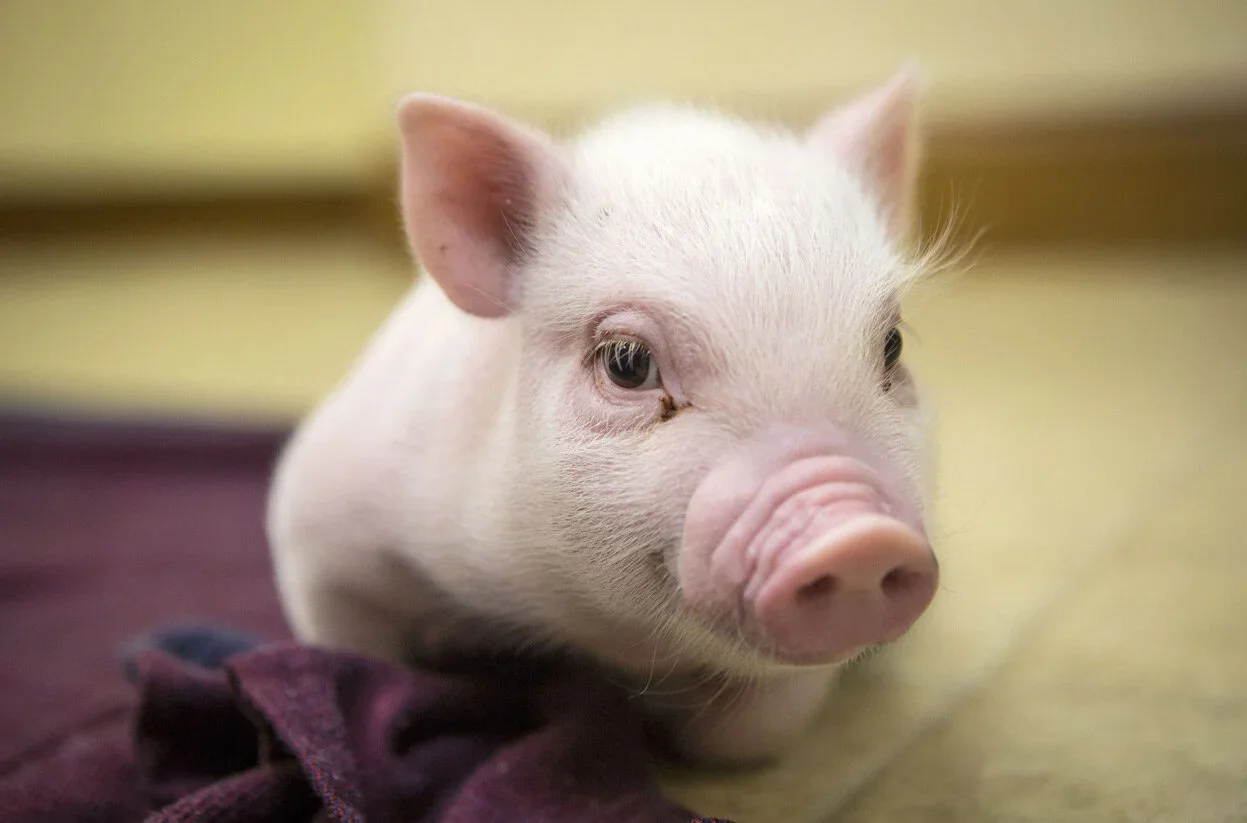
But what about the animals commonly found on our plates: cows, pigs, and chickens? Do they, too, deserve lives free of pain and suffering? Often, the distinction between which animals we cherish and which we consume is vividly illustrated in a popular meme:

Original Source: unknown

To understand the morality behind the public’s perception of some animals as friends while others are thought of as food, let’s focus on what psychologists call 'carnism'—the invisible belief system influencing us to eat certain animals while sparing others.

‘Carnism’ acts as a buffer, veiling the realities of our choices, enabling us to relish a Sunday roast while overlooking the animal's suffering that brought it to our plate. This conundrum finds its roots in the complexities of the animal food industry, where money, intricate supply chains, and neatly packaged products act as a shield. This disconnect between us and the source of our food allows us to act in ways that might seem unethical in other contexts. Yet, even the deep pockets of the animal food industry can’t fully blind our hearts from some suffering in their products.

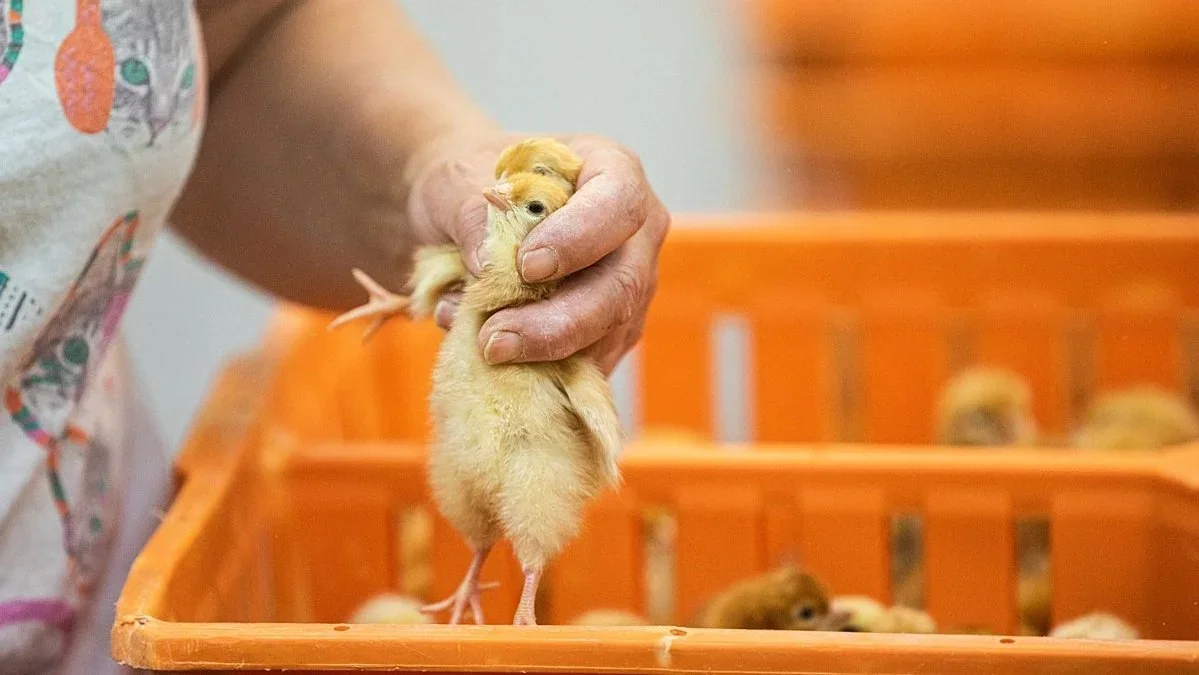
For instance, while many enjoy scrambled eggs for breakfast or crack some eggs to bake some treats without a second thought, the concept of male chick culling often evokes a sense of moral unease. This practice is an inherent part of the egg industry, where male chicks are shredded or killed shortly after hatching, as they are considered of no use to the egg-laying process.

Images: human.cruelties

So, let's focus on this gap, this crack in the carnist food lens to truly see these chicks as vulnerable babies that yearn for life. To us, this realization speaks of a wider reality, namely, that the majority of people are vegan at heart.

Often, the very mention of the “v” word is enough to send people running for the hills with their cheese and omelettes in hand, including self-professed animal lovers who would otherwise agree that animals deserve to be free from pain and suffering. In truth, we can hardly blame them. The image of vegans in the media paints us as extremist, judgmental, even confrontational. However, the reality of veganism is quite different. It's not about passing moral judgments or extremism. Instead, it's a reminder that, deep down, most of us are uncomfortable with the idea of animals suffering needlessly, like the culling of male chicks in the egg industry.

That is what veganism is about. It’s about shattering that carnist lens and seeing the individuals behind our meals and removing them from our plates one by one. It’s about discovering that we can thrive on plant-based foods alone. It’s about learning that the future of our food system isn't factory farming or genetic manipulation, but rather love, compassion, and the abundant variety of plant-based proteins.

As we conclude, we invite everyone to celebrate World Vegan Month and take part in the journey toward a more compassionate lifestyle. Embrace this opportunity to explore and discover the diverse world of plant-based foods.

For those curious or interested in learning more, we encourage participation in the Vegan Bootcamp.


Alex Ventimilla, Advisor

Alex is a third-year PhD student in the Department of English and Film Studies at the University of Alberta

Passionate about ecology, he firmly believes in the impact of storytelling on shaping our perspectives. He believes that the narratives we engage with through reading, watching, and listening play a crucial role in defining our connections with both human and non-human beings.

Read More
Egg Industry, Undercover Investigations Nigel Osborne Egg Industry, Undercover Investigations Nigel Osborne

What Happened in Winnipeg Should Be A Wake Up Call!

On April 1, 2021, workers at the Brady Municipal Landfill site in Winnipeg, Manitoba, Canada, discovered a very disturbing scene . . .
Thousands upon thousands of dead, egg laying hens litter the Brady Landfill, Winnipeg, MB, Canada. Note the dead pigs in the background. It is unclear where they came from and garnered no mention in media reports.

On April 1, 2021, workers at the Brady Municipal Landfill site in Winnipeg, Manitoba, Canada, discovered a very disturbing scene: tens of thousands of dead, egg-laying hens. Treated like trash, their broken and fragile bodies had been dumped at the site by an area egg farm. However, there appeared to be movement among the mass of contorted bodies - some of the hens were still alive! Shocked, the workers called a local farm sanctuary to inform them of what they saw and in hopes of having these few remaining souls rescued. Sadly, this was not the first time this had happened.

Ethics

News of this atrocity got out and was first reported by CTV News Winnipeg. Interestingly, the focus of the news report was not necessarily about the thousands of dead hens rotting in the open air, it was about the few who survived and were found writhing amongst the carnage. Make no mistake, the fact that still-alive hens were left to die a slow, painful death is a horror unto itself, but no less were the thousands of innocent ‘spent-hens’ who were killed and dumped like garbage simply because they were no longer profitable.

Above is a photo gallery of images taken from the Brady Landfill, April 1, 2021. Photo credit: The Good Place Farm Sanctuary.

A spokesperson from the Winnipeg Humane Society interviewed by CTV News was quoted as saying that these birds, “were among thousands of euthanized hens that were dumped at the landfill”. Euthanized? The definition of euthanasia is as follows: it is the practice of intentionally ending life to relieve pain and suffering. These hens were not euthanized, they were killed (gassed) to ensure profitability for the egg farm. Commercial hens have been genetically manipulated to lay an excessive number of eggs in their abbreviated life span of approximately 18 months. Once they reach the end of their laying cycle, their exhausted bodies can no longer lay the quantity or quality of eggs for the farmer to keep housing and feeding them, and must make way for younger pullets who have reached egg laying maturity. Thus, egg farms will “de-flock” their barns and kill the spent-hens (an industry term) either through on-site killing or sending them to slaughter. The natural life expectancy of a rescued commercial hen can be anywhere from 4-8 years, as can be testified to by many farmed animal sanctuaries, or longer if their bodies do not succumb to the common illnesses afflicting commercial hens such as ovarian cancer, osteoporosis, egg-yolk peritonitis or other diseases. In nature, their wild cousins can live 10-12 years.

A photo of “Penny”, a spent-hen rescued from the manure pits at an egg farm in British Columbia, Canada. Photo credit: Geoff Regier

How Did This Happen?

We interviewed Jen from The Good Place Farm Sanctuary (GPFS) to learn details of what happened.

A dump truck carrying thousands, perhaps tens-of-thousands, of “spent hens” arrived from an area egg farm. They were dumped at this municipal landfill to ultimately be moved into a pit. Workers, as on previous occasions, saw movement among the dead pile. Six hens on top were still alive. Jen and one of her volunteers arrived at the scene. One of the hens died on site and they managed to rescue five others. They searched the pile hoping to find others. But given the pile was many feet high over a vast area, there were no doubt alive birds near or at the bottom that could not be saved.

Jen and her volunteer were haunted by the possibility that they might miss one. After a period of time, the five they rescued were driven to a local vet. One of the hens, in particular, was in bad shape - they named her “Pearl”. She didn’t make it. The remaining four did and most ended up at several other sanctuaries (see footnote below).

Jen managed to reach out to the provincial vet responsible for farmed animals in Manitoba. Jen learned that a company was contracted by farms throughout the province who would conduct the mass killing of these birds using a mobile CO2 gas chamber. According to sources, this issue of still-alive hens being dumped at landfills had happened multiple times dating back to at least 2020. There was an investigation that year over a similar incident and recommendations were made to improve methods to ensure no hen came out of the chambers alive. Clearly, the issue was never resolved. Sources informed Jen at GPFS that the same thing happened approximately four days later after this particular incident. Landfill workers have said they often dread the days hens come to the facility because they would routinely see the same thing, over and over and over again. (Note: it is our understanding that municipal workers at this landfill have been reprimanded and instructed not to speak to anyone in the future on matters such as this.)

One of the rescued hens. Source: The Good Place: Farm Rescue & Sanctuary

Jen also observed that the pile of discarded hens at the Brady Landfill were likely not caged birds, but free-range or free-run. Jen noted that these hens did not have curled feet which comes from living on a wire floor in a cage for up to a year-and-a-half, as most hens do in Canada. The few they rescued didn’t seem skittish or afraid of her and her volunteer and seemed adept to walking on the ground. Caged hens are unfamiliar and unaccustomed to walking on the ground or interacting with people.

Another one of the rescued hens. Source: The Good Place Farm Rescue & Sanctuary

The “Manitoba Egg Farmers said it was "devastated" to hear about the five hens found alive”. “Devastated”? Why because the farm and/or the hired company failed to kill the few who survived which made its way to news reports? The Manitoba Egg Farmers, and Canada’s egg industry in general, kills millions upon millions of spent hens every year in addition to an equal number of male chicks who are useless to the egg industry as they don’t lay eggs. The egg industry IS a slaughter industry no different than meat or dairy production.

And herein lies the issue as it relates to the exploitation of egg laying hens: some of us (certainly not the egg industry) are not necessarily shocked or saddened to learn of thousands being killed in a story like this, we are saddened to learn that some were still alive. Think about this for a moment: is our empathy reserved largely for the suffering of those still alive, while ignoring the suffering of all those who were once confined and condemned to lay only to be killed and discarded like trash? Are not all the dead hens in this story entitled to the same moral concern as the ones found alive? Should we not be outraged and sickened by the massive dead pile? Absolutely!

Manure pits beneath the stacks of battery cages on an egg farm in British Columbia, Canada. Photo credit: Geoff Regier

Disease

A live market in New York City. Click on photo to enlarge.

In the sober new reality of global pandemics, our world needs to take a very hard look at the risk factors of animal agriculture and, in this case, the egg industry. Avian and swine flu, antibiotic resistance, zoonotic diseases such as SARS, MERS, AIDS, Ebola, and now Covid-19 are either caused directly, or indirectly, by intensive animal agriculture, stress imposed on natural ecosystems as a result of human encroachment, the harvesting of wildlife (ie. bush meat), and wet markets.

Yet despite all that we have learned, we still see scenes like the Brady Landfill playing out - thousands upon thousands of corpses from factory farms, rotting in the sun and out in the open? One thing most of us surely know from having been to a landfill or waste facility, there is a lot of wildlife that are attracted to these places: sea gulls, mice, rats, turkey vultures, raccoons, cats, dogs, and those predators preying on those scavenging the garbage. It is absolutely shocking that in a first world country like Canada, in the 21st century, dead farm animals would be dumped at a municipal landfill with the corpses of these animals free to come into contact with wildlife. And let’s not forget the municipal workers who are working at these facilities - what about the risk of exposure to them? All it takes is one pathogen to jump from animal to human. It has happened before and will, in all probability, happen again.

Propaganda

“We take accusations about animal cruelty very seriously”. How many times have you heard a PR person for an industry group say this every time a story emerges like this landfill story? Are they to be believed?

A screen shot from Manitoba Egg Farmers website depicts, ‘smiling, laughing’ people joyfully engaged in the business of egg production. A business that imposes untold misery and deprivation for the millions upon millions of hens exploited across Canada annually.

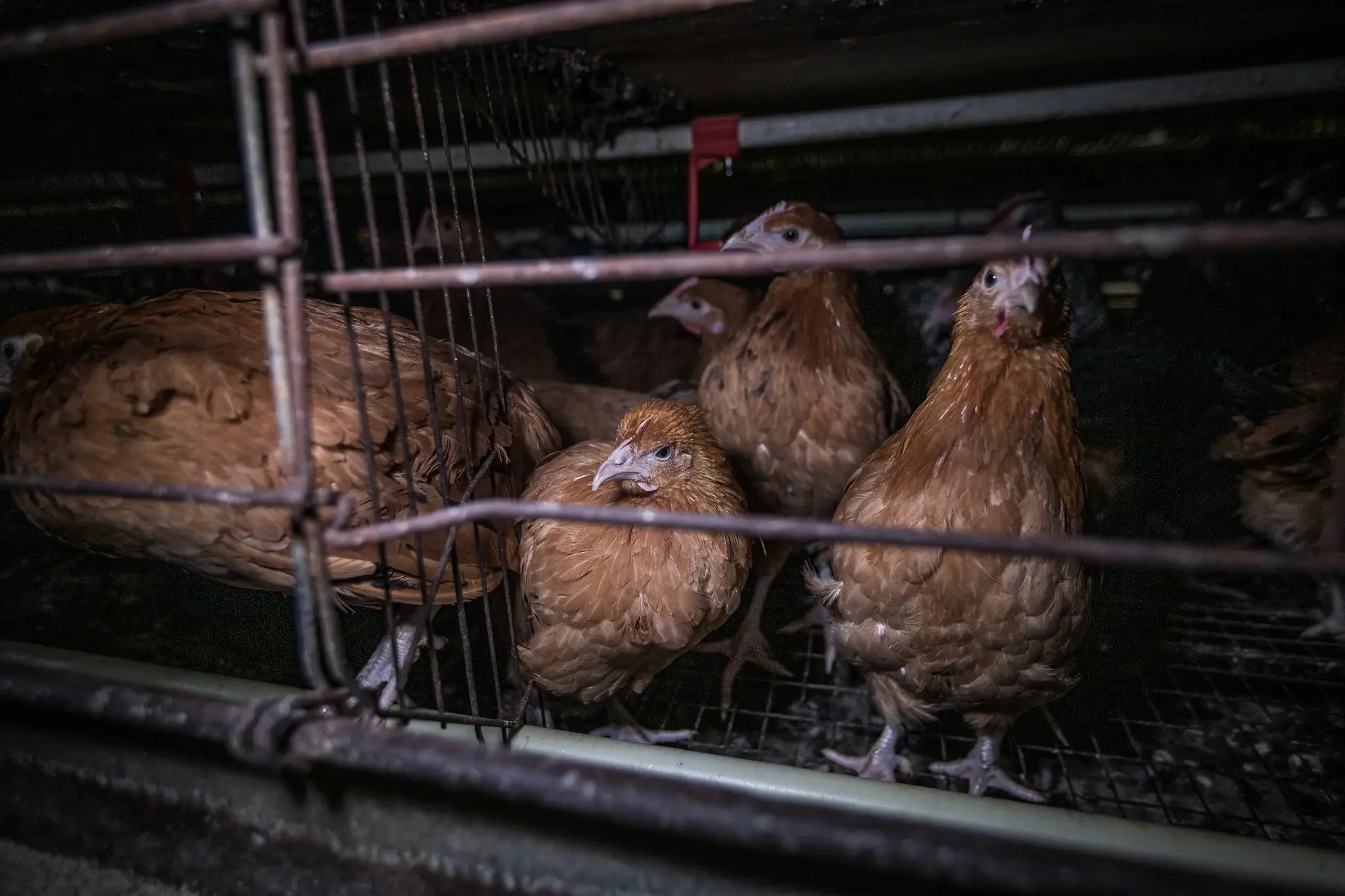
This is a standard reply designed to assuage public concern about animal welfare. The egg industry in Canada, and elsewhere, devote considerable sums of money to present an image of a clean, green and caring industry. They focus a lot of their efforts to remind consumers that they are feeding “you and your family” - sounds wholesome doesn’t it? Often they’ll recruit from their 1,200 members across Canada to profile a few of those who run and operate egg farms and portray them as ‘smiling, hard-working Canadians’ . . . . just like you! And if they are just like you they can’t be all bad, right? The focus of these carefully, crafted advertising campaigns are always on the family-run farms and invoke words like “community”, “care” and promote the healthful and nutritious aspects of eggs. Never do they focus on the hens and rarely show you inside an egg barn containing thousands of birds. And if they do, it is always of a barn that has been “de-flocked”, cleaned and re-populated with pullets who have just reached egg laying maturity and look clean, healthy and vibrant. Never will you see images or video of a barn 12-18 months afterwards. Why? Because it is not a pretty sight.

Generally speaking, the egg industry routinely anthropomorphizes animals when it comes to their consumer packaging and advertising campaigns by using cartoon depictions exhibiting human like qualities and facial expressions. This is true for Canada as it is for many countries around the world like the United States, United Kingdom, the European Union, etc. This is done in an effort to depict the industry as benign or harmless. Words like “Happy”, “Farm Fresh”, “Organic”, “Local” are ubiquitous.

The fact is, egg farming is a slaughter industry - it is violent and bloody. Male chicks are shredded alive shortly after hatching, females are often de-beaked, vaccinated against high risk diseases as a result of high stocking densities, endure many illnesses along the way, and then slaughtered after 18 months. Sometimes they are killed on site, dumped in a pit and buried, or incinerated.

Canada’s egg industry does not want you to know any of this because they know the average Canadian would be appalled at this kind of animal cruelty. Nonetheless, it is how commercial hatcheries, egg farmers, and the industry as a whole, can maximize profitability. And let’s be clear, all egg farming associations, whether provincial or federal, exist to promote the financial sustainability and profitability of their members first and foremost. And, part of that mandate, requires them to market and promote what they do in the most sanitized and favourable light possible.

The photo gallery below shows what the Egg Farmers of Canada publishes on their website and accompanying photos of the reality on Canadian egg farms:

Conclusion

Don’t trust anything the egg industry says. At least, view what they say with deep suspicion. It is in their interest to keep information like this out of view from Canadians. Even now, animal agriculture has succeeded in enacting legislation like Bill 156 in Ontario. And now Manitoba is considering the same thing - and you can be assured that the Manitoba Egg Farmers are in favour. Bill 156 in Ontario was lobbied for very hard by the animal agriculture sector. They’ll tell you it is about “protecting the food supply”, and ensuring that “food biosecurity” is a priority or by “protecting the property rights of farmers”. While this sounds reasonable, it is really about eliminating these kinds of videos and stories getting out. Why? Because it hurts business. And as the Premier of Ontario has often said, “Ontario is open for business”. It appears this is certainly true - but in the end, it is the animals who will pay the price.

But there is an alternative to all of this. There are so many cruelty-free, delicious and affordable egg-free alternatives available. And the great news is these alternatives are readily available in most grocery stores and health food stores across Canada! So please consider leaving eggs off your plate. Compassion is never the wrong thing.

And please consider contacting your area MP or MPP to tell them that you oppose any type of ag-gag legislation:

Search for your Canadian Member of Parliament.

Search for you Member of Provincial Parliament:

British Columbia
Alberta
Saskatchewan
Manitoba
Ontario
Quebec
New Brunswick
Nova Scotia
Prince Edward Island
Newfoundland & Labrador


Support Farm Sanctuaries Not Animal Farmers

If you would like to support the rescue of egg laying hens, please consider becoming a volunteer, or offering financial support to The Good Place Farm Sanctuary. And if you want to help one of the organizations who rescued the hens from the Brady Landfill, consider a donation to:

Rainbow Ranger Station (who rescued “Piper”)

Ledwich Family Farm (who took in “Karen”)

The Little Red Barn Sanctuary (who took in “Star”).

Or, consider supporting any number of farm sanctuaries around the world. Our “Resources” page has a very comprehensive list of sanctuaries, large and small, across the globe.


Footnote:

Dead pigs are visible in the background. Click on photo to enlarge.

We reached out to the Canadian Pork Council asking for comment on the dead pigs visible in the background of the photo of the pile of dead hens. A excerpt from their response is below.

To highlight, the CPC says, “mortalities are an unfortunate part of food production”. Unfortunate because they couldn’t profit from the ones that died? All animals face “mortality” in the food system. Mr. Ross the ED of the Canadian Pork Council goes on to say that the $83/tonne fee to dump dead pigs is the same as commercial garbage. We have reduced living beings to “commercial garbage” like tin cans, plastic containers, paper, and discarded cardboard.

“ . . . mortalities are an unfortunate part of food production . . . The disposal of mortalities is regulated by the Province of Manitoba. One approved option is to utilize the Brady Landfill . . . animal disposal arrangements must be made in advance and are subjected to an $83/tonne fee. This is the same fee applied to commercial garbage disposal.”
— John Ross Executive Director Canadian Pork Council

Nigel_headshot_ET.png

Nigel Osborne is the Executive Dir. of Egg-Truth. Nigel has years of experience related to animal rights and on-line advocacy. Nigel's extensive background in the publishing, outdoor advertising, printing and web design industries over the last 25 years provides him with a strong, creative acumen and business management experience. Through Egg-Truth.com and it's social media channels, Nigel seeks to increase awareness among the public about global egg production, expose the conditions for the billions of hens condemned to laying every year, and reveal the true impact of egg consumption on human health.

Read More
Chickens Juliane Priesemeister Chickens Juliane Priesemeister

Robin - Rescued From The Dead

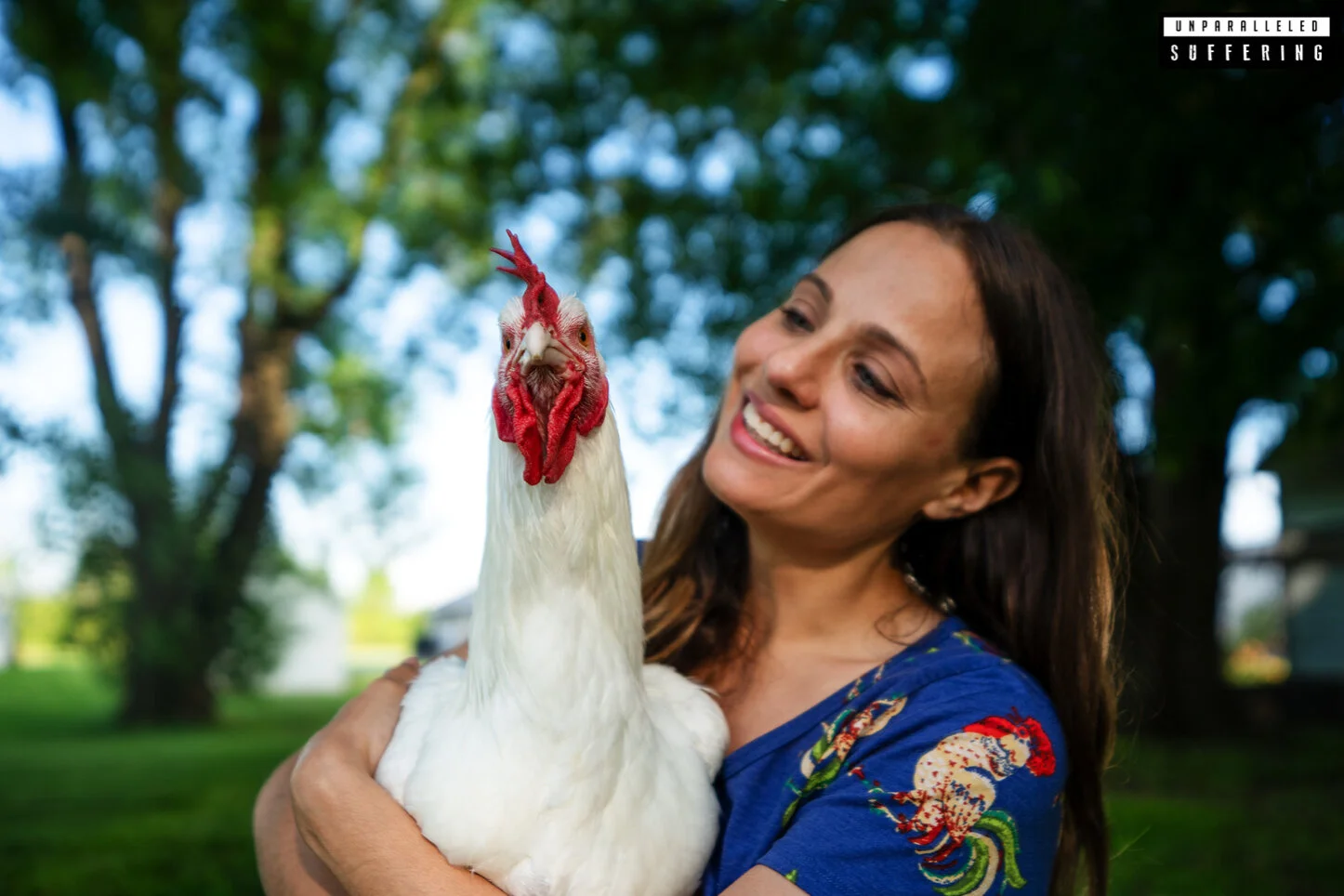
This post documents the rescue from a plastic trash bag of a “dead” chicken – a baby rooster – who was slaughtered during the ritual of Kaporos in Brooklyn, New York last fall along with thousands of other chickens.

Robin was found in a tied-up trash bag with his throat slit. Activists were documenting the aftermath of the kaporos on the morning after the final night of rituals, and they discovered one of the bags moving. They opened the bag and found Robin still alive and covered in blood among several dead birds. Robin went through the entire “sin- transferring” ritual including being swung over the participants head, then having his throat slit and being left for dead in the trash. The butcher (known as a shucat) missed his main artery, which is one of the many miracles of his story. Just minutes after they pulled him out of the trash, the garbage trucks arrived to take the bags filled with dead birds.

He was assisted by a triage team of activists and when Vanessa Dawson from Penelope’s Place showed up, she brought him to the emergency vet.

Robin was placed on oxygen, given heavy pain meds, fluids and antibiotics. He went into surgery the next day but he was given a 20% survival rate that he would live through the very risky surgery to repair his throat. When the vet called Vanessa for an update after the surgery the first words out of her mouth were “You have a miracle bird”. He recovered beautifully and now thrives at Penelope’s Place. He suffered some mental trauma from having lived through the ritual and being in the garbage bag among all of those other dead chickens. Any time that the lights went out it was as if he was back inside the bag. But he quickly learned that he was safe and loved at Penelope’s Place and the trauma symptoms subsided significantly. He turns 3 years old this month and is doing beautifully!

Unparalleled Suffering creates a documentary to report on the cruel Jewish tradition (more about that at the bottom of this page) and the unbelievable rescue of Robin.

Watch it here:


Kaporos - An Antiquated Custom

Kaporos is an antiquated custom that is sometimes referred to as Kapparot, both of which can mean “atonement,” or “scapegoat” or “sacrifice.” This is a “sin-transferring” custom in which a live animal (usually a mass-produced domesticated chicken) or money can be used. This tradition is done by some Haredi (ultra-orthdox) and Hasidic Jewish practitioners in the days and evenings leading up to the holiday of Yom Kippur, the Jewish Day of Atonement. Neither the Torah nor the Talmud - the two most holy Jewish texts - mandate or even mention Kaporos. It isn’t part of Jewish law to practice this. Certain Jewish scholars first discussed Kaporos in the ninth century. These scholars claimed that since the Hebrew word ‘gever” meant both “man” and “rooster,” punishment for the bird could be substituted for punishment of the human. Since this time, many Jewish scholars and rabbis have opposed this torturous, murderous and superstitious sin-cancellation practice. The ritual is most commonly practiced in Israel, but it also takes place in many other areas of the world - the epicenter being Brooklyn, New York and the second most popular location in the United States being Los Angeles. In Brooklyn alone, between 100,000 to 200,000 chickens are killed annually for this superstition.

For more information check this link.


Penelope's Place the Sanctuary is a non-profit Rescue and Sanctuary located in Akron, NY. Co-founders Vanessa Dawson and Steven Dawson began Penelope's Place in Brooklyn, NY and moved to the buffalo area to expand the sanctuary. The sanctuary was inspired by their first rescue Penelope the chicken. This sanctuary is her legacy. Penelope's Place is a vegan sanctuary and operates fully under those values. The animals will never be used for their eggs or meat and we also serve as a place of education about living a compassionate life towards all beings.

 
Read More
Philosophy Alex Ventimilla Philosophy Alex Ventimilla

Why Eating Some Animals But Not Others Is A Form Of Prejudice

Why do we choose to eat some animals, but not others?


Here’s why your food preferences are unfair and irrational

Why do we choose to eat some animals, but not others? 

It is well known that spiritual beliefs often play a factor in people’s diets. Yet, giraffes and locusts are both kosher and halal, while Jesus never forbade Christians from wolfing down whales or dogs. Why is it then that only a comparatively small fraction of people, sometimes only in relatively isolated communities around the world, choose to eat these species? And why are countless edible animals not eaten at all?

Looking at the animal most commonly featured on plates around the world may be a good place to begin answering questions about what makes certain animals unpopular menu choices. Pound-by-pound, this would be the domestic pig, making up for 36% of all the animal matter consumed by humans, narrowly beating out Gallus gallus domesticus, a.k.a. the domestic chicken, at 33%. However, the numbers of individuals required to rack up these percentages tell a different story. 

Over 75 billion chickens must be slaughtered yearly to meet the growing global demand for their flesh, compared to an estimated 1.5 billion pigs a year. This number does not include the millions of layer hens required to satisfy the world’s growing demand for their eggs, which humankind consumes at an estimated rate of one thousand billion units per year. 

That’s 1, 000, 000, 000, 000 eggs every 365 days. 

Do numbers matter?

People are evidently comfortable making the choice to eat chickens and their unborn offspring. And it may be that the very fact that these birds are bred and kept in such numbers makes it easier for people to consume them rather than large wild animals like giraffes and whales, whose populations are far smaller and localized. Governments have even established multinational organizations like CITES to regulate and sometimes ban the trade of products derived from species whose small population sizes make them susceptible to extinction, suggesting a growing number of people are against eating endangered species. Conversely, this would also suggest that people are more willing to eat animals that exist in large numbers. But these initial suggestions do not hold to scrutiny. 

But what about insects?

eating-insects.jpeg

Many species are notoriously numerous, including locusts. One small swarm roughly 1 km2 can be up to 80 million strong. Various cultures throughout these swarming grasshoppers’ range take advantage of this seasonal bounty of animal protein, incorporating them into their diet, as do other populations with other insect species the world over. Entomophagy still struggles to find acceptance in Western societies, however, where insects are perceived as unappealing, if not outright unsanitary and unsafe for human consumption (even though most zoonotic disease outbreaks have been traced back to commonly eaten animals, including pigs, chickens, and their eggs).

Humans also harvest exorbitant quantities of fish and seafood from the ocean every year. Indeed, while whales’ endangered status is cited as a principal reason behind the International Whaling Commission’s ongoing ban on whaling, no such multinational legislation exists to protect any of the endangered tuna species. Further, both insects and fish can be mass-produced in the same manner as chicken and other livestock, while producing insect protein requires far fewer resources than chickens, pigs, or cows. Despite bugs’ sustainability and nutritional value though, people in industrialized nations seem to prefer eating more familiar farmed animals. 

overfishing04.jpg

Does domestication matter?

This does not seem to be a factor either. Familiarity with a domestic species can, in fact, be why some people choose not to eat animals like cats and dogs. One argument for these exceptions could be that neither of the two were originally domesticated for food, although neither were chickens. Their wild ancestor, the Indian jungle fowl, was originally tamed for cockfighting. Only later did people begin to eat their flesh and eggs, a historical turn that also occurred with cats and dogs in many regions around the world, as these are eaten from East Asia to the Americas. Nowadays, however, the latter two are nearly universally regarded as companions while consuming them has become increasingly ostracized. For instance, the pressure on countries like South Korea to shut down their thriving dog meat market has been growing in recent years, while in a rare instance of bipartisan legislation, the Dog and Cat Meat Trade Prohibition Act of 2018 formally illegalized such practices in the United States.

A dog meat market in Vietnam. Photo: Jo-Anne McArthur/We Animals

But if these aren’t it, then what characteristics lead people to choose to eat some animals while ignoring, even protecting others? What, separates chickens from dogs, and whales from tuna, the so-called chicken of the sea? 

Because they are not like us?

One last argument could be that people choose not to eat animals that are too similar to humans, either because they are close biological relatives or because we share a higher kind of intelligence. Meanwhile, people’s sense of kinship with fish like tuna and birds like chickens is likely to be weak if present at all. Biologically, however, dogs, whales, cattle, pigs, and thousands of other mammals are all members of ferungulata, a vastly diverse group that split from our family, primates, millions of years before the days of the T-rex. In short, Homo sapiens are just as closely related to all these species, some of which they choose to kill and consume in exorbitant quantities, some of which they provide with luxury food. Intelligence or perception thereof does not fully explain these distinctions either. The widely acknowledged intelligence of pigs has done little to prevent people’s craving for pork, while recent studies suggest that the intelligence of chickens has been unjustifiably underestimated and may rival that of cats and dogs.

Why we love some eat others.jpg

This is all to say there doesn’t appear to be any heads or tails to how people in industrialized societies choose which animals are acceptable to eat and which aren’t. All distinctions between these species used to rationalize these choices are arbitrary, inconsistent, and irrational. They are little more than cultural prejudices based on unfounded assumptions about some species that have the effect of deeming their lives expendable for human consumption, a kind of discrimination against their suffering. It is, in short, a form of speciesism.

Say what?

Oxford animal rights activist Richard D. Ryder was the first to popularize the term. Arguing that "race” and “species” are both vague terms used in the classification of living creatures according to physical appearance, Ryder drew an analogy between the unequal treatment of racialized people and the uneven ethical considerations applied to different animal species. Since then, other science philosophers like Peter Singer and Richard Dawkins have also engaged with the concept. While acknowledging that the word is rather awkward, Singer agrees with its premise and argues we must give equal consideration to the pain experienced by all beings who share the capacity to suffer. Meanwhile, Dawkins considers that the human tendency to divide the world into units like races, cultures, and species reflect nothing but the limitations of our minds and our use of language. Within these purely subjective categorizing systems that represent animals as discontinuous species, he writes, the agency and suffering of some species can be recognized while those of others is denied or overlooked if it favors the survival of “our group”, be it a culture, race, or species.

The question of survival

The ability to prioritize the survival and wellbeing of the self and those most closely related was a valuable evolutionary advantage (pre)historically speaking given the precariousness most animals experience in the wild. This is also why cannibalism occurs. But in industrialized nations, human survival is no longer tied to the consumption of other, less related organisms. The fact that most people in such societies already choose to abstain from eating several animal species indicates they are at least partially aware of this. Thus, raising awareness of both the availability of vegetable-based foods, as well as the numerous physical and neurological characteristics we share with widely eaten animals may be key if the goal is to steer people away from current speciesist dietary practices. Already, a study out of New Zealand indicates that people’s attitudes towards chickens improve significantly when given the opportunity to spend time with these smart, sentient, and sociable animals. Perhaps interspecies encounters with the animals people still choose to eat can lead to the eventual realization that these most, if not all species, are complex beings whose right to life and freedom from suffering we should consider.


Alex headshot.png

Alex Ventimilla is a Ph.D. student in English & Film at the University of Alberta. He holds a B.A. in English Literature & Society cum laude from Vrije Universiteit Amsterdam and an M.A. in English & Film Studies from the University of Alberta. His primary research interests are animal/habitat studies and the environmental humanities.

Read More