Recipes & Resources, Egg Industry Juliane Priesemeister Recipes & Resources, Egg Industry Juliane Priesemeister

Egg-free Living: Navigating Veganuary with Sarah

Join Sarah this Veganuary as she uncovers the hidden truths of the egg industry. Discover cruelty-free alternatives, egg-free recipes, and tips on how to make your compassionate resolution last all year long.

Meet Sarah, a passionate food enthusiast diving into Veganuary—a vibrant time filled with culinary exploration and joyous laughter. In her small kitchen, friends gather to experiment with new plant-based recipes and share stories. However, as the conversation shifts towards the food system, a question that nobody can quite crack lingers—what's wrong with eggs?

As the night winds down and Sarah bids farewell to her friends, she delves into a quest for answers. It doesn't take long for her to confront the harsh realities of the egg industry. Huddled over her tablet at the kitchen table, she sifts through gut-wrenching images—layers of hens crammed into battery cages and 'cage-free' barns, their movements restricted. These creatures are sentient, Sarah discovers, possessing intelligence akin to her cherished cat 'Sergeant Fluff.' Yet, they endure suffering on a scale most wouldn't tolerate for dogs or cats. A disturbing insight hits Sarah just when she thinks she's seen enough: for every female chick fated for a life of abuse, mutilation, and malnourishment, there's a male chick denied a chance at life.

As Sarah lies in bed, reflecting on the delightful dinner with friends and the eye-opening facts she's just absorbed, she wonders—aren't eggs from small homesteads and backyard setups harmless? Surely, those hens, living outdoors with grass under their feet, are well cared for. The next morning, fueled by curiosity, she scours Insta for pictures of idyllic hen farms nearby. Amidst the many backyard chicken enthusiasts on social media who seem to have cracked the egg dilemma, she stumbles upon a woman dedicated to rescuing chickens from dire situations.

This chicken-saving advocate, once an organic and pasture-raised egg supporter, transitioned to an egg-free lifestyle after witnessing the relentless suffering inflicted by breeding. Sarah's feed becomes a revelation—hens, much like companion animals, have been artificially selected for traits deemed 'desirable' by humans. The comparison strikes a chord as she learns that, just as bulldogs face birthing challenges due to human-driven transformations, hens are ruthlessly bred to lay over 300 eggs annually—a stark increase from their ancestors' 10-15, far beyond their natural capacity. The notion of chickens in backyards and homesteads not being exempt from suffering dawns on her.

For Sarah, abandoning eggs feels like the only ethical choice, yet she hesitates. Childhood breakfast memories, filled with the comforting aroma of scrambled eggs and entwined with the fragrance of fresh coffee, flood her thoughts. Eggs with buttered toast were more than a meal; they were a cherished ritual, a piece of personal history. Baking, a beloved tradition, with her grandmother, involved the joyous cracking of eggs. This decision proves harder than she anticipated.

Lost in her nostalgia, Sarah receives a call from her best friend, a Veganuary companion. She's over the moon about the egg-like breakfast she tried that morning. Intrigued, the friends decide to explore the supermarket for more alternatives. They discover a world of innovative products, special promotions in place for the month. Sarah is nervous at first, but then she becomes excited when she realizes it's easy to bake without eggs once she understands their importance in recipes.

Back in the office on Monday, Sarah proudly shares her newfound discoveries with colleagues during lunch. One of them remains skeptical, stating that to truly ditch eggs, she must go beyond merely spotting the word 'eggs' on the ingredient list. He shares his brother's experience, who, being allergic, learned the hard way that they hide under various names in different products. The conversation delves into the complexity of identifying egg-based ingredients, including the use of prefixes like ovo- or ova- and tricky terms like Albumin and Apovitellin that read like a secret code. Unfortunately, this is not the only demotivating experience. When Sarah discusses her dietary choices with her parents, she encounters disapproval and additional criticism.

Staying on track can surely become a struggle. The key to sustaining an egg-free and vegan life is to stay motivated and remind oneself of the initial reasons for the journey. Videos and educational content on social media channels can be useful for keeping eggs off the table and passing along knowledge to curious friends.

Ordering at eateries to make sure nutrients and proteins are in order can remain a challenge. We offer our recommendation to enroll in the Vegan Bootcamp, a comprehensive resource that dissects information into easily digestible sections and provides personalized guidance.

As Sarah's story unfolds, it’s not just about what’s on the plate—it’s about challenging norms, making compassionate choices, and creating lasting change. This journey reshapes perspectives, for the animals and for a future that values kindness over convenience. Will you join her in choosing a world where compassion leads the way?


Resources & Further Reading

Further Reading:

Resources:

Read More
About Us Juliane Priesemeister About Us Juliane Priesemeister

Peaceful Holidays and a Compassionate 2024

Embark on a reflective journey with our Executive Director, joining us in exploring the narratives that shaped our advocacy and sparked conversations about compassion. Your brief moment of reflection holds the power to deepen understanding and inspire meaningful connections toward a more compassionate world.

In these final days of 2023, we take a pause to reflect back on 12 months of dedicated animal advocacy. While more individuals are embracing compassion in their dietary choices, the reality remains that profound and widespread suffering persists in our world. Numerous new undercover investigations have exposed the extent of cruelty that we are determined to help eradicate.

As you join us in these reflections, presented by our Executive Director, Julie, take a moment to deliberate on your own culinary choices from this impactful year.


As I sit down at my desk, reflecting on the past 12 months of speaking up for the animals, a wave of emotions overcomes me. It's been a year of truth-telling and exposing the raw realities behind the egg and dairy industries. Despite these revelations, the world around me appears wrapped up in festive celebration.

The holidays have a unique way of masking the suffering that goes into the making of our favorite dishes. We've become experts at focusing on the end product—the golden-brown turkey, the rich cheesecake, and the creamy eggnog. Yet, it's time we shift our gaze to the process—the journey these products take from farm to table. A journey fraught with pain, suffering, and a deep disregard for life.

This year, we've laid bare the harsh realities of animal agriculture, urging you to see beyond the joyful facade; urging you to pause. Take a moment to consider the weight of your choices and the impact on the lives of animals. It's not a call for guilt but a call for awareness, for a conscious decision to align actions with values.

Let's choose love over self-focused feasting. Let's extend our circle of kin in our celebrations and include those in our thoughts that are often overlooked. It's not about giving up joy; it's about finding joy in choices that spread love, not pain.

As you welcome the new year, rethink your resolutions to include not just personal aspirations but also a commitment to cultivating a less cruel plate.


Before we extend our wishes for a peaceful holiday, we like to share a glimpse of the month ahead. To conclude this year with a positive tone, we will be sharing our favorite videos and stories on Facebook, Instagram, and Twitter; unveiling animals, advocates, sanctuaries, and organizations who are actively weaving the fabric of a more compassionate world. Please watch out for these and follow us on your preferred social media channel if you haven’t yet.

Stay alert for upcoming announcements that will bring you a refreshed Egg Truth newsletter and a brand new one for Dairy Truth. As we align our steps on the path of our collective journey, we extend our deepest gratitude for your ongoing support and care for the animals. May the new year usher in a future where every decision is rooted in compassion. Wishing you peaceful holidays and a promising start to the new year!


Juliane Priesemeister, Executive Director

Juliane worked almost a decade for an international corporation as an information designer. Generating compelling visual stories was her daily deed, but as much as she enjoyed the creative work the big corporation environment left her hungry for substance and impact.

When she started her yoga journey a few years ago the “do no harm” philosophy pushed her to align work with her personal ethics and values. Today she uses her omnibus skill set, including marketing communications, economics, and graphic design, to reveal the truth about the egg industry to consumers.

Read More
Philosophy Alex Ventimilla Philosophy Alex Ventimilla

How to Love All Animals

Veganism is about shattering that carnist lens and seeing the individuals behind our meals and removing them from our plates one by one. It’s about discovering that we can thrive on plant-based foods alone. It’s about learning that the future of our food system isn't factory farming or genetic manipulation, but rather love, compassion, and the abundant variety of plant-based proteins.

Do you believe animals, much like us, should live free from needless suffering? Does the thought of causing harm to them trouble your conscience? If you find yourself nodding in agreement, you're not alone. There's a vast community of compassionate individuals who, despite their diverse dietary choices, share a common bond—empathy for animals.

The way we perceive animals is undergoing a significant shift. Despite many of us labeling ourselves as animal lovers, the legal view of animals has often reduced them to mere property rather than feeling beings. However, something intriguing is stirring. Recent studies are illustrating a remarkable change – around 47% of the British population today acknowledges that animals deserve the same rights as humans to escape suffering. Another 71% firmly believe causing animals pain is wrong.

These numbers aren't just figures; they signify a profound transformation. It’s as if science and law are catching up to what our innate feelings have always told us – creatures such as dogs, chickens, octopuses, and even lobsters are akin to us; they possess thoughts and emotions. This awakening may very well be global. Nowadays, when the media reports on human-inflicted cruelties and crises in relation to animals, like a lost companion animal or an escaped animal from a zoo (or perhaps an egg farm), it's as though a collective cry of outrage bursts from our hearts.

But what about the animals commonly found on our plates: cows, pigs, and chickens? Do they, too, deserve lives free of pain and suffering? Often, the distinction between which animals we cherish and which we consume is vividly illustrated in a popular meme:

Original Source: unknown

To understand the morality behind the public’s perception of some animals as friends while others are thought of as food, let’s focus on what psychologists call 'carnism'—the invisible belief system influencing us to eat certain animals while sparing others.

‘Carnism’ acts as a buffer, veiling the realities of our choices, enabling us to relish a Sunday roast while overlooking the animal's suffering that brought it to our plate. This conundrum finds its roots in the complexities of the animal food industry, where money, intricate supply chains, and neatly packaged products act as a shield. This disconnect between us and the source of our food allows us to act in ways that might seem unethical in other contexts. Yet, even the deep pockets of the animal food industry can’t fully blind our hearts from some suffering in their products.

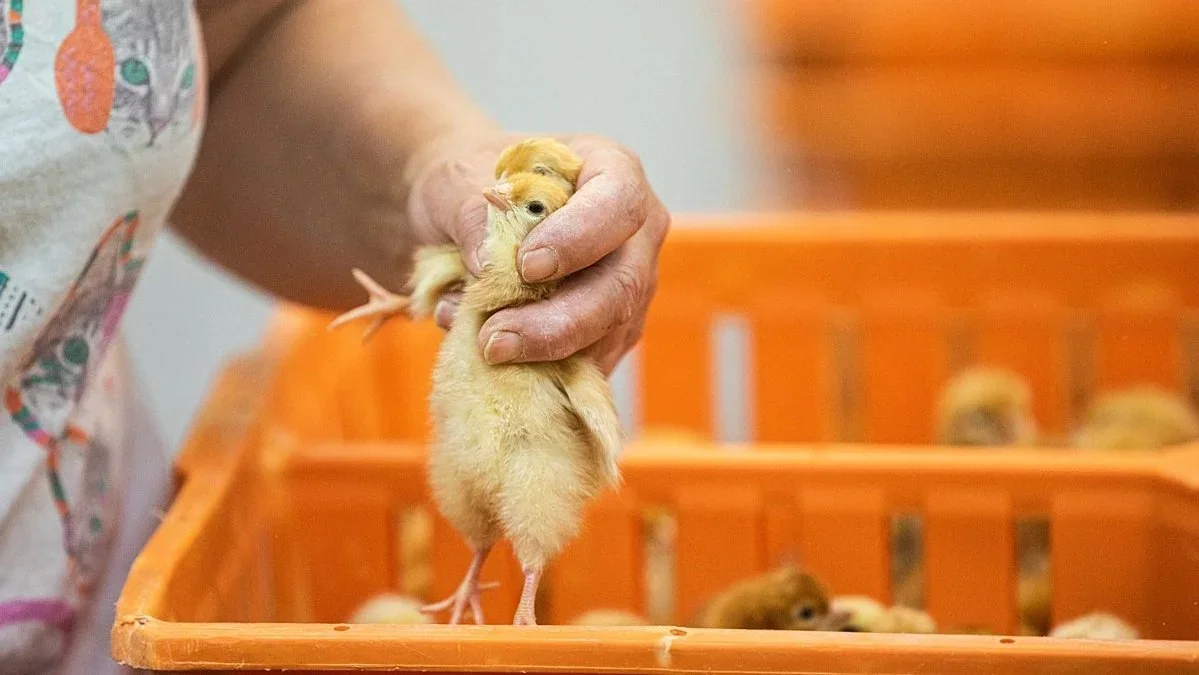
For instance, while many enjoy scrambled eggs for breakfast or crack some eggs to bake some treats without a second thought, the concept of male chick culling often evokes a sense of moral unease. This practice is an inherent part of the egg industry, where male chicks are shredded or killed shortly after hatching, as they are considered of no use to the egg-laying process.

Images: human.cruelties

So, let's focus on this gap, this crack in the carnist food lens to truly see these chicks as vulnerable babies that yearn for life. To us, this realization speaks of a wider reality, namely, that the majority of people are vegan at heart.

Often, the very mention of the “v” word is enough to send people running for the hills with their cheese and omelettes in hand, including self-professed animal lovers who would otherwise agree that animals deserve to be free from pain and suffering. In truth, we can hardly blame them. The image of vegans in the media paints us as extremist, judgmental, even confrontational. However, the reality of veganism is quite different. It's not about passing moral judgments or extremism. Instead, it's a reminder that, deep down, most of us are uncomfortable with the idea of animals suffering needlessly, like the culling of male chicks in the egg industry.

That is what veganism is about. It’s about shattering that carnist lens and seeing the individuals behind our meals and removing them from our plates one by one. It’s about discovering that we can thrive on plant-based foods alone. It’s about learning that the future of our food system isn't factory farming or genetic manipulation, but rather love, compassion, and the abundant variety of plant-based proteins.

As we conclude, we invite everyone to celebrate World Vegan Month and take part in the journey toward a more compassionate lifestyle. Embrace this opportunity to explore and discover the diverse world of plant-based foods.

For those curious or interested in learning more, we encourage participation in the Vegan Bootcamp.


Alex Ventimilla, Advisor

Alex is a third-year PhD student in the Department of English and Film Studies at the University of Alberta

Passionate about ecology, he firmly believes in the impact of storytelling on shaping our perspectives. He believes that the narratives we engage with through reading, watching, and listening play a crucial role in defining our connections with both human and non-human beings.

Read More
About Us, Egg Industry Juliane Priesemeister About Us, Egg Industry Juliane Priesemeister

Peeling Back the Layers of the Egg Industry: Egg-Truth Team on 'The Vegan Report'

Egg-truth.com is the initiative revealing what goes on behind the scenes of the egg industry. Beyond the marketing lies of the poultry business hides a harsh reality of merciless exploitation. Join Nigel, Julie, and Ryan in discussing the fate of chickens, the largest standing population of a single bird species in Earth's history.

The Egg-Truth Team is on ‘The Vegan Report’ podcast, where we expose the truths about the egg industry. Beyond the glossy façade of the poultry business, we're unmasking the harsh truths that lie beneath the surface.

But this is no ordinary podcast. It's a unique opportunity to meet us—Nigel and Julie—face-to-face on camera. We're sharing our personal vegan journeys and the driving force behind our mission.

Join us as we further discuss the origin of Egg-Truth and the unwavering motivation that propels us to amplify the voices of hens trapped within the egg industry. From dismantling misleading marketing narratives to peering into the lives of the largest population of a single bird species in Earth's history, this episode is a deep dive into our food system.

Together with Ryan, we aim to uncover the truth and empower listeners to make more compassionate choices—ultimately encouraging them to leave eggs off their plate.

Listen to “The Brutal Truth Behind the Egg Industry” on Every Podcast and uncover the realities that drive us to make a difference.


The Vegan Report offers you a window into the global fight for animal welfare. If you are an animal lover, subscribe now! Don't miss out on educational, fascinating, and inspiring conversations for a more compassionate and just world.

Episodes are posted every Tuesday. The Vegan Report is also on YouTube (@veganreportpodcast) and Instagram (@veganreportpodcast).


Juliane Priesemeister, Executive Director

Juliane worked almost a decade for an international corporation as an information designer. Generating compelling visual stories was her daily deed, but as much as she enjoyed the creative work the big corporation environment left her hungry for substance and impact.

When she started her yoga journey a few years ago the “do no harm” philosophy pushed her to align work with her personal ethics and values. Today she uses her omnibus skill set, including marketing communications, economics, and graphic design, to reveal the truth about the egg industry to consumers.

Read More
Recipes & Resources Juliane Priesemeister Recipes & Resources Juliane Priesemeister

What Egg Shortage?

Given the shortage of eggs, high prices and news reports about bird flu, are you feeling frustrated after your last supermarket run?

Given the shortage of eggs, high prices and news reports about bird flu, are you feeling frustrated after your last supermarket run?

Maybe you are thinking of raising backyard chickens as an alternative? Let's consider some plant-based alternatives first.

It makes sense to switch to healthy and cruelty-free options. This allows you to avoid the myriad of issues with backyard eggs and the welfare issues associated with commercial eggs. Many folks have been using plant-based alternatives for years, from aquafaba, flax, and chia seeds in baking to scrambled tofu and plant-based eggs for more traditional egg-centric meals.

It's important to consider what you're trying to achieve with your eggs. Once you've determined that, there are a variety of options:


The first are the most budget-friendly options that you probably already have in your cupboard. Aquafaba is the liquid from a can of chickpeas that can be whipped into a foam that resembles egg whites. Flax and chia seeds can also be used as egg substitutes by mixing them with water to form a gel-like consistency. Silken tofu can be blended into a smooth mixture and used in recipes that call for eggs. Lastly, mashed bananas or applesauce can also be used as egg substitutes in recipes that require a binding agent.


For those who want a baking option, established brands like ‘PaneRiso Egg Replacer’, ‘Ener-G Egg Replacer’, or ‘Bob's Red Mill Egg Replacer’ are perfect. These products are not only cruelty-free, but are highly versatile, and can be used in a variety of recipes, from cakes and cookies to savory dishes like quiches and omelettes.


For the demanding chef, or cooks in a hurry who need a truly authentic egg substitute, products like Just Eggs, Simply Eggless, VeganEgg, or Scramblit are a perfect fit. They are ideal for creating a very realistic and satisfying egg-like experience. To replicate the light and airy texture of egg whites, Oggs and Yumgo are great! Their texture and consistency can help achieve fluffy meringues or other recipes calling for airy fillings.


Finally, under “I can't believe these are plant-based” eggs, soy-free, and gluten-free Wonderegg has been praised for its ability to mimic the taste and texture of real eggs so closely that many people can't tell the difference.

Yo-Egg, is a plant-based egg yolk replacement that mimics the taste and texture of real egg yolks, making it perfect for dishes like hollandaise sauce or aioli.

All of these products are part of a rapidly expanding selection of plant-based egg alternatives that are transforming the food industry. With an increasing demand for allergy-friendly and cruelty-free options, these innovative products are enabling both chefs and home cooks to create family-friendly meals and baked goods without compromise.

Note: don't forget to check out our long list of replacements AND our extensive recipe collection, too.

Happy cooking!


Note: Egg-Truth is not sponsored by any of the aforementioned products.


Juliane Priesemeister, Executive Director

Juliane worked almost a decade for an international corporation as an information designer. Generating compelling visual stories was her daily deed, but as much as she enjoyed the creative work the big corporation environment left her hungry for substance and impact.

When she started her yoga journey a few years ago the “do no harm” philosophy pushed her to align work with her personal ethics and values. Today she uses her omnibus skill set, including marketing communications, economics, and graphic design, to reveal the truth about the egg industry to consumers.

Read More
Egg Industry, Backyard Chickens Juliane Priesemeister Egg Industry, Backyard Chickens Juliane Priesemeister

Buying chicks is NOT compatible with loving animals

Why keeping backyard chickens as a response to the egg shortage is not the solution to the problem, and why it's crucial to understand the welfare issues in the egg industry instead.

Image: Sarah-Claude Lévesque St-Louis, pexels.com

Recent egg shortages caused by the current avian flu outbreak have led many people to consider keeping backyard chickens as a source of fresh eggs. What we really should be considering are the broader welfare issues in the egg industry. From living conditions that are cramped and unsanitary to the routine mutilation of chickens, such as de-beaking, the egg industry raises serious concerns about how animals are treated.

In this blog post, we'll explore why keeping backyard chickens as a response to the egg shortage is not a solution to the problem, and why it's crucial to understand the welfare issues in the egg industry instead.

The staff of the Broken Shovels Farm Sanctuary, a sanctuary for homeless, abused, neglected, slaughter-bound animals, put together what they have seen and experienced when it comes to adopting and breeding animals for our needs. Here is the plea to stop buying chicks for eggs (see below):

After 15 years of chicken rescue, PLEASE hear me out. Buying chicks is NOT compatible with loving animals.

Originally posted on Facebook and Instagram.

READ BEFORE YOU BUY CHICKS!

We’ve all seen the hundreds of memes, heard the grumbling and watched the news reports about the price of eggs. You may get a wild hair and decide backyard chicken keeping is the thing to do, and rush out to go buy some peeping, adorable baby chicks. I get it, my lady friends…it’s like the ultimate peer pressure these days.

But I’m begging you, DON’T DO IT. If you’re here, you probably love animals. After 15 years of chicken rescue, PLEASE hear me out. Buying chicks is NOT compatible with loving animals. It’s just not.

1. It’s expensive.

Before the costs of a coop large enough to offer enrichment and stimulation suitable for intelligent and curious animals, medical care with an avian/exotics vet that can run $4-500 for a single visit with diagnostics, and everything you need to keep truly happy, healthy birds, just the cost of feed alone will be MORE per dozen of eggs when you factor in the months they won’t lay in the winter and the years when they’ll still need care after they lay infrequently or not at all. Why are store eggs cheaper? They can buy feed in huge bulk discounts AND they “depopulate” ie kill the hens when they are 16-18 months old, once they are no longer able to lay daily eggs. Crossing that threshold where you’d kill an animal because you can no longer use them requires you to give up your “animal lover” card for sure.

2. It’s hard work.

Cleaning coops a few times a week, all the dust and caustic bird dander for those of us with allergies, finding a place to toss your used shaving. Poop EVERYWHERE. Dug up lawns and flowerbeds. Twice daily feeding and watering, keeping overgrown nails and beaks trimmed, deworming, mite and lice treatments and trips to the vet take many hours per week that most busy people don’t have. These are living beings and just like your dog or cat, not giving them adequate space, housing, clean facilities and vet care is neglect. Animal lovers don’t neglect animals in their care.

3. Avian flu.

Highly Pathogenic Avian Influenza is sweeping the country and killing millions of birds, both pet and wild. Threatened species populations are suffering, and raptors like hawks and eagles are falling out of the sky, dead and dying. It’s even jumped to mammal species, killing bears and big cats in zoos around the country. The more animals we give this disease to spread, like the millions of sudden backyard chickens, the more we help it spread, and in effect are responsible for even more wild animals dying. Animal lovers don’t do things that harm wildlife.

**Not to mention that it CAN be spread to humans in close contact with birds. In the cases around the world where it has spread to poultry workers and those exposed, it has had a more than 50% mortality rate. The more we expose our own species to this disease, the more readily it will adapt to infecting humans. And the only reason we’ve been safe so far is that it can only spread from bird to human. But this is a quickly mutating virus, and when it is able to spread human to human, we will have another pandemic that will be more virulent than Covid. The 1918 influenza likely originated as an avian flu.

4. Predators.

We tend not to notice our city predator wildlife friends, and they usually leave our companion animals alone. But they can’t resist the dinner bell of captive backyard chickens and the often shoddy hobbyist coops and runs from feed stores with the glaring lack of predator protection they offer. We spend thousands of dollars on predator proof housing and runs for each flock, that requires sturdy sheds, an underlayment that prevents digging under fences and a cover of some sort. Every year we receive hundreds of messages from traumatized chicken owners who come out to find gore and devastation in their coops, often one or two injured, very grisly survivors. It’s almost a guarantee that new chicken owners will experience a predator attack. Are you ready for that guilt and heartbreak? Animal lovers don’t keep captive animals to be mutilated.

5. Roosters.

You may be reassured that you’re buying “sexed” chicks, just hens when you purchase baby chicks. It says so right on the sign right? Well, what they DON’T tell you is 10-30% of those chicks have been mis-sexed and about half of buyers end up with a rooster. It becomes agonizing every year as families who live in cities where roosters are banned try to find a home for him where he won’t be killed. It’s so sad to take him away from the hens and people he’s bonded with. And we receive over 3000 of those rooster rehome requests every year, more than we could ever care for. There are a few places that advertise a “gentleman’s club” where you can dump your little boy off with their rooster flocks for a nominal fee like $50. Anyone running a business like this would quickly be over run or go broke trying to feed all these boys, unless they have a way to discard some or neglect them horribly. What actually happens is most will be killed by other more dominant roosters in the flock or fall prey to the many diseases endemic to unquarantined flocks with no medical care offered. And eventually when they grow up, they are sold off cheaply to someone who will home butcher them. We’ve visited a few. It’s obvious what’s going on. It’s far more kind to take your rooster in for HUMANE EUTHANASIA with an avian vet than to leave them stressed, sick and attacked in these places. Animal lovers don’t buy animals they can’t keep.

6. Chick grinding.

Ok, so you bought just 6 hens and you got lucky—all are ACTUALLY hens. But since it was a 50/50 gender split on that hatch, where are their brothers? Egg laying breeds don’t gain weight quickly so it’s not profitable to raise them for food. Instead, all the male chicks are either suffocated in giant plastic bags of thousands of chicks or they are thrown alive into something called a “chick macerator”, basically an industrial grinder for baby chickens. EVERY HATCHERY does this. There are no exceptions. Lots of people who also eat chickens may not be bothered by this, but many find killing day old baby animals abhorrent. I don’t know how we can call ourselves animal lovers and be willing to pay for this to happen, as we do each time we buy a little girl chick.

7. Death in the mail.

All the chicks in those feed stores have been sent in the mail, at a day old, with no food, water or warmth they need. MANY chicks will die en route, and it will be a cold and scary ordeal for these little tiny animals even if they do survive. Every year, we get calls from feed stores asking us to come help the sick and dying babies who’ve arrived who need critical care. Sometimes entire shipments come in deceased. Can you imagine if we did this with puppies and kittens knowing there’s a very good chance they’d die in transit? There is nothing nice about the way we transport baby chickens. Animal lovers don’t put animals in traumatizing and unsafe situations.

8. Needs a mama.

Baby chickens, ducks and turkeys are unique in the bird world because they hatch with the ability to eat on their own, they don’t have to be fed by a mama bird. BUT! That does NOT mean they have no need for a mother. Living without a mother causes constant anxiety for a baby animal whose instinct is telling him that not being near his mother makes him vulnerable to predation. Their mothers are comfort, warmth, love, affection and teach them about how to be chickens. Just because they CAN live without a mother, doesn’t mean it isn’t cruel to force millions of babies to live without her. The few minutes or even hours a day you can spend with your baby chicks isn’t anywhere near sufficient for an animal who would stay at her parents side 24-7 for 6-8 weeks or longer. Hatchery chicks are born in industrial incubators with fake heat, and there’s nothing “natural” about this in the least. This, to me, may be the meanest thing we do to animals on a large scale. The industrialization of the lives of babies is truly monstrous. Animal lovers don’t intentionally take newborns from their mothers.

What to do instead:

If you still feel you NEED chicken companionship, build the Fort Knox of chicken habitats either inside or outside your house (chicken diapers are a thing), make their lives and enrichment a priority, find a great avian vet, be willing to spend money on their care, and ADOPT adult hens DON’T shop.

Sick of egg prices? There are so many plant based egg products on the market these days that cook just like eggs. Find a great tofu scramble recipe. Check out all the easy egg replacements for baking that are far more healthy, like applesauce, bananas, and flax seed.


Broken Shovels Farm Sanctuary (US)

We provide sanctuary for abused, neglected, unwanted farm animals and a safe place to share their love and their voice with our human visitors.


Juliane Priesemeister, Executive Director

Juliane worked almost a decade for an international corporation as an information designer. Generating compelling visual stories was her daily deed, but as much as she enjoyed the creative work the big corporation environment left her hungry for substance and impact.

When she started her yoga journey a few years ago the “do no harm” philosophy pushed her to align work with her personal ethics and values. Today she uses her omnibus skill set, including marketing communications, economics, and graphic design, to reveal the truth about the egg industry to consumers.

Read More
Egg Industry, Backyard Chickens Juliane Priesemeister Egg Industry, Backyard Chickens Juliane Priesemeister

World Egg Day and the Silent Suffering of Hens

While trying to avoid calling them 'healthy' (which is currently illegal according to FDA) the industry’s marketing team is working hard to present the nutritional composition as a miracle unicorn of affordable foods. Yet, one fact is ignored and left out every year: the suffering of the hens.

Image: Farm Transparency Project

On Friday, October 14, the egg industry praises the “power of the egg” and all its "nutritional, environmental, and societal benefits" during ‘World Egg Day’. Established at Vienna 1996, on the second Friday in October each year they “celebrate the power of the egg”.

While trying to avoid calling them 'healthy' (which is currently illegal according to FDA) the industry’s marketing team is working hard to present the nutritional composition as a miracle unicorn of affordable foods. Yet, one fact is ignored and left out every year: the suffering of the hens.

Whether housed in a cage or free-run system, the life of a hen is a life denied. Female birds are mutilated at a young age and denied their natural behaviours throughout their egg-laying cycle.

For people who actually live with hens, the extensive gaslighting promotion brings out all the frustrations that come with the egg industries' abuse and suffering.

The staff of the Microsanctuary Resource Center and Haidy at Belle and Fleur (Little Cage Fighters) who devote their lives to care for broken hens from various egg farms spoke up to explain why it would be more compassionate to leave eggs off your plate.

“it’s important to see egg consumption in a systemic context”

The staff of the Micro Sanctuary Resource Center shared their thoughts on egg consumption in a comprehensive post on Instagram.

A Note on Egg Consumption

As MRC has most specifically expressed in our second and third core principles, we take a strong stand against any use whatsoever of eggs from residents (along with any other residents’ “byproducts”).

We understand that giving eggs from well-loved residents to humans may seem at first like a better option than if those humans bought eggs from farms. We (vegan or not) are largely conditioned to perceive animal farming in terms of how animals are treated. If animals appear to be treated “well,” then animal welfare can obscure ethics of use. So it’s important to see egg consumption in a systemic context.

First and foremost, eggs are the very thing that will most likely harm and kill hens, no matter where they live, due to the domestication history and selective breeding for dangerously high laying rates in all breeds of chicken. We can’t ignore that the only reason chickens exist is because they were taken from their ancestral habitat and domesticated, millennia of selective breeding turning them into food and/or entertainment for humans. If residents’ eggs are consumed, that perpetuates the role of eggs as food and serves as a continuation of the larger systemic harm that puts chickens into the position of exploited beings who need liberation in the first place.

No matter how someone comes by (buying, breeding, “rescuing”) or treats their chickens, to benefit from the functions that were the causes for (and foci of) their exploitation is to be a part of that exploitation. You cannot separate human consumption of their eggs from the historical system that caused them to be used for food.

Secondly, a key part of the microsanctuary ethos is to treat and represent rescued nonhumans as more than just food sources, to do all we can to sever the link between their bodies and our plates. Even when a backyard chicken reaches a vegan sanctuary, they are not “free.” Both hens and roosters will FOREVER have to deal with the repercussions of domestication, primarily related to alterations to their reproductive systems. Egg consumption serves to maintain eggs as food in human society, and insures chickens will forever be put into situations of harm.

Thirdly, we recognize that human consumption of eggs occurs without the consent of individual hens (they can’t give it) and is thus wrong.

The idea of bodily autonomy, as well as health and safety, should be seriously considered for nonhuman sanctuary residents as well as for humans. Taking or giving away the fruit of someone else’s labor without consent for personal benefit when you don’t need it is not ethical, ever. Doing so when those hens cannot escape the toil and are very likely to suffer and die from it (and their brothers probably did die because they couldn’t do it...) is wrong.

So what to do? Preventative care to stop laying is the safest approach to keeping hens healthy and avoiding eggs all together. Otherwise, all eggs should be fed back to the hens in moderation, and we recommend that any excess be given to wildlife or other nonhuman residents who may need them, composted, or otherwise disposed of.


“I have seen hens from the highest welfare systems in states akin to those from cages.”

Haidy shares her thoughts on eggs and hen keeping based on years of experience with hens and rescue hens.


I feel it would be remiss of me to remain quiet on #worldeggday 🙏 

The industry bods are championing the egg and all it stands for. 

What an egg can do for YOU

What an egg provides for YOU

How little an egg costs YOU

Do YOU see the problem?? 

These photos are the gurls who have held MY hand on a journey. 

Belle, Fleur, Rockie, Blossom, Fleurie, Daya and Asha are just a snap shot of the teachers who have come my way.

When I started this it was because we wanted to be more self sufficient, to have our own hens. At that point I still ‘used’ animal products. I still thought I was doing the best I could by buying the highest welfare, local produce. 

These gurls showed me the true cost of eggs, the true cost to THEM……

What an egg does to THEM

What an egg takes from THEM

What an egg costs THEM

it was when the realisation of that truth hit me I had no choice but to change my mind!

I have seen hens from the highest welfare systems in states akin to those from cages.

The bottom line is my stance has changed from promoting animal welfare to animal rights and therefore I do not and will not hip hoorah world egg day. 

An egg is not an innocuous food item.
The industry perpetrates suffering from start to finish by; destroying male chicks by shredding, gassing or crushing, overcrowding, restricting and denying natural behaviours in young hens in rearing barns, roughly handling and transporting hens to laying facilities, breaking any group dynamics that have may have formed in rearing barns, as well as breaking bones as in Asha’s case we suspect, by reducing nutrition through their lay cycle to protect profits thus pushing hens to their limits to continue laying eggs at the expense of their health, which is how they are genetically modified, by killing them at 72 weeks old before their first moult when egg production drops, again to protect the industry profits.

Buying eggs means YOU allow the industry to strip, discard, allow to suffer and be unseen….. billions of hens each year. 

8 out my 10 ladies are currently implanted because producing eggs generally causes massive problems!!

Please Think 🙏

#saynotoeggs #ethicalchoices #eggtruth #vegan


Micro Sanctuary Resource Center (US)

A platform for small-scale vegan caregivers to learn about many different care topics on many different species, and a place where we can share practical advice, celebrate, and grieve our nonhuman family.


Belle and Fleur (UK)

Haidy at Belle and Fleur (Little Cage Fighters) runs a tight ship with the most loving and luxurious hen home in the UK. She is always happy to chat about hens. She has the experience and access to wonderful vets who have always helped her understand more about her beloved Girls.

Read More
Recipes & Resources Juliane Priesemeister Recipes & Resources Juliane Priesemeister

Egg-free - Tips and Resources

But how does one switch to an egg-free, maybe, vegan diet now? Here are our favourite resources to help replace eggs in your diet.

During the last three weeks, we shared a lot of content regarding the impact of eating eggs on the environment, your health, and the hens.

But how does one switch to an egg-free, or even, a vegan diet? Below are some of our favourite resources to help replace eggs in your diet. And, if you’d like to support a sanctuary to help rescue more layer hens, check out some of the links at the bottom.

Egg Replacements

It’s never been easier to replace eggs in your favourite recipes. The simple and most accessible ones are likely foods that are already in your pantry or fridge.

Here are the top nine options. Choose the right one by understanding what role eggs play in the recipe. Do they act as a binder for leavening, adding moisture, or adding protein? (For a more detailed explanation on this, check out this great post.)

This egg alternative graphic is provided by Vegan Outreach.

  1. Applesauce (binder, moisture)

  2. Aquafaba (binder)

  3. Baking soda and vinegar (leavening agent)

  4. Bananas (moisture)

  5. Chia seeds (binder)

  6. Firm tofu (protein, moisture)

  7. Flaxseed (binding)

  8. Powdered egg replacer (leavening agent)

  9. Silken tofu (protein, moisture)

Many of you may have heard of a popular, plant-based egg called: JustEgg. It is a real revolution for egg-free cooking! But did you know that it’s just one of many fantastic commercial liquid eggs that have been launched in the past few years? Here is a comprehensive list of delicious cruelty-free products on our “Egg Alternatives” page.

Egg-free Recipes

We would also love to share some of our favourite recipes with you. We have a vast collection (whisked together by the gifted chef Linda) on our blog and even more on our Pinterest page. Happy cooking!

Hen Rescue

Now, if week 3 of our series made you want to help there are several options.
First and foremost check out the website, blogs and podcasts from our partners at Catskill Animal Sanctuary. They are entertaining, informative and let you be part of the saved animals’ lives there.

We also love smaller sanctuaries (called micro sanctuaries) that specialize in rescuing ex-battery hens and struggle to make ends meet. Please have a look at the fantastic work of:

Brown’s Microsanctuary (Canada)

This is run by the wonderful and energetic Temara Brown. A microsanctuary for chickens rescued from industrial and small-scale egg & meat farming abused or neglected pets and backyard butchery.


Belle and Fleur (UK)

Haidy at Belle and Fleur (Little Cage Fighters) runs a tight ship with the most loving and luxurious hen home in the UK. She is always happy to chat about hens. She has the experience and access to wonderful vets who have always helped her understand more about her beloved Girls.


NSW Hen Rescue (Australia)

And, finally, there is NSW Hen Rescue (Australia), founded by Catherine Kelaher. She and her volunteers rescue, rehabilitate and re-home sick, injured, abused and abandoned animals that come into their care. They are 100% volunteer-run and provide the individuals rescued the veterinary care and love they need.


We hope you enjoyed our series. Before we wrap things up we would like to give a big ‘Thank You’ to Sentient Media who allowed us to republish their great newsletter content. We highly recommend the website of this non-profit, journalism organization that seeks to create transparency around the use of animals in our daily lives—from food to companionship to laboratory test subjects.

Make sure to check out our daily posts on Twitter, Instagram and Facebook for more information on chickens and the egg industry.


Read More
Egg Industry Juliane Priesemeister Egg Industry Juliane Priesemeister

Eggs and Animal Abuse

For the short lives that egg-laying chickens live—usually around 2 years—their lives are stressful. The total number of chickens raised for eggs in Canada is over 25.8 million.

File 2021-10-13, 11 16 16 AM.png

With permission. Originally published by Sentient Media.

For the short lives that egg-laying chickens live—usually around 2 years—their lives are stressful. The total number of chickens raised for eggs in Canada is over 25.8 million.

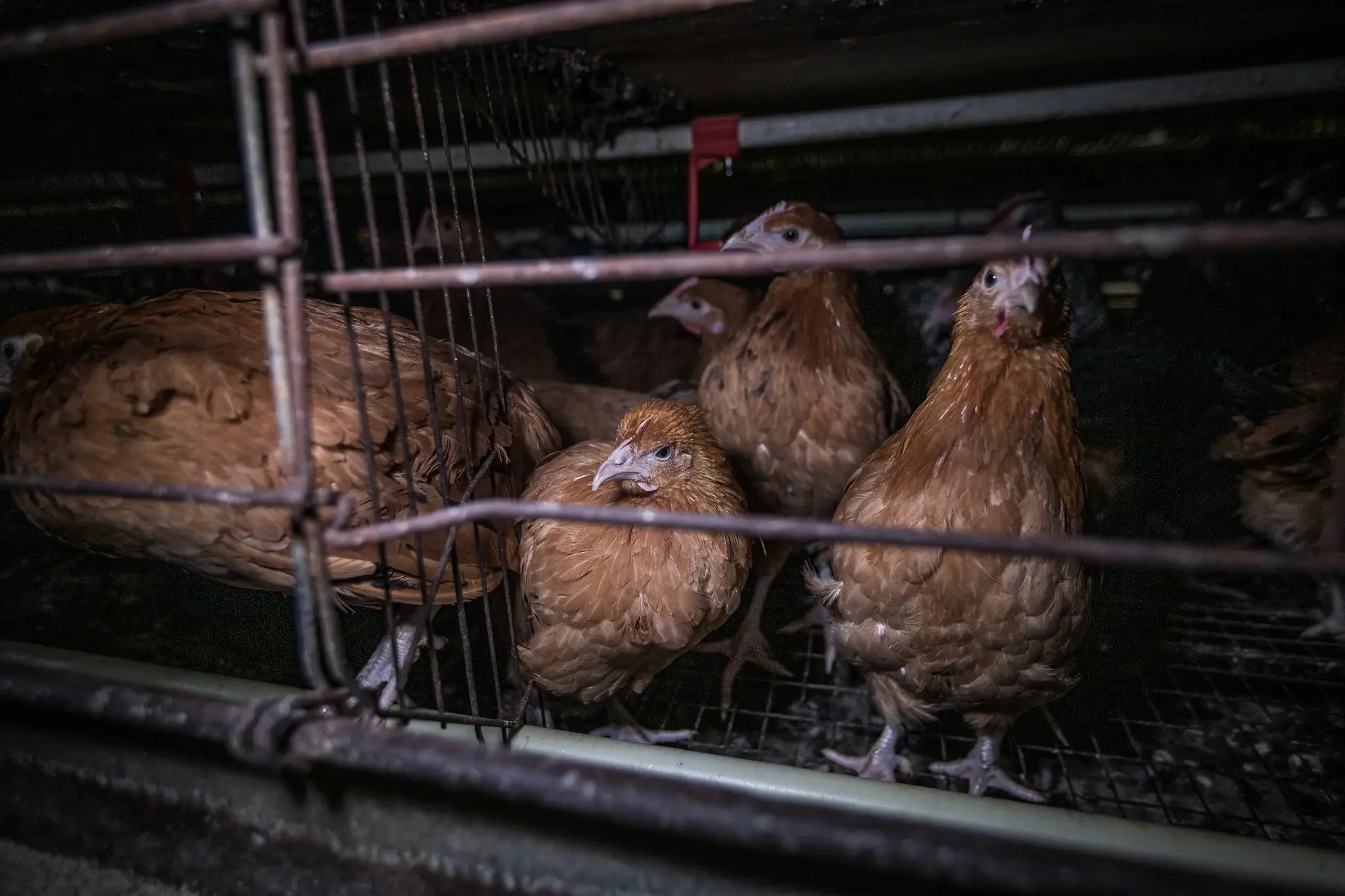
Canada has over 1,000 egg farms and hens are forced to lay approximately 320 eggs in one year. Eighty-four percent of Canadian egg-laying hens spend their entire lives in cages. Around 66 percent of caged birds are housed in conventional “battery” cages, while the remaining 18 percent are housed in “enriched” slightly larger cages. On average, each hen is given less space than a standard sheet of printed paper.

The use of battery cages is still the most common method of raising egg-laying chickens worldwide. In the countries that are part of the International Egg Commission, which includes Nigeria, the U.S., Brazil, and Germany, about 88.7 percent of hens are kept in battery cages.

The egg production process is started by debeaking the chicks who are just a few hours or a day old. This process is done without any painkillers. Due to the pain, the chicks often are unable to eat or drink water leaving them dehydrated and starving until they heal. As there is not enough space, the hens are not able to move around or expand their wings. Additionally, they are unable to clean themselves and have no option but to sit on their urine and feces.

The male chicks born in the egg industry are regarded as waste and are discarded within hours of being born. It's a standard practice to throw them in the garbage, kill them in gas chambers, or grind them in "Macerators."

The air inside egg farming buildings is full of ammonia which is toxic for the birds and they can suffer respiratory illnesses and even die from the effects. Because the number of hens within factory farms is large, farmers are unable to keep up with the dead birds, so the surviving hens are often forced to live next to other dead hens.

Rather than the 10 to 15 eggs laid naturally in a year by red jungle fowl—the presumed ancestor of today’s domestic chicken—industrially farmed hens have been manipulated to lay more than 300 eggs per year. This is almost 30 times more than the natural amount of eggs produced by one hen.

For a more detailed record of the life of layer-hens, please visit our “Life of a Hen” page.

Please consider taking ‘Petunia’s Pledge’ below and enjoy the free live events organized by Catskill Animal Sanctuary.

Take Petnunia’s Pledge to join an online community and free live classes.

Read More
Health Juliane Priesemeister Health Juliane Priesemeister

Eggs and Health

Eggs and health - the fat and cholesterol found in eggs can harm heart health and lead to diabetes, as well as prostate and colorectal cancers.

File 2021-10-11, 6 08 46 PM.png

The fat and cholesterol found in eggs can harm heart health and lead to diabetes, as well as prostate and colarectal cancers.*

Bold claims - let’s dive into this and have a closer look at cholesterol, protein and why eggs are not the health food they are claimed to be.

Cholesterol

For almost five decades it has been conventional wisdom that dietary cholesterol should be limited. For the average person, this means consuming less than 300 mgs per day, and less than 200mg per day for hyper-responders, those with type 2 diabetes or pre-diabetes and those who are at risk of cardiovascular disease - which is most people who “expect to live past middle age”. For the record, one average-sized egg contains approximately 215 mgs of dietary cholesterol.

Despite these long-standing restrictions, a flurry of media reports recently has cited studies now claiming that dietary cholesterol does not actually increase overall cholesterol levels in the blood. These studies claim we no longer have to be concerned about these previous restrictions. In other words, feel free to eat as many eggs as you want! And, shockingly, some studies are even suggesting that eating eggs can actually reduce the risk of heart disease.

Even the United States Office of Disease Prevention and Health Promotion as far back as 2015 were advised by a panel to drop any recommendations that limit cholesterol intake. It is of particular interest to note that Dr. J. David Spence, professor of pharmacology and clinical neurology at the Robarts Research Institute, Western University in London, Ontario, Canada, has written extensively that this recommendation, has been “heavily influenced by propaganda from the egg industry”.

Protein

Some nutritionists will concede that it is just the egg yolk that should be avoided despite the industry propagating the myth that cholesterol in eggs is harmless. Nutritionists will advocate, however, for the consumption of egg whites because it is almost all protein.

While protein is essential in our diets, there is a balance between excessive and adequate. In other words, you can get too much of a good thing! IGF-1 (insulin growth factor) is a hormone in the blood that regulates the replenishment of old and dying cells with new ones in our body. Excessive protein consumption over time can elevate IGF-1 to abnormally high levels and promote cellular growth exceeding our natural requirements. Elevated levels of IGF-1 have been linked to various forms of cancer.**


To learn more about the harmful effects of egg consumption on human health, please visit our “Eggs and Our Health” page.


Please consider taking ‘Petunia’s Pledge’ below and enjoy the free live events organized by Catskill Animal Sanctuary.

Take Petunia’s Pledge to join an online community and free live classes.

Take Petunia’s Pledge to join an online community and free live classes.

Read More
Egg Industry, Environment Juliane Priesemeister Egg Industry, Environment Juliane Priesemeister

Eggs and the Environment

Eggs and the environment - a topic seldom talked about. But this overview shows that large egg farms do a number on their immediate environment and the ecosystem.

File 2021-09-28, 10 33 06 AM.png

(With permission. Originally published by Sentient Media in their Newsletter ‘100 Voices - Day 24’)

In an intensive system of farming, billions of chickens live in cramped conditions and are exploited every year for meat and egg production. This form of farming aims to keep as many birds as possible in a limited area while maximizing profits.

It is becoming increasingly acknowledged that animal agriculture is a major contributor to the climate crisis. Animal agriculture is also destroying forests, polluting rivers, and displacing communities across species.

Chicken farming’s impact on the climate is less than cattle farming’s environmental impact, however, greenhouse gas emissions (GHG) per serving of poultry are still 11 times higher than those for one serving of beans.

Egg production is no different. The impacts range from poor living conditions for the animals, poor working conditions for humans, and pollution and degradation of the environment. Recently, research published by the Journal of Cleaner Production revealed an ecological footprint from the current productive system of eggs, where every dozen eggs emit 2.7 kilograms of CO2, and approximately 196 liters of water are used to produce one egg.

Chicken meat is playing an increasingly large role in the American diet as people trade red meat for more poultry. Americans now eat more chicken per capita than beef or pork. The annual American appetite for chicken produces 129 billion lbs of CO2 emissions per year—the same amount as 12.37 million cars. Between 1981 and 2006, GHG emissions from the Canadian poultry industry increased by 40%.

Due to the rise of global demand for chicken and eggs, animal feed production must also rise. Over one-third (37%) of global soy is fed to chickens and other poultry. In 2004, the chicken farming industry utilized a total of 294 million tons of animal feed. The global poultry feed market was valued at $175.9 billion in 2018, growing at a rate of 4.5% over the forecast period.

This increased feed production has resulted in the expansion of croplands resulting in deforestation of biodiverse forests and pollution of water resources. This pollution is caused by the use of mineral fertilizers, pesticides, and herbicides. It also contributes to air pollution from nitrogen fertilizer which happens through the evaporation of ammonia.


Sentient Media’s ‘100 Voices’ Newsletter is a creation of their Social Media Fellowship program sponsored by VEGFUND.


Please consider taking ‘Petunia’s Pledge’ below and enjoy the free live events organized by Catskill Animal Sanctuary.

Take Petnunia’s Pledge to join an online community and free live classes.

Take Petnunia’s Pledge to join an online community and free live classes.

Read More
Juliane Priesemeister Juliane Priesemeister

Petunia's Pledge - From Vegetarian to Vegan In One Month

Join us from Oct-1 to Nov-1 to move to a vegan lifestyle together with the Catskill Animal Sanctuary.

File 2021-09-28, 9 05 24 AM.png

Dear vegetarians, vegan-curious, and everyone interested in a healthier and more compassionate lifestyle!

October 1st marks World Vegetarian Day. And we couldn't be more excited about people coming together to consider making lifestyle changes for the better. In partnership with Catskill Animal Sanctuary, we will guide you through a month-long information campaign about transitioning from a vegetarian lifestyle to a vegan one. 

While it’s not as simple as crossing out a few letters of a word, we’ll show you the benefits of a vegan lifestyle in hopes of getting you started on your journey to a cruelty-free diet!

The first week of the campaign will start with information about the environmental impacts of eggs. Week two will focus on the health benefits of leaving eggs off your plate. Week three will reveal the realities of egg farming from an animal welfare perspective. In week four we’ll provide additional information on how to transition to a vegan lifestyle. We’ll provide lots of resources and links for delicious, egg-free alternatives, egg-free recipes and to help with the transition!

And please consider taking ‘Petunia’s Pledge’ below and enjoy the free live events!

See you throughout October.

Sincerely,
The Egg-Truth Team


We’re going to have a lot of fun this month trying out new vegan recipes, chatting in our Facebook group about our favourite vegan cheeses — WHOA those have come a long way! — and so much more!

You can click here to view & download Petunia’s Vegan Tips & Tricks.

If you have questions, please write to my pal Heather Decker, our Communications & Retail Associate — she helps out because my handwriting is chicken scratch!

You can jump onto our Facebook group with questions too! There are lots of friendly faces there!

We’ll send you some more emails throughout the month, but don’t be shy about questions! My friends and I are here for you.

Mark your calendar for these upcoming events:

  • October 13th at 6:00 PM Vegan101 Webinar and Dinner Cookalong with Linda Soper-Kolton, Award-Winning Chef & Cookbook Author

  • October 16th at 12:00PM Vegetarian To Vegan Workshop at Catskill Animal Sanctuary: A Live Recipe Demo With Chef Linda PLUS A Tour With Sanctuary Founder Kathy, and more!

  • Cooking Classes! Pick one and get your free ticket with the code PETUNIAJUNE21

  • PLUS Virtual Sanctuary on our Facebook Page every Thursday at 1:00 PM of course! My human pals, Andrea & Lauren, are creating LOTS of amazing content. I don’t want to spoil the surprise — but you won’t want to miss it!

Thanks for taking the next step on your compassionate journey with us!

Signed,
Petunia ;)

Read More
Recipes & Resources Juliane Priesemeister Recipes & Resources Juliane Priesemeister

Everything You Need to Know About Veganism in 2020

Plant Based News (PBN) annual documentary “Vegan 2020” showcasing how health, environmental, and ethical awareness growth around the globe.

When John Parker from the Economist declared 2019 the “Year of the Vegan” to indicate an increase in vegan product launches and lifestyle choices he couldn’t have predicted that 2020 would trump those numbers by a landslide. The constant bombardment with news about the Coronavirus and its roots in the wet markets in China made people rethink their food choices. With more time to cook healthier, at-home meals helped to contribute to a general shift in animal welfare awareness.

This passing year and the ongoing pandemic have given great momentum to the vegan lifestyle. The magnitude of this boost is beautifully explained in Plant Based News (PBN) annual documentary “Vegan 2020” showcasing health, environmental, and ethical awareness growth around the globe. These documentaries have been produced with growing success since 2015.

“What is exciting is that due to COVID-19, we feel that this year’s documentary would be unique – and considerably more exciting than previous years. Vegan 2020 aims to weave together the biggest events of the year in a powerful way that places the spotlight on topics not covered significantly in the past, such as pandemic risk and antibiotic resistance.”

- Klaus Mitchell, PBN founder and Director of the Vegan series.

Highlights this year are interviews with prolific figures within the movement, including advocate Earthling Ed, philanthropist and PBN investor Prince Khalid, and Emmy-winning journalist Jane Velez-Mitchell among others.

VEGAN 2020 - The Film is sponsored by abillion - where you can find recommendations and review vegan-friendly restaurants near you, food products and cruelty...

Read More
Recipes & Resources Nigel Osborne Recipes & Resources Nigel Osborne

Egg-less Egg Washing!

The above video is a great “how-to” on egg-less egg washing.

The above video is a great “how-to” on egg-less egg washing. What is egg washing? Curious Cat Bakery explains: “When you’re baking bread, the whole thing is not quite complete without that shiny, golden coat over it, right? But if you’re vegan, can you still get that look and effect without using eggs? We’re looking into that today at the Curious Cat Bakery Test Kitchen by trying out the 4 most common vegan egg wash replacements: plant milk, plant milk and agave, aquafaba and coconut oil and seeing which one works best.”

Check it out!

Read More
Recipes & Resources Nigel Osborne Recipes & Resources Nigel Osborne

Tofu Ham Benny with Zoomie Hollandaise Sauce

Tofu Ham Benny with Zoomie Hollandaise Sauce. Recipe by Chef Linda of Esther's Kitchen.

Tofu Ham Benny with Zoomie Hollandaise Sauce
Recipe courtesy of Chef Linda of Esther's Kitchen!

 
Esther's Kitchen logo.jpg
 

For all you Hollandaise sauce lovers, here’s a zoomie fast way to make it. Egg-free mayo creates a thick and creamy base in this recipe. This sauce is tasty on asparagus too!

Tofu Benny Assembly:
1. Make Esther’s Tofu Sliced Ham or purchase meatless ham deli slices or meatless Canadian bacon, such as YVES brand.
2. Sauté spinach.
3. Make the Esther Approved Hollandaise Sauce.
4. Toast Esther Approved English muffins and spread with nondairy butter.
5. Place some of the sautéed spinach on each toasted English muffin. Add a slice of Esther’s Tofu Sliced Ham on the spinach. Add the Zoomie Hollandaise sauce, black pepper and chives.

Zoomie Hollandaise Sauce
Cuisine: Esther Approved, Non-dairy sauce, egg-free (can be made soy-free or gluten-free depending on mayo ingredients).
Prep Time: 10 minutes
Yields: 1/2 cup
Author: Chef Linda | Esther's Kitchen

Ingredients:
1 Tablespoon nondairy butter
1/2 cup egg-free mayonnaise
1/4 teaspoon onion powder
1/4 teaspoon ground turmeric
1 Tablespoon fresh lemon juice
1/8-1/4 teaspoon Kala Namak black salt, to taste

Preparation:
1. Melt the nondairy butter in a saucepan over medium heat. Stir in the egg-free mayonnaise, onion powder, ground turmeric, and lemon juice. Heat until the sauce is warmed. Do not simmer or boil. Turn off the burner. Stir in the Kala Namak black salt to add an eggy tasting finish.

Esther’s Tofu Sliced Ham
Cuisine: Esther Approved Ham Alternative, Contains Soy
Prep Time: 15 minutes
Marinade Time: 2 hours or overnight
Yields: 15 slices
Author: Chef Linda | Esther's Kitchen


Tofu Ham Ingredients:
16 ounces (1 lb) super firm tofu, drained, sliced into 1/4” thick pieces, pat each slice with a towel to remove excess water.
1 teaspoon tamari sauce or Braggs liquid aminos
2 teaspoons liquid smoke
2 Tablespoons vegan light brown sugar
1 Tablespoon nutritional yeast
1/4 teaspoon beet root powder (This adds PINK colour. If you don’t have it, omit it.)
1/2 teaspoon dragonfruit/pitaya powder (This adds PINK colour. If you don’t have it, omit it.)
1/4 teaspoon ground black pepper
3/4 teaspoon salt

Glaze
Heat glaze ingredients after the marinating time on the stove,
just until the vegan butter is melted. Set aside.

Glaze Ingredients:
1 Tablespoon vegan butter
1 Tablespoon vegan brown sugar
1/4 teaspoon salt
1/4 teaspoon Dijon mustard
Dash onion powder
1 teaspoon liquid smoke

Preparation:
1. Combine the tamari, liquid smoke, brown sugar, nutritional yeast, beet root powder, dragonfruit/pitaya powder, black pepper and salt in a bowl.
2. Arrange the tofu slices in a baking dish. Brush the marinade on the tofu. Flip the tofu over and brush this side. Stack 3 or 5 pieces on each other. Marinate for 2 hours in the refrigerator or overnight is best for optimum flavour. Turn the tofu occasionally during the marinating time.
3. Fry Option - Melt neutral tasting vegetable oil in a skillet over medium-high heat. Fry the tofu on each side for 5 minutes or until desired crispiness, flipping once. Brush warm glaze on top. Continue to cook until the glaze is to your liking. Serve
4. Baked Option - Lightly grease a baking dish to fit the tofu. Lay the tofu slices on each other like fallen dominoes. Drizzle the glaze on the tofu. Broil uncovered at 500F for 10 minutes or until the tops are crispy. Keep an eye on the tofu under the broiler. Broil time can vary with ovens. Serve
5. This Tofu Ham can be refrigerated for ham style sandwiches for up to 3 days. Super firm tofu is recommended for the rubbery ham texture.

ENJOY!

Read More
Recipes & Resources Nigel Osborne Recipes & Resources Nigel Osborne

Esther's Eggy Tofu Scramble!

Esther’s Eggy Tofu Scramble. Recipe by Chef Linda of Esther's Kitchen.

Esther’s Eggy Tofu Scramble with Chive Flowers + Chives + fresh grated Violife Parmesan + Arugula + Tomatoes + Almond butter on whole grain bread.
Recipe courtesy of Chef Linda of Esther's Kitchen!

 
Esther's Kitchen logo.jpg
 

Esther’s Eggy Tofu Scramble
Cuisine: Esther Approved Breakfast, Lunch, Dinner, Egg-free, Gluten-free, Contains Soy
Prep Time: 5 minutes
Cook Time: 8 minutes
Yields: 2-4 servings
Author: Chef Linda | Esther's Kitchen

Ingredients:
14 oz/397g package organic firm tofu, drained and not pressed
2 teaspoons Adobo seasoning (Frontier Co-op Organic Adobo Seasoning-Authentic Garlic & Pepper Blend was used)
1/8 teaspoon ground turmeric * 1/4 teaspoon ground black pepper
1 Tablespoon dairy-free butter
1/4 cup nutritional yeast
3 Tablespoons warm water, divided
Kala Namak salt to taste and add an eggy flavor

Instructions:
1. Break up the tofu in chunks with your fingers and add it to a glass mixing bowl. Add the Adobo seasoning, ground turmeric and black pepper. Gently stir with a silicone spatula.
2. Heat a nonstick sauté pan over medium heat. Melt the 1 Tablespoon of dairy-free butter in the pan. Add the tofu and 2 Tablespoons of warm water. The tofu will be runny in the beginning. The water will evaporate as it cooks. Sauté the tofu scramble on medium heat for about 6 minutes.
3. Stir in the nutritional yeast and remaining 1 Tablespoon of water. Cook for 1 more minute.
4. For an eggy flavor, add Kala Namak salt at serving. Store the cooked scramble in the fridge for 2 days.

ENJOY!

Read More
Recipes & Resources Nigel Osborne Recipes & Resources Nigel Osborne

Cheezy Old Bay Scrambled Eggz!

This breakfast will keep me full for most of the day. Recipe by Chef Linda of Esther's Kitchen.

Cheezy Old Bay Scrambled Eggz + Field Roast maple breakfast sausage + sourdough toast + sliced mandarin + fair trade Mexican coffee + Ripple half & half
What Esther Approved, vegan option did you have for breakfast?

This breakfast will keep me full for most of the day. I’ll eat fruit and drink water until a late lunch. This Esther Approved plate of food has 28g protein, 375 calories, 9g fat and 6g fiber. I eat vitamin C rich foods, such as this mandarin to help my body absorb the non-heme iron in this meal: To learn more, click here.
I grew up on the Eastern Shore of the US. I would sometimes eat cheesy scrambled chicken eggs with Old Bay that my Mom would make for my family. You will see Old Bay and other seafood seasoning in recipes on the Eastern Shore. Old Bay is available in Canada too.
These Cheezy Old Bay Scrambled Eggz taste just like the ones I grew up with as a youth. Tofu, nutritional yeast, Esther’s Cashew Parmesan, vegan butter and vegan cheddar cheeze shreds replace the old ingredients. You can also use a commercial vegan parmesan cheeze. Follow Your Heart, Earth Island (in Canada), Violife, Parma, Go Veggie! have a parmesan option.
xo
Chef Linda
Recipe courtesy of Chef Linda of Esther's Kitchen!

 
Esther's Kitchen logo.jpg
 

Cheezy Old Bay Scrambled Eggz
Cuisine: Esther Approved Egg Alternative, Gluten-free, Contains Soy
Yields: 2 (4 oz) servings
Prep Time: 8 minutes
Cook Time: 4 minutes
Author: Chef Linda | Esther's Kitchen

Ingredients:
8 oz block extra firm tofu, drained, unsqueezed, crumbled lightly with hand masher or fork
2 Tablespoons nutritional yeast
2 Tablespoons prepared Cashew Parmesan (see recipes below)
Couple grinds of black pepper
Dash of ground turmeric, optional for color
1/2 teaspoon Old Bay seasoning, plus more at serving
Small pat of vegan butter for cooking
2 Tablespoons vegan cheddar shreds, use more if you want hog wild extra cheezy
Kala Namak salt, to taste after eggz are cooked

Other Ingredients:
Chives, optional
Vegan sourdough toast
Side of fruit
Vegan cooked sausage

Preparation:
1. Add the tofu, nutritional yeast, cashew parmesan, old bay, black pepper and turmeric in a mixing bowl. Stir to combine.
2. Heat the vegan butter and a nonstick pan over medium-high heat. Add the tofu mixture and cook for 3 minutes. The scrambled tofu will begin to come together. Stir in the vegan cheddar until it melts. Remove the pan off the burner.
3. Sprinkle Kala Namak salt on your eggz to taste. Serve

Esther’s Parmesan Cheeze 3 Ways
Recipe Type: Nut and Seed Cheeze
Cuisine: Esther Approved, Gluten Free
Serves: 1-1/4 Cups
Prep Time: 10 minutes

Option 1:
Esther’s Cashew Parmesan Cheeze
Ingredients
1 cup raw unsalted cashews
4 Tablespoons nutritional yeast, aka nooch
1/2 teaspoon garlic powder
1 teaspoon sea salt or pink himalayan salt

Option 2:
Esther’s Sunflower Parmesan Cheeze
Ingredients
1 cup raw unsalted sunflower seeds
4 Tablespoons nutritional yeast, aka nooch
1/2 teaspoon garlic powder
1 teaspoon sea salt or pink himalayan salt

Option 3:
Esther’s Almond Parmesan Cheeze
Ingredients
1 cup sliced or slivered almonds
4 Tablespoons nutritional yeast, aka nooch
1/2 teaspoon garlic powder
1 teaspoon sea salt or pink himalayan salt

Instructions:
1. Combine all ingredients from your chosen nut or seed parmesan cheeze option in a food processor, bullet or blender.
2. Pulse the mixture to a parmesan cheeze texture. Transfer the parmesan cheeze in a sealed jar. Store the parmesan cheeze in the refrigerator for up to 1 month.
3. Sprinkle on foods wherever you would use parmesan cheese. It's delicious on pasta, salads, soups, raw and cooked veggies, lasagna, avocado toast, sandwiches, pizza and popcorn.

ENJOY!

Read More
Recipes & Resources Nigel Osborne Recipes & Resources Nigel Osborne

Deviled Eggz!

You simply will not believe this deviled eggz recipe - Chef Linda of Esther's Kitchen is amazing!

Enjoy deviled eggs again with our Esther Approved, Eggless and Vegan recipe. Wow your friends and family with these Deviled Eggz. The Kala Namak salt can smell intense, just like deviled eggs. It’s potency will go away if it’s added while cooking, so add it in last to both the egg whites and egg yolks.
This recipe was developed to yield more egg yolk to guarantee you have enough. Do a practice run of piping a few mini mounds to get your strength and momentum established with the piping bag. The extra egg yolk filling can be used to fill the cavities of celery, on top of sliced cucumbers, veggies, toasts, mini egg style tea sandwiches and more. Vintage deviled egg platters and woodland pottery animals can be sources at thrift stores and online. Egg molds can be found at baking supply stores and online.
Recipe courtesy of Chef Linda of Esther's Kitchen!

 
Esther's Kitchen logo.jpg
 

Cuisine: Esther Approved, Vegan, Eggless, Gluten-free, Contains nuts
Yields: 2 dozen
Prep + Refrigeration Time: 45 minutes
Cook Time: 10-15 minutes
Author: Chef Linda | Esther's Kitchen

Egg White Ingredients:
2 cups unsweetened almond milk
1/2 teaspoon tapioca flour
6 teaspoons agar agar flakes
1/2 tsp kala namak salt

Egg White Preparation:
1. Whisk the almond milk, tapioca flour, and agar agar flakes in a small pot. Whisk constantly while you bring the pot to a boil. The liquid will foam and rise up the pot once it reaches the boil stage. Turn off the heat. Whisk in the kala namak salt and pour the mixture into a measuring cup that has a spout for easier pouring.
2. Fill 24 egg molds. If you only have 12 egg molds, fill and leave the remaining liquid egg whites in the measuring cup on the counter. Refrigerate the eggs in the first mold for 35 minutes.
3. Remove the first 12 egg whites and transfer onto a deviled egg platter. Whisk the remaining liquid egg whites and pour into the same mold. Refrigerate for 35 minutes again and release into a second deviled egg platter.
4. Prepare the yellow egg yolk filling while the egg whites refrigerate.

Yellow Egg Yolk Filling Ingredients:
* lb small yellow potatoes, peeled, sliced in half, and boiled until tender, drained
2/3 cup + 2 Tablespoons eggless mayo
1 Tablespoon Dijon mustard
1/4 teaspoon ground turmeric
2 Tablespoons unsweetened almond milk
1 teaspoon kala namak salt, plus more for serving
1 Tablespoon snipped chives, chopped parsley, cilantro, chia caviar, sweet or hot paprika for garnish to taste.

Egg Yolk Preparation:
1. Add the potatoes, mayo, mustard, turmeric and almond milk in a mixing bowl. Combine with an electrician mixer until smooth. Add the kala namak salt.
2. Scoop the egg yolk mixture and transfer in a piping bag fit with a star tip.
3. Practice piping out a few yolks on a plate until you get your momentum. Whatever pattern you do to the first egg, repeat that technique. Blot the tops of the egg whites with a paper towel so the egg yolk doesnt slide off. You can scoop out a little of the center with a melon baller if desired. Begin piping the egg yolk filling onto each egg white. You can cover the whole surface too. These are your Deviled Eggz.
4. Sprinkle paprika, chia caviar, chives, cilantro or parsley. Keep your Deviled Eggs refrigerated up to 1 day.

ENJOY!

Read More
Recipes & Resources Nigel Osborne Recipes & Resources Nigel Osborne

Esther Approved Egg Replacers!

Here’s our new egg chart for Esther Approved, Vegan baking.

Here’s our new egg chart for Esther Approved, Vegan baking. These 6 egg replacers get used the most here. If you are using applesauce, pumpkin or nondairy yogurt, they tend to be heavy. Add in an additional 1/2 teaspoon baking powder for each egg to help with leavening. Each of these egg replacers work differently and it depends what you are baking. You can read about their differences with an online search.

To replace 1 egg, you can also use the following:
• 1/4 cup mashed banana
• 3 Tablespoons creamy peanut butter
• 1 teaspoon baking soda + 1 Tablespoon vinegar
• 1/4 cup silken tofu
• 1-1/2 teaspoons water + 1-1/2 teaspoons oil + 1 teaspoon baking powder
• store bought premixed egg replacers.

Courtesy of Chef Linda of Esther's Kitchen!

 
Esther's Kitchen logo.jpg
 
Read More
Recipes & Resources Nigel Osborne Recipes & Resources Nigel Osborne

Esther the Wonder Pig's Eggy Tofu Scramble!

Today’s filling breakfast is Esther the Wonder Pig’s Eggy Tofu Scramble with Sun-dried Tomatoes, Baby Spinach, Field Roast Maple Breakfast Sausages and Sourdough toast. Recipe courtesy of Chef Linda of Esther's Kitchen!

Today’s filling breakfast is Esther the Wonder Pig’s Eggy Tofu Scramble with Sun-dried Tomatoes, Baby Spinach, Field Roast Maple Breakfast Sausages and Sourdough toast. The baby spinach can be omitted if you just want an eggy tofu scramble. If you are shopping at Trader Joe’s this weekend, check out the Everything but the Bagel Sesame Seasoning blend. For a more eggy flavor, sprinkle Kala Namak as a finishing salt on your tofu scramble. Recipe courtesy of Chef Linda of Esther's Kitchen!

 
Esther's Kitchen logo.jpg
 

Cuisine: Esther Approved Breakfast, Egg-free, Gluten-free, Contains Soy
Prep Time: 5 minutes
Cook Time: 11 minutes
Yields: 2 Servings

Author: Chef Linda | Esther's Kitchen

Ingredients:
1 Tablespoon dairy-free, vegan butter
14 oz/397g package organic firm tofu, drained and not pressed
1/4 cup nutritional yeast
Dash ground turmeric
1/2 teaspoon garlic powder
1/8 teaspoon black pepper
1/2 cup loosely measured sun-dried julienne cut sun-dried tomatoes from a store bought package
2 handfuls organic baby spinach
Field Roast Maple Breakfast Sausages, cooked to package directions
*ourdough toast with vegan butter

Preparation:
1. Break up the tofu in chunks with your fingers and add it to a glass mixing bowl. Add the nutritional yeast, turmeric, garlic powder, and black pepper. Gently stir with a silicone spatula.
2. Heat a non-stick sauté pan over medium heat. Melt the 1 Tablespoon of dairy-free butter in the pan. Add the tofu. The tofu will be runny in the beginning. The water will evaporate as it cooks. Sauté the tofu scramble on medium heat for 5 minutes. Stir in the sun-dried tomatoes and cook for another 4 minutes. Stir occasionally. Add the baby spinach and cook just until it begins to wilt.
For an eggy flavor, add Kala Namak salt at serving time.
4. The cooked tofu scramble can be stored in the refrigerator for 2 days.

ENJOY!

Read More