Philosophy Alex Ventimilla Philosophy Alex Ventimilla

How to Love All Animals

Veganism is about shattering that carnist lens and seeing the individuals behind our meals and removing them from our plates one by one. It’s about discovering that we can thrive on plant-based foods alone. It’s about learning that the future of our food system isn't factory farming or genetic manipulation, but rather love, compassion, and the abundant variety of plant-based proteins.

Do you believe animals, much like us, should live free from needless suffering? Does the thought of causing harm to them trouble your conscience? If you find yourself nodding in agreement, you're not alone. There's a vast community of compassionate individuals who, despite their diverse dietary choices, share a common bond—empathy for animals.

The way we perceive animals is undergoing a significant shift. Despite many of us labeling ourselves as animal lovers, the legal view of animals has often reduced them to mere property rather than feeling beings. However, something intriguing is stirring. Recent studies are illustrating a remarkable change – around 47% of the British population today acknowledges that animals deserve the same rights as humans to escape suffering. Another 71% firmly believe causing animals pain is wrong.

These numbers aren't just figures; they signify a profound transformation. It’s as if science and law are catching up to what our innate feelings have always told us – creatures such as dogs, chickens, octopuses, and even lobsters are akin to us; they possess thoughts and emotions. This awakening may very well be global. Nowadays, when the media reports on human-inflicted cruelties and crises in relation to animals, like a lost companion animal or an escaped animal from a zoo (or perhaps an egg farm), it's as though a collective cry of outrage bursts from our hearts.

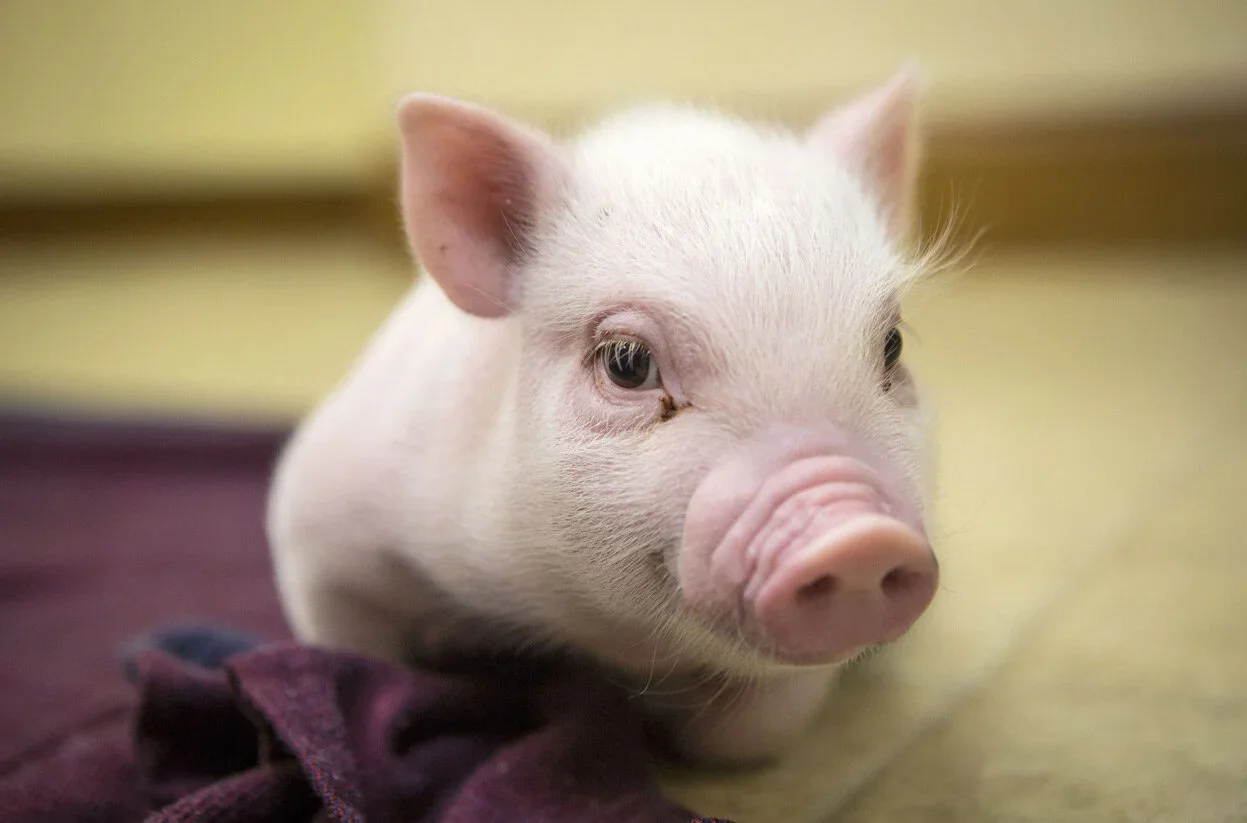
But what about the animals commonly found on our plates: cows, pigs, and chickens? Do they, too, deserve lives free of pain and suffering? Often, the distinction between which animals we cherish and which we consume is vividly illustrated in a popular meme:

Original Source: unknown

To understand the morality behind the public’s perception of some animals as friends while others are thought of as food, let’s focus on what psychologists call 'carnism'—the invisible belief system influencing us to eat certain animals while sparing others.

‘Carnism’ acts as a buffer, veiling the realities of our choices, enabling us to relish a Sunday roast while overlooking the animal's suffering that brought it to our plate. This conundrum finds its roots in the complexities of the animal food industry, where money, intricate supply chains, and neatly packaged products act as a shield. This disconnect between us and the source of our food allows us to act in ways that might seem unethical in other contexts. Yet, even the deep pockets of the animal food industry can’t fully blind our hearts from some suffering in their products.

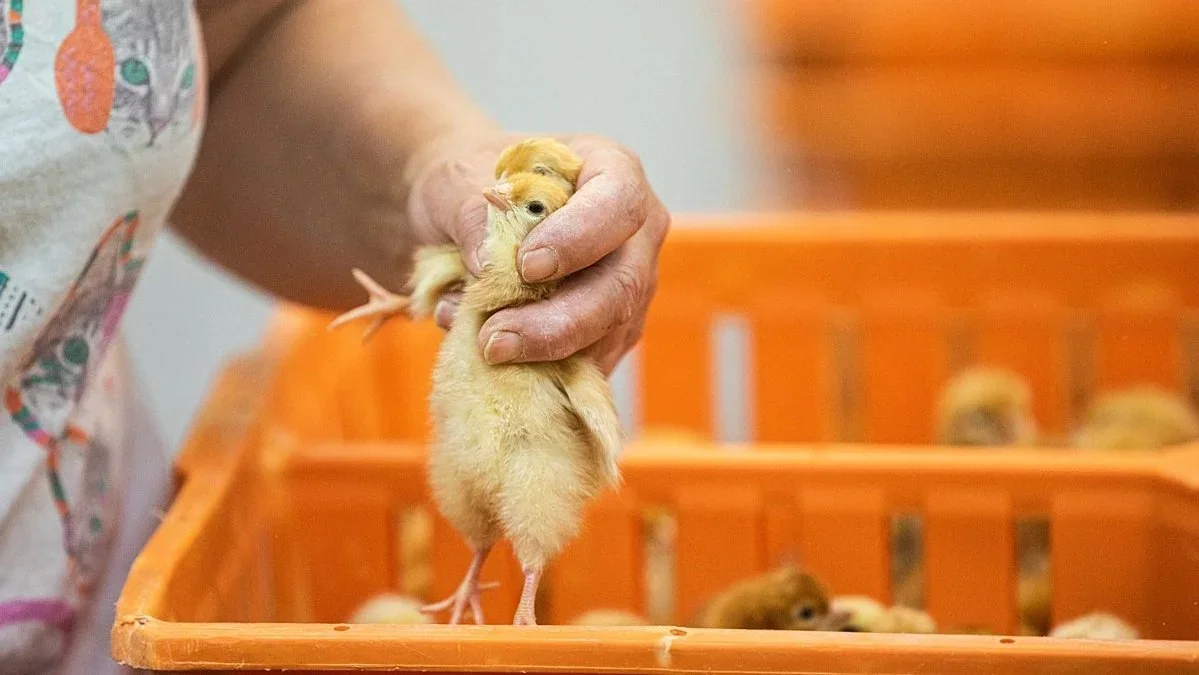
For instance, while many enjoy scrambled eggs for breakfast or crack some eggs to bake some treats without a second thought, the concept of male chick culling often evokes a sense of moral unease. This practice is an inherent part of the egg industry, where male chicks are shredded or killed shortly after hatching, as they are considered of no use to the egg-laying process.

Images: human.cruelties

So, let's focus on this gap, this crack in the carnist food lens to truly see these chicks as vulnerable babies that yearn for life. To us, this realization speaks of a wider reality, namely, that the majority of people are vegan at heart.

Often, the very mention of the “v” word is enough to send people running for the hills with their cheese and omelettes in hand, including self-professed animal lovers who would otherwise agree that animals deserve to be free from pain and suffering. In truth, we can hardly blame them. The image of vegans in the media paints us as extremist, judgmental, even confrontational. However, the reality of veganism is quite different. It's not about passing moral judgments or extremism. Instead, it's a reminder that, deep down, most of us are uncomfortable with the idea of animals suffering needlessly, like the culling of male chicks in the egg industry.

That is what veganism is about. It’s about shattering that carnist lens and seeing the individuals behind our meals and removing them from our plates one by one. It’s about discovering that we can thrive on plant-based foods alone. It’s about learning that the future of our food system isn't factory farming or genetic manipulation, but rather love, compassion, and the abundant variety of plant-based proteins.

As we conclude, we invite everyone to celebrate World Vegan Month and take part in the journey toward a more compassionate lifestyle. Embrace this opportunity to explore and discover the diverse world of plant-based foods.

For those curious or interested in learning more, we encourage participation in the Vegan Bootcamp.


Alex Ventimilla, Advisor

Alex is a third-year PhD student in the Department of English and Film Studies at the University of Alberta

Passionate about ecology, he firmly believes in the impact of storytelling on shaping our perspectives. He believes that the narratives we engage with through reading, watching, and listening play a crucial role in defining our connections with both human and non-human beings.

Read More
Undercover Investigations, Egg Industry Juliane Priesemeister Undercover Investigations, Egg Industry Juliane Priesemeister

Dead Ones - Exposing the Truth for True Transformation

With the EU's unified trade area, consumers find it challenging to track the origins of the eggs they purchase, especially when used as ingredients. In May and June 2023, two undercover activists documented the grim reality of hens kept on a farm operated by the largest egg producer in Poland and the entire European Union – Fermy Drobiu Woźniak.

In the realm of animal welfare standards, the European Union (EU) has earned a reputation as a global leader. Yet, this reputation doesn't uniformly extend to the conditions of laying hens across EU member states. Within the EU's integrated trade zone, consumers encounter a formidable challenge – deciphering the origins of the eggs they buy, particularly when utilized as ingredients.

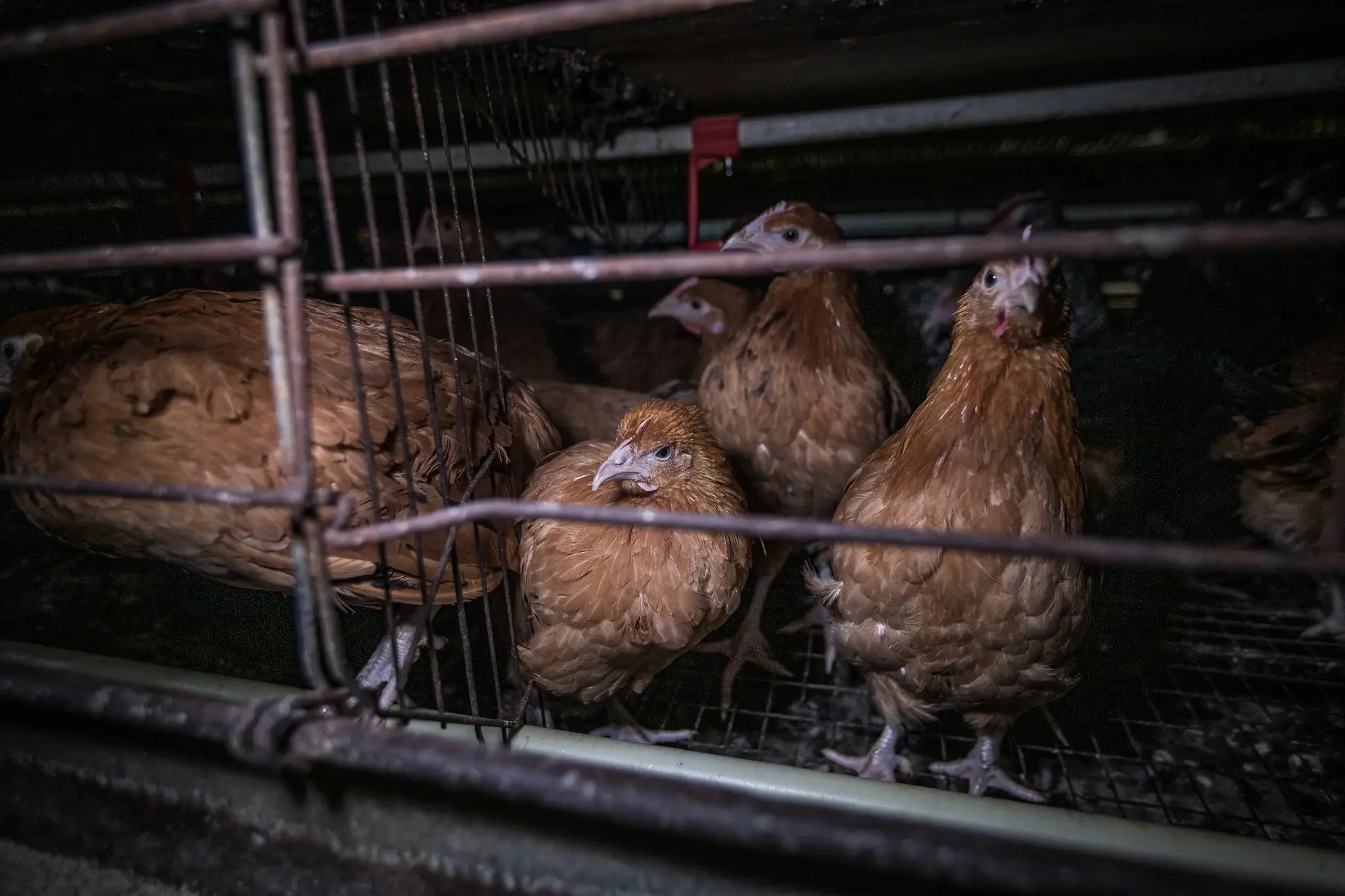
As consumers within the European Union grapple with the challenge of tracing the origins of the eggs they purchase, a chilling exposé has emerged. In May and June 2023, two dedicated undercover activists, Oksana and Sasha, embarked on a harrowing journey into the heart of the continent's largest egg producer – Fermy Drobiu Woźniak, nestled in Wioska, Poland. Their six-week odyssey within the sprawling facility, which boasted 'enriched cages' as a supposed improvement over battery cages, bore witness to unimaginable suffering. Their account sheds light on the stark realities of egg production—here is what they found:

‘Enriched cages’ were introduced as an alternative to battery cages. But for hens, this transition has been far from liberating. They continue to suffer in cramped and unnatural environments.

Stress, aggression, cannibalism, cramped cages, unbearable heat, and swarms of fleas – these were the daily horrors revealed by the investigation.

  • Cramped Cages
    The cages on the farm were incredibly cramped, with hens barely having room to move. Hens had to squeeze through crowded spaces, making it impossible for them to spread their wings. The lack of space was agonizing for these birds.

  • Cannibalism and Feather Pecking
    Stress from overcrowding led to aggression among the hens. They fought for space and access to the nest, resulting in feather pecking and even cannibalism. Weaker hens were often pecked to death by their fellow birds.

  • Painful Deformities
    The mesh floor of the cages caused severe foot deformities in many hens. Their toes bent painfully in the opposite direction, causing excruciating pain. No help was provided, and they were left to suffer alone.

  • Slow and Inhumane Deaths
    Injuries from the metal perches were common, and hens trapped there were left to die slowly from hunger and thirst. There was no procedure to help injured or sick hens, and everyday veterinary care was nonexistent. Defective cages proved deadly for many.

Just a few of the many snapshots taken by Oksana and Sasha during their undercover investigation. Source: Otwarte Klatki

Fermy Drobiu Woźniak, being the largest egg producer in Poland and the EU, raises questions about the conditions for hens across the industry. Across the European Union, there are, in fact, significant disparities in laying hen welfare. While some countries have made strides in transitioning to more humane systems, others lag. For instance, while Germany keeps the majority of their hens in cage-free systems (>60%), the neighboring countries of Poland, The Czech Republic, and Slovakia still keep over 70% of laying hens in cages.

This map shows the dominant housing systems on commercial egg farms around the world (click on map to enlarge and zoom in). Source: welfareproject.org

A hen escaped the cages and stands in front of a pile of crushed eggs. Source: Otwarte Klatki

In our pursuit of ethical and humane eggs, the global landscape of egg production, as revealed in the linked map, sheds light on the challenges consumers face. This desire for better conditions for hens often remains unfulfilled, as demonstrated by the Polish undercover investigation. This investigation serves as a stark reminder that the transition from battery cages to ‘enriched cages’ may not always deliver the expected improvements for hens.

As consumers, we supported this transition with the hope of more ethical eggs, but it's crucial to consider whether we may have been inadvertently misled. We've explored the grim realities of these housing systems in prior posts, accessible here and here, offering an opportunity for us to reflect on our choices and demand genuine humane treatment for hens.

It's worth recognizing that the fight for improved conditions must go beyond the superficial shift from cages to 'cage-free.' It's an invitation to be more discerning when navigating the options on supermarket shelves. We understand that this can be challenging. It's a journey fraught with difficult decisions, and we've all been conditioned to believe in the status quo.

But let's take a moment to imagine this from the hen's perspective – a life filled with cramped spaces, aggression, and suffering. We believe that deep down, all of us share a common desire for a more compassionate world, not just for ourselves but for all living beings. The path to a cruelty-free life for hens, as well as a more compassionate world for all animals, begins on our plates. By embracing egg-free diets and supporting alternatives that respect the well-being of hens, we can take a significant step toward honoring their plea for a life free from suffering.

Please leave eggs off your plate.


Otwarte Klatki’s goal is to prevent animal suffering by introducing systemic social changes, documenting the conditions of industrial farming and education promoting positive attitudes towards animals.

Their latest investigation into Fermy Drobiu Woźniak can we found here (viewers discretion advised).


Juliane Priesemeister, Executive Director

Juliane worked almost a decade for an international corporation as an information designer. Generating compelling visual stories was her daily deed, but as much as she enjoyed the creative work the big corporation environment left her hungry for substance and impact.

When she started her yoga journey a few years ago the “do no harm” philosophy pushed her to align work with her personal ethics and values. Today she uses her omnibus skill set, including marketing communications, economics, and graphic design, to reveal the truth about the egg industry to consumers.

Read More
About Us, Egg Industry Juliane Priesemeister About Us, Egg Industry Juliane Priesemeister

Peeling Back the Layers of the Egg Industry: Egg-Truth Team on 'The Vegan Report'

Egg-truth.com is the initiative revealing what goes on behind the scenes of the egg industry. Beyond the marketing lies of the poultry business hides a harsh reality of merciless exploitation. Join Nigel, Julie, and Ryan in discussing the fate of chickens, the largest standing population of a single bird species in Earth's history.
The Egg-Truth Team is on ‘The Vegan Report’ podcast, where we expose the truths about the egg industry. Beyond the glossy façade of the poultry business, we're unmasking the harsh truths that lie beneath the surface.

But this is no ordinary podcast. It's a unique opportunity to meet us—Nigel and Julie—face-to-face on camera. We're sharing our personal vegan journeys and the driving force behind our mission.

Join us as we further discuss the origin of Egg-Truth and the unwavering motivation that propels us to amplify the voices of hens trapped within the egg industry. From dismantling misleading marketing narratives to peering into the lives of the largest population of a single bird species in Earth's history, this episode is a deep dive into our food system.

Together with Ryan, we aim to uncover the truth and empower listeners to make more compassionate choices—ultimately encouraging them to leave eggs off their plate.

Listen to “The Brutal Truth Behind the Egg Industry” on Every Podcast and uncover the realities that drive us to make a difference.


The Vegan Report offers you a window into the global fight for animal welfare. If you are an animal lover, subscribe now! Don't miss out on educational, fascinating, and inspiring conversations for a more compassionate and just world.

Episodes are posted every Tuesday. The Vegan Report is also on YouTube (@veganreportpodcast) and Instagram (@veganreportpodcast).


Juliane Priesemeister, Executive Director

Juliane worked almost a decade for an international corporation as an information designer. Generating compelling visual stories was her daily deed, but as much as she enjoyed the creative work the big corporation environment left her hungry for substance and impact.

When she started her yoga journey a few years ago the “do no harm” philosophy pushed her to align work with her personal ethics and values. Today she uses her omnibus skill set, including marketing communications, economics, and graphic design, to reveal the truth about the egg industry to consumers.

Read More
Egg Industry Juliane Priesemeister Egg Industry Juliane Priesemeister

The Motherhood We Ignore: The Exploitation of Mother Hens in the Egg Industry

The blog post discusses the cruel treatment of female parent flocks in the egg industry, who are often subjected to inhumane conditions and never get to experience motherhood, despite the maternal instincts of hens.

Mother's Day is a time to celebrate the love, compassion, and sacrifice of mothers everywhere. A time to reflect on the role that they play in shaping our society and building a better future for all of us. We must remember, however, that not all mothers are treated with the love and respect they deserve.

According to United Nations Food and Agriculture Organization the vast majority of farmed animals, are female, and they are often subjected to unspeakable cruelty in the name of food. This includes cows used for dairy, pigs used for breeding, and of course, the layer hens used for their eggs. But it's not just the layer hens that suffer in the egg industry—it's also their mothers.

Egg industry hens are all descended from chickens in a 'parent flock' on a breeder farm. These eggs are produced solely for the purpose of producing fertilized eggs, which are sent to hatcheries. (Note: When urban farmers buy chicks, or fertilized eggs to hatch in homemade incubators, both the chicks and the eggs come from these tormented parent birds.)

"The young parent birds are confined in giant warehouses where they are bred relentlessly for the duration of their short lives. Unable to escape the shed or defend themselves against the roosters, the hens are overmounted, causing crushing injuries, broken bones, severe feather loss, painfully raw vents and distended bellies.

None of these hens will ever get to see any of her babies. Every single one of the 90 billion eggs produced annually in the US originates from a hen who has been denied the freedom to raise her young. Each year, at the end of their first laying cycle, the hens who survive the ordeal of forced insemination, are discarded and replaced with younger 'breeding stock'." (Source)

Inside a breeder farm. Watch the full video here.

The cruelties of the egg industry are not talked about in public beyond battery cages and cage-free campaigns, let alone the breeder farms, or hatcheries. Animal Liberation Victoria's Openrescue team was one of the few that went on an undercover investigation to report on the abuse and neglect of the chickens in a hatchery near Melbourne. They reported:

"We found each shed filled with exhausted, debeaked and debilitated hens suffering severe feather loss mixed together with young virile roosters. 

There were no cages, all the birds were tightly packed together on metal flooring. 

[...] they kill the older male birds at around 50 weeks of age and replace them with young roosters to further boost the economic productivity of the already exhausted hens."

Clip from an Australian-first investigation on a Specialised Breeders Australia (SBA) Hatchery near Bendigo, Victoria, one of the country's largest egg-layer hatcheries. (by Animal Liberation)

In Canada, the Code of Practice for the Care and Handling of Hatching Eggs, Breeders, Chickens and Turkeys sets standards for the care and handling of parent flocks. However, these standards fall far short of what any compassionate person would consider acceptable. For example, it also allows for the routine mutilation of birds' beaks, which can cause lifelong pain and suffering.

In the United States, the USDA's National Poultry Improvement Plan sets standards for the care and handling of parent flocks. However, these standards are voluntary and not enforceable by law. As a result, many parent flocks in the US are kept in appalling conditions, with birds suffering from diseases, injuries, and neglect.

Hens, like many other animals, have strong maternal instincts and are natural caregivers who will go to great lengths to protect and care for their offspring. However, in the egg industry, these instincts are ignored, and many female hens never get the chance to experience motherhood. This treatment of hens is not only cruel, but also perpetuates a cycle of exploitation and suffering in the egg industry. By consuming eggs from such systems, we contribute to a scheme that prioritizes profit over compassion and puts these sentient beings at risk.

But there are alternatives. By choosing plant-based options, we can help break this cycle of cruelty and support a more compassionate and just food system. As we celebrate Mother's Day, let's remember that all mothers deserve love, compassion, and respect—whether they are human or non-human animals. Let's work towards a future where all mothers, and all beings, can live free from harm and suffering.


Juliane Priesemeister, Executive Director

Juliane worked almost a decade for an international corporation as an information designer. Generating compelling visual stories was her daily deed, but as much as she enjoyed the creative work the big corporation environment left her hungry for substance and impact.

When she started her yoga journey a few years ago the “do no harm” philosophy pushed her to align work with her personal ethics and values. Today she uses her omnibus skill set, including marketing communications, economics, and graphic design, to reveal the truth about the egg industry to consumers.

Read More
Recipes & Resources Juliane Priesemeister Recipes & Resources Juliane Priesemeister

What Egg Shortage?

Given the shortage of eggs, high prices and news reports about bird flu, are you feeling frustrated after your last supermarket run?

Given the shortage of eggs, high prices and news reports about bird flu, are you feeling frustrated after your last supermarket run?

Maybe you are thinking of raising backyard chickens as an alternative? Let's consider some plant-based alternatives first.

It makes sense to switch to healthy and cruelty-free options. This allows you to avoid the myriad of issues with backyard eggs and the welfare issues associated with commercial eggs. Many folks have been using plant-based alternatives for years, from aquafaba, flax, and chia seeds in baking to scrambled tofu and plant-based eggs for more traditional egg-centric meals.

It's important to consider what you're trying to achieve with your eggs. Once you've determined that, there are a variety of options:


The first are the most budget-friendly options that you probably already have in your cupboard. Aquafaba is the liquid from a can of chickpeas that can be whipped into a foam that resembles egg whites. Flax and chia seeds can also be used as egg substitutes by mixing them with water to form a gel-like consistency. Silken tofu can be blended into a smooth mixture and used in recipes that call for eggs. Lastly, mashed bananas or applesauce can also be used as egg substitutes in recipes that require a binding agent.


For those who want a baking option, established brands like ‘PaneRiso Egg Replacer’, ‘Ener-G Egg Replacer’, or ‘Bob's Red Mill Egg Replacer’ are perfect. These products are not only cruelty-free, but are highly versatile, and can be used in a variety of recipes, from cakes and cookies to savory dishes like quiches and omelettes.


For the demanding chef, or cooks in a hurry who need a truly authentic egg substitute, products like Just Eggs, Simply Eggless, VeganEgg, or Scramblit are a perfect fit. They are ideal for creating a very realistic and satisfying egg-like experience. To replicate the light and airy texture of egg whites, Oggs and Yumgo are great! Their texture and consistency can help achieve fluffy meringues or other recipes calling for airy fillings.


Finally, under “I can't believe these are plant-based” eggs, soy-free, and gluten-free Wonderegg has been praised for its ability to mimic the taste and texture of real eggs so closely that many people can't tell the difference.

Yo-Egg, is a plant-based egg yolk replacement that mimics the taste and texture of real egg yolks, making it perfect for dishes like hollandaise sauce or aioli.

All of these products are part of a rapidly expanding selection of plant-based egg alternatives that are transforming the food industry. With an increasing demand for allergy-friendly and cruelty-free options, these innovative products are enabling both chefs and home cooks to create family-friendly meals and baked goods without compromise.

Note: don't forget to check out our long list of replacements AND our extensive recipe collection, too.

Happy cooking!


Note: Egg-Truth is not sponsored by any of the aforementioned products.


Juliane Priesemeister, Executive Director

Juliane worked almost a decade for an international corporation as an information designer. Generating compelling visual stories was her daily deed, but as much as she enjoyed the creative work the big corporation environment left her hungry for substance and impact.

When she started her yoga journey a few years ago the “do no harm” philosophy pushed her to align work with her personal ethics and values. Today she uses her omnibus skill set, including marketing communications, economics, and graphic design, to reveal the truth about the egg industry to consumers.

Read More
Egg Industry, Backyard Chickens Juliane Priesemeister Egg Industry, Backyard Chickens Juliane Priesemeister

Buying chicks is NOT compatible with loving animals

Why keeping backyard chickens as a response to the egg shortage is not the solution to the problem, and why it's crucial to understand the welfare issues in the egg industry instead.

Image: Sarah-Claude Lévesque St-Louis, pexels.com

Recent egg shortages caused by the current avian flu outbreak have led many people to consider keeping backyard chickens as a source of fresh eggs. What we really should be considering are the broader welfare issues in the egg industry. From living conditions that are cramped and unsanitary to the routine mutilation of chickens, such as de-beaking, the egg industry raises serious concerns about how animals are treated.

In this blog post, we'll explore why keeping backyard chickens as a response to the egg shortage is not a solution to the problem, and why it's crucial to understand the welfare issues in the egg industry instead.

The staff of the Broken Shovels Farm Sanctuary, a sanctuary for homeless, abused, neglected, slaughter-bound animals, put together what they have seen and experienced when it comes to adopting and breeding animals for our needs. Here is the plea to stop buying chicks for eggs (see below):

After 15 years of chicken rescue, PLEASE hear me out. Buying chicks is NOT compatible with loving animals.

Originally posted on Facebook and Instagram.

READ BEFORE YOU BUY CHICKS!

We’ve all seen the hundreds of memes, heard the grumbling and watched the news reports about the price of eggs. You may get a wild hair and decide backyard chicken keeping is the thing to do, and rush out to go buy some peeping, adorable baby chicks. I get it, my lady friends…it’s like the ultimate peer pressure these days.

But I’m begging you, DON’T DO IT. If you’re here, you probably love animals. After 15 years of chicken rescue, PLEASE hear me out. Buying chicks is NOT compatible with loving animals. It’s just not.

1. It’s expensive.

Before the costs of a coop large enough to offer enrichment and stimulation suitable for intelligent and curious animals, medical care with an avian/exotics vet that can run $4-500 for a single visit with diagnostics, and everything you need to keep truly happy, healthy birds, just the cost of feed alone will be MORE per dozen of eggs when you factor in the months they won’t lay in the winter and the years when they’ll still need care after they lay infrequently or not at all. Why are store eggs cheaper? They can buy feed in huge bulk discounts AND they “depopulate” ie kill the hens when they are 16-18 months old, once they are no longer able to lay daily eggs. Crossing that threshold where you’d kill an animal because you can no longer use them requires you to give up your “animal lover” card for sure.

2. It’s hard work.

Cleaning coops a few times a week, all the dust and caustic bird dander for those of us with allergies, finding a place to toss your used shaving. Poop EVERYWHERE. Dug up lawns and flowerbeds. Twice daily feeding and watering, keeping overgrown nails and beaks trimmed, deworming, mite and lice treatments and trips to the vet take many hours per week that most busy people don’t have. These are living beings and just like your dog or cat, not giving them adequate space, housing, clean facilities and vet care is neglect. Animal lovers don’t neglect animals in their care.

3. Avian flu.

Highly Pathogenic Avian Influenza is sweeping the country and killing millions of birds, both pet and wild. Threatened species populations are suffering, and raptors like hawks and eagles are falling out of the sky, dead and dying. It’s even jumped to mammal species, killing bears and big cats in zoos around the country. The more animals we give this disease to spread, like the millions of sudden backyard chickens, the more we help it spread, and in effect are responsible for even more wild animals dying. Animal lovers don’t do things that harm wildlife.

**Not to mention that it CAN be spread to humans in close contact with birds. In the cases around the world where it has spread to poultry workers and those exposed, it has had a more than 50% mortality rate. The more we expose our own species to this disease, the more readily it will adapt to infecting humans. And the only reason we’ve been safe so far is that it can only spread from bird to human. But this is a quickly mutating virus, and when it is able to spread human to human, we will have another pandemic that will be more virulent than Covid. The 1918 influenza likely originated as an avian flu.

4. Predators.

We tend not to notice our city predator wildlife friends, and they usually leave our companion animals alone. But they can’t resist the dinner bell of captive backyard chickens and the often shoddy hobbyist coops and runs from feed stores with the glaring lack of predator protection they offer. We spend thousands of dollars on predator proof housing and runs for each flock, that requires sturdy sheds, an underlayment that prevents digging under fences and a cover of some sort. Every year we receive hundreds of messages from traumatized chicken owners who come out to find gore and devastation in their coops, often one or two injured, very grisly survivors. It’s almost a guarantee that new chicken owners will experience a predator attack. Are you ready for that guilt and heartbreak? Animal lovers don’t keep captive animals to be mutilated.

5. Roosters.

You may be reassured that you’re buying “sexed” chicks, just hens when you purchase baby chicks. It says so right on the sign right? Well, what they DON’T tell you is 10-30% of those chicks have been mis-sexed and about half of buyers end up with a rooster. It becomes agonizing every year as families who live in cities where roosters are banned try to find a home for him where he won’t be killed. It’s so sad to take him away from the hens and people he’s bonded with. And we receive over 3000 of those rooster rehome requests every year, more than we could ever care for. There are a few places that advertise a “gentleman’s club” where you can dump your little boy off with their rooster flocks for a nominal fee like $50. Anyone running a business like this would quickly be over run or go broke trying to feed all these boys, unless they have a way to discard some or neglect them horribly. What actually happens is most will be killed by other more dominant roosters in the flock or fall prey to the many diseases endemic to unquarantined flocks with no medical care offered. And eventually when they grow up, they are sold off cheaply to someone who will home butcher them. We’ve visited a few. It’s obvious what’s going on. It’s far more kind to take your rooster in for HUMANE EUTHANASIA with an avian vet than to leave them stressed, sick and attacked in these places. Animal lovers don’t buy animals they can’t keep.

6. Chick grinding.

Ok, so you bought just 6 hens and you got lucky—all are ACTUALLY hens. But since it was a 50/50 gender split on that hatch, where are their brothers? Egg laying breeds don’t gain weight quickly so it’s not profitable to raise them for food. Instead, all the male chicks are either suffocated in giant plastic bags of thousands of chicks or they are thrown alive into something called a “chick macerator”, basically an industrial grinder for baby chickens. EVERY HATCHERY does this. There are no exceptions. Lots of people who also eat chickens may not be bothered by this, but many find killing day old baby animals abhorrent. I don’t know how we can call ourselves animal lovers and be willing to pay for this to happen, as we do each time we buy a little girl chick.

7. Death in the mail.

All the chicks in those feed stores have been sent in the mail, at a day old, with no food, water or warmth they need. MANY chicks will die en route, and it will be a cold and scary ordeal for these little tiny animals even if they do survive. Every year, we get calls from feed stores asking us to come help the sick and dying babies who’ve arrived who need critical care. Sometimes entire shipments come in deceased. Can you imagine if we did this with puppies and kittens knowing there’s a very good chance they’d die in transit? There is nothing nice about the way we transport baby chickens. Animal lovers don’t put animals in traumatizing and unsafe situations.

8. Needs a mama.

Baby chickens, ducks and turkeys are unique in the bird world because they hatch with the ability to eat on their own, they don’t have to be fed by a mama bird. BUT! That does NOT mean they have no need for a mother. Living without a mother causes constant anxiety for a baby animal whose instinct is telling him that not being near his mother makes him vulnerable to predation. Their mothers are comfort, warmth, love, affection and teach them about how to be chickens. Just because they CAN live without a mother, doesn’t mean it isn’t cruel to force millions of babies to live without her. The few minutes or even hours a day you can spend with your baby chicks isn’t anywhere near sufficient for an animal who would stay at her parents side 24-7 for 6-8 weeks or longer. Hatchery chicks are born in industrial incubators with fake heat, and there’s nothing “natural” about this in the least. This, to me, may be the meanest thing we do to animals on a large scale. The industrialization of the lives of babies is truly monstrous. Animal lovers don’t intentionally take newborns from their mothers.

What to do instead:

If you still feel you NEED chicken companionship, build the Fort Knox of chicken habitats either inside or outside your house (chicken diapers are a thing), make their lives and enrichment a priority, find a great avian vet, be willing to spend money on their care, and ADOPT adult hens DON’T shop.

Sick of egg prices? There are so many plant based egg products on the market these days that cook just like eggs. Find a great tofu scramble recipe. Check out all the easy egg replacements for baking that are far more healthy, like applesauce, bananas, and flax seed.


Broken Shovels Farm Sanctuary (US)

We provide sanctuary for abused, neglected, unwanted farm animals and a safe place to share their love and their voice with our human visitors.


Juliane Priesemeister, Executive Director

Juliane worked almost a decade for an international corporation as an information designer. Generating compelling visual stories was her daily deed, but as much as she enjoyed the creative work the big corporation environment left her hungry for substance and impact.

When she started her yoga journey a few years ago the “do no harm” philosophy pushed her to align work with her personal ethics and values. Today she uses her omnibus skill set, including marketing communications, economics, and graphic design, to reveal the truth about the egg industry to consumers.

Read More
Recipes & Resources Guest User Recipes & Resources Guest User

JUST EGG QUICHE

This JUST Egg quiche recipe is elegant, yet simple - filled with savory Mediterranean flavors, this is a perfect brunch, lunch, or weeknight dinner.

JUST EGG QUICHE!
Recipe courtesy of Chef Kathy of Kathy’s Vegan Kitchen


If you're looking for a quick and easy recipe, this JUST Egg quiche recipe is elegant yet simple. Filled with savory Mediterranean flavors, this is a perfect brunch, lunch, or weeknight dinner.

For those who prefer to avoid JUST Egg, I make a Mediterranean vegan quiche from tofu. But this JUST Egg quiche is calling your name if you're looking for a quick and easy alternative to a fabulous recipe.

Mushroom Immunity Omelette
Yields: 6 servings
Prep Time: 10 minutes
Cook Time: 55 minutes
Author: Chef Kathy | Kathy’s Vegan Kitchen

Ingredients:

  • 1 bottle JUST Egg (12 oz)

  • ¼ teaspoon Baking Powder

  • 2 Tablespoon Chickpea Flour

  • 2 Tablespoons Nutritional Yeast

  • ½ teaspoon Black Salt Optional

Vegetables

  • ½ cup chopped red onion

  • ¼ cup chopped dried tomatoes

  • 8 ounces chopped mushrooms

  • 1 red bell pepper, diced

  • ¼ cup chopped Kalamata olives

  • 8 ounces organic spinach

  • 6 grape tomatos, sliced

Crust or Crustless

1 frozen pie crust of choice or homemade pie crust

Preparation


JUST Egg Mixture

  • Pour 12 ounces of JUST Egg into a bowl

  • Whisk in flour, nutritional yeast, baking powder and black salt (optional)

  • Set aside

Crust

  • Preheat the oven to 350 degrees

  • If using a frozen crust, remove it from the freezer and allow it to thaw for at least 20 minutes.

  • Using a knife, poke holes in the bottom of the pie crust to vent the crust.

  • Set aside.

Preparing the Vegetables

  • In a large skillet, begin by sautéing the onions until translucent.

  • Add the mushrooms and cook until brown.

  • Add a small amount of vegetable broth or water if vegetables stick to the bottom of the pan.

  • Add the sun-dried tomatoes, olives, and red pepper.

  • Now, add the spinach and stir into the cooked vegetables.

  • Add a little more vegetable broth or water to wilt the spinach.

Making the Quiche

  • Pour the cooked vegetables into the pie crust

  • Spread the vegetables equally in the pie crust.

  • Next, pour the JUST Egg mixture over the vegetables.

  • Gently shake the pie plate to evenly distribute the egg mixture.

  • Gently add the sliced grape tomatoes on top.

  • Place the quiche in the oven and bake for 55 minutes.

  • Remove the quiche from the oven, and allow setting for 10 minutes before cutting it into pieces.

NOTES

  • Cook vegetables before adding them to the prepared pie crust. This allows the moisture to cook from the vegetables and enhance the flavors of the vegetables by cooking them together. 

  • Do not add the egg mixture until after the cooked vegetables are added to the crust.

  • Do not use black salt if you do not want it to taste ‘eggy’.

  • Skip the crust for a crustless quiche. 

  • Choose a different crust, or try oil-free pizza dough as another oil-free option. 

ENJOY!

Read More
Egg Industry, Backyard Chickens Juliane Priesemeister Egg Industry, Backyard Chickens Juliane Priesemeister

World Egg Day and the Silent Suffering of Hens

While trying to avoid calling them 'healthy' (which is currently illegal according to FDA) the industry’s marketing team is working hard to present the nutritional composition as a miracle unicorn of affordable foods. Yet, one fact is ignored and left out every year: the suffering of the hens.

Image: Farm Transparency Project

On Friday, October 14, the egg industry praises the “power of the egg” and all its "nutritional, environmental, and societal benefits" during ‘World Egg Day’. Established at Vienna 1996, on the second Friday in October each year they “celebrate the power of the egg”.

While trying to avoid calling them 'healthy' (which is currently illegal according to FDA) the industry’s marketing team is working hard to present the nutritional composition as a miracle unicorn of affordable foods. Yet, one fact is ignored and left out every year: the suffering of the hens.

Whether housed in a cage or free-run system, the life of a hen is a life denied. Female birds are mutilated at a young age and denied their natural behaviours throughout their egg-laying cycle.

For people who actually live with hens, the extensive gaslighting promotion brings out all the frustrations that come with the egg industries' abuse and suffering.

The staff of the Microsanctuary Resource Center and Haidy at Belle and Fleur (Little Cage Fighters) who devote their lives to care for broken hens from various egg farms spoke up to explain why it would be more compassionate to leave eggs off your plate.

“it’s important to see egg consumption in a systemic context”

The staff of the Micro Sanctuary Resource Center shared their thoughts on egg consumption in a comprehensive post on Instagram.

A Note on Egg Consumption

As MRC has most specifically expressed in our second and third core principles, we take a strong stand against any use whatsoever of eggs from residents (along with any other residents’ “byproducts”).

We understand that giving eggs from well-loved residents to humans may seem at first like a better option than if those humans bought eggs from farms. We (vegan or not) are largely conditioned to perceive animal farming in terms of how animals are treated. If animals appear to be treated “well,” then animal welfare can obscure ethics of use. So it’s important to see egg consumption in a systemic context.

First and foremost, eggs are the very thing that will most likely harm and kill hens, no matter where they live, due to the domestication history and selective breeding for dangerously high laying rates in all breeds of chicken. We can’t ignore that the only reason chickens exist is because they were taken from their ancestral habitat and domesticated, millennia of selective breeding turning them into food and/or entertainment for humans. If residents’ eggs are consumed, that perpetuates the role of eggs as food and serves as a continuation of the larger systemic harm that puts chickens into the position of exploited beings who need liberation in the first place.

No matter how someone comes by (buying, breeding, “rescuing”) or treats their chickens, to benefit from the functions that were the causes for (and foci of) their exploitation is to be a part of that exploitation. You cannot separate human consumption of their eggs from the historical system that caused them to be used for food.

Secondly, a key part of the microsanctuary ethos is to treat and represent rescued nonhumans as more than just food sources, to do all we can to sever the link between their bodies and our plates. Even when a backyard chicken reaches a vegan sanctuary, they are not “free.” Both hens and roosters will FOREVER have to deal with the repercussions of domestication, primarily related to alterations to their reproductive systems. Egg consumption serves to maintain eggs as food in human society, and insures chickens will forever be put into situations of harm.

Thirdly, we recognize that human consumption of eggs occurs without the consent of individual hens (they can’t give it) and is thus wrong.

The idea of bodily autonomy, as well as health and safety, should be seriously considered for nonhuman sanctuary residents as well as for humans. Taking or giving away the fruit of someone else’s labor without consent for personal benefit when you don’t need it is not ethical, ever. Doing so when those hens cannot escape the toil and are very likely to suffer and die from it (and their brothers probably did die because they couldn’t do it...) is wrong.

So what to do? Preventative care to stop laying is the safest approach to keeping hens healthy and avoiding eggs all together. Otherwise, all eggs should be fed back to the hens in moderation, and we recommend that any excess be given to wildlife or other nonhuman residents who may need them, composted, or otherwise disposed of.


“I have seen hens from the highest welfare systems in states akin to those from cages.”

Haidy shares her thoughts on eggs and hen keeping based on years of experience with hens and rescue hens.


I feel it would be remiss of me to remain quiet on #worldeggday 🙏 

The industry bods are championing the egg and all it stands for. 

What an egg can do for YOU

What an egg provides for YOU

How little an egg costs YOU

Do YOU see the problem?? 

These photos are the gurls who have held MY hand on a journey. 

Belle, Fleur, Rockie, Blossom, Fleurie, Daya and Asha are just a snap shot of the teachers who have come my way.

When I started this it was because we wanted to be more self sufficient, to have our own hens. At that point I still ‘used’ animal products. I still thought I was doing the best I could by buying the highest welfare, local produce. 

These gurls showed me the true cost of eggs, the true cost to THEM……

What an egg does to THEM

What an egg takes from THEM

What an egg costs THEM

it was when the realisation of that truth hit me I had no choice but to change my mind!

I have seen hens from the highest welfare systems in states akin to those from cages.

The bottom line is my stance has changed from promoting animal welfare to animal rights and therefore I do not and will not hip hoorah world egg day. 

An egg is not an innocuous food item.
The industry perpetrates suffering from start to finish by; destroying male chicks by shredding, gassing or crushing, overcrowding, restricting and denying natural behaviours in young hens in rearing barns, roughly handling and transporting hens to laying facilities, breaking any group dynamics that have may have formed in rearing barns, as well as breaking bones as in Asha’s case we suspect, by reducing nutrition through their lay cycle to protect profits thus pushing hens to their limits to continue laying eggs at the expense of their health, which is how they are genetically modified, by killing them at 72 weeks old before their first moult when egg production drops, again to protect the industry profits.

Buying eggs means YOU allow the industry to strip, discard, allow to suffer and be unseen….. billions of hens each year. 

8 out my 10 ladies are currently implanted because producing eggs generally causes massive problems!!

Please Think 🙏

#saynotoeggs #ethicalchoices #eggtruth #vegan


Micro Sanctuary Resource Center (US)

A platform for small-scale vegan caregivers to learn about many different care topics on many different species, and a place where we can share practical advice, celebrate, and grieve our nonhuman family.


Belle and Fleur (UK)

Haidy at Belle and Fleur (Little Cage Fighters) runs a tight ship with the most loving and luxurious hen home in the UK. She is always happy to chat about hens. She has the experience and access to wonderful vets who have always helped her understand more about her beloved Girls.

Read More
Egg Industry, Undercover Investigations Nigel Osborne Egg Industry, Undercover Investigations Nigel Osborne

What Happened in Winnipeg Should Be A Wake Up Call!

On April 1, 2021, workers at the Brady Municipal Landfill site in Winnipeg, Manitoba, Canada, discovered a very disturbing scene . . .

Thousands upon thousands of dead, egg laying hens litter the Brady Landfill, Winnipeg, MB, Canada. Note the dead pigs in the background. It is unclear where they came from and garnered no mention in media reports.

On April 1, 2021, workers at the Brady Municipal Landfill site in Winnipeg, Manitoba, Canada, discovered a very disturbing scene: tens of thousands of dead, egg-laying hens. Treated like trash, their broken and fragile bodies had been dumped at the site by an area egg farm. However, there appeared to be movement among the mass of contorted bodies - some of the hens were still alive! Shocked, the workers called a local farm sanctuary to inform them of what they saw and in hopes of having these few remaining souls rescued. Sadly, this was not the first time this had happened.

Ethics

News of this atrocity got out and was first reported by CTV News Winnipeg. Interestingly, the focus of the news report was not necessarily about the thousands of dead hens rotting in the open air, it was about the few who survived and were found writhing amongst the carnage. Make no mistake, the fact that still-alive hens were left to die a slow, painful death is a horror unto itself, but no less were the thousands of innocent ‘spent-hens’ who were killed and dumped like garbage simply because they were no longer profitable.

Above is a photo gallery of images taken from the Brady Landfill, April 1, 2021. Photo credit: The Good Place Farm Sanctuary.

A spokesperson from the Winnipeg Humane Society interviewed by CTV News was quoted as saying that these birds, “were among thousands of euthanized hens that were dumped at the landfill”. Euthanized? The definition of euthanasia is as follows: it is the practice of intentionally ending life to relieve pain and suffering. These hens were not euthanized, they were killed (gassed) to ensure profitability for the egg farm. Commercial hens have been genetically manipulated to lay an excessive number of eggs in their abbreviated life span of approximately 18 months. Once they reach the end of their laying cycle, their exhausted bodies can no longer lay the quantity or quality of eggs for the farmer to keep housing and feeding them, and must make way for younger pullets who have reached egg laying maturity. Thus, egg farms will “de-flock” their barns and kill the spent-hens (an industry term) either through on-site killing or sending them to slaughter. The natural life expectancy of a rescued commercial hen can be anywhere from 4-8 years, as can be testified to by many farmed animal sanctuaries, or longer if their bodies do not succumb to the common illnesses afflicting commercial hens such as ovarian cancer, osteoporosis, egg-yolk peritonitis or other diseases. In nature, their wild cousins can live 10-12 years.

A photo of “Penny”, a spent-hen rescued from the manure pits at an egg farm in British Columbia, Canada. Photo credit: Geoff Regier

How Did This Happen?

We interviewed Jen from The Good Place Farm Sanctuary (GPFS) to learn details of what happened.

A dump truck carrying thousands, perhaps tens-of-thousands, of “spent hens” arrived from an area egg farm. They were dumped at this municipal landfill to ultimately be moved into a pit. Workers, as on previous occasions, saw movement among the dead pile. Six hens on top were still alive. Jen and one of her volunteers arrived at the scene. One of the hens died on site and they managed to rescue five others. They searched the pile hoping to find others. But given the pile was many feet high over a vast area, there were no doubt alive birds near or at the bottom that could not be saved.

Jen and her volunteer were haunted by the possibility that they might miss one. After a period of time, the five they rescued were driven to a local vet. One of the hens, in particular, was in bad shape - they named her “Pearl”. She didn’t make it. The remaining four did and most ended up at several other sanctuaries (see footnote below).

Jen managed to reach out to the provincial vet responsible for farmed animals in Manitoba. Jen learned that a company was contracted by farms throughout the province who would conduct the mass killing of these birds using a mobile CO2 gas chamber. According to sources, this issue of still-alive hens being dumped at landfills had happened multiple times dating back to at least 2020. There was an investigation that year over a similar incident and recommendations were made to improve methods to ensure no hen came out of the chambers alive. Clearly, the issue was never resolved. Sources informed Jen at GPFS that the same thing happened approximately four days later after this particular incident. Landfill workers have said they often dread the days hens come to the facility because they would routinely see the same thing, over and over and over again. (Note: it is our understanding that municipal workers at this landfill have been reprimanded and instructed not to speak to anyone in the future on matters such as this.)

One of the rescued hens. Source: The Good Place: Farm Rescue & Sanctuary

Jen also observed that the pile of discarded hens at the Brady Landfill were likely not caged birds, but free-range or free-run. Jen noted that these hens did not have curled feet which comes from living on a wire floor in a cage for up to a year-and-a-half, as most hens do in Canada. The few they rescued didn’t seem skittish or afraid of her and her volunteer and seemed adept to walking on the ground. Caged hens are unfamiliar and unaccustomed to walking on the ground or interacting with people.

Another one of the rescued hens. Source: The Good Place Farm Rescue & Sanctuary

The “Manitoba Egg Farmers said it was "devastated" to hear about the five hens found alive”. “Devastated”? Why because the farm and/or the hired company failed to kill the few who survived which made its way to news reports? The Manitoba Egg Farmers, and Canada’s egg industry in general, kills millions upon millions of spent hens every year in addition to an equal number of male chicks who are useless to the egg industry as they don’t lay eggs. The egg industry IS a slaughter industry no different than meat or dairy production.

And herein lies the issue as it relates to the exploitation of egg laying hens: some of us (certainly not the egg industry) are not necessarily shocked or saddened to learn of thousands being killed in a story like this, we are saddened to learn that some were still alive. Think about this for a moment: is our empathy reserved largely for the suffering of those still alive, while ignoring the suffering of all those who were once confined and condemned to lay only to be killed and discarded like trash? Are not all the dead hens in this story entitled to the same moral concern as the ones found alive? Should we not be outraged and sickened by the massive dead pile? Absolutely!

Manure pits beneath the stacks of battery cages on an egg farm in British Columbia, Canada. Photo credit: Geoff Regier

Disease

A live market in New York City. Click on photo to enlarge.

In the sober new reality of global pandemics, our world needs to take a very hard look at the risk factors of animal agriculture and, in this case, the egg industry. Avian and swine flu, antibiotic resistance, zoonotic diseases such as SARS, MERS, AIDS, Ebola, and now Covid-19 are either caused directly, or indirectly, by intensive animal agriculture, stress imposed on natural ecosystems as a result of human encroachment, the harvesting of wildlife (ie. bush meat), and wet markets.

Yet despite all that we have learned, we still see scenes like the Brady Landfill playing out - thousands upon thousands of corpses from factory farms, rotting in the sun and out in the open? One thing most of us surely know from having been to a landfill or waste facility, there is a lot of wildlife that are attracted to these places: sea gulls, mice, rats, turkey vultures, raccoons, cats, dogs, and those predators preying on those scavenging the garbage. It is absolutely shocking that in a first world country like Canada, in the 21st century, dead farm animals would be dumped at a municipal landfill with the corpses of these animals free to come into contact with wildlife. And let’s not forget the municipal workers who are working at these facilities - what about the risk of exposure to them? All it takes is one pathogen to jump from animal to human. It has happened before and will, in all probability, happen again.

Propaganda

“We take accusations about animal cruelty very seriously”. How many times have you heard a PR person for an industry group say this every time a story emerges like this landfill story? Are they to be believed?

A screen shot from Manitoba Egg Farmers website depicts, ‘smiling, laughing’ people joyfully engaged in the business of egg production. A business that imposes untold misery and deprivation for the millions upon millions of hens exploited across Canada annually.

This is a standard reply designed to assuage public concern about animal welfare. The egg industry in Canada, and elsewhere, devote considerable sums of money to present an image of a clean, green and caring industry. They focus a lot of their efforts to remind consumers that they are feeding “you and your family” - sounds wholesome doesn’t it? Often they’ll recruit from their 1,200 members across Canada to profile a few of those who run and operate egg farms and portray them as ‘smiling, hard-working Canadians’ . . . . just like you! And if they are just like you they can’t be all bad, right? The focus of these carefully, crafted advertising campaigns are always on the family-run farms and invoke words like “community”, “care” and promote the healthful and nutritious aspects of eggs. Never do they focus on the hens and rarely show you inside an egg barn containing thousands of birds. And if they do, it is always of a barn that has been “de-flocked”, cleaned and re-populated with pullets who have just reached egg laying maturity and look clean, healthy and vibrant. Never will you see images or video of a barn 12-18 months afterwards. Why? Because it is not a pretty sight.

Generally speaking, the egg industry routinely anthropomorphizes animals when it comes to their consumer packaging and advertising campaigns by using cartoon depictions exhibiting human like qualities and facial expressions. This is true for Canada as it is for many countries around the world like the United States, United Kingdom, the European Union, etc. This is done in an effort to depict the industry as benign or harmless. Words like “Happy”, “Farm Fresh”, “Organic”, “Local” are ubiquitous.

The fact is, egg farming is a slaughter industry - it is violent and bloody. Male chicks are shredded alive shortly after hatching, females are often de-beaked, vaccinated against high risk diseases as a result of high stocking densities, endure many illnesses along the way, and then slaughtered after 18 months. Sometimes they are killed on site, dumped in a pit and buried, or incinerated.

Canada’s egg industry does not want you to know any of this because they know the average Canadian would be appalled at this kind of animal cruelty. Nonetheless, it is how commercial hatcheries, egg farmers, and the industry as a whole, can maximize profitability. And let’s be clear, all egg farming associations, whether provincial or federal, exist to promote the financial sustainability and profitability of their members first and foremost. And, part of that mandate, requires them to market and promote what they do in the most sanitized and favourable light possible.

The photo gallery below shows what the Egg Farmers of Canada publishes on their website and accompanying photos of the reality on Canadian egg farms:

Conclusion

Don’t trust anything the egg industry says. At least, view what they say with deep suspicion. It is in their interest to keep information like this out of view from Canadians. Even now, animal agriculture has succeeded in enacting legislation like Bill 156 in Ontario. And now Manitoba is considering the same thing - and you can be assured that the Manitoba Egg Farmers are in favour. Bill 156 in Ontario was lobbied for very hard by the animal agriculture sector. They’ll tell you it is about “protecting the food supply”, and ensuring that “food biosecurity” is a priority or by “protecting the property rights of farmers”. While this sounds reasonable, it is really about eliminating these kinds of videos and stories getting out. Why? Because it hurts business. And as the Premier of Ontario has often said, “Ontario is open for business”. It appears this is certainly true - but in the end, it is the animals who will pay the price.

But there is an alternative to all of this. There are so many cruelty-free, delicious and affordable egg-free alternatives available. And the great news is these alternatives are readily available in most grocery stores and health food stores across Canada! So please consider leaving eggs off your plate. Compassion is never the wrong thing.

And please consider contacting your area MP or MPP to tell them that you oppose any type of ag-gag legislation:

Search for your Canadian Member of Parliament.

Search for you Member of Provincial Parliament:

British Columbia
Alberta
Saskatchewan
Manitoba
Ontario
Quebec
New Brunswick
Nova Scotia
Prince Edward Island
Newfoundland & Labrador


Support Farm Sanctuaries Not Animal Farmers

If you would like to support the rescue of egg laying hens, please consider becoming a volunteer, or offering financial support to The Good Place Farm Sanctuary. And if you want to help one of the organizations who rescued the hens from the Brady Landfill, consider a donation to:

Rainbow Ranger Station (who rescued “Piper”)

Ledwich Family Farm (who took in “Karen”)

The Little Red Barn Sanctuary (who took in “Star”).

Or, consider supporting any number of farm sanctuaries around the world. Our “Resources” page has a very comprehensive list of sanctuaries, large and small, across the globe.


Footnote:

Dead pigs are visible in the background. Click on photo to enlarge.

We reached out to the Canadian Pork Council asking for comment on the dead pigs visible in the background of the photo of the pile of dead hens. A excerpt from their response is below.

To highlight, the CPC says, “mortalities are an unfortunate part of food production”. Unfortunate because they couldn’t profit from the ones that died? All animals face “mortality” in the food system. Mr. Ross the ED of the Canadian Pork Council goes on to say that the $83/tonne fee to dump dead pigs is the same as commercial garbage. We have reduced living beings to “commercial garbage” like tin cans, plastic containers, paper, and discarded cardboard.

“ . . . mortalities are an unfortunate part of food production . . . The disposal of mortalities is regulated by the Province of Manitoba. One approved option is to utilize the Brady Landfill . . . animal disposal arrangements must be made in advance and are subjected to an $83/tonne fee. This is the same fee applied to commercial garbage disposal.”
— John Ross Executive Director Canadian Pork Council

Nigel_headshot_ET.png

Nigel Osborne is the Executive Dir. of Egg-Truth. Nigel has years of experience related to animal rights and on-line advocacy. Nigel's extensive background in the publishing, outdoor advertising, printing and web design industries over the last 25 years provides him with a strong, creative acumen and business management experience. Through Egg-Truth.com and it's social media channels, Nigel seeks to increase awareness among the public about global egg production, expose the conditions for the billions of hens condemned to laying every year, and reveal the true impact of egg consumption on human health.

Read More
Recipes & Resources Juliane Priesemeister Recipes & Resources Juliane Priesemeister

Egg-free - Tips and Resources

But how does one switch to an egg-free, maybe, vegan diet now? Here are our favourite resources to help replace eggs in your diet.

During the last three weeks, we shared a lot of content regarding the impact of eating eggs on the environment, your health, and the hens.

But how does one switch to an egg-free, or even, a vegan diet? Below are some of our favourite resources to help replace eggs in your diet. And, if you’d like to support a sanctuary to help rescue more layer hens, check out some of the links at the bottom.

Egg Replacements

It’s never been easier to replace eggs in your favourite recipes. The simple and most accessible ones are likely foods that are already in your pantry or fridge.

Here are the top nine options. Choose the right one by understanding what role eggs play in the recipe. Do they act as a binder for leavening, adding moisture, or adding protein? (For a more detailed explanation on this, check out this great post.)

This egg alternative graphic is provided by Vegan Outreach.

  1. Applesauce (binder, moisture)

  2. Aquafaba (binder)

  3. Baking soda and vinegar (leavening agent)

  4. Bananas (moisture)

  5. Chia seeds (binder)

  6. Firm tofu (protein, moisture)

  7. Flaxseed (binding)

  8. Powdered egg replacer (leavening agent)

  9. Silken tofu (protein, moisture)

Many of you may have heard of a popular, plant-based egg called: JustEgg. It is a real revolution for egg-free cooking! But did you know that it’s just one of many fantastic commercial liquid eggs that have been launched in the past few years? Here is a comprehensive list of delicious cruelty-free products on our “Egg Alternatives” page.

Egg-free Recipes

We would also love to share some of our favourite recipes with you. We have a vast collection (whisked together by the gifted chef Linda) on our blog and even more on our Pinterest page. Happy cooking!

Hen Rescue

Now, if week 3 of our series made you want to help there are several options.
First and foremost check out the website, blogs and podcasts from our partners at Catskill Animal Sanctuary. They are entertaining, informative and let you be part of the saved animals’ lives there.

We also love smaller sanctuaries (called micro sanctuaries) that specialize in rescuing ex-battery hens and struggle to make ends meet. Please have a look at the fantastic work of:

Brown’s Microsanctuary (Canada)

This is run by the wonderful and energetic Temara Brown. A microsanctuary for chickens rescued from industrial and small-scale egg & meat farming abused or neglected pets and backyard butchery.


Belle and Fleur (UK)

Haidy at Belle and Fleur (Little Cage Fighters) runs a tight ship with the most loving and luxurious hen home in the UK. She is always happy to chat about hens. She has the experience and access to wonderful vets who have always helped her understand more about her beloved Girls.


NSW Hen Rescue (Australia)

And, finally, there is NSW Hen Rescue (Australia), founded by Catherine Kelaher. She and her volunteers rescue, rehabilitate and re-home sick, injured, abused and abandoned animals that come into their care. They are 100% volunteer-run and provide the individuals rescued the veterinary care and love they need.


We hope you enjoyed our series. Before we wrap things up we would like to give a big ‘Thank You’ to Sentient Media who allowed us to republish their great newsletter content. We highly recommend the website of this non-profit, journalism organization that seeks to create transparency around the use of animals in our daily lives—from food to companionship to laboratory test subjects.

Make sure to check out our daily posts on Twitter, Instagram and Facebook for more information on chickens and the egg industry.


Read More
Egg Industry Juliane Priesemeister Egg Industry Juliane Priesemeister

Eggs and Animal Abuse

For the short lives that egg-laying chickens live—usually around 2 years—their lives are stressful. The total number of chickens raised for eggs in Canada is over 25.8 million.

File 2021-10-13, 11 16 16 AM.png

With permission. Originally published by Sentient Media.

For the short lives that egg-laying chickens live—usually around 2 years—their lives are stressful. The total number of chickens raised for eggs in Canada is over 25.8 million.

Canada has over 1,000 egg farms and hens are forced to lay approximately 320 eggs in one year. Eighty-four percent of Canadian egg-laying hens spend their entire lives in cages. Around 66 percent of caged birds are housed in conventional “battery” cages, while the remaining 18 percent are housed in “enriched” slightly larger cages. On average, each hen is given less space than a standard sheet of printed paper.

The use of battery cages is still the most common method of raising egg-laying chickens worldwide. In the countries that are part of the International Egg Commission, which includes Nigeria, the U.S., Brazil, and Germany, about 88.7 percent of hens are kept in battery cages.

The egg production process is started by debeaking the chicks who are just a few hours or a day old. This process is done without any painkillers. Due to the pain, the chicks often are unable to eat or drink water leaving them dehydrated and starving until they heal. As there is not enough space, the hens are not able to move around or expand their wings. Additionally, they are unable to clean themselves and have no option but to sit on their urine and feces.

The male chicks born in the egg industry are regarded as waste and are discarded within hours of being born. It's a standard practice to throw them in the garbage, kill them in gas chambers, or grind them in "Macerators."

The air inside egg farming buildings is full of ammonia which is toxic for the birds and they can suffer respiratory illnesses and even die from the effects. Because the number of hens within factory farms is large, farmers are unable to keep up with the dead birds, so the surviving hens are often forced to live next to other dead hens.

Rather than the 10 to 15 eggs laid naturally in a year by red jungle fowl—the presumed ancestor of today’s domestic chicken—industrially farmed hens have been manipulated to lay more than 300 eggs per year. This is almost 30 times more than the natural amount of eggs produced by one hen.

For a more detailed record of the life of layer-hens, please visit our “Life of a Hen” page.

Please consider taking ‘Petunia’s Pledge’ below and enjoy the free live events organized by Catskill Animal Sanctuary.

Take Petnunia’s Pledge to join an online community and free live classes.

Read More
Health Juliane Priesemeister Health Juliane Priesemeister

Eggs and Health

Eggs and health - the fat and cholesterol found in eggs can harm heart health and lead to diabetes, as well as prostate and colorectal cancers.

File 2021-10-11, 6 08 46 PM.png

The fat and cholesterol found in eggs can harm heart health and lead to diabetes, as well as prostate and colarectal cancers.*

Bold claims - let’s dive into this and have a closer look at cholesterol, protein and why eggs are not the health food they are claimed to be.

Cholesterol

For almost five decades it has been conventional wisdom that dietary cholesterol should be limited. For the average person, this means consuming less than 300 mgs per day, and less than 200mg per day for hyper-responders, those with type 2 diabetes or pre-diabetes and those who are at risk of cardiovascular disease - which is most people who “expect to live past middle age”. For the record, one average-sized egg contains approximately 215 mgs of dietary cholesterol.

Despite these long-standing restrictions, a flurry of media reports recently has cited studies now claiming that dietary cholesterol does not actually increase overall cholesterol levels in the blood. These studies claim we no longer have to be concerned about these previous restrictions. In other words, feel free to eat as many eggs as you want! And, shockingly, some studies are even suggesting that eating eggs can actually reduce the risk of heart disease.

Even the United States Office of Disease Prevention and Health Promotion as far back as 2015 were advised by a panel to drop any recommendations that limit cholesterol intake. It is of particular interest to note that Dr. J. David Spence, professor of pharmacology and clinical neurology at the Robarts Research Institute, Western University in London, Ontario, Canada, has written extensively that this recommendation, has been “heavily influenced by propaganda from the egg industry”.

Protein

Some nutritionists will concede that it is just the egg yolk that should be avoided despite the industry propagating the myth that cholesterol in eggs is harmless. Nutritionists will advocate, however, for the consumption of egg whites because it is almost all protein.

While protein is essential in our diets, there is a balance between excessive and adequate. In other words, you can get too much of a good thing! IGF-1 (insulin growth factor) is a hormone in the blood that regulates the replenishment of old and dying cells with new ones in our body. Excessive protein consumption over time can elevate IGF-1 to abnormally high levels and promote cellular growth exceeding our natural requirements. Elevated levels of IGF-1 have been linked to various forms of cancer.**


To learn more about the harmful effects of egg consumption on human health, please visit our “Eggs and Our Health” page.


Please consider taking ‘Petunia’s Pledge’ below and enjoy the free live events organized by Catskill Animal Sanctuary.

Take Petunia’s Pledge to join an online community and free live classes.

Take Petunia’s Pledge to join an online community and free live classes.

Read More
Egg Industry, Environment Juliane Priesemeister Egg Industry, Environment Juliane Priesemeister

Eggs and the Environment

Eggs and the environment - a topic seldom talked about. But this overview shows that large egg farms do a number on their immediate environment and the ecosystem.

File 2021-09-28, 10 33 06 AM.png

(With permission. Originally published by Sentient Media in their Newsletter ‘100 Voices - Day 24’)

In an intensive system of farming, billions of chickens live in cramped conditions and are exploited every year for meat and egg production. This form of farming aims to keep as many birds as possible in a limited area while maximizing profits.

It is becoming increasingly acknowledged that animal agriculture is a major contributor to the climate crisis. Animal agriculture is also destroying forests, polluting rivers, and displacing communities across species.

Chicken farming’s impact on the climate is less than cattle farming’s environmental impact, however, greenhouse gas emissions (GHG) per serving of poultry are still 11 times higher than those for one serving of beans.

Egg production is no different. The impacts range from poor living conditions for the animals, poor working conditions for humans, and pollution and degradation of the environment. Recently, research published by the Journal of Cleaner Production revealed an ecological footprint from the current productive system of eggs, where every dozen eggs emit 2.7 kilograms of CO2, and approximately 196 liters of water are used to produce one egg.

Chicken meat is playing an increasingly large role in the American diet as people trade red meat for more poultry. Americans now eat more chicken per capita than beef or pork. The annual American appetite for chicken produces 129 billion lbs of CO2 emissions per year—the same amount as 12.37 million cars. Between 1981 and 2006, GHG emissions from the Canadian poultry industry increased by 40%.

Due to the rise of global demand for chicken and eggs, animal feed production must also rise. Over one-third (37%) of global soy is fed to chickens and other poultry. In 2004, the chicken farming industry utilized a total of 294 million tons of animal feed. The global poultry feed market was valued at $175.9 billion in 2018, growing at a rate of 4.5% over the forecast period.

This increased feed production has resulted in the expansion of croplands resulting in deforestation of biodiverse forests and pollution of water resources. This pollution is caused by the use of mineral fertilizers, pesticides, and herbicides. It also contributes to air pollution from nitrogen fertilizer which happens through the evaporation of ammonia.


Sentient Media’s ‘100 Voices’ Newsletter is a creation of their Social Media Fellowship program sponsored by VEGFUND.


Please consider taking ‘Petunia’s Pledge’ below and enjoy the free live events organized by Catskill Animal Sanctuary.

Take Petnunia’s Pledge to join an online community and free live classes.

Take Petnunia’s Pledge to join an online community and free live classes.

Read More
Juliane Priesemeister Juliane Priesemeister

Petunia's Pledge - From Vegetarian to Vegan In One Month

Join us from Oct-1 to Nov-1 to move to a vegan lifestyle together with the Catskill Animal Sanctuary.

File 2021-09-28, 9 05 24 AM.png

Dear vegetarians, vegan-curious, and everyone interested in a healthier and more compassionate lifestyle!

October 1st marks World Vegetarian Day. And we couldn't be more excited about people coming together to consider making lifestyle changes for the better. In partnership with Catskill Animal Sanctuary, we will guide you through a month-long information campaign about transitioning from a vegetarian lifestyle to a vegan one. 

While it’s not as simple as crossing out a few letters of a word, we’ll show you the benefits of a vegan lifestyle in hopes of getting you started on your journey to a cruelty-free diet!

The first week of the campaign will start with information about the environmental impacts of eggs. Week two will focus on the health benefits of leaving eggs off your plate. Week three will reveal the realities of egg farming from an animal welfare perspective. In week four we’ll provide additional information on how to transition to a vegan lifestyle. We’ll provide lots of resources and links for delicious, egg-free alternatives, egg-free recipes and to help with the transition!

And please consider taking ‘Petunia’s Pledge’ below and enjoy the free live events!

See you throughout October.

Sincerely,
The Egg-Truth Team


We’re going to have a lot of fun this month trying out new vegan recipes, chatting in our Facebook group about our favourite vegan cheeses — WHOA those have come a long way! — and so much more!

You can click here to view & download Petunia’s Vegan Tips & Tricks.

If you have questions, please write to my pal Heather Decker, our Communications & Retail Associate — she helps out because my handwriting is chicken scratch!

You can jump onto our Facebook group with questions too! There are lots of friendly faces there!

We’ll send you some more emails throughout the month, but don’t be shy about questions! My friends and I are here for you.

Mark your calendar for these upcoming events:

  • October 13th at 6:00 PM Vegan101 Webinar and Dinner Cookalong with Linda Soper-Kolton, Award-Winning Chef & Cookbook Author

  • October 16th at 12:00PM Vegetarian To Vegan Workshop at Catskill Animal Sanctuary: A Live Recipe Demo With Chef Linda PLUS A Tour With Sanctuary Founder Kathy, and more!

  • Cooking Classes! Pick one and get your free ticket with the code PETUNIAJUNE21

  • PLUS Virtual Sanctuary on our Facebook Page every Thursday at 1:00 PM of course! My human pals, Andrea & Lauren, are creating LOTS of amazing content. I don’t want to spoil the surprise — but you won’t want to miss it!

Thanks for taking the next step on your compassionate journey with us!

Signed,
Petunia ;)

Read More
Chickens Juliane Priesemeister Chickens Juliane Priesemeister

Robin - Rescued From The Dead

This post documents the rescue from a plastic trash bag of a “dead” chicken – a baby rooster – who was slaughtered during the ritual of Kaporos in Brooklyn, New York last fall along with thousands of other chickens.

Robin was found in a tied-up trash bag with his throat slit. Activists were documenting the aftermath of the kaporos on the morning after the final night of rituals, and they discovered one of the bags moving. They opened the bag and found Robin still alive and covered in blood among several dead birds. Robin went through the entire “sin- transferring” ritual including being swung over the participants head, then having his throat slit and being left for dead in the trash. The butcher (known as a shucat) missed his main artery, which is one of the many miracles of his story. Just minutes after they pulled him out of the trash, the garbage trucks arrived to take the bags filled with dead birds.

He was assisted by a triage team of activists and when Vanessa Dawson from Penelope’s Place showed up, she brought him to the emergency vet.

Robin was placed on oxygen, given heavy pain meds, fluids and antibiotics. He went into surgery the next day but he was given a 20% survival rate that he would live through the very risky surgery to repair his throat. When the vet called Vanessa for an update after the surgery the first words out of her mouth were “You have a miracle bird”. He recovered beautifully and now thrives at Penelope’s Place. He suffered some mental trauma from having lived through the ritual and being in the garbage bag among all of those other dead chickens. Any time that the lights went out it was as if he was back inside the bag. But he quickly learned that he was safe and loved at Penelope’s Place and the trauma symptoms subsided significantly. He turns 3 years old this month and is doing beautifully!

Unparalleled Suffering creates a documentary to report on the cruel Jewish tradition (more about that at the bottom of this page) and the unbelievable rescue of Robin.

Watch it here:


Kaporos - An Antiquated Custom

Kaporos is an antiquated custom that is sometimes referred to as Kapparot, both of which can mean “atonement,” or “scapegoat” or “sacrifice.” This is a “sin-transferring” custom in which a live animal (usually a mass-produced domesticated chicken) or money can be used. This tradition is done by some Haredi (ultra-orthdox) and Hasidic Jewish practitioners in the days and evenings leading up to the holiday of Yom Kippur, the Jewish Day of Atonement. Neither the Torah nor the Talmud - the two most holy Jewish texts - mandate or even mention Kaporos. It isn’t part of Jewish law to practice this. Certain Jewish scholars first discussed Kaporos in the ninth century. These scholars claimed that since the Hebrew word ‘gever” meant both “man” and “rooster,” punishment for the bird could be substituted for punishment of the human. Since this time, many Jewish scholars and rabbis have opposed this torturous, murderous and superstitious sin-cancellation practice. The ritual is most commonly practiced in Israel, but it also takes place in many other areas of the world - the epicenter being Brooklyn, New York and the second most popular location in the United States being Los Angeles. In Brooklyn alone, between 100,000 to 200,000 chickens are killed annually for this superstition.

For more information check this link.


Penelope's Place the Sanctuary is a non-profit Rescue and Sanctuary located in Akron, NY. Co-founders Vanessa Dawson and Steven Dawson began Penelope's Place in Brooklyn, NY and moved to the buffalo area to expand the sanctuary. The sanctuary was inspired by their first rescue Penelope the chicken. This sanctuary is her legacy. Penelope's Place is a vegan sanctuary and operates fully under those values. The animals will never be used for their eggs or meat and we also serve as a place of education about living a compassionate life towards all beings.

 
Read More
Philosophy Alex Ventimilla Philosophy Alex Ventimilla

Why Eating Some Animals But Not Others Is A Form Of Prejudice

Why do we choose to eat some animals, but not others?


Here’s why your food preferences are unfair and irrational

Why do we choose to eat some animals, but not others? 

It is well known that spiritual beliefs often play a factor in people’s diets. Yet, giraffes and locusts are both kosher and halal, while Jesus never forbade Christians from wolfing down whales or dogs. Why is it then that only a comparatively small fraction of people, sometimes only in relatively isolated communities around the world, choose to eat these species? And why are countless edible animals not eaten at all?

Looking at the animal most commonly featured on plates around the world may be a good place to begin answering questions about what makes certain animals unpopular menu choices. Pound-by-pound, this would be the domestic pig, making up for 36% of all the animal matter consumed by humans, narrowly beating out Gallus gallus domesticus, a.k.a. the domestic chicken, at 33%. However, the numbers of individuals required to rack up these percentages tell a different story. 

Over 75 billion chickens must be slaughtered yearly to meet the growing global demand for their flesh, compared to an estimated 1.5 billion pigs a year. This number does not include the millions of layer hens required to satisfy the world’s growing demand for their eggs, which humankind consumes at an estimated rate of one thousand billion units per year. 

That’s 1, 000, 000, 000, 000 eggs every 365 days. 

Do numbers matter?

People are evidently comfortable making the choice to eat chickens and their unborn offspring. And it may be that the very fact that these birds are bred and kept in such numbers makes it easier for people to consume them rather than large wild animals like giraffes and whales, whose populations are far smaller and localized. Governments have even established multinational organizations like CITES to regulate and sometimes ban the trade of products derived from species whose small population sizes make them susceptible to extinction, suggesting a growing number of people are against eating endangered species. Conversely, this would also suggest that people are more willing to eat animals that exist in large numbers. But these initial suggestions do not hold to scrutiny. 

But what about insects?

eating-insects.jpeg

Many species are notoriously numerous, including locusts. One small swarm roughly 1 km2 can be up to 80 million strong. Various cultures throughout these swarming grasshoppers’ range take advantage of this seasonal bounty of animal protein, incorporating them into their diet, as do other populations with other insect species the world over. Entomophagy still struggles to find acceptance in Western societies, however, where insects are perceived as unappealing, if not outright unsanitary and unsafe for human consumption (even though most zoonotic disease outbreaks have been traced back to commonly eaten animals, including pigs, chickens, and their eggs).

Humans also harvest exorbitant quantities of fish and seafood from the ocean every year. Indeed, while whales’ endangered status is cited as a principal reason behind the International Whaling Commission’s ongoing ban on whaling, no such multinational legislation exists to protect any of the endangered tuna species. Further, both insects and fish can be mass-produced in the same manner as chicken and other livestock, while producing insect protein requires far fewer resources than chickens, pigs, or cows. Despite bugs’ sustainability and nutritional value though, people in industrialized nations seem to prefer eating more familiar farmed animals. 

overfishing04.jpg

Does domestication matter?

This does not seem to be a factor either. Familiarity with a domestic species can, in fact, be why some people choose not to eat animals like cats and dogs. One argument for these exceptions could be that neither of the two were originally domesticated for food, although neither were chickens. Their wild ancestor, the Indian jungle fowl, was originally tamed for cockfighting. Only later did people begin to eat their flesh and eggs, a historical turn that also occurred with cats and dogs in many regions around the world, as these are eaten from East Asia to the Americas. Nowadays, however, the latter two are nearly universally regarded as companions while consuming them has become increasingly ostracized. For instance, the pressure on countries like South Korea to shut down their thriving dog meat market has been growing in recent years, while in a rare instance of bipartisan legislation, the Dog and Cat Meat Trade Prohibition Act of 2018 formally illegalized such practices in the United States.

A dog meat market in Vietnam. Photo: Jo-Anne McArthur/We Animals

But if these aren’t it, then what characteristics lead people to choose to eat some animals while ignoring, even protecting others? What, separates chickens from dogs, and whales from tuna, the so-called chicken of the sea? 

Because they are not like us?

One last argument could be that people choose not to eat animals that are too similar to humans, either because they are close biological relatives or because we share a higher kind of intelligence. Meanwhile, people’s sense of kinship with fish like tuna and birds like chickens is likely to be weak if present at all. Biologically, however, dogs, whales, cattle, pigs, and thousands of other mammals are all members of ferungulata, a vastly diverse group that split from our family, primates, millions of years before the days of the T-rex. In short, Homo sapiens are just as closely related to all these species, some of which they choose to kill and consume in exorbitant quantities, some of which they provide with luxury food. Intelligence or perception thereof does not fully explain these distinctions either. The widely acknowledged intelligence of pigs has done little to prevent people’s craving for pork, while recent studies suggest that the intelligence of chickens has been unjustifiably underestimated and may rival that of cats and dogs.

Why we love some eat others.jpg

This is all to say there doesn’t appear to be any heads or tails to how people in industrialized societies choose which animals are acceptable to eat and which aren’t. All distinctions between these species used to rationalize these choices are arbitrary, inconsistent, and irrational. They are little more than cultural prejudices based on unfounded assumptions about some species that have the effect of deeming their lives expendable for human consumption, a kind of discrimination against their suffering. It is, in short, a form of speciesism.

Say what?

Oxford animal rights activist Richard D. Ryder was the first to popularize the term. Arguing that "race” and “species” are both vague terms used in the classification of living creatures according to physical appearance, Ryder drew an analogy between the unequal treatment of racialized people and the uneven ethical considerations applied to different animal species. Since then, other science philosophers like Peter Singer and Richard Dawkins have also engaged with the concept. While acknowledging that the word is rather awkward, Singer agrees with its premise and argues we must give equal consideration to the pain experienced by all beings who share the capacity to suffer. Meanwhile, Dawkins considers that the human tendency to divide the world into units like races, cultures, and species reflect nothing but the limitations of our minds and our use of language. Within these purely subjective categorizing systems that represent animals as discontinuous species, he writes, the agency and suffering of some species can be recognized while those of others is denied or overlooked if it favors the survival of “our group”, be it a culture, race, or species.

The question of survival

The ability to prioritize the survival and wellbeing of the self and those most closely related was a valuable evolutionary advantage (pre)historically speaking given the precariousness most animals experience in the wild. This is also why cannibalism occurs. But in industrialized nations, human survival is no longer tied to the consumption of other, less related organisms. The fact that most people in such societies already choose to abstain from eating several animal species indicates they are at least partially aware of this. Thus, raising awareness of both the availability of vegetable-based foods, as well as the numerous physical and neurological characteristics we share with widely eaten animals may be key if the goal is to steer people away from current speciesist dietary practices. Already, a study out of New Zealand indicates that people’s attitudes towards chickens improve significantly when given the opportunity to spend time with these smart, sentient, and sociable animals. Perhaps interspecies encounters with the animals people still choose to eat can lead to the eventual realization that these most, if not all species, are complex beings whose right to life and freedom from suffering we should consider.


Alex headshot.png

Alex Ventimilla is a Ph.D. student in English & Film at the University of Alberta. He holds a B.A. in English Literature & Society cum laude from Vrije Universiteit Amsterdam and an M.A. in English & Film Studies from the University of Alberta. His primary research interests are animal/habitat studies and the environmental humanities.

Read More
Recipes & Resources Nigel Osborne Recipes & Resources Nigel Osborne

Jalapeño Bagel Chickpea Egg 'n Cheeze Breakfast Sandwich

Here’s a monster Jalapeño Bagel Chickpea Egg ‘n Cheeze Breakfast Sandwich which you can enjoy for breakfast today!

Jalapeño Bagel Chickpea Egg ‘n Cheeze Breakfast Sandwich!
Recipe courtesy of Chef Linda of Esther's Kitchen!

 
Esther's Kitchen logo.jpg
 

Here’s a monster Jalapeño Bagel Chickpea Egg ‘n Cheeze Breakfast Sandwich to enjoy for breakfast today! Here’s one Chickpea Omelette on this sandwich. Each omelette side is folded over the center. Then the whole omelette is folded in half for this breakfast bagel sandwich. The cheese is sliced provolone by Follow Your Heart. Each omelette has 11.5g of plant protein. The cooking method is easy and is aided by a lid. No flipping of the entire omelette is needed. If you wish to make an omelette, add fillings of your choice. This omelette recipe is soy-free, gluten-free, egg-free, Esther Approved, and vegan.

Chickpea Omelette
Prep Time: 10 minutes
Cook Time: 7 minutes without fillings
Yields: 2 omelettes
Author: Chef Linda | Esther's Kitchen

Ingredients:
1 cup chickpea flour
1 teaspoon tapioca flour
2 teaspoons potato flour
1/2 teaspoon Kala Namak salt
1 teaspoon onion powder
1 teaspoon garlic powder
1 teaspoon melted coconut oil
1/8 teaspoon ground turmeric
pinch of ground cumin
1 Tablespoon nutritional yeast flakes
1-1/4 cups water

Preparation:
1. Stir all dry ingredients in a mixing bowl first. Pour in the water. Whisk until smooth. Let the batter rest for 5 minutes.
2. Heat a nonstick pan on medium heat. Melt nondairy butter in the pan. Pour the batter in the pan. Add the lid on the pan. Begin to swirl the pan with the lid on to spread the uncooked batter to the sides. Cook for about 5-7 minutes. Once you begin to see the surface cooked, begin to loosen the sides and bottom of the omelette with a spatula. Shift the pan occasionally to loosen the omelette.
3. Add nondairy cheese or precooked vegetable fillings down the center. Fold one side of the omelette over the center. Fold the other side of the omelette onto the first folded side. Place the lid on the pan. Cook for an additional 1 minute to melt the nondairy cheese. Slide the omelette out of the pan and onto a plate.

ENJOY!

Read More
Chickens, Philosophy Juliane Priesemeister Chickens, Philosophy Juliane Priesemeister

Anonymous Memoir of a Battery Caged Chicken

My eyes are shut. I strain to open them a little but the burning sensation forces them closed again. Perhaps it is better they are shut. When I open them I see things I don’t want to.

humane.crulties_1.jpg
Every chicken here dies. But no chicken here really lived.
— anonymous chicken

My eyes are shut. I strain to open them a little but the burning sensation forces them closed again. Perhaps it is better they are shut. When I open them I see things I don’t want to.

My feet ache intolerably. I lift one foot to relieve it for a while, but the extra weight on my other foot is unbearable, so I put both feet down again. Whatever I’m standing on, it’s not stable.

It is hard to breath. I take in a deep breath and my lungs absorb the foul stench around me. My nose burns, as does my throat. The room smells of stale faeces and urine. My lungs feel heavy and wet. The wetness trickles down my throat, irritating my airways. I need to cough up this poisonous phlegm, but I don’t seem to be able to.

I’m hungry. There is food not far away, but I can’t get close enough. It’s hard to move and I’m terrified to try. The others I have been put here with- they have all gone mad. Sometimes they try to hurt me. I still have cuts and sores from the last attack- my last attempt to get closer to the food.

It is useless anyhow. Even when I get to the food my mouth hurts. It is hard to keep the food in my mouth. It just falls out. I have to tilt my head back to keep it there. Depravation, I decide, is easier.

There’s a loud scream that echoes through the darkness.

I open my eyes. Two of the others are fighting in the dark. Perhaps over food, or perhaps they have gone crazy- it only takes a matter of time. I can see across the room another huddled into a corner. She is menstruating and is embarrassed she can’t keep it private. She wants to be alone.

I choose to shut my eyes again.

My body aches in every way possible. It’s like a heavy throbbing sensation that starts at my neck and travels all the way down my body. I desperately want to stretch out, to relieve some of the pain, but there is no room. I lean against the cold, rusty metal bars beside me. My skin feels so red raw, and leaning against the wire only distresses my skin more.

The stinging on my skin gets worse as I’m forced to rub against the metal as a cage mate attempts to move to a more comfortable position.

Apparently chickens don’t have dreams.

Perhaps that is true. I don’t dream of a better life, because I don’t know of any other existence. This is everything I know of life. I have not seen, heard or thought of anything different.

But I do have hope.

Sometimes when I shut my eyes, everything goes blank for a while. The pain goes, the smell goes, and I don’t know where I am. This is my nothing. But no matter how long I sleep, my nothing is always broken again by life.

But maybe, just maybe, one day when I go to my nothing, I won’t ever wake up again. One day perhaps everything will disappear. No pain, no smell, no fighting, no cages- nothing.

That is what I hope for. That is all I have.

Do not mourn for me when I die. It is what died inside me while I was still alive that should enrage you.

Every chicken here dies. But no chicken here really lived.

Anonymous memoir of a battery caged chicken.


Emma_Hurst_crop.gif

Emma Hurst, Animal Justice Party MP, elected to the Upper House of NSW Parliament - Emma Hurst's Website

Emma Hurst is the first female Animal Justice Party MP, elected to the Upper House of NSW Parliament in Australia. A former psychologist, Emma has worked tirelessly for the rights of animals for many years with a background in campaigning, political lobbying, and media work.

Since she was elected in March 2019, Emma has used her time in parliament to bring animals to the forefront of political discussion: running inquiries into battery hens and animals in entertainment, preparing legislation to ban puppy farms, securing legislative reform on the link between domestic violence and animal abuse, banning the breeding and importation of captive dolphins, and campaigning against the use of animals in experimentation.

Read More
Recipes & Resources Juliane Priesemeister Recipes & Resources Juliane Priesemeister

Everything You Need to Know About Veganism in 2020

Plant Based News (PBN) annual documentary “Vegan 2020” showcasing how health, environmental, and ethical awareness growth around the globe.

When John Parker from the Economist declared 2019 the “Year of the Vegan” to indicate an increase in vegan product launches and lifestyle choices he couldn’t have predicted that 2020 would trump those numbers by a landslide. The constant bombardment with news about the Coronavirus and its roots in the wet markets in China made people rethink their food choices. With more time to cook healthier, at-home meals helped to contribute to a general shift in animal welfare awareness.

This passing year and the ongoing pandemic have given great momentum to the vegan lifestyle. The magnitude of this boost is beautifully explained in Plant Based News (PBN) annual documentary “Vegan 2020” showcasing health, environmental, and ethical awareness growth around the globe. These documentaries have been produced with growing success since 2015.

“What is exciting is that due to COVID-19, we feel that this year’s documentary would be unique – and considerably more exciting than previous years. Vegan 2020 aims to weave together the biggest events of the year in a powerful way that places the spotlight on topics not covered significantly in the past, such as pandemic risk and antibiotic resistance.”

- Klaus Mitchell, PBN founder and Director of the Vegan series.

Highlights this year are interviews with prolific figures within the movement, including advocate Earthling Ed, philanthropist and PBN investor Prince Khalid, and Emmy-winning journalist Jane Velez-Mitchell among others.

VEGAN 2020 - The Film is sponsored by abillion - where you can find recommendations and review vegan-friendly restaurants near you, food products and cruelty...

Read More
Philosophy Guest User Philosophy Guest User

"Which came first the Chicken or the egg?"

Evolutionary biologists think that they have solved the dilemma.

Here is why you couldn't find an answer, yet.

Chicken or the egg.png
Plutarch, (46 - c. 120)

Plutarch, (46 - c. 120)

Most everyone is familiar with the mind teaser, ”Which came first the Chicken or the egg?” While it seems contemporary, the question was first posed 2000 years ago by the Greek philosopher, Plutarch. The question – and its answer - was considered quite serious and important because it deals with whether or not the universe and life have a beginning.

In our worldly experience, everything seems to have a cause and an effect. Something causes something else to happen. The Dog wags her tail which knocks down the vase of flowers which spills water on the floor which causes the Dog’s guardian to slip and fall which causes the second Dog to bark, and so on - a simple chain of causes and effects. But, what came before that? We might be able to keep going back to find earlier and earlier causes but at some point, like the Greeks, we are stuck with the question: What came before the universe?

Time is a mystery from a scientific point of view. The past is gone and the future has not yet happened, and the present as the point between past and future immediately ceases to exist – or it is possible to question whether it ever existed at all.
— David Bohm

Evolutionary biologists think that they have solved the dilemma. They claim it was the egg who came first and did so through mutation. In other words, a non-Chicken laid an egg that was somehow genetically changed to produce the first Chicken. But, physics says otherwise. 

space-time-continuum.jpg

We usually take time as a given, that it is real and flows in succession. But, quantum physicist David Bohm called time a “mystery.” Indeed, he asserted, the passage of time, from past, present, and future only exist as an assumed image or thought. “The world-line (history) of a Chicken in spacetime is comprised of a series of continuous spacetime events. This is called the "block" picture of the universe, “(Perelman, 2020). The Chicken (past) who laid the egg (present) who becomes the Chicken (future) are one and the same. Our perception of time’s directionality, moving from the past towards the future is not grounded in reality, but (mis)informed by our belief in a fixed sense of self. Furthermore, quantum physics’ retrocausality implies that the Chickens and eggs of today can send information to the past thereby changing who their predecessors could be and might have been.

According to Bohm, the world we experience around us, the eggs, Chickens, and ourselves, only appear separate but are actually explicit manifestations of a deeper implicit order. As he describes, “Take for example all the experience of ourselves that we have at the ordinary level, in which I include all the various kinds of thoughts, images and sensations with which we identify. Now ordinarily we say, tacitly, that that is me. But that is really only an explicit image of something much more subtle and enfolded.”

Venn diagrams representing the specific and overlapping proteins identified in the human (during the whole gestation) and chicken (11th day of incubation) amniotic fluid (AF). Human AF data were obtained from the work of Cho et al., (11), which comb…

Venn diagrams representing the specific and overlapping proteins identified in the human (during the whole gestation) and chicken (11th day of incubation) amniotic fluid (AF). Human AF data were obtained from the work of Cho et al., (11), which combines results from nine publications (supplemental Data S3, sheet #3).

So when contemplating the Chicken-egg conundrum, quantum mechanics frames it in a very different way by demonstrating that we each emerge from life’s intrinsic, implicit wholeness, but are forever entangled, not just connected to each other, but we profoundly affect one and another. The egg that you hold in your hand was generated by the same wholeness from which you were generated. You and the egg are deeply entangled in the universe.

Physics is not the only science to recognize patterns of continuity which underlie and cohere all of us. Neuroscience does not delve into the implicit, invisible realms which quantum physics reveals, however, it describes the continuity in the explicit, tangible world. 

Chickens, humans, Fish, and all other Animals possess common brains and capacities to feel, think, and experience the rainbow of emotions that make life so rich. We may look different on the outside, feathered versus naked skin, beaks versus noses and mouths, etc, but inside we share the same brain structures and processes which govern consciousness

As we have learned from the recent convergence of global crises, to harm or destroy, abuse or kill an egg or Chicken, is the same as abusing and killing ourselves. As Shakespeare’s Danish Prince once admonished his friend, “There’s more to Chickens and eggs, Horatio, than dreamt in your philosophy.”


Round_headshot_G_Bradshaw.png

Gay Bradshaw, PhD, PhD, Executive Director - The Kerulos Center for Nonviolence

Gay holds doctorate degrees in ecology and psychology, and has published, taught, and lectured widely in these fields both in the U.S. and internationally. She is the author of the Pulitzer Prize-nominated Elephants on the Edge: What Animals Teach Us about Humanity, and Carnivore Minds: Who These Fearsome Beings Really Are, both published by Yale University Press. She is also the author of Talking with Bears: Conversations with Charlie Russell (Rocky Mountain Books, 2020). Dr. Bradshaw’s work focuses on trans-species psychology, the theory and methods for the study and care of Animal psychological well-being and multi-species cultures. Her research expertise includes the effects of violence on and trauma recovery for Elephants, Grizzly Bears, Chimpanzees, Parrots, and other species both free-living and in captivity.

Read More